
One of the devil’s most effective lies is this:
“𝘠𝘰𝘶𝘳 𝘱𝘢𝘴𝘵 𝘥𝘦𝘧𝘪𝘯𝘦𝘴 𝘺𝘰𝘶.”
He reminds us of our failures, our sins, our shame—hoping we will believe that change is impossible and holiness is reserved only for the “perfect.”
But Christianity proclaims the exact opposite.
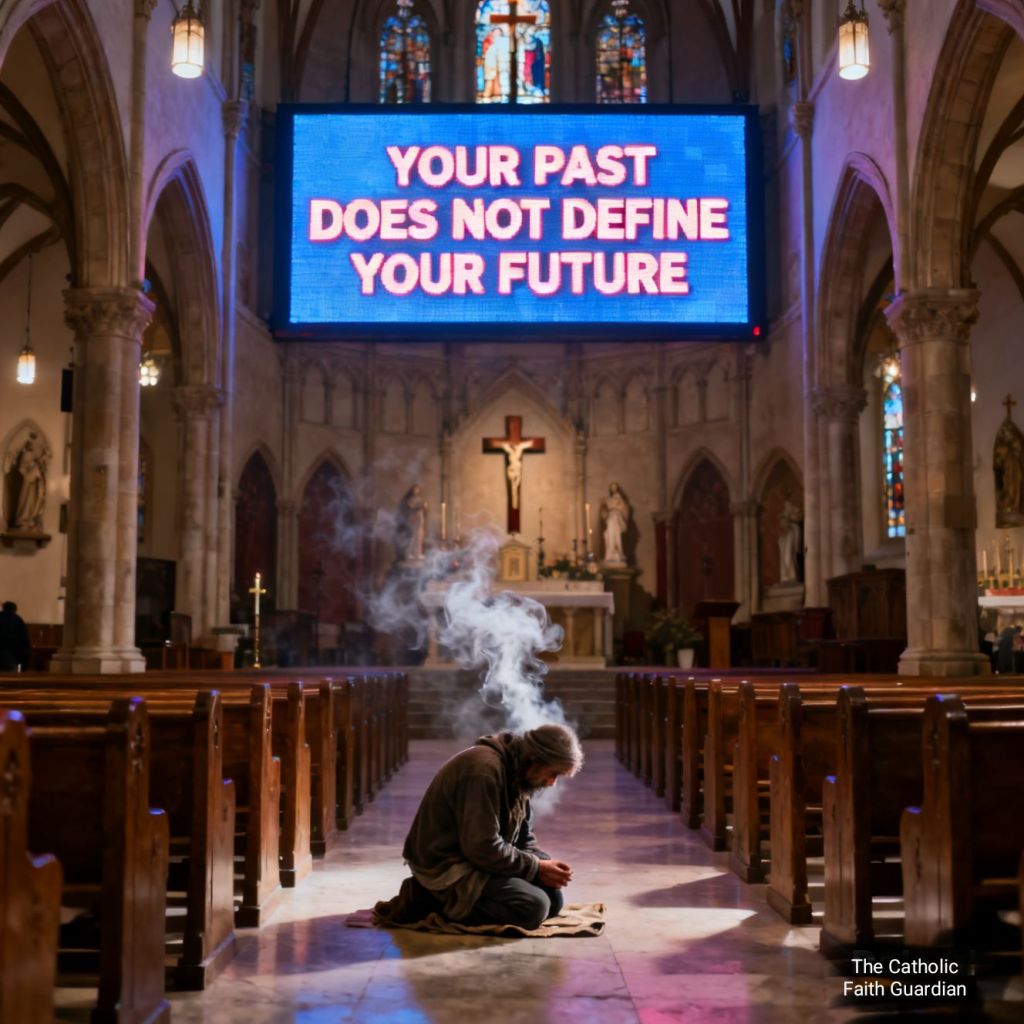
Your past does not define your future.
God’s mercy does.
The Catholic faith is not a religion of flawless people—it is the story of broken sinners transformed by grace. If past sins disqualified us from holiness, the Church would have no saints at all.
𝐆𝐨𝐝 𝐒𝐩𝐞𝐜𝐢𝐚𝐥𝐢𝐳𝐞𝐬 𝐢𝐧 𝐖𝐫𝐢𝐭𝐢𝐧𝐠 𝐍𝐞𝐰 𝐒𝐭𝐨𝐫𝐢𝐞𝐬
Scripture tells us:
> “𝘐𝘧 𝘢𝘯𝘺𝘰𝘯𝘦 𝘪𝘴 𝘪𝘯 𝘊𝘩𝘳𝘪𝘴𝘵, 𝘩𝘦 𝘪𝘴 𝘢 𝘯𝘦𝘸 𝘤𝘳𝘦𝘢𝘵𝘪𝘰𝘯; 𝘵𝘩𝘦 𝘰𝘭𝘥 𝘩𝘢𝘴 𝘱𝘢𝘴𝘴𝘦𝘥 𝘢𝘸𝘢𝘺, 𝘣𝘦𝘩𝘰𝘭𝘥, 𝘵𝘩𝘦 𝘯𝘦𝘸 𝘩𝘢𝘴 𝘤𝘰𝘮𝘦.”
— 2 𝘊𝘰𝘳𝘪𝘯𝘵𝘩𝘪𝘢𝘯𝘴 5:17
God does not merely “improve” us—He re-creates us. He does not ask where you came from; He asks whether you will trust Him now.
The saints prove this truth powerfully.
𝗦𝗮𝗶𝗻𝘁𝘀 𝗪𝗵𝗼 𝗪𝗲𝗿𝗲 𝗢𝗻𝗰𝗲 𝗚𝗿𝗲𝗮𝘁 𝗦𝗶𝗻𝗻𝗲𝗿𝘀
1. St. Paul – From Persecutor to Apostle
Before becoming Christianity’s greatest missionary, Paul hunted Christians. He approved of their deaths and tried to destroy the Church (Acts 8:1–3).
Yet God chose him.
Paul later wrote:
> “𝘊𝘩𝘳𝘪𝘴𝘵 𝘑𝘦𝘴𝘶𝘴 𝘤𝘢𝘮𝘦 𝘪𝘯𝘵𝘰 𝘵𝘩𝘦 𝘸𝘰𝘳𝘭𝘥 𝘵𝘰 𝘴𝘢𝘷𝘦 𝘴𝘪𝘯𝘯𝘦𝘳𝘴—𝘰𝘧 𝘸𝘩𝘰𝘮 𝘐 𝘢𝘮 𝘵𝘩𝘦 𝘧𝘰𝘳𝘦𝘮𝘰𝘴𝘵.”
— 1 𝘛𝘪𝘮𝘰𝘵𝘩𝘺 1:15
His past didn’t cancel his calling—it magnified God’s mercy.
2. St. Augustine – From Slave of Lust to Doctor of the Church
Augustine lived a life of sexual immorality, fathered a child outside marriage, and openly mocked Christianity.
Yet after years of resistance, he surrendered.
He became one of the greatest theologians in Christian history, writing:
> “𝘓𝘢𝘵𝘦 𝘩𝘢𝘷𝘦 𝘐 𝘭𝘰𝘷𝘦𝘥 𝘠𝘰𝘶, 𝘖 𝘉𝘦𝘢𝘶𝘵𝘺 𝘦𝘷𝘦𝘳 𝘢𝘯𝘤𝘪𝘦𝘯𝘵, 𝘦𝘷𝘦𝘳 𝘯𝘦𝘸.”
His past did not define him—conversion did.
3. St. Mary Magdalene – From Possession to Proclamation
The Gospels tell us Jesus cast seven demons out of Mary Magdalene (Luke 8:2). Tradition associates her with a deeply sinful life.
Yet she became:
 A faithful disciple
One who stood at the Cross
The first witness of the Resurrection
Jesus entrusted His greatest announcement not to the “perfect,” but to the redeemed.
4. St. Moses the Ethiopian – From Violent Thief to Gentle Monk
Moses was a feared criminal, a gang leader, and murderer. But one encounter with Christ transformed him.
He became a monk known for extraordinary humility, so much so that he refused to judge others, saying:
> “𝘔𝘺 𝘴𝘪𝘯𝘴 𝘳𝘶𝘯 𝘰𝘶𝘵 𝘣𝘦𝘩𝘪𝘯𝘥 𝘮𝘦, 𝘢𝘯𝘥 𝘐 𝘥𝘰 𝘯𝘰𝘵 𝘴𝘦𝘦 𝘵𝘩𝘦𝘮—𝘺𝘦𝘵 𝘐 𝘫𝘶𝘥𝘨𝘦 𝘮𝘺 𝘣𝘳𝘰𝘵𝘩𝘦𝘳?”
5. St. Margaret of Cortona – From Scandal to Sanctity
Margaret lived openly in grave sin for years and was rejected by society. Broken and repentant, she turned to Christ completely.
She became a Franciscan tertiary, living a life of intense prayer, penance, and charity—and is now honored as a saint.
𝐆𝐨𝐝 𝐃𝐨𝐞𝐬 𝐍𝐨𝐭 𝐂𝐚𝐥𝐥 𝐭𝐡𝐞 𝐐𝐮𝐚𝐥𝐢𝐟𝐢𝐞𝐝—𝐇𝐞 𝐐𝐮𝐚𝐥𝐢𝐟𝐢𝐞𝐬 𝐭𝐡𝐞 𝐂𝐚𝐥𝐥𝐞𝐝
Holiness is not about having a clean past.
It is about having a surrendered heart.
> “Where sin increased, grace abounded all the more.”
— Romans 5:20
Your worst chapter can become the place where God’s mercy shines the brightest.
𝐃𝐨 𝐍𝐨𝐭 𝐋𝐞𝐭 𝐒𝐡𝐚𝐦𝐞 𝐒𝐭𝐞𝐚𝐥 𝐘𝐨𝐮𝐫 𝐇𝐨𝐩𝐞
Shame says: “You are your sins.”
God says: “You are My beloved child.”
The saints did not become holy because they never fell—
They became holy because they kept getting up.
Confession exists because God knows we fall.
Grace exists because God knows we cannot save ourselves.
𝐘𝐨𝐮𝐫 𝐅𝐮𝐭𝐮𝐫𝐞 𝐈𝐬 𝐒𝐭𝐢𝐥𝐥 𝐁𝐞𝐢𝐧𝐠 𝐖𝐫𝐢𝐭𝐭𝐞𝐧
If you are breathing, God is not finished with you.
Your past:
may explain your wounds
may humble your heart
may become your testimony
But it does not determine your destiny.
Let God rewrite your story.
>𝘠𝘰𝘶𝘳 𝘍𝘶𝘵𝘶𝘳𝘦 𝘐𝘴 𝘚𝘵𝘪𝘭𝘭 𝘉𝘦𝘪𝘯𝘨 “𝘈 𝘣𝘳𝘶𝘪𝘴𝘦𝘥 𝘳𝘦𝘦𝘥 𝘏𝘦 𝘸𝘪𝘭𝘭 𝘯𝘰𝘵 𝘣𝘳𝘦𝘢𝘬, 𝘢𝘯𝘥 𝘢 𝘴𝘮𝘰𝘭𝘥𝘦𝘳𝘪𝘯𝘨 𝘸𝘪𝘤𝘬 𝘏𝘦 𝘸𝘪𝘭𝘭 𝘯𝘰𝘵 𝘲𝘶𝘦𝘯𝘤𝘩.” — 𝘐𝘴𝘢𝘪𝘢𝘩 42:3
𝐑𝐞𝐦𝐞𝐦𝐛𝐞𝐫 𝐓𝐡𝐢𝐬
 You are not disqualified.
You are not beyond mercy.
You are not defined by yesterday.
The same God who made sinners into saints is still at work today.
And He is calling you.. 
Source: The Catholic Faith Guardian
 Nelson MCBS
Leave a comment