

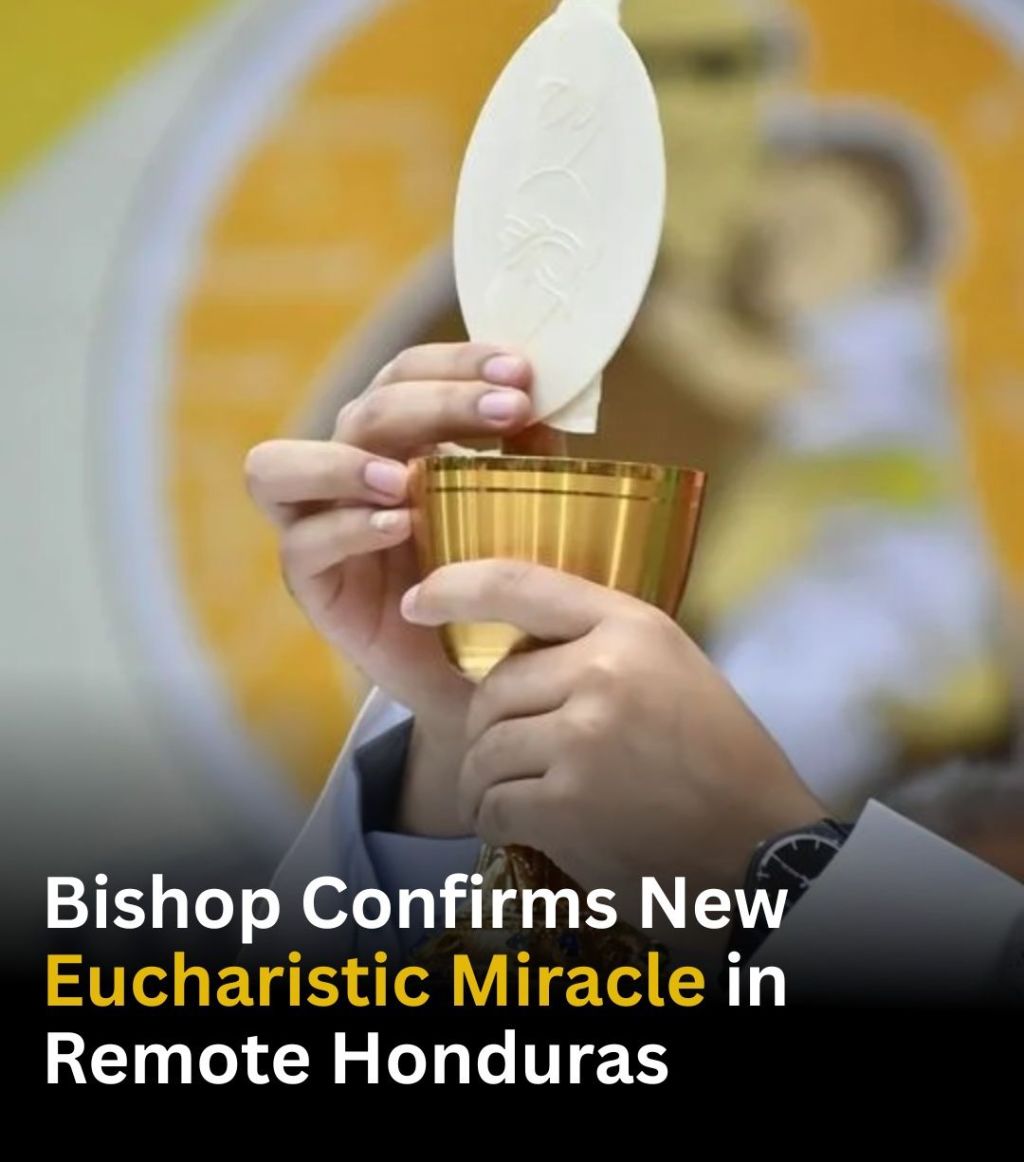
On the afternoon of June 9, 2022, when the Catholic Church was celebrating the liturgical feast of Jesus Christ, Eternal High Priest (celebrated the Thursday after Pentecost), José Elmer Benítez Machado arrived before anyone else at the chapel of the El Espinal community to celebrate the Liturgy of the Word and distribute to the faithful the hosts previously consecrated by the priests of the diocese.
About 60 families live in El Espinal, spread throughout the mountainous region, dedicated mainly to agriculture and raising cattle, pigs, and poultry. Barely 15 families attend the Liturgy of the Word every Thursday conducted by laypeople, since they don’t have a priest based in the town.
Benítez was appointed an extraordinary minister of holy Communion two years ago to attend to the pastoral needs of the chapel dedicated to the Apostle James.
At about 5 p.m. local time, the Liturgy of the Word began. When it was time to distribute the Eucharist, Benítez opened the tabernacle and noticed that the corporal (sacred linen cloth), under and folded over the wooden ciborium and on a white satin cushion, showed large stains that seemed to be of human blood.
“I was amazed,” he told “EWTN Noticias,” the EWTN’s Spanish-language news program. “My first hope was: ‘It’s the blood of Christ.” However, in the confusion of the moment, and to complete his ministry, he continued with the celebration and distributed the Eucharist.
Before concluding, at the time of making the parish announcements, Benítez asked those present if they had seen any water leaking into the church or if they knew of anyone who had entered before. He then told what he had seen.
“Several of us responded that we had not seen any water leaking, and when he explained what had happened, we asked him to show the corporal,” Reginaldo Aguilar Benítez, parish coordinator and sworn witness in the investigation process, told “EWTN Noticias.”
Pedrina García, who was in the chapel at the time, said she did not doubt that it was a miracle. “This is something that God has put there for us,” she said.
𝐓𝐡𝐞 𝐢𝐧𝐯𝐞𝐬𝐭𝐢𝐠𝐚𝐭𝐢𝐨𝐧
The next day, Father Marvin Sotelo and Father Oscar Rodríguez, Missionaries of the Sacred Heart of Jesus — who had come to the town of San Juan de Intibucá just two months before — went to the community of El Espinal to corroborate what the parish coordinator had told them over the phone.
Sotelo put the corporal in a plastic bag with a hermetic seal, kept it in his rectory, and handed it over to Bishop Guillén two days later.
Guillén was particularly skeptical and decided to keep it in his personal chapel while he decided what to do. “I’m not that prone to naively believing in things. Logic makes us prudent in terms of believing things without sifting through them and without analyzing them,” he told “EWTN Noticias.”
Almost three months later, the bishop ordered some scientific tests to be carried out at the Santa Rosa de Copán Medical Center, about 30 miles from Gracias, to evaluate the oxidation and dilution of the apparent blood.
Concluding that the necessary material was not available to carry out an analysis, the corporal was sent to the DISA Test toxicological center in Tegucigalpa, where Dr. Héctor Díaz del Valle, who holds a doctorate in chemistry and pharmacy, led the investigation.
At the end of October 2022, the analysis began with the intervention of an external forensic expert and an expert in analytical toxicology.
𝐓𝐡𝐞 𝐬𝐚𝐦𝐞 𝐛𝐥𝐨𝐨𝐝 𝐭𝐲𝐩𝐞 𝐨𝐧 𝐭𝐡𝐞 𝐒𝐡𝐫𝐨𝐮𝐝 𝐨𝐟 𝐓𝐮𝐫𝐢𝐧 𝐚𝐧𝐝 𝐋𝐚𝐧𝐜𝐢𝐚𝐧𝐨
Initially, it was ruled out that the stains were of wood resin or animal blood. Subsequent procedures revealed that the blood was human and was type AB with a positive Rh factor, the same as the eucharistic miracle of Lanciano, Italy, as well as that found on the Shroud of Turin, also in Italy.
According to the World Population Review portal in Honduras, less than 2.5% of the population in that country has that same blood type.
The expert tests also ruled out that the pattern of the blood stains could have been made artificially.
Valle was surprised because the cloth “had contact with air, humidity; presumptive tests were carried out on the cloth and it did not dry properly” and yet to date “it does not show deterioration or fungus.”
In forensic investigations, presumptive and confirmatory tests are a useful tool in the study of blood stains.
After carrying out the investigations and putting the statements of the witnesses under notarized oath, the bishop of Gracias confirmed that it was a surprising occurrence. “I don’t place in doubt the credibility,” he said.
“I think that this extraordinary, visible, tangible, perceptible, verifiable sign of this manifestation of the blood of the Lord in an obscure community in the midst of the most extreme rurality of our agricultural environment says a lot at this time,” he said.
“You have to think that God seeks extremes to call us to the balance of good sense and truth. It seems to me that this is an extreme sign of God who manifests himself again, as he has done in the holy Scriptures, in the history of salvation, by those simple ones whom Mary praises for their lowliness,” the bishop said.
𝓢𝓸𝓾𝓻𝓬𝓮: 𝓒𝓪𝓽𝓱𝓸𝓵𝓲𝓬 𝓝𝓮𝔀𝓼 𝓐𝓰𝓮𝓷𝓬𝔂
 Nelson MCBS
Leave a comment