

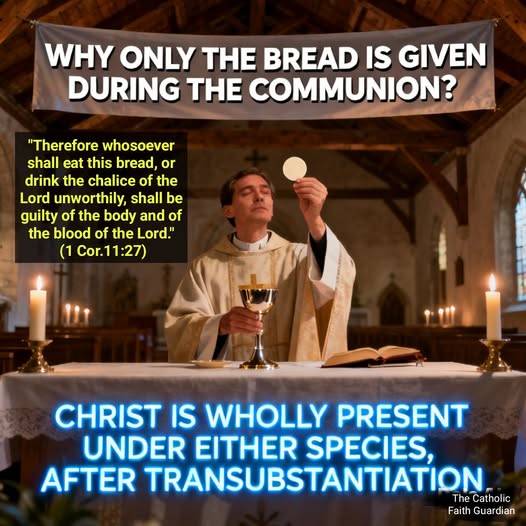
𝗪𝗛𝗬 𝗣𝗥𝗜𝗘𝗦𝗧 𝗢𝗡𝗟𝗬 𝗚𝗜𝗩𝗘 𝗧𝗛𝗘 𝗘𝗨𝗖𝗛𝗔𝗥𝗜𝗦𝗧𝗜𝗖 𝗕𝗥𝗘𝗔𝗗 𝗗𝗨𝗥𝗜𝗡𝗚 𝗖𝗢𝗠𝗠𝗨𝗡𝗜𝗢𝗡?
At the Last Supper, Our Lord Jesus Christ gave a clear and binding command to His Apostles: “Do this in memory of me” (Luke 22:19; 1 Corinthians 11:24–25).
This command refers not merely to the physical acts of eating and drinking, but to the institution of the Eucharistic sacrifice and the authority entrusted to the Apostles and their successors to regulate its celebration.
Yet some Catholics today assert that receiving Holy Communion under only one kind (the consecrated bread) is somehow incomplete, claiming that Christ’s words “eat” and “drink” require reception under both species.
 “𝘐𝘧 𝘊𝘩𝘳𝘪𝘴𝘵 𝘤𝘰𝘮𝘮𝘢𝘯𝘥𝘦𝘥 𝘵𝘰 𝘦𝘢𝘵 𝘢𝘯𝘥 𝘥𝘳𝘪𝘯𝘬, 𝘸𝘩𝘺 𝘥𝘰𝘦𝘴 𝘵𝘩𝘦 𝘱𝘳𝘪𝘦𝘴𝘵 𝘨𝘪𝘷𝘦 𝘰𝘯𝘭𝘺 𝘵𝘩𝘦 𝘣𝘳𝘦𝘢𝘥, 𝘸𝘪𝘵𝘩𝘰𝘶𝘵 𝘸𝘪𝘯𝘦?”
𝙏𝙝𝙚 𝙈𝙚𝙖𝙣𝙞𝙣𝙜 𝙤𝙛 “𝙀𝙪𝙘𝙝𝙖𝙧𝙞𝙨𝙩”: 𝙏𝙝𝙖𝙣𝙠𝙨𝙜𝙞𝙫𝙞𝙣𝙜, 𝙎𝙖𝙘𝙧𝙞𝙛𝙞𝙘𝙚, 𝙖𝙣𝙙 𝙍𝙚𝙖𝙡𝙞𝙩𝙮
The word Eucharist comes from the Greek ‘eucharistia’, meaning thanksgiving. This is not symbolic language nor a later theological invention, but the very terminology of Sacred Scripture itself.
Scripture testifies:
“𝘈𝘯𝘥 𝘩𝘦 𝘵𝘰𝘰𝘬 𝘣𝘳𝘦𝘢𝘥, 𝘢𝘯𝘥 𝘸𝘩𝘦𝘯 𝘩𝘦 𝘩𝘢𝘥 𝘨𝘪𝘷𝘦𝘯 𝘵𝘩𝘢𝘯𝘬𝘴 (𝘦𝘶𝘤𝘩𝘢𝘳𝘪𝘴𝘵ē𝘴𝘢𝘴), 𝘩𝘦 𝘣𝘳𝘰𝘬𝘦 𝘪𝘵…”
(𝘓𝘶𝘬𝘦 22:19)
“𝘈𝘯𝘥 𝘩𝘦 𝘵𝘰𝘰𝘬 𝘵𝘩𝘦 𝘤𝘶𝘱, 𝘢𝘯𝘥 𝘸𝘩𝘦𝘯 𝘩𝘦 𝘩𝘢𝘥 𝘨𝘪𝘷𝘦𝘯 𝘵𝘩𝘢𝘯𝘬𝘴…”
(𝘔𝘢𝘵𝘵𝘩𝘦𝘸 26:27)
“𝘛𝘩𝘦 𝘤𝘶𝘱 𝘰𝘧 𝘣𝘭𝘦𝘴𝘴𝘪𝘯𝘨 𝘵𝘩𝘢𝘵 𝘸𝘦 𝘣𝘭𝘦𝘴𝘴…”
(1 𝘊𝘰𝘳𝘪𝘯𝘵𝘩𝘪𝘢𝘯𝘴 10:16)
The Eucharist is therefore the supreme act of thanksgiving offered by Christ to the Father, made sacramentally present in the Church.
> CCC 1328: “𝘛𝘩𝘦 𝘪𝘯𝘦𝘹𝘩𝘢𝘶𝘴𝘵𝘪𝘣𝘭𝘦 𝘳𝘪𝘤𝘩𝘯𝘦𝘴𝘴 𝘰𝘧 𝘵𝘩𝘪𝘴 𝘴𝘢𝘤𝘳𝘢𝘮𝘦𝘯𝘵 𝘪𝘴 𝘦𝘹𝘱𝘳𝘦𝘴𝘴𝘦𝘥 𝘪𝘯 𝘵𝘩𝘦 𝘥𝘪𝘧𝘧𝘦𝘳𝘦𝘯𝘵 𝘯𝘢𝘮𝘦𝘴 𝘸𝘦 𝘨𝘪𝘷𝘦 𝘪𝘵: 𝘌𝘶𝘤𝘩𝘢𝘳𝘪𝘴𝘵… 𝘣𝘦𝘤𝘢𝘶𝘴𝘦 𝘪𝘵 𝘪𝘴 𝘢𝘯 𝘢𝘤𝘵𝘪𝘰𝘯 𝘰𝘧 𝘵𝘩𝘢𝘯𝘬𝘴𝘨𝘪𝘷𝘪𝘯𝘨 𝘵𝘰 𝘎𝘰𝘥.”
𝙏𝙝𝙚 𝙀𝙪𝙘𝙝𝙖𝙧𝙞𝙨𝙩 𝙖𝙨 𝙩𝙝𝙚 𝙁𝙪𝙡𝙛𝙞𝙡𝙡𝙢𝙚𝙣𝙩 𝙤𝙛 𝙈𝙖𝙡𝙖𝙘𝙝𝙞 1:11
The Catholic Church celebrates the Eucharist daily throughout the world, uniquely fulfilling the prophecy of Malachi:
>“𝘍𝘰𝘳 𝘧𝘳𝘰𝘮 𝘵𝘩𝘦 𝘳𝘪𝘴𝘪𝘯𝘨 𝘰𝘧 𝘵𝘩𝘦 𝘴𝘶𝘯 𝘵𝘰 𝘪𝘵𝘴 𝘴𝘦𝘵𝘵𝘪𝘯𝘨 𝘮𝘺 𝘯𝘢𝘮𝘦 𝘪𝘴 𝘨𝘳𝘦𝘢𝘵 𝘢𝘮𝘰𝘯𝘨 𝘵𝘩𝘦 𝘯𝘢𝘵𝘪𝘰𝘯𝘴, 𝘢𝘯𝘥 𝘪𝘯 𝘦𝘷𝘦𝘳𝘺 𝘱𝘭𝘢𝘤𝘦 𝘪𝘯𝘤𝘦𝘯𝘴𝘦 𝘪𝘴 𝘰𝘧𝘧𝘦𝘳𝘦𝘥 𝘵𝘰 𝘮𝘺 𝘯𝘢𝘮𝘦, 𝘢𝘯𝘥 𝘢 𝘱𝘶𝘳𝘦 𝘰𝘧𝘧𝘦𝘳𝘪𝘯𝘨.” (𝘔𝘢𝘭𝘢𝘤𝘩𝘪 1:11)
This prophecy cannot refer to Old Testament sacrifices, which were confined to Jerusalem. It clearly foretells a new, universal, and perpetual sacrifice—the Holy Mass.
> 𝘊𝘊𝘊 1330: “𝘛𝘩𝘦 𝘴𝘢𝘤𝘳𝘪𝘧𝘪𝘤𝘦 𝘰𝘧 𝘊𝘩𝘳𝘪𝘴𝘵 𝘢𝘯𝘥 𝘵𝘩𝘦 𝘴𝘢𝘤𝘳𝘪𝘧𝘪𝘤𝘦 𝘰𝘧 𝘵𝘩𝘦 𝘌𝘶𝘤𝘩𝘢𝘳𝘪𝘴𝘵 𝘢𝘳𝘦 𝘰𝘯𝘦 𝘴𝘪𝘯𝘨𝘭𝘦 𝘴𝘢𝘤𝘳𝘪𝘧𝘪𝘤𝘦.”
Whether Communion is received under one kind or both kinds, the same sacrifice is offered and the same Christ is fully present.
𝙀𝙖𝙧𝙡𝙮 𝘾𝙝𝙪𝙧𝙘𝙝 𝙋𝙧𝙖𝙘𝙩𝙞𝙘𝙚: 𝘿𝙞𝙨𝙘𝙞𝙥𝙡𝙞𝙣𝙚, 𝙉𝙤𝙩 𝘿𝙤𝙜𝙢𝙖
It is frequently claimed that the early Church “always” distributed Communion under both kinds. Even if this were universally true (it was not), historical practice does not equal doctrinal necessity.
From the earliest centuries:
 The sick, the imprisoned, and those in danger of death often received only the consecrated bread.
Hermits and persecuted Christians carried the Eucharist under one species only.
The Church has always distinguished between what is essential (the Real Presence) and what is disciplinary (the manner of distribution).
> 𝘊𝘊𝘊 1377: “𝘛𝘩𝘦 𝘌𝘶𝘤𝘩𝘢𝘳𝘪𝘴𝘵𝘪𝘤 𝘱𝘳𝘦𝘴𝘦𝘯𝘤𝘦 𝘰𝘧 𝘊𝘩𝘳𝘪𝘴𝘵 𝘣𝘦𝘨𝘪𝘯𝘴 𝘢𝘵 𝘵𝘩𝘦 𝘮𝘰𝘮𝘦𝘯𝘵 𝘰𝘧 𝘵𝘩𝘦 𝘤𝘰𝘯𝘴𝘦𝘤𝘳𝘢𝘵𝘪𝘰𝘯 𝘢𝘯𝘥 𝘦𝘯𝘥𝘶𝘳𝘦𝘴 𝘢𝘴 𝘭𝘰𝘯𝘨 𝘢𝘴 𝘵𝘩𝘦 𝘌𝘶𝘤𝘩𝘢𝘳𝘪𝘴𝘵𝘪𝘤 𝘴𝘱𝘦𝘤𝘪𝘦𝘴 𝘴𝘶𝘣𝘴𝘪𝘴𝘵.”
𝙇𝙚𝙜𝙞𝙩𝙞𝙢𝙖𝙩𝙚 𝘾𝙚𝙡𝙚𝙗𝙧𝙖𝙩𝙞𝙤𝙣𝙨 𝙒𝙝𝙚𝙧𝙚 𝘽𝙤𝙩𝙝 𝙆𝙞𝙣𝙙𝙨 𝘼𝙧𝙚 𝘼𝙙𝙢𝙞𝙣𝙞𝙨𝙩𝙚𝙧𝙚𝙙
The Catholic Church has never forbidden Communion under both kinds. In fact, she explicitly permits and at times encourages it in certain solemn contexts, such as:
 Adult Baptism, especially during the Easter Vigil
The Sacrament of Marriage, particularly within a Nuptial Mass
Religious professions, ordinations, and special liturgical celebrations
These celebrations highlight the sign value of Communion under both species, not its necessity.
> 𝘊𝘊𝘊 1390: “𝘚𝘪𝘯𝘤𝘦 𝘊𝘩𝘳𝘪𝘴𝘵 𝘪𝘴 𝘴𝘢𝘤𝘳𝘢𝘮𝘦𝘯𝘵𝘢𝘭𝘭𝘺 𝘱𝘳𝘦𝘴𝘦𝘯𝘵 𝘶𝘯𝘥𝘦𝘳 𝘦𝘢𝘤𝘩 𝘰𝘧 𝘵𝘩𝘦 𝘴𝘱𝘦𝘤𝘪𝘦𝘴, 𝘤𝘰𝘮𝘮𝘶𝘯𝘪𝘰𝘯 𝘶𝘯𝘥𝘦𝘳 𝘵𝘩𝘦 𝘴𝘱𝘦𝘤𝘪𝘦𝘴 𝘰𝘧 𝘣𝘳𝘦𝘢𝘥 𝘢𝘭𝘰𝘯𝘦 𝘮𝘢𝘬𝘦𝘴 𝘪𝘵 𝘱𝘰𝘴𝘴𝘪𝘣𝘭𝘦 𝘵𝘰 𝘳𝘦𝘤𝘦𝘪𝘷𝘦 𝘢𝘭𝘭 𝘵𝘩𝘦 𝘧𝘳𝘶𝘪𝘵 𝘰𝘧 𝘌𝘶𝘤𝘩𝘢𝘳𝘪𝘴𝘵𝘪𝘤 𝘨𝘳𝘢𝘤𝘦.”
Thus, even when both kinds are offered, the Church affirms that nothing additional is received beyond what is already fully present under one kind.
𝙋𝙧𝙖𝙘𝙩𝙞𝙘𝙖𝙡, 𝙈𝙤𝙧𝙖𝙡, 𝙖𝙣𝙙 𝙋𝙖𝙨𝙩𝙤𝙧𝙖𝙡 𝙉𝙚𝙘𝙚𝙨𝙨𝙞𝙩𝙮 𝙛𝙤𝙧 𝘾𝙤𝙢𝙢𝙪𝙣𝙞𝙤𝙣 𝙐𝙣𝙙𝙚𝙧 𝙊𝙣𝙚 𝙆𝙞𝙣𝙙
The Church’s discipline developed not from denial of Christ’s words, but from reverence, prudence, and charity.
𝟏. 𝐒𝐜𝐚𝐫𝐜𝐢𝐭𝐲 𝐚𝐧𝐝 𝐃𝐞𝐩𝐥𝐞𝐭𝐢𝐨𝐧 𝐨𝐟 𝐭𝐡𝐞 𝐏𝐫𝐞𝐜𝐢𝐨𝐮𝐬 𝐁𝐥𝐨𝐨𝐝
Unlike bread, wine can be scarce, especially during famines, persecutions, or in mission territories. Moreover, when large congregations are present, the Precious Blood may be quickly depleted if communicants drink excessively or unpredictably.
This is not ordinary wine that can simply be replenished. After consecration, it is the Precious Blood of Christ, which must be treated with the utmost reverence and care (CCC 1374).
𝟐. 𝐑𝐢𝐬𝐤 𝐨𝐟 𝐏𝐫𝐨𝐟𝐚𝐧𝐚𝐭𝐢𝐨𝐧 𝐨𝐫 𝐃𝐞𝐬𝐞𝐜𝐫𝐚𝐭𝐢𝐨𝐧
Spilling even a single drop of the Precious Blood constitutes a grave sacrilege. The risk increases exponentially with large numbers of communicants.
𝟑. 𝐃𝐢𝐬𝐞𝐚𝐬𝐞 𝐚𝐧𝐝 𝐏𝐮𝐛𝐥𝐢𝐜 𝐇𝐞𝐚𝐥𝐭𝐡
The use of a common chalice has historically been a serious means of transmitting disease—particularly evident during plagues and modern pandemics.
𝟒. 𝐈𝐦𝐩𝐫𝐚𝐜𝐭𝐢𝐜𝐚𝐥𝐢𝐭𝐲 𝐨𝐟 𝐌𝐮𝐥𝐭𝐢𝐩𝐥𝐞 𝐂𝐡𝐚𝐥𝐢𝐜𝐞𝐬
Providing and safeguarding multiple chalices is often impossible in poor parishes and persecuted regions. The Church is universal, not confined to wealthy or stable societies.
The Church is a wise mother, not a careless administrator of sacred mysteries.
𝘾𝙝𝙧𝙞𝙨𝙩 𝙄𝙨 𝙒𝙝𝙤𝙡𝙡𝙮 𝙋𝙧𝙚𝙨𝙚𝙣𝙩 𝙐𝙣𝙙𝙚𝙧 𝙀𝙞𝙩𝙝𝙚𝙧 𝙎𝙥𝙚𝙘𝙞𝙚𝙨 (𝘿𝙤𝙘𝙩𝙧𝙞𝙣𝙚 𝙤𝙛 𝘾𝙤𝙣𝙘𝙤𝙢𝙞𝙩𝙖𝙣𝙘𝙚)
The Catholic Church infallibly teaches that after transubstantiation, Christ is fully and entirely present—Body, Blood, Soul, and Divinity—under each species.
>𝘊𝘊𝘊 1374: “𝘐𝘯 𝘵𝘩𝘦 𝘮𝘰𝘴𝘵 𝘣𝘭𝘦𝘴𝘴𝘦𝘥 𝘴𝘢𝘤𝘳𝘢𝘮𝘦𝘯𝘵 𝘰𝘧 𝘵𝘩𝘦 𝘌𝘶𝘤𝘩𝘢𝘳𝘪𝘴𝘵 𝘵𝘩𝘦 𝘣𝘰𝘥𝘺 𝘢𝘯𝘥 𝘣𝘭𝘰𝘰𝘥, 𝘵𝘰𝘨𝘦𝘵𝘩𝘦𝘳 𝘸𝘪𝘵𝘩 𝘵𝘩𝘦 𝘴𝘰𝘶𝘭 𝘢𝘯𝘥 𝘥𝘪𝘷𝘪𝘯𝘪𝘵𝘺, 𝘰𝘧 𝘰𝘶𝘳 𝘓𝘰𝘳𝘥 𝘑𝘦𝘴𝘶𝘴 𝘊𝘩𝘳𝘪𝘴𝘵… 𝘪𝘴 𝘵𝘳𝘶𝘭𝘺, 𝘳𝘦𝘢𝘭𝘭𝘺, 𝘢𝘯𝘥 𝘴𝘶𝘣𝘴𝘵𝘢𝘯𝘵𝘪𝘢𝘭𝘭𝘺 𝘤𝘰𝘯𝘵𝘢𝘪𝘯𝘦𝘥.”
1 Corinthians 11:27 — “Eat or Drink,” Not “Eat and Drink”
St. Paul warns:
> “𝘞𝘩𝘰𝘦𝘷𝘦𝘳, 𝘵𝘩𝘦𝘳𝘦𝘧𝘰𝘳𝘦, 𝘦𝘢𝘵𝘴 𝘵𝘩𝘦 𝘣𝘳𝘦𝘢𝘥 𝘰𝘳 𝘥𝘳𝘪𝘯𝘬𝘴 𝘵𝘩𝘦 𝘤𝘶𝘱 𝘰𝘧 𝘵𝘩𝘦 𝘓𝘰𝘳𝘥 𝘪𝘯 𝘢𝘯 𝘶𝘯𝘸𝘰𝘳𝘵𝘩𝘺 𝘮𝘢𝘯𝘯𝘦𝘳…”
The Holy Spirit deliberately inspired the word “or”, not “and.” If Christ were divided between the species, St. Paul’s warning would be theologically incoherent.
A risen and glorified Christ cannot be divided.
𝙒𝙝𝙮 𝙩𝙝𝙚 𝙋𝙧𝙞𝙚𝙨𝙩 𝘼𝙡𝙤𝙣𝙚 𝙊𝙧𝙙𝙞𝙣𝙖𝙧𝙞𝙡𝙮 𝘿𝙧𝙞𝙣𝙠𝙨 𝙛𝙧𝙤𝙢 𝙩𝙝𝙚 𝘾𝙝𝙖𝙡𝙞𝙘𝙚?
At the Last Supper, Christ addressed the Apostles as priests, commanding them to “do this”—to offer the sacrifice.
When the priest drinks from the chalice, he does so in persona Christi, completing the sacrificial act of the Mass.
> 𝘊𝘊𝘊 1548: “𝘛𝘩𝘦 𝘰𝘳𝘥𝘢𝘪𝘯𝘦𝘥 𝘮𝘪𝘯𝘪𝘴𝘵𝘦𝘳 𝘢𝘤𝘵𝘴 𝘪𝘯 𝘵𝘩𝘦 𝘱𝘦𝘳𝘴𝘰𝘯 𝘰𝘧 𝘊𝘩𝘳𝘪𝘴𝘵 𝘵𝘩𝘦 𝘏𝘦𝘢𝘥.”
This is not a matter of clerical superiority, but of sacramental function and divine institution.
𝙏𝙝𝙚 𝙃𝙪𝙨𝙨𝙞𝙩𝙚 𝙀𝙧𝙧𝙤𝙧 𝙖𝙣𝙙 𝙩𝙝𝙚 𝙐𝙡𝙩𝙧𝙖𝙦𝙪𝙞𝙨𝙩𝙨
In the 15th century, the Ultraquists insisted that Communion under both kinds was mandatory and declared Communion under one kind invalid. This doctrinal error fueled the Hussite Wars.
The Church condemned not the chalice itself, but the heresy that denied Christ’s full presence under a single species.
The Council of Constance (1415) definitively taught that Communion under one kind is valid, complete, and sufficient.
History repeatedly demonstrates the danger of turning disciplinary matters into dogmatic absolutes.
𝙏𝙚𝙨𝙩𝙞𝙢𝙤𝙣𝙮 𝙤𝙛 𝙩𝙝𝙚 𝙀𝙖𝙧𝙡𝙮 𝘾𝙝𝙪𝙧𝙘𝙝 𝙁𝙖𝙩𝙝𝙚𝙧𝙨
 St. Ignatius of Antioch (c. AD 107) called the Eucharist “the flesh of our Savior Jesus Christ.”
St. Cyril of Jerusalem taught that under the appearance of bread, the faithful receive the Body and Blood of Christ.
St. Augustine emphasized that Christ is received whole and undivided.
No Father ever taught that Communion under one kind was deficient or incomplete.
𝗢𝗻𝗲 𝗖𝗵𝗿𝗶𝘀𝘁, 𝗢𝗻𝗲 𝗦𝗮𝗰𝗿𝗶𝗳𝗶𝗰𝗲, 𝗙𝘂𝗹𝗹𝘆 𝗥𝗲𝗰𝗲𝗶𝘃𝗲𝗱
The Catholic Church does not contradict Christ—she obeys Him with understanding and authority.
The Eucharist is first and foremost a sacrifice, not mere consumption.
Christ is wholly present under either species.
Communion under one kind is complete, valid, and salvific.
Demanding the chalice as a necessity is not deeper faith, but theological confusion.
> > 𝘊𝘊𝘊 1414: “𝘈𝘴 𝘴𝘢𝘤𝘳𝘪𝘧𝘪𝘤𝘦, 𝘵𝘩𝘦 𝘌𝘶𝘤𝘩𝘢𝘳𝘪𝘴𝘵 𝘪𝘴 𝘢𝘭𝘴𝘰 𝘰𝘧𝘧𝘦𝘳𝘦𝘥 𝘪𝘯 𝘳𝘦𝘱𝘢𝘳𝘢𝘵𝘪𝘰𝘯 𝘧𝘰𝘳 𝘵𝘩𝘦 𝘴𝘪𝘯𝘴 𝘰𝘧 𝘵𝘩𝘦 𝘭𝘪𝘷𝘪𝘯𝘨 𝘢𝘯𝘥 𝘵𝘩𝘦 𝘥𝘦𝘢𝘥.”
When a Catholic receives the consecrated Host, he receives nothing less than the entire Christ—Body, Blood, Soul, and Divinity.
Nothing is lacking. Christ is not divided. The Church is faithful.
Source: The Catholic Faith Guardian
 Nelson MCBS
Leave a comment