

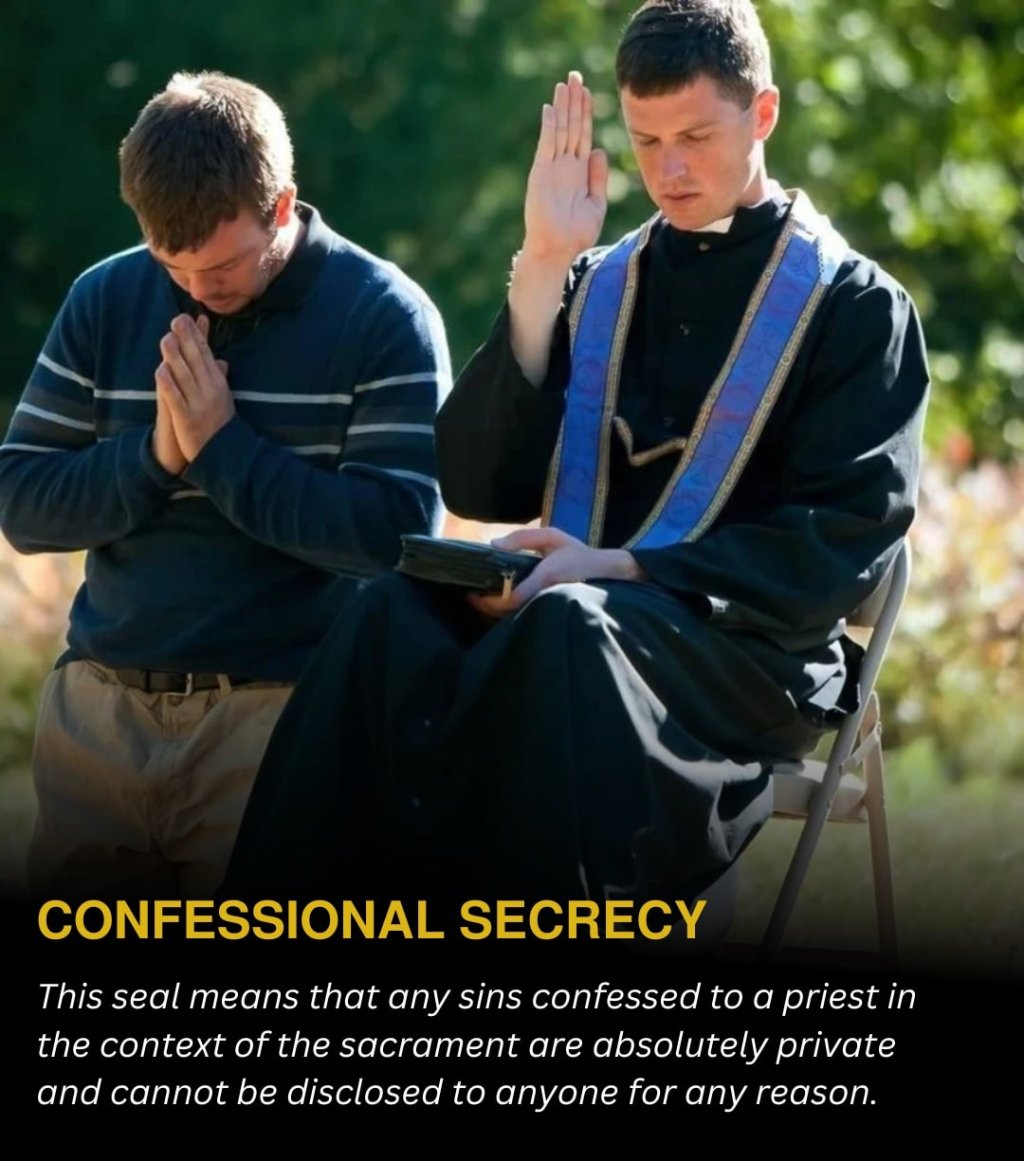
One of the greatest gifts which God has given to anybody who has committed sin is the Sacrament of Penance, sometimes called the Sacrament of Reconciliation, and popularly known as Confession. It stems from the words of Jesus Christ himself when he said to Peter: I will give you the keys of the kingdom of heaven, and whatever you bind on earth shall be bound in heaven, and whatever you loose on earth shall be loosed in heaven.Mt.16:19)
It is only God who can forgive sins; he alone can give the power to human beings to forgive sins. The Catholic Church has guided this sacrament scrupulously and has protected it from all onslaughts from all sides.
First, she makes it clear that the priest celebrating this sacrament knows that he is not acting on his own power but is rather an instrument of the mercy of God. The Catechism of the Catholic church puts it this way: When he celebrates the sacrament of Penance, the priest is fulfilling the ministry of the Good Shepherd who seeks the lost sheep, of the Good Samaritan who binds up wounds, of the Father who awaits the prodigal son and welcomes him on his return, and of the just and impartial judge whose judgment is both just and merciful. The priest is the sign and the instrument of Gods merciful love for the sinner.” (CCC. 1465)
The Church further stresses that the priest administering this Sacrament must himself pray and do penance for the person who has approached him for confession: The confessor is not the master of Gods forgiveness, but its servant. The minister of this sacrament should unite himself to the intention and charity of Christ. He should have a proven knowledge of Christian behavior, experience of human affairs, respect and sensitivity toward the one who has fallen; he must love the truth, be faithful to the Magisterium of the Church, and lead the penitent with patience toward healing and full maturity. He must pray and do penance for his penitent, entrusting him to the Lords mercy.” (CCC.1466)
 The Seal of Confession
Since the priests who hear the confessions of so many people are fully aware of their duties and are well prepared for it, as we have seen above, the confidence of the people going to confession is strengthened and they can approach the confessional as people going to the judgment seat of God with the confidence that they will obtain not only justice but above all, mercy and forgiveness. But this alone may not be enough to give the sacrament its proper position within the Catholic community as a seat of mercy where people may approach with confidence and a sense of security. Something else is needed, and that is confidentiality. It is not easy for someone to go and reveal his secret sins to another, even when that is the means of obtaining Gods mercy, no matter how good and prepared that other person is to whom he is revealing his innermost sins. The penitent needs some protection to enable him approach this sacrament without fear.
Among the measures which the Church has adopted for the much needed protection of this sacrament of divine mercy is what is called the “seal of confession”. Here again the Catechism of the Catholic Church has this to say: Given the delicacy and greatness of this ministry and the respect due to persons, the Church declares that every priest who hears confessions is bound under very severe penalties to keep absolute secrecy regarding the sins that his penitents have confessed to him. He can make no use of knowledge that confession gives him about penitents lives. This secret, which admits of no exceptions, is called the sacramental seal, because what the penitent has made known to the priest remains sealed by the sacrament. (CCC. 1467)
No one, not even the Pope, can order the priest to reveal what he has heard in confession. Whatever he hears there falls under the sacramental seal and remains sealed without exception.
The Canon Law makes it clear that: The sacramental seal is inviolable. Accordingly, it is absolutely wrong for a confessor in any way to betray the penitent, for any reason whatsoever, whether by word or in any other fashion. (CIC. 983 §1) Further, it says that The confessor is wholly forbidden to use knowledge acquired in confession to the detriment of the penitent, even when all danger of disclosure is excluded ( CIC. 984 §1)
This is not just an innovation in the life of the Church. As far back as 1215, the Fourth Lateran Council came up with what can be regarded as one of the first comprehensive teachings concerning the Sacrament of Penance which shows that the Churchs position in this matter has a long-standing credibility. It was this council that stipulated the need for the yearly sacramental confession of sins and reception of the Holy Eucharist, and imposed disciplinary measures upon priest confessors.
On the seal of confession it decreed as follows: Let the confessor take absolute care not to betray the sinner through word or sign, or in any other way whatsoever. In case he needs expert advice he may seek it without, however, in any way indicating the person. For we decree that he who presumes to reveal a sin which has been manifested to him in the tribunal of penance is not only to be deposed from the priestly office, but also to be consigned to a closed monastery for perpetual penance.
For centuries, the Church has tenaciously maintained the inviolability of this secrecy and has defended it at all costs. There is no danger that she will soften it. Yet in recent times, some governments have been making attempt to wade into this through an unholy road, refusing to recognize that such a road will only lead them into a blind alley.
Two States in Australia, had in 2019 passed the bills that would compel priests to report any issue of child abuse which they hear in confession. These were the states of Victoria and Tasmania. The Australian Bishops were quick to tell them that this was a no-go-area.
In California, USA, there arose a bill seeking to remove the confessional seal. It was however withdrawn following protests by Catholics who were joined by some other advocates of religious freedom who were not Catholic.
In any case, even though the doctors and some other professionals were, in a situation of immediate threat of harm bound to break confidentiality as ruled by the US Supreme Court in 1818, the confessions of the Catholic Church has been safeguarded.
✍ 𝗠𝘀𝗴𝗿. 𝗛𝘆𝗽𝗼𝗹𝗶𝘁𝗲 𝗔𝗱𝗶𝗴𝘄𝗲.
 Nelson MCBS
Leave a comment