

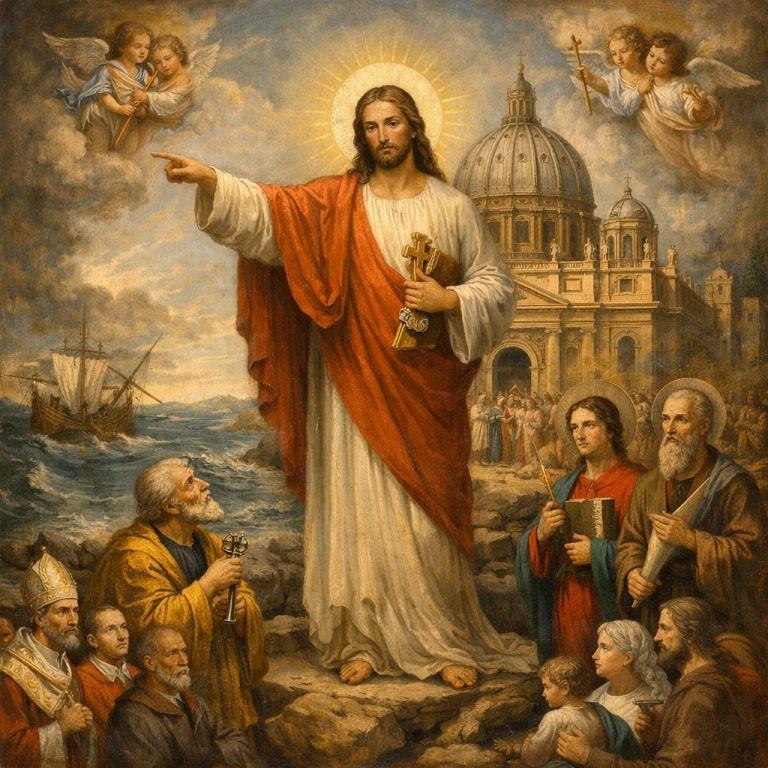
In a world filled with thousands of competing Christian groups, many sincere believers ask: Did Christ truly intend for His followers to be divided? When we return to Sacred Scripture, Apostolic teaching, and the witness of the early centuries, one truth becomes clear — Our Lord Jesus Christ founded one visible, united Church, not a collection of denominations built on private interpretation.
𝟭. 𝗧𝗵𝗲 𝗜𝗻𝘁𝗲𝗻𝘁𝗶𝗼𝗻 𝗼𝗳 𝗖𝗵𝗿𝗶𝘀𝘁: 𝗨𝗻𝗶𝘁𝘆, 𝗡𝗼𝘁 𝗙𝗿𝗮𝗴𝗺𝗲𝗻𝘁𝗮𝘁𝗶𝗼𝗻
When Christ spoke of His Church, He never used plural language. He did not say, “I will build my churches,” but “I will build My Church.” This singular expression reveals both identity and mission. The Church was meant to be:
One in faith
One in worship
One in authority
One in sacramental life
Before His Passion, Our Lord prayed earnestly that His followers “may be one.” Unity was not an optional ideal — it was part of the Church’s very nature. Division contradicts the visible witness Christ desired for the world.
𝟮. 𝗧𝗵𝗲 𝗔𝗽𝗼𝘀𝘁𝗼𝗹𝗶𝗰 𝗙𝗼𝘂𝗻𝗱𝗮𝘁𝗶𝗼𝗻: 𝗔𝘂𝘁𝗵𝗼𝗿𝗶𝘁𝘆 𝗚𝗶𝘃𝗲𝗻, 𝗡𝗼𝘁 𝗜𝗻𝘃𝗲𝗻𝘁𝗲𝗱
Christ did not leave behind a book alone; He established Apostles with real authority to teach, sanctify, and govern. This living authority ensured that the Gospel would remain intact as it spread across cultures and generations.
The earliest Christians did not gather around competing interpretations. They gathered around the Apostles and their successors. When disputes arose, they did not form new communities — they sought judgment from the Church’s shepherds. This apostolic structure safeguarded unity long before the New Testament was fully compiled.
𝟯. 𝗖𝗵𝗿𝗶𝘀𝘁𝗶𝗮𝗻𝗶𝘁𝘆 𝗕𝗲𝗳𝗼𝗿𝗲 𝗗𝗲𝗻𝗼𝗺𝗶𝗻𝗮𝘁𝗶𝗼𝗻𝘀
For many centuries, Christians across different lands recognized the same core faith, the same sacramental worship, and the same hierarchical structure. While heresies emerged from time to time, they were understood as departures from the Church — not as equally valid alternatives.
The idea of countless independent denominations, each claiming equal authority, is a relatively recent phenomenon in Christian history. It reflects the rise of private interpretation rather than the original apostolic model.
𝟰. 𝗧𝗵𝗲 𝗣𝗿𝗼𝗯𝗹𝗲𝗺 𝗪𝗶𝘁𝗵 𝗗𝗲𝗻𝗼𝗺𝗶𝗻𝗮𝘁𝗶𝗼𝗻𝗮𝗹𝗶𝘀𝗺
Denominational Christianity often assumes that doctrinal differences are secondary. Yet Scripture presents truth as something objective and entrusted to the Church. When each believer or group becomes its own final authority, unity inevitably fractures.
This fragmentation leads to:
Conflicting teachings on salvation, sacraments, and morality
Endless debates without a final voice of resolution
Confusion among sincere seekers of Christ
If Christ is the Author of truth, then contradictory doctrines cannot all be equally correct. The existence of division challenges Christians to ask where the fullness of apostolic continuity remains.
𝟱. 𝗩𝗶𝘀𝗶𝗯𝗹𝗲 𝗨𝗻𝗶𝘁𝘆 𝗮𝘀 𝗮 𝗪𝗶𝘁𝗻𝗲𝘀𝘀 𝘁𝗼 𝘁𝗵𝗲 𝗪𝗼𝗿𝗹𝗱
Christ declared that the world would believe through the visible unity of His disciples. A divided Christianity weakens evangelization because it presents competing versions of the Gospel. The early Church grew not through fragmentation but through a shared faith expressed across nations and languages.
Unity does not erase diversity of culture or spirituality — rather, it binds them together under one faith. Just as the human body has many members but remains one organism, so the Church embraces variety while preserving doctrinal harmony.
𝟲. 𝗧𝗵𝗲 𝗥𝗼𝗹𝗲 𝗼𝗳 𝗦𝗮𝗰𝗿𝗲𝗱 𝗧𝗿𝗮𝗱𝗶𝘁𝗶𝗼𝗻
Sacred Tradition ensures continuity with the teaching of the Apostles. It prevents Christianity from being reinvented by each generation. Without Tradition, Scripture can be interpreted in countless ways, leading to the very divisions we see today.
Tradition is not a human invention competing with God’s Word; it is the living transmission of that Word within the Church Christ established.
𝟳. 𝗔 𝗖𝗮𝗹𝗹 𝘁𝗼 𝗥𝗲𝘁𝘂𝗿𝗻 𝘁𝗼 𝗔𝗽𝗼𝘀𝘁𝗼𝗹𝗶𝗰 𝗨𝗻𝗶𝘁𝘆
To say that Christ founded one Church is not a condemnation of individuals outside visible unity, many of whom sincerely love God. Rather, it is an invitation — a call to rediscover the fullness of the faith as it was lived from the beginning.
The goal is not triumph over others but fidelity to Christ’s intention. Authentic unity is not built by lowering truth but by returning together to the apostolic foundation.
𝗖𝗼𝗻𝗰𝗹𝘂𝘀𝗶𝗼𝗻: 𝗢𝗻𝗲 𝗟𝗼𝗿𝗱, 𝗢𝗻𝗲 𝗙𝗮𝗶𝘁𝗵, 𝗢𝗻𝗲 𝗖𝗵𝘂𝗿𝗰𝗵
Christ did not leave His followers to wander through endless interpretations. He established a Church to guard truth, administer grace, and lead souls to holiness.
Denominations may arise from history and human disagreement, but the Church founded by Christ remains a sign of unity in a divided world — a living witness that truth is not fragmented, and holiness is not optional.
𝘼𝙙 𝙈𝙖𝙟𝙤𝙧𝙚𝙢 𝘿𝙚𝙞 𝙂𝙡𝙤𝙧𝙞𝙖𝙢 
 Nelson MCBS
Leave a comment