

𝗛𝗘𝗥𝗘𝗦𝗬 𝗩𝗦 𝗗𝗘𝗩𝗘𝗟𝗢𝗣𝗠𝗘𝗡𝗧 𝗢𝗙 𝗗𝗢𝗖𝗧𝗥𝗜𝗡𝗘
Throughout the history of Christianity, one of the greatest challenges has been discerning the difference between authentic growth in understanding and dangerous deviation from the faith. As centuries pass, the Church explains doctrines more clearly, uses new language, and responds to new questions. Some observers mistake this for change or contradiction, while others reject any development at all.
This raises an essential question: How can doctrine develop without becoming heresy?
To answer this, we must understand the difference between faithful development and distortion of the truth entrusted by Christ.
𝟭. 𝗪𝗵𝗮𝘁 𝗜𝘀 𝗛𝗲𝗿𝗲𝘀𝘆?
Heresy is not simply disagreement or questioning. In the Christian tradition, heresy refers to the persistent rejection or distortion of truths that belong to the apostolic faith. Heresies often begin with partial truths taken out of context, or with interpretations that emphasize one aspect of revelation while neglecting others.
Historically, heresies have arisen when individuals or groups:
separated Scripture from the living Tradition of the Church
rejected apostolic authority
or introduced teachings that contradicted what Christians had always believed.
Heresy does not always appear openly hostile to Christianity. Sometimes it claims to “simplify” or “purify” the faith, yet ends up fragmenting unity and obscuring essential truths.
𝟮. 𝗪𝗵𝗮𝘁 𝗜𝘀 𝗗𝗲𝘃𝗲𝗹𝗼𝗽𝗺𝗲𝗻𝘁 𝗼𝗳 𝗗𝗼𝗰𝘁𝗿𝗶𝗻𝗲?
Development of doctrine does not mean inventing new beliefs. Instead, it refers to the Church’s deeper understanding and clearer expression of truths already present in divine revelation.
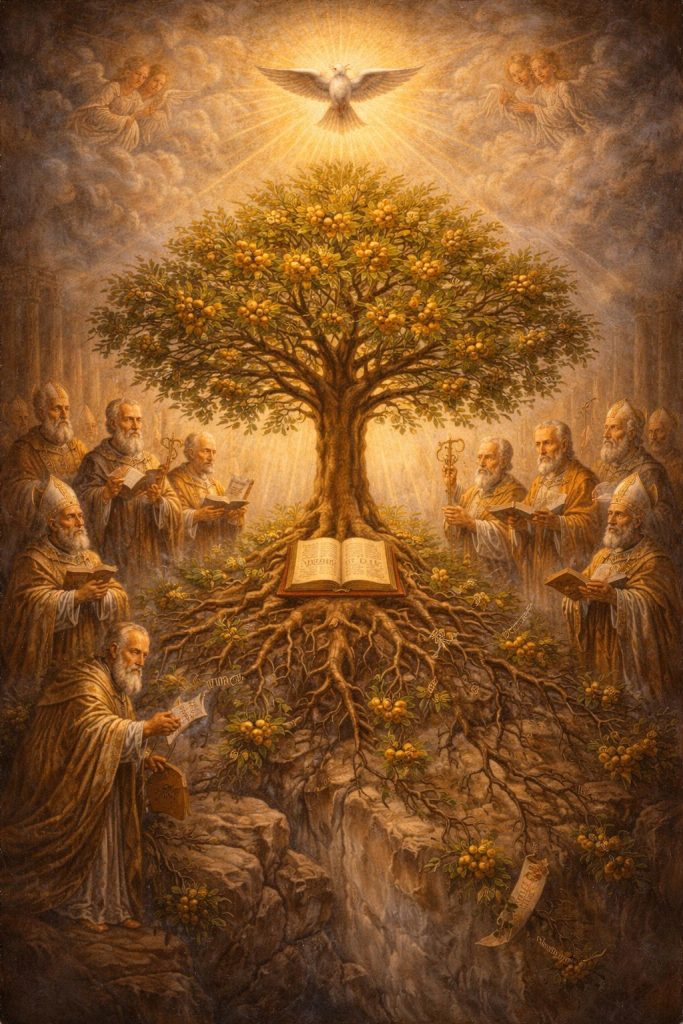
Think of a seed growing into a tree. The tree looks different from the seed, yet its identity remains the same. In a similar way, doctrine develops when the Church:
clarifies language to respond to new challenges
deepens theological reflection
and articulates more precisely what was believed from the beginning.
Development preserves continuity. It does not replace the original faith but unfolds its richness over time.
𝟯. 𝗪𝗵𝘆 𝗗𝗲𝘃𝗲𝗹𝗼𝗽𝗺𝗲𝗻𝘁 𝗜𝘀 𝗡𝗲𝗰𝗲𝘀𝘀𝗮𝗿𝘆
The Apostles handed down the fullness of revelation, but not every question was addressed explicitly in the earliest centuries. As Christianity encountered new cultures, philosophies, and controversies, the Church needed to express ancient truths in ways that answered new misunderstandings.
For example:
Early Christians believed in Christ’s divinity from the start, yet later councils used precise terminology to defend this belief against errors.
The Trinity was always worshipped, but theological language developed gradually to protect the mystery from distortion.
Development, therefore, is a sign of a living faith — not a departure from it.
𝟰. 𝗛𝗼𝘄 𝘁𝗵𝗲 𝗖𝗵𝘂𝗿𝗰𝗵 𝗗𝗶𝘀𝗰𝗲𝗿𝗻𝘀 𝘁𝗵𝗲 𝗗𝗶𝗳𝗳𝗲𝗿𝗲𝗻𝗰𝗲
Distinguishing authentic development from heresy requires discernment rooted in apostolic continuity. The Church evaluates new teachings by asking:
Does this deepen what has always been believed?
Does it remain consistent with Scripture and Tradition?
Does it preserve unity rather than create fragmentation?
Councils and the teaching authority of the Church play a crucial role in this process. Their task is not to invent doctrine but to guard the deposit of faith and ensure that growth remains faithful to its origins.
𝟱. 𝗦𝗶𝗴𝗻𝘀 𝗼𝗳 𝗔𝘂𝘁𝗵𝗲𝗻𝘁𝗶𝗰 𝗗𝗲𝘃𝗲𝗹𝗼𝗽𝗺𝗲𝗻𝘁
Authentic development often shows certain characteristics:
Continuity: It remains connected to earlier teachings.
Clarity: It resolves confusion rather than creating it.
Universality: It resonates with the faith of the whole Church, not just a small group.
Fidelity: It draws believers closer to Christ and the sacraments.
When doctrine develops in this way, it strengthens unity and deepens spiritual life.
𝟲. 𝗦𝗶𝗴𝗻𝘀 𝗼𝗳 𝗛𝗲𝗿𝗲𝘀𝘆
By contrast, heresy often reveals itself through:
rejection of apostolic authority
selective use of Scripture
isolation from the wider Christian tradition
and the creation of divisions that weaken communion.
Heresies frequently claim to return to a “pure” Christianity, yet they break continuity with the faith received from the Apostles.
𝟳. 𝗚𝗿𝗼𝘄𝘁𝗵 𝗪𝗶𝘁𝗵𝗼𝘂𝘁 𝗖𝗵𝗮𝗻𝗴𝗲 𝗼𝗳 𝗘𝘀𝘀𝗲𝗻𝗰𝗲
A helpful image is that of a melody. Over time, musicians may compose harmonies or richer arrangements, yet the original melody remains recognizable. If the melody itself is replaced, it is no longer the same song.
In the same way, development enriches doctrine without altering its essence. The Church grows in understanding while remaining faithful to the same Gospel proclaimed from the beginning.
𝗖𝗼𝗻𝗰𝗹𝘂𝘀𝗶𝗼𝗻: 𝗙𝗶𝗱𝗲𝗹𝗶𝘁𝘆 𝗧𝗵𝗿𝗼𝘂𝗴𝗵 𝗧𝗶𝗺𝗲
The difference between heresy and development lies in fidelity. Heresy abandons continuity; development deepens it. One fractures unity; the other strengthens it.
Christ did not leave His Church frozen in history, nor did He allow it to drift into endless innovation. Instead, He entrusted the faith to a living community guided by the Holy Ghost — capable of growing in understanding while remaining rooted in apostolic truth.
In a world where new ideas appear constantly, the Church’s task remains the same: to discern carefully, to preserve faithfully, and to lead souls toward the fullness of the truth that never changes.
𝙁𝙤𝙧 𝙩𝙝𝙚 𝙂𝙧𝙚𝙖𝙩𝙚𝙧 𝙂𝙡𝙤𝙧𝙮 𝙤𝙛 𝙂𝙤𝙙 
 Nelson MCBS
Leave a comment