

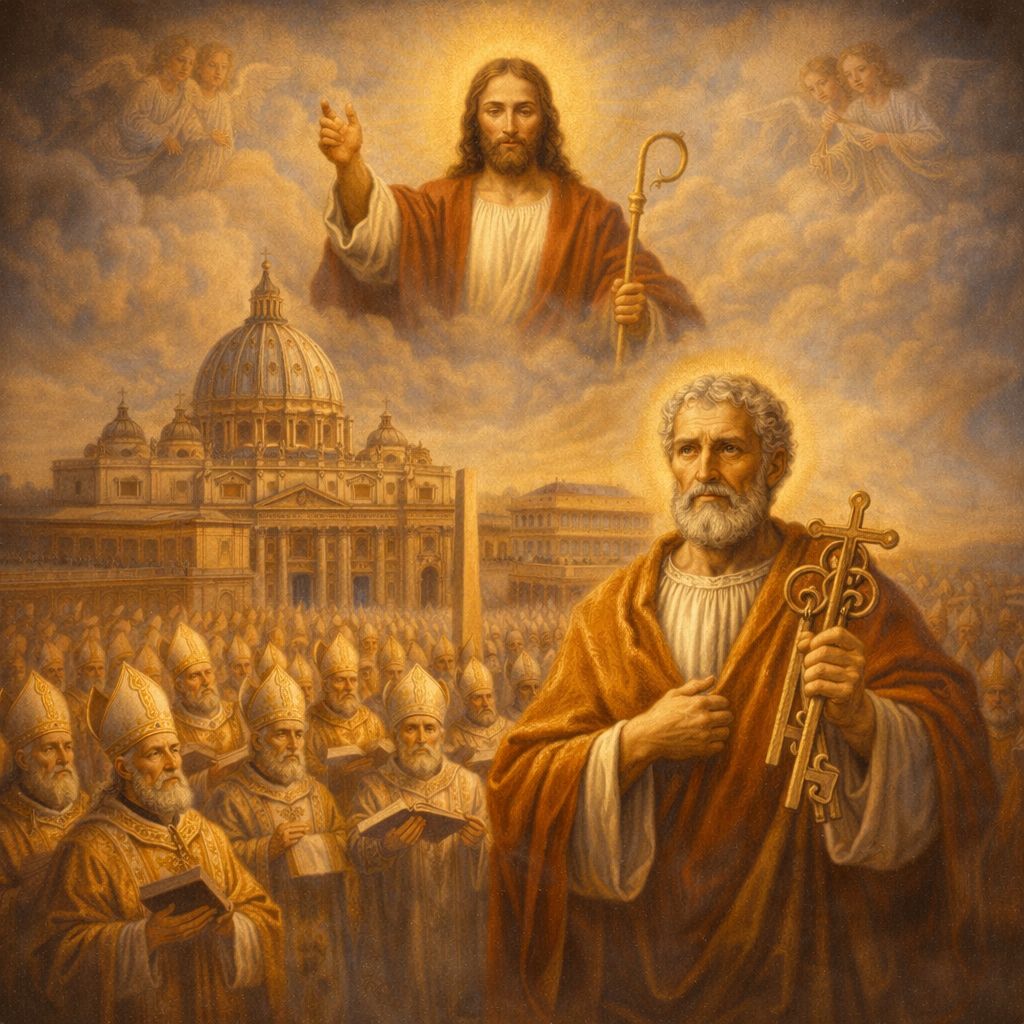
Few subjects in Christian history provoke as much misunderstanding as the role of Rome. For some, the Bishop of Rome is seen primarily as a symbol of authority or control; for others, as a historical figure disconnected from the life of the early Church. Yet when we examine Scripture, Tradition, and the witness of the first centuries, a deeper picture emerges. The role of Rome was never meant to dominate the Church but to serve unity, safeguard doctrine, and strengthen communion among believers.
To understand this role correctly is to move beyond caricatures and rediscover a ministry rooted in service rather than power.
𝟭. 𝗧𝗵𝗲 𝗙𝗼𝘂𝗻𝗱𝗮𝘁𝗶𝗼𝗻𝘀 𝗼𝗳 𝗨𝗻𝗶𝘁𝘆 𝗶𝗻 𝘁𝗵𝗲 𝗔𝗽𝗼𝘀𝘁𝗼𝗹𝗶𝗰 𝗔𝗴𝗲
From the earliest Christian communities, unity was not left to chance. The Apostles guided the Church together, yet certain leaders exercised particular responsibilities to maintain harmony among believers. Among these, the Church of Rome held a unique place due to its connection with the apostolic witness of Peter and Paul.
This prominence was not initially political but pastoral. Rome became a reference point when disputes threatened unity, not because of worldly influence but because of its continuity with apostolic teaching.
The goal was always to preserve the one faith handed down from Christ.
𝟮. 𝗔𝘂𝘁𝗵𝗼𝗿𝗶𝘁𝘆 𝗮𝘀 𝗮 𝗠𝗶𝗻𝗶𝘀𝘁𝗿𝘆 𝗼𝗳 𝗦𝗲𝗿𝘃𝗶𝗰𝗲
In Christian understanding, authority is never meant to resemble domination. Christ Himself taught that true leadership is expressed through service — a shepherd guiding and protecting the flock.
The role associated with Rome developed within this framework. It existed to:
encourage unity among diverse communities
provide clarity when controversies arose
and help preserve continuity with apostolic tradition.
Rather than replacing the authority of local bishops or councils, this ministry functioned as a point of reference — a voice called to strengthen communion.
𝟯. 𝗧𝗵𝗲 𝗪𝗶𝘁𝗻𝗲𝘀𝘀 𝗼𝗳 𝗘𝗮𝗿𝗹𝘆 𝗖𝗵𝗿𝗶𝘀𝘁𝗶𝗮𝗻 𝗣𝗿𝗮𝗰𝘁𝗶𝗰𝗲
Historical accounts show that early Christians often looked to Rome during moments of disagreement. Appeals for guidance were not always about enforcing power but about maintaining unity with the wider Church.
This relationship reflected a shared understanding: unity requires a visible center capable of confirming the faith. The Church did not see this role as a threat to local communities but as a safeguard against fragmentation.
Over time, this ministry helped the Church navigate theological crises while remaining anchored to apostolic roots.
𝟰. 𝗠𝗶𝘀𝘂𝗻𝗱𝗲𝗿𝘀𝘁𝗮𝗻𝗱𝗶𝗻𝗴𝘀 𝗔𝗯𝗼𝘂𝘁 𝗣𝗼𝘄𝗲𝗿
Many modern critiques arise from viewing the role of Rome through political or historical lenses rather than spiritual ones. While human weaknesses and historical tensions have existed, the theological purpose of this ministry has always been tied to service.
When authority is misunderstood as domination, unity appears oppressive. Yet when seen as a form of pastoral care, it becomes a sign of Christ’s promise to guide His Church through history.
The distinction between service and control is essential. Authentic authority seeks to protect truth and foster communion, not to replace the conscience of believers.
𝟱. 𝗥𝗼𝗺𝗲 𝗮𝗻𝗱 𝘁𝗵𝗲 𝗖𝗼𝘂𝗻𝗰𝗶𝗹𝘀: 𝗪𝗼𝗿𝗸𝗶𝗻𝗴 𝗧𝗼𝗴𝗲𝘁𝗵𝗲𝗿
The history of councils shows that unity was never maintained by one voice alone. Bishops gathered collectively, discerning doctrine through prayer and dialogue. The role of Rome complemented these gatherings, helping ensure continuity with apostolic teaching.
This collaboration reveals that unity in the Church arises from communion rather than competition. Authority functions best when exercised in harmony with the broader body of believers.
𝟲. 𝗔 𝗠𝗶𝗻𝗶𝘀𝘁𝗿𝘆 𝗥𝗼𝗼𝘁𝗲𝗱 𝗶𝗻 𝗖𝗼𝗻𝘁𝗶𝗻𝘂𝗶𝘁𝘆
Throughout centuries of change, the role of Rome has remained connected to the same mission: preserving the faith and strengthening unity. While expressions of authority have evolved in response to historical circumstances, the underlying purpose has remained constant.
This continuity offers reassurance in times of confusion. It reminds believers that the Church is not guided solely by shifting opinions but by a living tradition rooted in Christ.
𝟳. 𝗨𝗻𝗶𝘁𝘆 𝗪𝗶𝘁𝗵𝗼𝘂𝘁 𝗨𝗻𝗶𝗳𝗼𝗿𝗺𝗶𝘁𝘆
Recognizing Rome as a servant of unity does not eliminate diversity within the Church. Different rites, cultures, and spiritual traditions have flourished while remaining united in essential doctrine.
This balance demonstrates that unity does not require erasing legitimate differences. Instead, it provides a framework where diversity can exist without sacrificing the integrity of the faith.
𝗖𝗼𝗻𝗰𝗹𝘂𝘀𝗶𝗼𝗻: 𝗔 𝗦𝗵𝗲𝗽𝗵𝗲𝗿𝗱𝗶𝗻𝗴 𝗣𝗿𝗲𝘀𝗲𝗻𝗰𝗲
The role of Rome in Christian history cannot be reduced to political authority or institutional power. At its deepest level, it represents a ministry of service — a call to strengthen unity, preserve doctrine, and guide the faithful toward holiness.
When understood in this light, Rome stands not as a master seeking control but as a servant entrusted with a difficult yet vital mission: helping the Church remain one, even amid the challenges of history.
In a world where division often seems inevitable, this vision reminds us that unity is not achieved through domination but through faithful service rooted in Christ’s promise to remain with His Church always.
𝙁𝙤𝙧 𝙩𝙝𝙚 𝙜𝙧𝙚𝙖𝙩𝙚𝙧 𝙂𝙡𝙤𝙧𝙮 𝙤𝙛 𝙂𝙤𝙙 
 Nelson MCBS
Leave a comment