

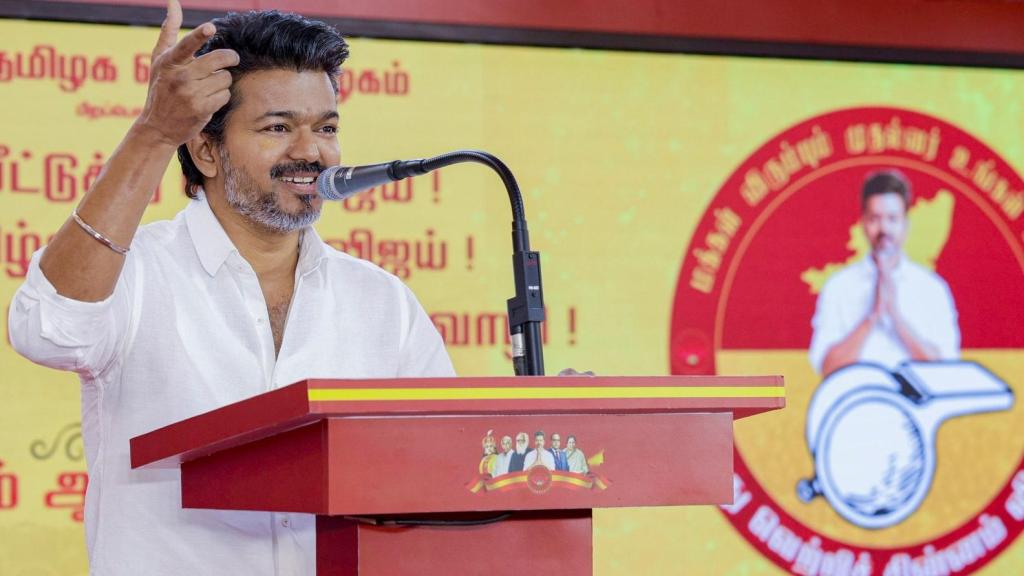
The Inspiring Life of C. Joseph Vijay
From “Thalapathy” of Cinema to a Transformative Political Leader
Among the greatest stars ever produced by Indian cinema, C. Joseph Vijay occupies a unique and unforgettable place. Known affectionately by millions as “Thalapathy” (“Leader”), Vijay rose from a child actor in Tamil cinema to become one of the most influential entertainers in South India. Over the decades, he built not merely a film career, but a cultural movement rooted in mass appeal, emotional storytelling, philanthropy, and public service.
His journey eventually moved beyond cinema into politics, where he emerged as the founder of the political party Tamilaga Vettri Kazhagam (TVK). His entry into politics marked one of the most dramatic transitions in contemporary Indian public life. In 2026, Vijay’s political ascent reached a historic milestone when he became the Chief Minister of Tamil Nadu after his party’s breakthrough electoral performance.
This biography explores the life, struggles, achievements, cinematic legacy, humanitarian work, political journey, and enduring influence of C. Joseph Vijay.
Early Life and Family Background
C. Joseph Vijay was born on June 22, 1974, in Chennai (then Madras), Tamil Nadu, India. His full name is Joseph Vijay Chandrasekhar. He was born into a family deeply connected to the world of cinema and the arts. His father, S. A. Chandrasekhar, is a well-known film director, writer, and producer, while his mother, Shoba Chandrasekhar, is a singer and storyteller.
Growing up in an artistic atmosphere naturally influenced Vijay’s interests and personality. Yet, despite his famous background, his rise was not effortless. Like many children of cinema families, he faced criticism and skepticism early in his career. Many believed he entered films only because of his father’s influence. Over time, however, Vijay proved himself through discipline, persistence, and an extraordinary connection with audiences.
Vijay also experienced tragedy at a young age. His sister, Vidhya, died when she was only two years old. This deeply affected the family and left a lasting emotional impact on Vijay himself. Many observers believe this personal sorrow contributed to the quiet and reserved personality he displayed during his early years.
He studied at Fathima School in Kodambakkam and later at Balalok School in Virugambakkam. He briefly attended Loyola College to study Visual Communication before leaving academics to pursue acting full-time.
Entry into Cinema as a Child Actor
Vijay first appeared in films as a child artist under the direction of his father. His earliest screen appearances came during the 1980s in movies such as Vetri and other productions directed by S. A. Chandrasekhar.
These early experiences helped him understand filmmaking from a young age. He observed actors, directors, cinematographers, and technicians closely. Unlike many child actors who disappear after brief success, Vijay steadily prepared himself for a future leading role in Tamil cinema.
In 1992, he made his debut as a lead actor in the film Naalaiya Theerpu. Though the film was not commercially successful, it marked the beginning of a remarkable cinematic journey. Critics at the time were uncertain about his future, and some even questioned whether he possessed the charisma needed to become a hero. However, Vijay refused to give up.
Struggles and Gradual Rise to Stardom
The early phase of Vijay’s career was marked by experimentation and steady growth rather than instant superstardom. He acted in several romantic and family-oriented films during the 1990s, including:
- Rasigan
- Deva
- Love Today
- Selva
- Poove Unakkaga
Among these, Poove Unakkaga became a turning point in his career. The film portrayed themes of sacrifice, love, and communal harmony, helping Vijay gain recognition as a sensitive and emotionally expressive actor.
The audience began to connect deeply with his performances. Unlike some stars who depended mainly on action or glamour, Vijay’s appeal lay in his relatability. He often portrayed ordinary young men struggling against injustice, poverty, corruption, or social inequality.
During the late 1990s and early 2000s, Vijay transformed into one of Tamil cinema’s most bankable heroes through films such as:
- Ghilli
- Thirumalai
- Friends
- Thulladha Manamum Thullum
- Kushi
- Priyamaanavale
These films established him as a major commercial star.
The Birth of “Thalapathy”
Vijay’s fans gradually began referring to him as “Thalapathy,” meaning “Commander” or “Leader.” Over time, this title became inseparable from his identity. Massive fan clubs emerged across Tamil Nadu and beyond.
His fan base was unlike ordinary cinema fandom. Fans celebrated film releases with processions, music, banners, milk abhishekams (ritual pouring of milk over giant cutouts), charitable activities, and public service programs.
Importantly, Vijay encouraged his fans to participate in welfare activities rather than mere hero worship. This transformed his fan network into a socially active movement.

Dominance in Tamil Cinema
From the mid-2000s onward, Vijay became one of the undisputed kings of Tamil cinema. His films routinely broke box-office records and achieved enormous popularity internationally among Tamil-speaking audiences.
Some of his most influential films include:
Ghilli (2004)
A massive commercial success that cemented Vijay’s action-hero image.
Pokkiri (2007)
A stylish action thriller that became a cult favorite.
Thuppakki (2012)
A patriotic thriller directed by A. R. Murugadoss which elevated Vijay’s national popularity.
Kaththi (2014)
A socially conscious film addressing farmer issues and corporate exploitation.
Mersal (2017)
A blockbuster film that generated national discussion because of its political dialogues and criticism of certain public policies.
Sarkar (2018)
A politically charged film that many saw as reflecting Vijay’s future political ambitions.
Bigil (2019)
A sports drama focusing on women’s empowerment.
Master (2021)
A major commercial success that further strengthened his pan-Indian appeal.
Leo (2023)
An action thriller that became one of the highest-grossing Tamil films ever.
Vijay’s films frequently blended entertainment with social commentary. Themes such as corruption, education, healthcare, unemployment, and political accountability appeared repeatedly in his movies.
Acting Style and Popular Appeal
Vijay’s success cannot be explained merely through box-office statistics. His appeal cuts across age groups, social classes, and regions.
Several factors contributed to his popularity:
- Strong screen presence
- Emotional acting
- Dance skills
- Comic timing
- Relatable dialogue delivery
- Inspirational themes
- Family-friendly image
He also became famous for energetic dance performances and memorable songs. His movies often included motivational dialogues that resonated with youth.
Over time, Vijay evolved from a romantic hero into a socially conscious mass leader figure on screen.
Personal Life
C. Joseph Vijay married Sangeetha Sornalingam in 1999. Sangeetha, a Sri Lankan Tamil living in the United Kingdom, reportedly met Vijay as an admirer of his films before their relationship developed into marriage.
The couple has two children:
- Jason Sanjay
- Divya Saasha
Despite enormous fame, Vijay has generally maintained a private family life. He rarely discusses personal matters publicly and prefers to keep his family away from excessive media attention.
Philanthropy and Social Service
One of the most admired aspects of Vijay’s life is his commitment to humanitarian work.
His fan organizations frequently engage in:
- Blood donation drives
- Educational assistance
- Medical camps
- Food distribution
- Disaster relief
- Welfare activities for poor families
The transformation of his fan clubs into welfare associations played a major role in shaping his public image.
Vijay himself has financially supported students, poor families, and victims of natural disasters. During difficult times in Tamil Nadu, including floods and health emergencies, his organizations were active in relief efforts.
This charitable culture distinguished Vijay from many other film stars and gradually prepared the foundation for his future political journey.
Political Awakening
For years, observers speculated that Vijay would eventually enter politics. Tamil Nadu has a long history of film stars becoming political leaders, including:
- M. G. Ramachandran
- J. Jayalalithaa
- M. Karunanidhi
Many of Vijay’s films contained political undertones, especially Sarkar and Mersal. His speeches increasingly addressed social justice, corruption, education, and governance.
In February 2024, Vijay officially launched his political party: Tamilaga Vettri Kazhagam (TVK).
He announced that after completing his final film commitments, he would dedicate himself fully to politics.
The announcement created enormous excitement among supporters and dramatically changed Tamil Nadu’s political landscape.
Formation of Tamilaga Vettri Kazhagam (TVK)
TVK positioned itself as a people-centered movement advocating:
- Social justice
- Equality
- Anti-corruption measures
- Secular governance
- Youth empowerment
- Welfare policies
Vijay’s political messaging emphasized dignity, transparency, and change. He portrayed himself as a servant of the people rather than a traditional politician.
The party rapidly gained support among:
- Young voters
- Women
- First-time voters
- Middle-class citizens
- Vijay’s extensive fan network
Political analysts noted that Vijay’s cinematic popularity enabled TVK to develop statewide influence far more quickly than most new political parties.
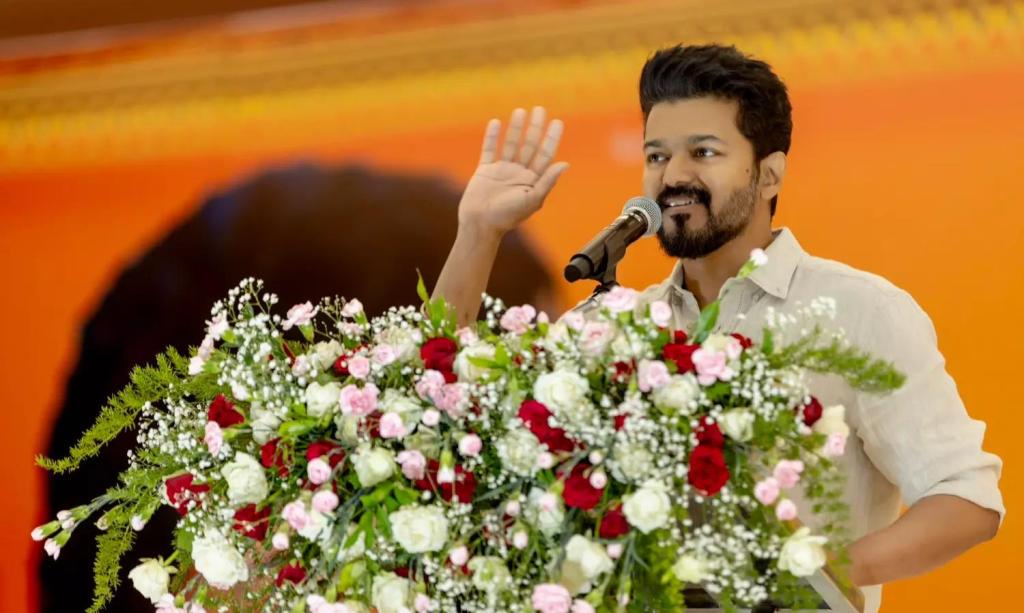
2026 Tamil Nadu Elections
The 2026 Tamil Nadu Assembly Election became one of the most closely watched elections in India.
C. Joseph Vijay campaigned aggressively across the state, presenting himself as an alternative to the long-standing dominance of the DMK and AIADMK.
TVK achieved a historic breakthrough by winning 108 seats, emerging as the single largest party in the Assembly.
After coalition negotiations and political developments, Vijay was sworn in as the Chief Minister of Tamil Nadu in May 2026.
This marked a dramatic transformation from film superstar to head of government.
Governance and Early Political Decisions
Soon after taking office, Vijay announced several welfare-focused measures, including:
- Free electricity support
- Anti-drug initiatives
- Women’s safety programs
- Administrative reforms
These early actions signaled his desire to present a people-oriented government focused on social welfare and public accountability.
Supporters viewed his rise as the beginning of a new political era in Tamil Nadu, while critics questioned whether cinematic charisma could successfully translate into long-term governance.
Regardless of opinion, Vijay undeniably reshaped the political conversation in the state.
Criticism and Controversies
Like every major public figure, Vijay has also faced criticism and controversy.
Some critics questioned:
- His political experience
- The practicality of his promises
- The relationship between cinema and politics
- Whether fan devotion could replace grassroots political work
Online discussions reflected both admiration and skepticism regarding his political transition.
Others argued that his welfare activities and years of public engagement had already laid a meaningful social foundation for politics.
Vijay has generally responded to criticism through restraint rather than confrontation.
Legacy in Indian Cinema
Even before his political success, Vijay had already secured a permanent place in Indian cinema history.
His legacy includes:
- One of Tamil cinema’s highest-grossing careers
- Massive international fan following
- Influence on youth culture
- Memorable songs and dialogues
- Socially themed commercial cinema
- Transformation of fan clubs into welfare organizations
He is widely regarded as one of the defining stars of modern Tamil cinema.
Spiritual and Human Dimensions
Though celebrated as a superstar, Vijay is often described by colleagues as disciplined, reserved, and deeply emotional. He has repeatedly emphasized compassion, education, humility, and service in his speeches.
His life story also reflects perseverance. He endured early criticism, worked steadily through failures, and gradually became one of India’s most influential personalities.
For many admirers, Vijay symbolizes:
- Hope for social change
- Hard work and determination
- Loyalty to the people
- Courage to reinvent oneself
Conclusion
C. Joseph Vijay is far more than a film actor. He represents a remarkable cultural phenomenon that spans cinema, philanthropy, mass leadership, and politics.
From a child actor struggling for recognition to becoming “Thalapathy” of millions, Vijay’s journey reflects persistence, reinvention, and emotional connection with ordinary people. His transition from the silver screen to public leadership marks one of the most fascinating chapters in contemporary Indian history.
Whether remembered primarily as a legendary actor, a humanitarian, or a transformative political leader, Vijay has undeniably left an unforgettable imprint on Tamil society and Indian public life.
His story continues to inspire millions who believe that determination, discipline, and service can transform not only an individual life, but also an entire generation.
 Nelson MCBS
Leave a comment