

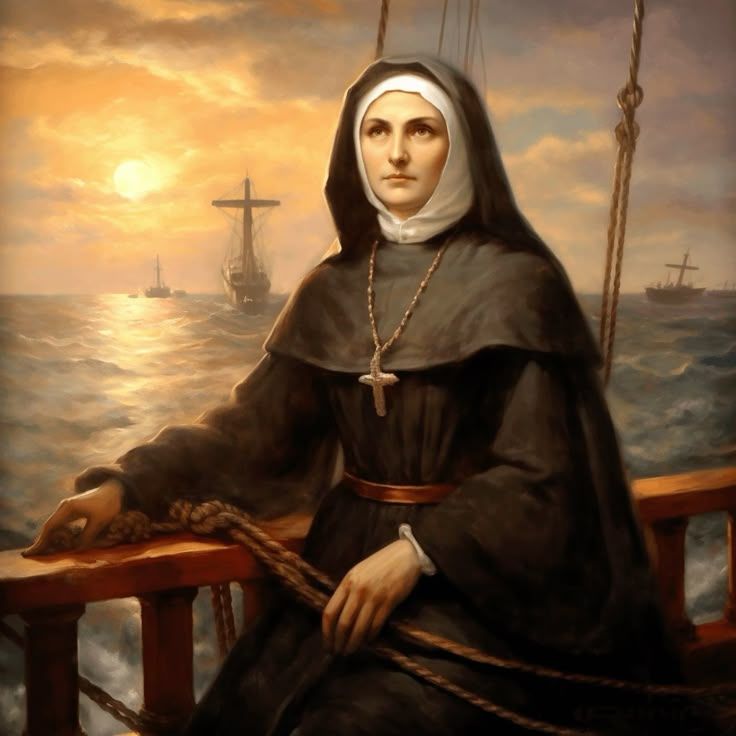
Saint Rose Philippine Duchesne stands as one of the most compelling figures in American Catholic history—a woman whose courage, endurance, and devotion shaped the spiritual landscape of a young nation. Born in Grenoble, France, in 1769, she became a Religious of the Sacred Heart of Jesus and later an American pioneer, missionary, educator, and saint. Her life of formidable perseverance earned her the beloved nickname “the woman who prays always.” Yet her story encompasses far more: resilience in the face of political turmoil, dedication to education on the frontier, and a burning desire to serve Indigenous communities.
Her journey from the foothills of the French Alps to the rugged woods of the American Midwest reveals not only the depth of her faith but also the extraordinary impact one person can have with a spirit anchored in conviction and love.
Early Life in Revolutionary France
Rose Philippine Duchesne grew up in a France soon to be swept into revolution. From a young age, she felt what she described as a “singular attraction” to prayer and religious life. Against the expectations of her influential family, she entered the Visitation convent of Sainte-Marie-d’en-Haut in Grenoble at age 18.
The French Revolution abruptly interrupted her path. Religious houses were suppressed, church properties confiscated, and priests and religious dispersed or persecuted. Philippine returned home but did not abandon her calling. She cared for the sick, sheltered children, and continued clandestine prayer gatherings. This period forged her resolve and gave her the maturity to face the challenges that awaited her in America.
When peace returned and the Church slowly reestablished itself, she discovered the newly formed Society of the Sacred Heart, founded by Saint Madeleine Sophie Barat. Philippine, captivated by the congregation’s dedication to education and evangelization, joined them in 1804. It was a partnership that would define the rest of her life.
Answering the Call to the American Frontier
Philippine’s lifelong desire was to be a missionary, drawn especially to the Indigenous peoples of North America. When Bishop William Dubourg of Louisiana requested teachers and missionaries, Philippine seized the opportunity without hesitation.
In 1818, at age 49—when many would seek stability rather than a radically new beginning—she set sail with four companions. After an arduous 11-week ocean journey and long river travel, the group arrived in St. Charles, Missouri. There, Philippine established the first Sacred Heart school outside of France and the first free school for girls west of the Mississippi.
The challenges were immense: harsh winters, primitive living conditions, scarce resources, illness, and language barriers. Yet Philippine persisted. Her perseverance, even when success seemed minimal, became one of her most defining traits.
Educator, Builder, and Spiritual Mother
During her years in Missouri and later in Kansas, Philippine helped establish schools, orphanages, and convents. She opened the Society of the Sacred Heart’s first U.S. novitiate and helped lay the foundation for the congregation’s future in America.
Though not a natural administrator—her gifts leaned toward contemplation rather than organization—she inspired others through her holiness, humility, and astonishing toughness. She endured cold, hunger, and physical hardship without complaint.
Visitors and fellow religious reported that she often spent long hours, sometimes entire nights, in prayer. Her students and companions considered her a living example of Christlike love and endurance.
Among the Potawatomi: “The Woman Who Prays Always”
Philippine’s deepest missionary desire was fulfilled when she was 72. In 1841, Jesuit missionaries invited the Sacred Heart sisters to assist at a mission school for the Potawatomi people in Sugar Creek, Kansas. Philippine volunteered immediately.
Although her age and declining health limited her active ministry, her presence became a profound spiritual force within the community. She spent hours each day in prayer, often kneeling motionless before the tabernacle. The Potawatomi called her Quah-kah-ka-num-ad, meaning “the woman who prays always.”
Even when she could no longer teach, Philippine’s life itself became a prayer—an unbroken offering of peace and intercession that deeply moved those around her.
After a year, her health could no longer sustain the frontier environment, and she was reluctantly sent back to St. Charles. The separation from the Potawatomi was deeply painful; she believed her brief mission among them was the fulfillment of her life’s calling.
Final Years and Legacy
Philippine spent her final decade in quiet prayer, correspondence, and companionship within the St. Charles community. She died peacefully in 1852 at age 83.
In 1988, Pope John Paul II canonized her as Saint Rose Philippine Duchesne, honoring her holiness, missionary spirit, and enduring influence on Catholic education in the United States.
Today, her legacy lives on in Sacred Heart schools across the world and especially in the American Midwest, where she is remembered as an early Catholic pioneer.
The Heart of Her Mission
1. Courage in Times of Upheaval
From the turmoil of the French Revolution to the challenges of the American frontier, Philippine accepted risks with remarkable trust and conviction.
2. A Radical Commitment to the Marginalized
She sought out those overlooked by society—refugees in France, children on the frontier, and Indigenous communities in America.
3. A Life Centered on Prayer
Her prayer was not withdrawal from the world; it was the source of her strength for service. Her union with God shaped every act of her ministry.
4. Love That Perseveres
Her story is not one of ease but of faithful endurance. She believed God’s work often grows slowly, nourished by patience and silence.
Why She Matters Today
In a world that values speed, productivity, and immediate results, Saint Rose Philippine Duchesne offers a refreshing and countercultural example. She shows that faithfulness is more powerful than efficiency, that presence is more transformative than productivity, and that prayer can reshape the world from the inside out.
Her life invites all people—regardless of belief—to consider the strength that comes from purpose, humility, and courage. She demonstrates that great impact often begins with simply showing up, persevering, and loving without limits.
Prayer to Saint Rose Philippine Duchesne
Saint Rose Philippine Duchesne, faithful daughter of God and tireless missionary of the Sacred Heart, we come before you seeking your prayers and guidance. You crossed oceans and frontiers with courage, trusting entirely in God’s providence. Teach us to pray with the same perseverance that earned you the name “the woman who prays always.” Strengthen our hearts when we grow weary, and help us embrace God’s will with humility and trust.
Intercede for us in our struggles, our families, and our communities, that we may carry Christ’s love to all we meet. May your example inspire us to live with compassion, courage, and unwavering faith. Amen.
 Nelson MCBS
Leave a comment