

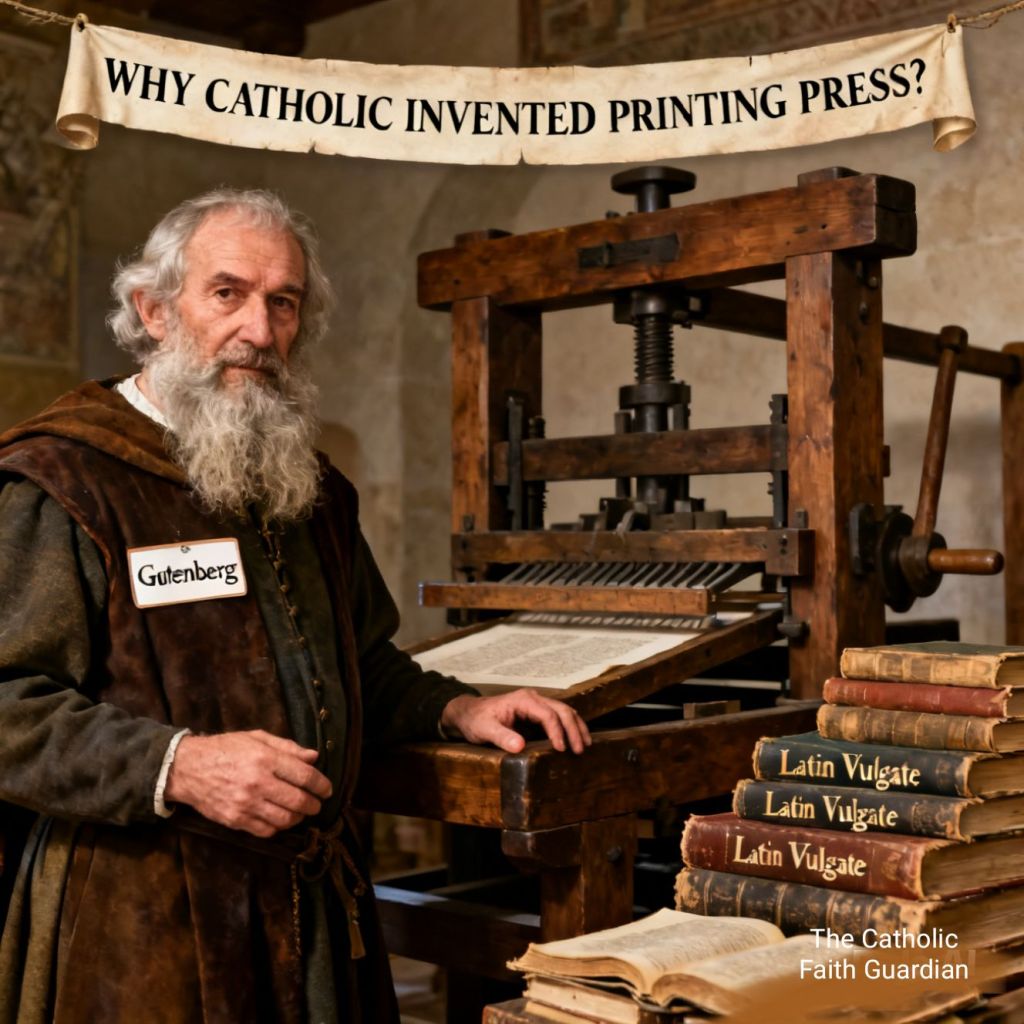
 𝗗𝗶𝗱 𝗬𝗼𝘂 𝗞𝗻𝗼𝘄? 𝗧𝗵𝗲 𝗙𝗶𝗿𝘀𝘁 𝗣𝗿𝗶𝗻𝘁𝗶𝗻𝗴 𝗣𝗿𝗲𝘀𝘀 𝗪𝗮𝘀 𝗜𝗻𝘃𝗲𝗻𝘁𝗲𝗱 𝗯𝘆 𝗮 𝗖𝗮𝘁𝗵𝗼𝗹𝗶𝗰!
Before modern technology, all books were written by hand — every letter, every page, every illustration. Producing a single book required enormous effort, time, and cost. And among all handwritten books, the Bible was the most labor-intensive of all, often taking around 3 years to complete.
Then came a Catholic inventor who changed the world forever.
 𝗝𝗼𝗵𝗮𝗻𝗻𝗲𝘀 𝗚𝘂𝘁𝗲𝗻𝗯𝗲𝗿𝗴 — 𝗧𝗵𝗲 𝗖𝗮𝘁𝗵𝗼𝗹𝗶𝗰 𝗪𝗵𝗼 𝗥𝗲𝘃𝗼𝗹𝘂𝘁𝗶𝗼𝗻𝗶𝘇𝗲𝗱 𝗕𝗼𝗼𝗸𝘀 𝗮𝗻𝗱 𝘁𝗵𝗲 𝗕𝗶𝗯𝗹𝗲
Johannes Gutenberg, a devout German Catholic, invented the movable-type printing press in the 15th century.
And do you know what his first major goal was?
 𝗧𝗼 𝗽𝗿𝗶𝗻𝘁 𝘁𝗵𝗲 𝗕𝗶𝗯𝗹𝗲.
Gutenberg wasn’t powered by electricity or modern machinery.
His printing press was completely manual, requiring hand-inking, hand-pressing, and constant resetting of metal type.
Because of this, even with his groundbreaking machine, he was only able to produce a few hundred copies — yet that alone was more than what scribes could produce in centuries.
And what Bible did he choose to print?
 𝗧𝗵𝗲 𝗖𝗮𝘁𝗵𝗼𝗹𝗶𝗰 𝗟𝗮𝘁𝗶𝗻 𝗩𝘂𝗹𝗴𝗮𝘁𝗲 — the very first complete Christian Bible compiled by the Catholic Church under St. Jerome.
𝗧𝗵𝗲 𝗪𝗼𝗿𝗹𝗱 𝗕𝗲𝗳𝗼𝗿𝗲 𝘁𝗵𝗲 𝗣𝗿𝗶𝗻𝘁𝗶𝗻𝗴 𝗣𝗿𝗲𝘀𝘀
Before Gutenberg, people did not casually own books — especially not Bibles.
 𝗪𝗵𝘆?
𝗪𝗵𝘆?
Every Bible was written by hand, taking around 3 years to finish.
They required hundreds of pages of parchment, often made from up to 200 animal skins.
A complete Bible was as costly as a small house.
Only churches, monasteries, and royalty could afford one.
Literacy rates were very low; even owning a Bible didn’t guarantee you could read it.
This means:
 No pastor, preacher, or church leader could “tuck a Bible in his armpit” because owning a Bible was rare, sacred, and incredibly expensive.
The Church didn’t “hide” the Bible — it protected the only existing copies in an era when books were fragile, costly, and precious.
𝗚𝘂𝘁𝗲𝗻𝗯𝗲𝗿𝗴’𝘀 𝗖𝗮𝘁𝗵𝗼𝗹𝗶𝗰 𝗕𝗶𝗯𝗹𝗲: 𝗧𝗵𝗲 𝗕𝗲𝗴𝗶𝗻𝗻𝗶𝗻𝗴 𝗼𝗳 𝗠𝗮𝘀𝘀 𝗦𝗰𝗿𝗶𝗽𝘁𝘂𝗿𝗲
When Gutenberg invented the printing press, he didn’t print a political pamphlet or a personal manifesto.
He printed:
 𝗧𝗵𝗲 𝗚𝘂𝘁𝗲𝗻𝗯𝗲𝗿𝗴 𝗕𝗶𝗯𝗹𝗲 — a Catholic Bible using the Latin Vulgate.
This marked the beginning of affordable Scripture.
For the first time in history, the possibility of owning a Bible became real.
Even though Gutenberg only printed a limited number due to manual labor, his invention opened the door to everything that followed:
Mass-produced Bibles
Affordable books
Increased literacy
Widespread Christian education
The preservation of Scripture in countless copies
All of this began because a Catholic invented the printing press to print a Catholic Bible.
 𝗧𝗵𝗲 𝗖𝗮𝘁𝗵𝗼𝗹𝗶𝗰 𝗖𝗼𝗻𝘁𝗿𝗶𝗯𝘂𝘁𝗶𝗼𝗻 𝘁𝗼 𝘁𝗵𝗲 𝗕𝗶𝗯𝗹𝗲 𝗮𝘀 𝗪𝗲 𝗞𝗻𝗼𝘄 𝗜𝘁 𝗧𝗼𝗱𝗮𝘆
The Bible you hold today — whether paperback, leather-bound, or digital — is only possible because:
 Catholic monks preserved Scripture by hand
The Catholic Church commissioned the first complete Christian Bible (the Vulgate)
Catholic scribes copied it for over 1,000 years
A Catholic inventor created the printing press
The first printed Bible was a Catholic Bible
Remove any of these, and the Bible as we know it would not exist today.
 𝗙𝗶𝗻𝗮𝗹 𝗥𝗲𝗳𝗹𝗲𝗰𝘁𝗶𝗼𝗻
The first mass-produced Bible in history was printed by a Catholic, using the Catholic Church’s own first Christian Bible — the Latin Vulgate.
Gutenberg’s invention didn’t just change technology.
It changed Christianity, education, and the entire world.
So the next time someone holds up a Bible, remember:
It exists because Catholics preserved it, translated it, protected it, and eventually printed it first.
Source:
 Nelson MCBS
Leave a comment