
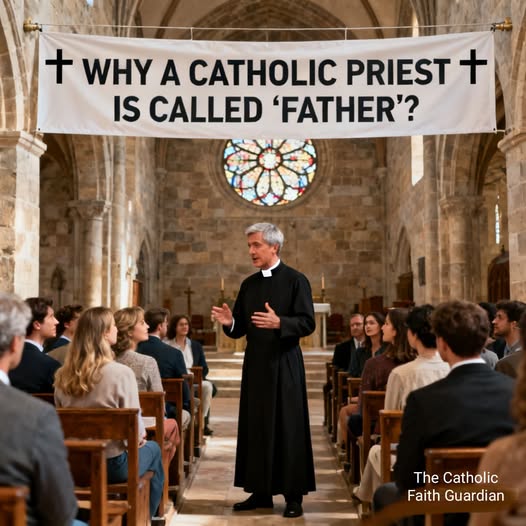
One of the most repeated objections against Catholicism is the claim that calling priests “Father” disobeys Jesus’ words in Matthew 23:9. But a careful and complete reading of Scripture, combined with early Christian history, shows that this Catholic practice is entirely biblical, apostolic, and consistent with the faith of the early Church.
1. The Verse Protestants Cite — and Why It Cannot Be Literal
Protestants often quote Jesus:
> “𝘊𝘢𝘭𝘭 𝘯𝘰 𝘮𝘢𝘯 𝘰𝘯 𝘦𝘢𝘳𝘵𝘩 𝘺𝘰𝘶𝘳 𝘧𝘢𝘵𝘩𝘦𝘳, 𝘧𝘰𝘳 𝘺𝘰𝘶 𝘩𝘢𝘷𝘦 𝘰𝘯𝘦 𝘍𝘢𝘵𝘩𝘦𝘳 𝘸𝘩𝘰 𝘪𝘴 𝘪𝘯 𝘩𝘦𝘢𝘷𝘦𝘯.”
— 𝘔𝘢𝘵𝘵𝘩𝘦𝘸 23:9
At first glance, this appears straightforward. But if interpreted literally, it leads to impossible contradictions.
If Christians cannot call anyone “father,” then they must also obey:
“You have one teacher.” — Matthew 23:8
“You have one leader.” — Matthew 23:10
Therefore:
 You cannot call your biological father father.
You cannot call someone teacher at school.
You cannot refer to any leader—political, religious, or otherwise.
Protestants must stop calling their pastors “Pastor,” “Teacher,” or “Reverend.”
But both Catholics and Protestants call their parents mother and father, which means even Protestants do not interpret Matthew 23 literally.
What Jesus Actually Condemned?
In Matthew 23, Jesus rebukes the Pharisees for:
 Pride
Pride
Hypocrisy
Seeking titles to elevate themselves
Usurping God’s authority
Jesus is condemning spiritual arrogance, not the use of honorable titles in a humble way.
This is clear because the Bible itself repeatedly uses father, teacher, and leader for human beings.
2. The Bible Calls Human Spiritual Leaders “Father”
A. Abraham is Called “Father”
> “𝘈𝘣𝘳𝘢𝘩𝘢𝘮 𝘪𝘴 𝘵𝘩𝘦 𝘧𝘢𝘵𝘩𝘦𝘳 𝘰𝘧 𝘶𝘴 𝘢𝘭𝘭.”
— 𝘙𝘰𝘮𝘢𝘯𝘴 4:16
> “𝘠𝘰𝘶𝘳 𝘧𝘢𝘵𝘩𝘦𝘳 𝘈𝘣𝘳𝘢𝘩𝘢𝘮 𝘳𝘦𝘫𝘰𝘪𝘤𝘦𝘥 𝘵𝘰 𝘴𝘦𝘦 𝘮𝘺 𝘥𝘢𝘺.”
— 𝘑𝘰𝘩𝘯 8:56
If calling someone “father” were forbidden, then Abraham’s title would be blasphemous—and the New Testament itself would be in error.
3. The New Testament Uses “Father” for Spiritual Leadership
A. St. Paul Calls Himself a Spiritual Father
> “𝘐 𝘣𝘦𝘤𝘢𝘮𝘦 𝘺𝘰𝘶𝘳 𝘧𝘢𝘵𝘩𝘦𝘳 𝘪𝘯 𝘊𝘩𝘳𝘪𝘴𝘵 𝘑𝘦𝘴𝘶𝘴 𝘵𝘩𝘳𝘰𝘶𝘨𝘩 𝘵𝘩𝘦 𝘨𝘰𝘴𝘱𝘦𝘭.” — 1 𝘊𝘰𝘳𝘪𝘯𝘵𝘩𝘪𝘢𝘯𝘴 4:15
> “𝘐 𝘢𝘱𝘱𝘦𝘢𝘭 𝘵𝘰 𝘺𝘰𝘶 𝘢𝘴 𝘮𝘺 𝘥𝘦𝘢𝘳 𝘤𝘩𝘪𝘭𝘥𝘳𝘦𝘯.”
— 1 𝘊𝘰𝘳𝘪𝘯𝘵𝘩𝘪𝘢𝘯𝘴 4:14
B. Paul Calls Timothy His Child
> “𝘛𝘰 𝘛𝘪𝘮𝘰𝘵𝘩𝘺, 𝘮𝘺 𝘵𝘳𝘶𝘦 𝘴𝘰𝘯 𝘪𝘯 𝘵𝘩𝘦 𝘧𝘢𝘪𝘵𝘩.”
— 1 𝘛𝘪𝘮𝘰𝘵𝘩𝘺 1:2
C. Paul Calls Titus His Child
> “𝘛𝘰 𝘛𝘪𝘵𝘶𝘴, 𝘮𝘺 𝘵𝘳𝘶𝘦 𝘤𝘩𝘪𝘭𝘥 𝘪𝘯 𝘰𝘶𝘳 𝘤𝘰𝘮𝘮𝘰𝘯 𝘧𝘢𝘪𝘵𝘩.”
— 𝘛𝘪𝘵𝘶𝘴 1:4
Spiritual fatherhood is not symbolic—it is real.
Paul exercised true pastoral care, guidance, discipline, and teaching—everything a spiritual father does.
4. Old Testament: Priests and Prophets Were Called “Father”
The Old Testament directly uses father as a spiritual title.
A. A Levite Priest Is Called “Father”
> “𝘚𝘵𝘢𝘺 𝘸𝘪𝘵𝘩 𝘮𝘦. 𝘉𝘦 𝘢 𝘧𝘢𝘵𝘩𝘦𝘳 𝘢𝘯𝘥 𝘢 𝘱𝘳𝘪𝘦𝘴𝘵 𝘵𝘰 𝘮𝘦.”
— 𝘑𝘶𝘥𝘨𝘦𝘴 17:10–13
Here, the word “father” is used as a religious title for a priest.
B. Prophets Were Called Father
> “𝘔𝘺 𝘧𝘢𝘵𝘩𝘦𝘳, 𝘮𝘺 𝘧𝘢𝘵𝘩𝘦𝘳! 𝘛𝘩𝘦 𝘤𝘩𝘢𝘳𝘪𝘰𝘵𝘴 𝘰𝘧 𝘐𝘴𝘳𝘢𝘦𝘭!”
— 2 𝘒𝘪𝘯𝘨𝘴 2:12 (𝘌𝘭𝘪𝘴𝘩𝘢 𝘢𝘥𝘥𝘳𝘦𝘴𝘴𝘪𝘯𝘨 𝘌𝘭𝘪𝘫𝘢𝘩)
> “𝘔𝘺 𝘧𝘢𝘵𝘩𝘦𝘳, 𝘮𝘺 𝘧𝘢𝘵𝘩𝘦𝘳!”
— 2 𝘒𝘪𝘯𝘨𝘴 13:14 (𝘒𝘪𝘯𝘨 𝘑𝘰𝘢𝘴𝘩 𝘢𝘥𝘥𝘳𝘦𝘴𝘴𝘪𝘯𝘨 𝘌𝘭𝘪𝘴𝘩𝘢)
If calling a priest or prophet father were sinful, then the Holy Spirit would not have inspired these verses.
𝗘𝗮𝗿𝗹𝘆 𝗖𝗵𝘂𝗿𝗰𝗵 𝗪𝗿𝗶𝘁𝗶𝗻𝗴𝘀: 𝗧𝗵𝗲 𝗙𝗶𝗿𝘀𝘁 𝗖𝗵𝗿𝗶𝘀𝘁𝗶𝗮𝗻𝘀 𝗖𝗮𝗹𝗹𝗲𝗱 𝗣𝗿𝗶𝗲𝘀𝘁𝘀 “𝗙𝗮𝘁𝗵𝗲𝗿”
The earliest Christians—long before the Bible was canonized—used father as a normal title for bishops and priests.
1. St. Ignatius of Antioch (AD 107)
Calls bishops and presbyters spiritual fathers of the community.
(Letters to the Magnesians, Trallians, and Smyrnaeans)
2. St. Clement of Alexandria (AD 200)
Refers to bishops and priests as “our fathers and teachers.”
(Stromata 1.1)
3. St. Athanasius (4th century)
Addressed bishops as “holy father” in his epistles.
4. St. Jerome (4th century)
Describes monastic leaders as “spiritual fathers.”
5. The Desert Fathers (3rd–4th century)
Early monks were literally called “Abbas” (father).
From this word we get abbot, meaning “father of the monastery.”
Calling spiritual leaders “father” has been universal from the earliest days of Christianity—and never considered contrary to Matthew 23:9.
𝘿𝙚𝙗𝙪𝙣𝙠𝙞𝙣𝙜 𝘾𝙤𝙢𝙢𝙤𝙣 𝙋𝙧𝙤𝙩𝙚𝙨𝙩𝙖𝙣𝙩 𝙊𝙗𝙟𝙚𝙘𝙩𝙞𝙤𝙣𝙨
 Objection 1: “Only God is our Father!”
 True—but God is also our only Shepherd, yet He appoints human shepherds (Eph 4:11).
God is our only Judge, yet He established human judges (Deut 16:18).
God is our only Teacher, yet the New Testament calls many human teachers (Acts 13:1).
Human roles share in God’s authority—they do not replace Him.
Objection 2: “Jesus banned religious titles.”
If Jesus literally banned religious titles, Protestants must stop using:
 Pastor
Reverend
Teacher
Minister
Doctor
Bishop
Brother
Elder
But they don’t.
Because they know Jesus was condemning pride, not titles used humbly.
Objection 3: “Paul didn’t mean father literally.”
Paul specifically says:
>> “𝘐 𝘣𝘦𝘤𝘢𝘮𝘦 𝘺𝘰𝘶𝘳 𝘧𝘢𝘵𝘩𝘦𝘳.”
The Greek word egenēthēn (“became”) refers to an actual spiritual reality—not a metaphor.
Objection 4: “No one in Scripture calls a priest father except the Old Covenant.”
False—Paul clearly claims New Testament spiritual fatherhood.
And Christians continue it because the apostles modeled it.
𝗖𝗼𝗻𝗰𝗹𝘂𝘀𝗶𝗼𝗻: 𝗖𝗮𝗹𝗹𝗶𝗻𝗴 𝗣𝗿𝗶𝗲𝘀𝘁𝘀 “𝗙𝗮𝘁𝗵𝗲𝗿” 𝗜𝘀 𝗕𝗶𝗯𝗹𝗶𝗰𝗮𝗹 𝗮𝗻𝗱 𝗔𝗽𝗼𝘀𝘁𝗼𝗹𝗶𝗰
The Catholic use of “Father” for priests is:
Grounded in Scripture
Affirmed by St. Paul
Practiced in the Old Testament
Taught by the Early Church
Universal in Christian history
Not forbidden by Jesus in any literal sense
Jesus was condemning pride—not the respectful use of spiritual titles.
Catholics call priests “Father” because they are spiritual fathers who guide us, nourish us with the Sacraments, and lead us in the life of Christ—just as the apostles did.
Source:
 Nelson MCBS
Leave a comment