
Introduction: The Wonder of Christmas
Christmas is the celebration of the most profound mystery of our faith: the Incarnation of the Son of God. It is the moment when the eternal Word, who was with God and was God, took on human flesh and dwelt among us (John 1:14). This divine event is not merely a historical fact but the foundation of our salvation, the source of our hope, and the wellspring of our joy.
As we gather to celebrate this holy feast, let us open our hearts to the profound truths revealed in Scripture and illuminated by the wisdom of the Fathers of the Church. Their reflections help us grasp the depth of God’s love and the transformative power of Christ’s birth.
The Biblical Foundation of Christmas
The Word Became Flesh
The Apostle John declares with majestic simplicity:
“And the Word became flesh and dwelt among us, and we have seen his glory, glory as of the only Son from the Father, full of grace and truth.” (John 1:14)
This verse encapsulates the heart of Christmas. The eternal Word, the second Person of the Holy Trinity, did not remain distant in heaven but entered into our human condition. He took on our flesh, our vulnerabilities, our joys, and our sufferings. This is the ultimate expression of God’s love.
The Promise Fulfilled
From the Old Testament, the promise of the Messiah was long awaited:
“For to us a child is born, to us a son is given; and the government shall be upon his shoulder, and his name shall be called Wonderful Counselor, Mighty God, Everlasting Father, Prince of Peace.” (Isaiah 9:6)
This prophecy reveals the identity and mission of the newborn King. He is not just a child but the Mighty God who brings peace and salvation to a broken world.
The Purpose of the Incarnation
The Apostle Paul explains the purpose of Christ’s coming:
“For the wages of sin is death, but the free gift of God is eternal life in Christ Jesus our Lord.” (Romans 6:23)
The birth of Christ is the beginning of God’s plan to redeem humanity from sin and death. Through His incarnation, life, death, and resurrection, Jesus offers us the gift of eternal life.
Reflections from the Fathers of the Church on Christmas
The early Church Fathers provide profound insights into the mystery of the Incarnation. Their teachings continue to inspire and guide us in understanding the significance of Christmas.
St. John Chrysostom: The God Who Became Man
St. John Chrysostom, known for his eloquent preaching, beautifully captures the wonder of Christmas:
“All join to praise this holy feast, beholding the Godhead here on earth, and man in heaven. He who is above, now for our redemption dwells here below.”
Chrysostom emphasizes the paradox of the Incarnation: the infinite God humbling Himself to become finite man. This divine condescension is the ultimate act of love and mercy.
St. Augustine: The Word Made Flesh
St. Augustine reflects on the mystery of God becoming man to unite Himself with us:
“He became what we are that He might make us what He is.”
This profound statement reveals the transformative purpose of the Incarnation. By becoming human, Christ opens the way for us to share in the divine life.
St. Athanasius: The Incarnation for Our Salvation
St. Athanasius, a staunch defender of the faith, explains why the Word became flesh:
“He was made man that we might be made God.”
This does not mean we become God by nature but by grace, sharing in the divine life through Christ. The Incarnation is the gateway to our sanctification and eternal communion with God.
The Spiritual Significance of Christmas
God’s Love Manifested
Christmas is the supreme manifestation of God’s love for humanity. As the Apostle John writes:
“In this the love of God was made manifest among us, that God sent his only Son into the world, so that we might live through him.” (1 John 4:9)
God’s love is not abstract or distant; it is personal and tangible. He sent His Son to live among us, to suffer and die for us, so that we might have life.
The Light in the Darkness
The birth of Christ brings light into a dark world:
“The people who walked in darkness have seen a great light; those who dwelt in a land of deep darkness, on them has light shone.” (Isaiah 9:2)
Jesus is the Light of the World, dispelling the darkness of sin, fear, and despair. Christmas invites us to embrace this light and become bearers of it to others.
Joy and Peace
The angels proclaimed at the birth of Jesus:
“Glory to God in the highest, and on earth peace among those with whom he is pleased!” (Luke 2:14)
Christmas is a time of joy and peace, rooted in the reconciliation between God and humanity. This peace surpasses all understanding and transforms our hearts.
Practical Lessons from Christmas
Humility and Service
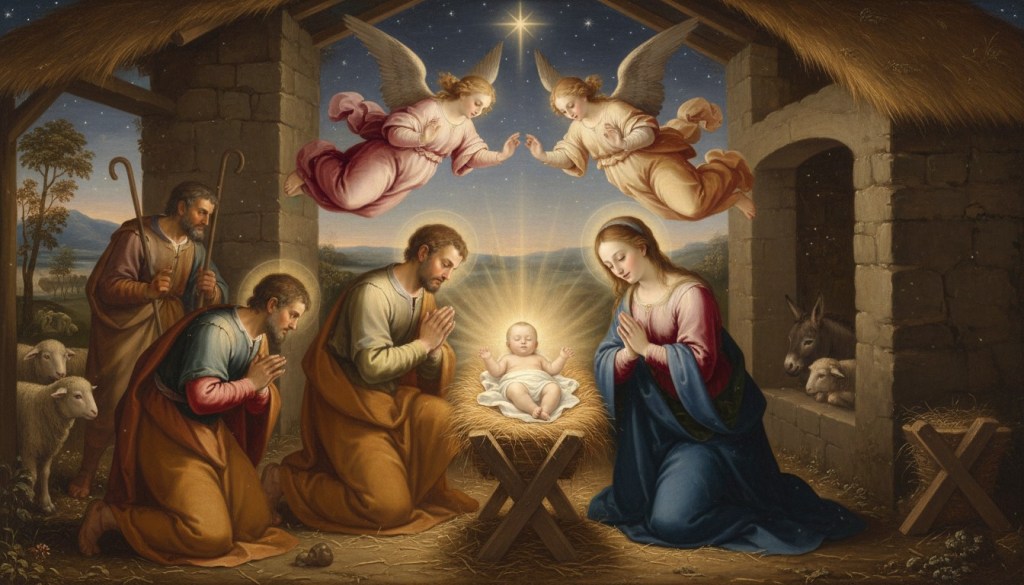
The Incarnation teaches us humility. God chose to be born in a humble manger, not a palace. St. Bernard of Clairvaux reminds us:
“The Word was made flesh to teach us that humility is the way to greatness.”
As followers of Christ, we are called to imitate His humility and serve others selflessly.
Hope in Trials
Christmas brings hope, especially in difficult times. The birth of Christ assures us that God is with us, Emmanuel, even in our struggles. St. Gregory Nazianzen encourages us:
“Let us rejoice that God has come to dwell with us, for in Him our sorrows find comfort and our fears are dispelled.”
Charity and Compassion
The love of God made flesh calls us to love one another. St. John Chrysostom exhorts:
“If you cannot find Christ in the beggar at the church door, you will not find Him in the chalice.”
Christmas challenges us to see Christ in every person, especially the poor and marginalized, and to respond with compassion.
Christmas in Our Lives Today
Renewing Our Faith
Christmas is an opportunity to renew our faith in the mystery of God’s love. It invites us to deepen our relationship with Christ, who came to save us.
Living the Incarnation
The mystery of the Incarnation is not just a past event but a present reality. Christ dwells in us through the Holy Spirit. We are called to live out this reality by embodying Christ’s love, humility, and peace in our daily lives.
Sharing the Joy
Christmas is a time to share the joy of Christ’s birth with others. Through acts of kindness, forgiveness, and generosity, we become witnesses to the transformative power of the Incarnation.
Conclusion: The Eternal Gift of Christmas
As we celebrate Christmas, let us remember the profound truth that God became man for our salvation. This divine gift is the source of our hope, joy, and peace. Let us open our hearts to receive Christ anew and commit ourselves to living His love in the world.
May the words of St. Augustine inspire us all:
“God became man so that man might become God.”
And may the peace of Christ, born in Bethlehem, reign in our hearts now and forevermore.


 Nelson MCBS
Leave a comment