
After the terrifying visions of the Beasts and the fall of “Babylon” (the corrupt worldly city), the Book of Revelation concludes not with a funeral, but with a Wedding. This is the climax of the entire Bible: the final union between God and humanity.
For Catholics, Chapters 21 and 22 provide the definitive vision of Heaven and the ultimate purpose of the Sacraments.
1. The Marriage Supper of the Lamb
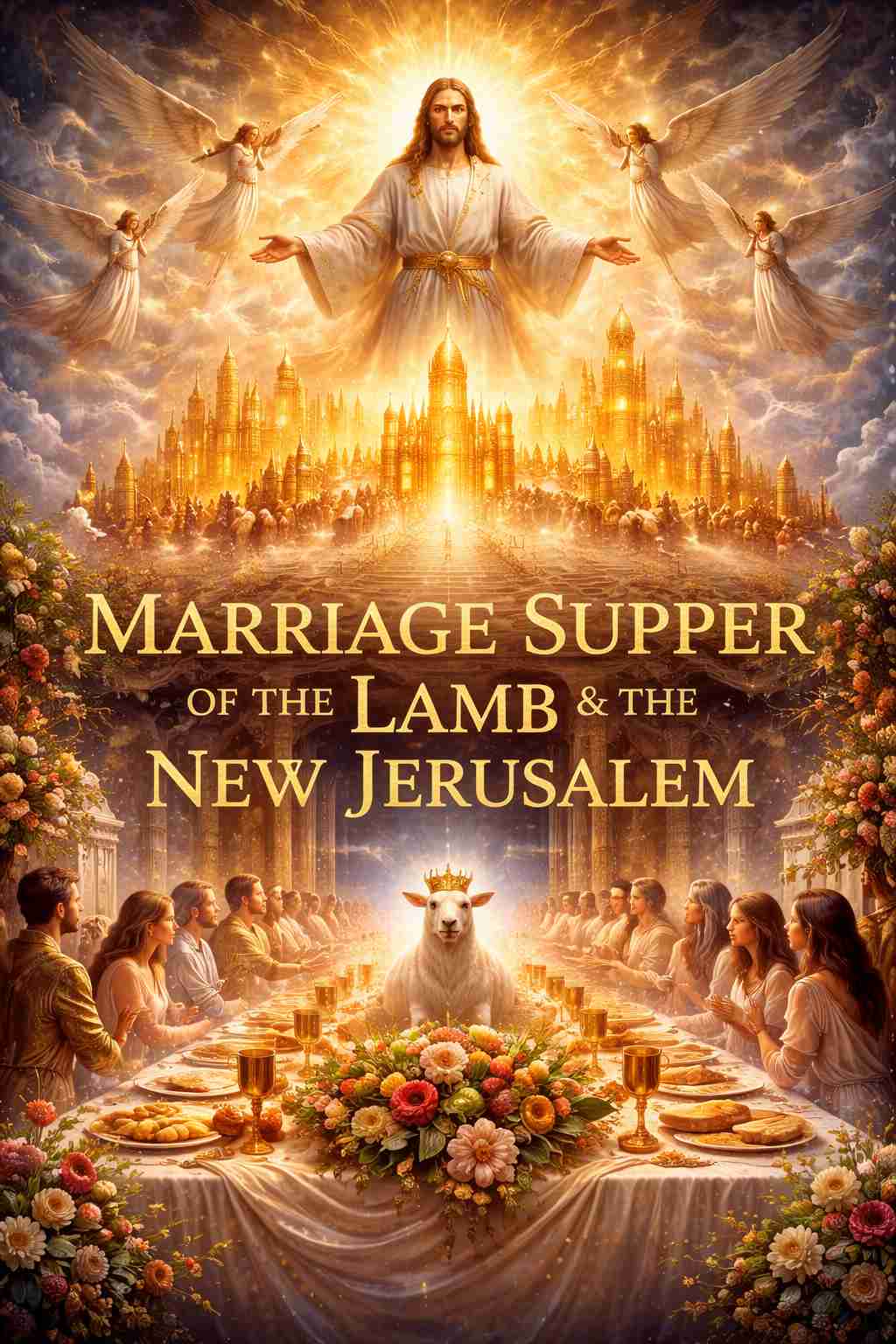
In Revelation 19:7-9, a great multitude in heaven cries out: “For the marriage of the Lamb has come, and his Bride has made herself ready.”
Who is the Bride?
The “Bride” is the Church. In Catholic theology, Christ is the New Adam, and the Church is the New Eve, born from His side as He slept in death on the Cross. This marital imagery explains why the Church refers to herself as “Holy Mother Church” and why Christ is the “Bridegroom.”
The Connection to the Mass
Every time a Catholic goes to Mass, the priest says: “Behold the Lamb of God… Blessed are those called to the supper of the Lamb.” This is a direct quote from Revelation 19:9. The Mass is not just a memorial; it is a “foretaste” of this eternal wedding feast. In the Eucharist, we are already participating in the heavenly banquet described at the end of the world.
2. The New Jerusalem: The City as a Woman
John sees the holy city, the New Jerusalem, coming down out of heaven from God, “prepared as a bride adorned for her husband” (Rev 21:2).
The Architecture of Heaven
John describes the city in highly symbolic terms that mirror the Twelve Apostles:
- Twelve Gates: Inscribed with the names of the twelve tribes of Israel.
- Twelve Foundations: Inscribed with the names of the Twelve Apostles of the Lamb.
- The Measurement: The city is a perfect cube (12,000 stadia). In the Old Testament, the only other cube was the Holy of Holies in the Temple. This means the New Jerusalem is not just a city; it is the dwelling place of God where everyone lives in His immediate presence.
No Temple in the City
John notes a shocking detail: “I saw no temple in the city, for its temple is the Lord God the Almighty and the Lamb” (Rev 21:22). In this life, we need churches, altars, and veils to encounter God. In the New Jerusalem, those “signs” pass away because we possess the Reality itself. This is what the Church calls the Beatific Vision—seeing God “face to face.”
3. The River of Life and the New Eden
The final chapter (Rev 22) takes us back to the beginning of the Bible. It is the “Restoration of Eden.”
- The River: A river of the “water of life” flows from the throne of God. Catholic tradition sees this as a symbol of the Holy Spirit and the life-giving grace of Baptism.
- The Tree of Life: In Genesis, man was barred from the Tree of Life after the Fall. In Revelation, the Tree is back, and its leaves are for the “healing of the nations.” Christ, hanging on the “tree” of the Cross, has become the fruit that gives eternal life (The Eucharist).
4. The Last Words: “Maranatha”
The book, and the entire Bible, ends with a dialogue between Christ and the Church:
- Jesus: “Surely I am coming soon.”
- The Church: “Amen. Come, Lord Jesus!” (In Aramaic: Maranatha).
For Catholics, this “coming” is three-fold:
- Historically: His birth in Bethlehem.
- Sacramentally: His daily coming in the Eucharist.
- Eschatologically: His final coming in glory to judge the living and the dead.
5. Summary Table: The Great Reversal
| Genesis (The Beginning) | Revelation (The End) |
| Creation of Sun and Moon. | No need for sun/moon; God is the Light. |
| Satan deceives humanity. | Satan is defeated forever. |
| Man is separated from God. | God dwells with His people (“Behold the dwelling of God”). |
| Death and pain enter the world. | “Death shall be no more… nor pain.” |
| Access to the Tree of Life is lost. | Access to the Tree of Life is restored. |
Conclusion: A Book of Hope
To the Catholic mind, the Book of Revelation is the ultimate “Happy Ending.” It promises that no matter how dark the world becomes—no matter how many “Beasts” rise or how much the “Dragon” roars—the Lamb has already won. History is not a circle; it is a line leading toward a Wedding.
The final message of the Apocalypse is one of invitation: “The Spirit and the Bride say, ‘Come.’ And let him who hears say, ‘Come.’ And let him who is thirsty come” (Rev 22:17).
 Nelson MCBS
Leave a comment