
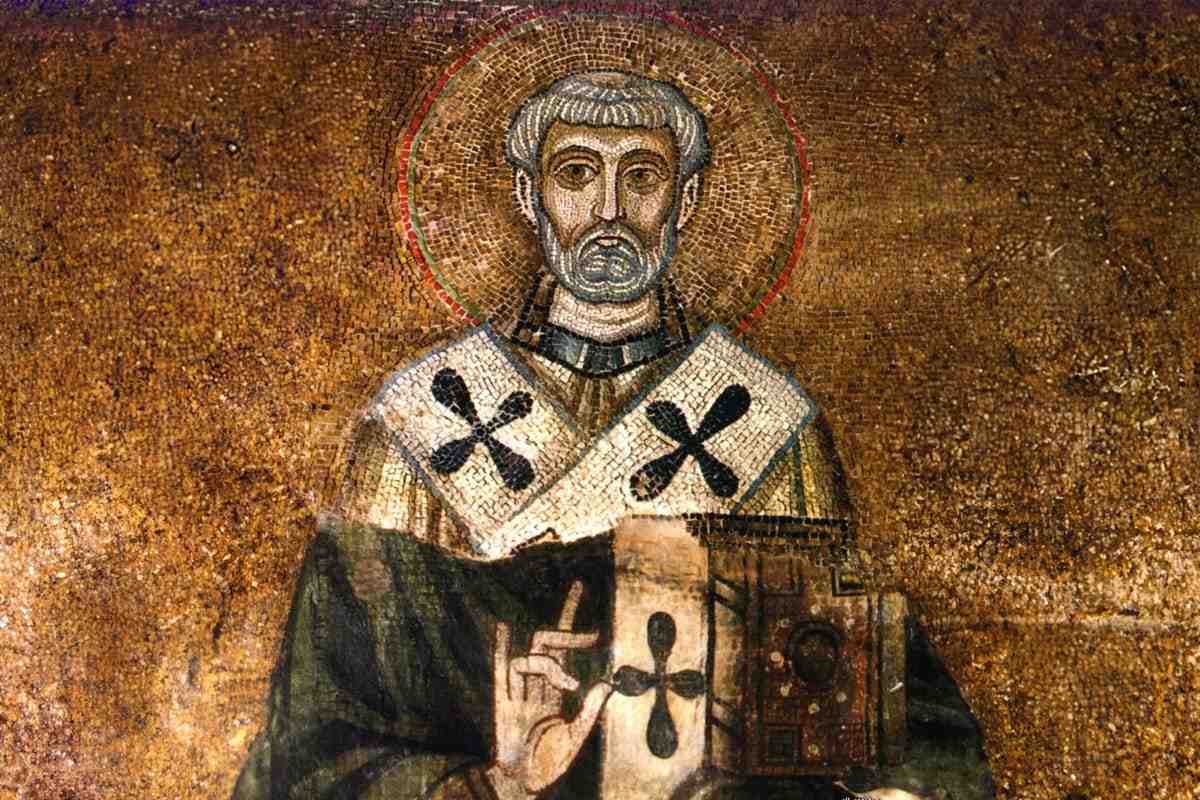
St. Clement of Rome: An Early Witness of Church Leadership
Authority, Unity, and Apostolic Order in the First Century Church
Introduction: A Voice from the Apostolic Age
In the fragile early decades of Christianity, when the Church was still emerging from the immediate shadow of the Apostles, questions of leadership, authority, and unity were not theoretical—they were urgent and deeply practical. Communities were growing, tensions were arising, and the need for clear guidance was becoming evident.
Into this context steps St. Clement of Rome, one of the earliest and most important witnesses to the structure and leadership of the Church. His surviving letter to the Corinthians—commonly known as 1 Clement—is one of the oldest Christian documents outside the New Testament. Written around the end of the first century, it provides invaluable insight into how the early Church understood authority, apostolic succession, and ecclesial unity.
Far from being a mere historical curiosity, Clement’s voice carries remarkable clarity and relevance. His intervention in a distant Church, his appeal to apostolic authority, and his insistence on order and harmony reveal a Church already conscious of its structure and mission.
This article explores the life of Clement, the context of his writing, and how his work stands as a foundational witness to early Church leadership.
1. Who Was Clement of Rome?
St. Clement of Rome is traditionally regarded as the third successor of St. Peter as Bishop of Rome, following Linus and Anacletus. His episcopate is usually dated to around 88–99 AD, placing him within living memory of the Apostles.
Though historical details about his life are limited, early Christian tradition holds him in high esteem. Some ancient sources even identify him with the Clement mentioned by St. Paul in his Letter to the Philippians (Philippians 4:3), suggesting that Clement may have been personally known to the Apostles.
This proximity to the Apostolic age is crucial. Clement does not speak as a later interpreter trying to reconstruct early Christianity—he speaks as someone who inherited its living memory.
As Bishop of Rome, Clement occupied a position of growing importance within the Christian world. Rome, as the capital of the empire and the site of the martyrdom of both Peter and Paul, held a unique place among the Churches.
2. The Situation in Corinth: Crisis and Intervention
The occasion for Clement’s most famous writing was a crisis in the Church at Corinth.
The Christian community there had fallen into serious discord. A group within the Church had deposed certain presbyters (elders or priests) who had been legitimately appointed. This internal conflict threatened not only local harmony but also the integrity of Church leadership.
What is remarkable is Clement’s response.
Instead of treating this as a purely local issue, Clement—writing from Rome—intervenes. His letter is not merely advisory; it carries a tone of authority and expectation. He calls for repentance, restoration of order, and submission to rightful leaders.
This intervention raises an important question:
On what basis does Clement, a bishop in Rome, address and correct a Church in Corinth?
The answer lies at the heart of his understanding of Church leadership.
3. Apostolic Authority and Its Continuation
One of the central themes of 1 Clement is the idea that Church leadership is not arbitrary—it is rooted in divine and apostolic authority.
Clement explains that:
- Jesus Christ was sent by God
- The Apostles were sent by Christ
- The Apostles appointed leaders in the Church
This chain of sending establishes a clear structure:
God → Christ → Apostles → Church leaders
Clement writes that the Apostles, foreseeing future disputes, appointed bishops and deacons and provided for their succession. This is one of the earliest explicit testimonies to what would later be called Apostolic Succession.
For Clement, therefore:
- Leadership in the Church is not self-appointed
- It is not based on popularity or charisma
- It is rooted in continuity with the Apostles
This principle becomes the foundation of his argument against the unjust removal of presbyters in Corinth.
4. The Role of the Bishop, Presbyters, and Deacons
Clement’s letter provides important insight into the structure of early Church leadership.
He refers to:
- Bishops (episkopoi)
- Presbyters (elders)
- Deacons (servants or ministers)
While the exact distinctions between these roles were still developing, it is clear that the Church already had an organized hierarchy.
Clement emphasizes that these leaders:
- Were appointed through legitimate means
- Served specific roles within the community
- Deserved respect and obedience
He compares Church order to the harmony of creation and even to the disciplined structure of the Roman military—each person fulfilling their role for the common good.
5. Authority and Humility
One of the most striking features of Clement’s leadership is the balance between authority and humility.
On the one hand, he speaks with clarity and firmness. He does not hesitate to correct wrongdoing or to call for obedience.
On the other hand, his tone is pastoral rather than domineering. He appeals to Scripture, to reason, and to the example of Christ.
He writes not as a tyrant, but as a shepherd.
This balance is crucial. Clement shows that true authority in the Church is not about power—it is about service, order, and fidelity to Christ.
6. The Primacy of the Church of Rome
Clement’s intervention in Corinth is one of the earliest examples of the Church of Rome exercising a form of leadership beyond its immediate locality.
While he does not explicitly define this role, several aspects of his letter are significant:
- He writes on behalf of the Roman Church
- He expects his counsel to be followed
- He grounds his authority in apostolic tradition
This suggests that, even at this early stage, the Church of Rome held a position of special responsibility within the wider Christian community.
Later theological developments would articulate this more fully, but Clement’s letter provides an early and important witness.
7. The Importance of Unity
For Clement, the crisis in Corinth is not just about leadership—it is about unity.
He sees division as a serious threat to the Church’s identity.
He writes passionately about:
- The danger of jealousy and rivalry
- The need for harmony and peace
- The beauty of a unified community
Clement draws on examples from Scripture and nature to illustrate the importance of order. Just as the universe operates in harmony, so too must the Church.
Unity, for Clement, is not optional—it is essential.
8. Scripture and Tradition in Clement’s Teaching
Clement’s letter is rich in references to Scripture. He draws extensively from the Old Testament and echoes themes found in the New Testament.
At the same time, his teaching reflects an early understanding of Tradition:
- The faith has been handed down from the Apostles
- It is preserved in the life of the Church
- It guides interpretation and practice
Clement does not see Scripture and Tradition as separate. They work together to sustain the Church’s life and teaching.
9. Leadership as Service and Sacrifice
Clement’s vision of leadership is deeply shaped by the example of Christ.
He emphasizes virtues such as:
- Humility
- Obedience
- Self-sacrifice
- Love
He reminds the Corinthians that Christ Himself came not to be served, but to serve.
This model transforms leadership from a position of privilege into a call to responsibility.
True leaders, in Clement’s view, are those who imitate Christ.
10. The Legacy of St. Clement
The importance of St. Clement of Rome cannot be overstated.
His letter:
- Is one of the earliest Christian writings outside the New Testament
- Provides clear evidence of structured Church leadership
- Affirms the principle of Apostolic Succession
- Demonstrates the role of the Church of Rome in maintaining unity
It also reveals something deeper—the Church, even in its earliest days, was not a loose collection of independent groups. It was a structured, unified body, guided by leaders who saw themselves as stewards of a divine mission.
11. Relevance for the Church Today
Clement’s teaching remains highly relevant in the modern world.
a. Authority and Authentic Leadership
In a time when authority is often questioned, Clement reminds us that true authority is rooted in service and continuity with Christ.
b. The Importance of Unity
His call to unity challenges divisions and encourages reconciliation.
c. Respect for Church Structure
Clement’s emphasis on order invites a deeper appreciation of the Church’s hierarchical structure.
d. Faithfulness to Tradition
He reminds us that the Church does not invent its teachings—it receives and preserves them.
Conclusion: A Lasting Witness
St. Clement of Rome stands as a bridge between the Apostolic age and the developing Church.
Through his letter to the Corinthians, he offers a powerful witness to:
- The continuity of apostolic authority
- The structure of Church leadership
- The necessity of unity and order
His voice, though ancient, speaks with surprising clarity to the challenges of today.
In a world often marked by division and uncertainty, Clement points us back to the foundations—to a Church rooted in Christ, guided by the Apostles, and sustained by faithful leadership.
And in doing so, he reminds us that the strength of the Church lies not in innovation, but in fidelity—to the truth handed down from the beginning.
Leave a Reply