

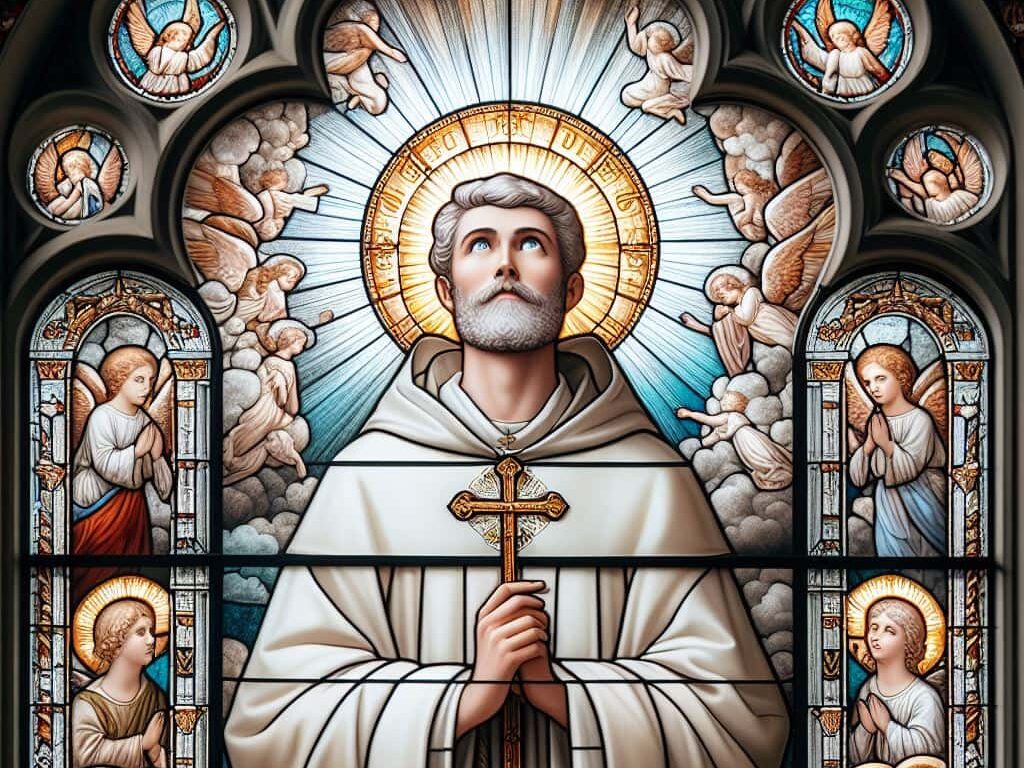
Born into a wealthy family in Nisibis in the last decades of the third century, James renounced his home and property to lead an austere life of asceticism in the Mesopotamian mountains, as testified by Theodoret of Cyrrhus. He did not build a house or labor for food. He lived by eating what nature provided and residing in open places and caves. He wore clothing made from coarse goat’s hair (“The History of the Monks of Syria,” I, 2).
Attracted by the many miracles God performed through him, the people of Nisibis demanded that James be appointed as their first bishop, and he was consecrated bishop in A.D. 308. Though he had to move from the mountain to the city, he did not change his diet or clothing. He continued with rigorous fasting, wore sackcloth, and slept on bare ground even after becoming a bishop (Theodoret, “The History of the Monks of Syria,” I, 7).
Known as the father of the Church of Nisibis, James was the spiritual teacher of the prominent Syriac Church Father Mar Aphrahat and the founder of the theological school of Nisibis. Mar Aphrahat testifies about the Church of Nisibis, saying, “It was Mar Jacob who gave birth to her, fed her during infancy” (“Nisibene Hymns,” 14, 6).
He participated in the First Council of Nicaea and encouraged other council fathers to undertake fasting and acts of penance for the conversion of the seven bishops who secretly supported the Arian heresy (“The History of the Monks of Syria,” I, 10).
When the Persian king Shapur II attempted to capture Nisibis, which was part of the Roman Empire, it was the prayers of Bishop Mar Jacob that saved the city from destruction. Later, when the city fell to the Persian emperor in A.D. 363, the Christians, while fleeing the city, declared, “Had he been alive, this disaster would not have happened,” and took his relics with them (“The History of the Monks of Syria,” 11–12, 14).
Rev. Dr. Alex Sebastian Kollamkalam
Source: Syro-malabar Vison, August 2025
 Nelson MCBS
Leave a comment