
(𝘉𝘦𝘧𝘰𝘳𝘦 𝘎𝘳𝘦𝘦𝘬. 𝘉𝘦𝘧𝘰𝘳𝘦 𝘓𝘢𝘵𝘪𝘯. 𝘛𝘩𝘦𝘳𝘦 𝘸𝘢𝘴 𝘈𝘳𝘢𝘮𝘢𝘪𝘤.)
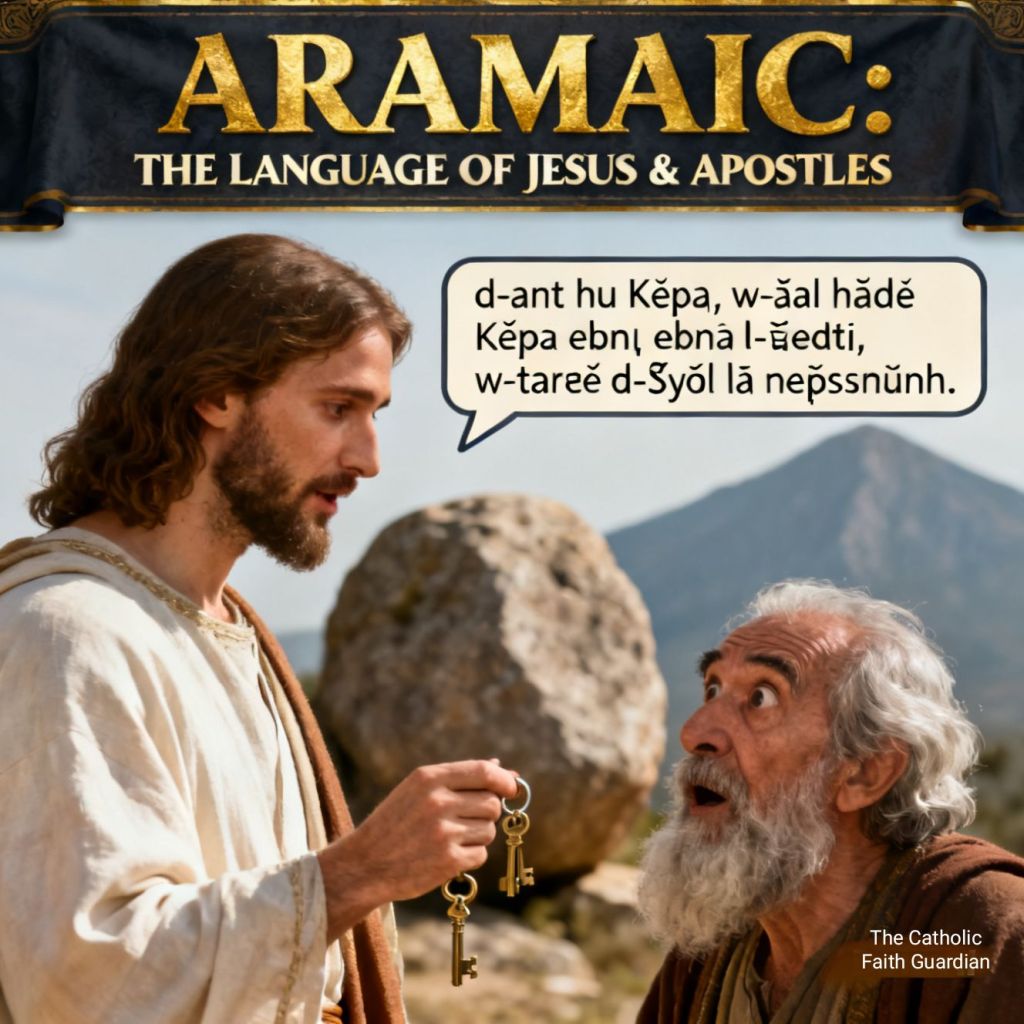
Before Greek and Latin became the sacred languages of Scripture and liturgy, Aramaic was the living language of the earliest Christian faith.
It was the spoken tongue of Jesus Christ, the daily language of the Apostles, and the first language in which the Gospel was proclaimed to the people.
Long before theology was written in Greek or prayed in Latin, the Good News was heard, spoken, and lived in Aramaic.
 When the Dead Sea Scrolls were discovered in the 20th century, the world was reminded of this truth: many of these ancient biblical texts were written in Aramaic, confirming how deeply this language shaped Jewish and early Christian religious life.
Languages may change across centuries — but the Church does not.
 𝐀𝐑𝐀𝐌𝐀𝐈𝐂: 𝐓𝐇𝐄 𝐌𝐎𝐓𝐇𝐄𝐑 𝐓𝐎𝐍𝐆𝐔𝐄 𝐎𝐅 𝐉𝐄𝐒𝐔𝐒
Aramaic is a Semitic language, related to Hebrew and Arabic.
By the 1st century:
 Hebrew was mainly liturgical
Greek was used for trade and administration
Aramaic was the everyday language of the people
This is why Jesus preached, healed, prayed, and taught in Aramaic.
The Gospels even preserve His actual spoken words:
 “𝘛𝘢𝘭𝘪𝘵𝘩𝘢 𝘬𝘰𝘶𝘮” — 𝘓𝘪𝘵𝘵𝘭𝘦 𝘨𝘪𝘳𝘭, 𝘢𝘳𝘪𝘴𝘦
“𝘌𝘱𝘩𝘱𝘩𝘢𝘵𝘩𝘢” — 𝘉𝘦 𝘰𝘱𝘦𝘯𝘦𝘥
“𝘈𝘣𝘣𝘢” — 𝘍𝘢𝘵𝘩𝘦𝘳
“𝘌𝘭𝘰𝘪, 𝘌𝘭𝘰𝘪, 𝘭𝘢𝘮𝘢 𝘴𝘢𝘣𝘢𝘤𝘩𝘵𝘩𝘢𝘯𝘪?” — 𝘔𝘺 𝘎𝘰𝘥, 𝘔𝘺 𝘎𝘰𝘥, 𝘸𝘩𝘺 𝘩𝘢𝘷𝘦 𝘠𝘰𝘶 𝘧𝘰𝘳𝘴𝘢𝘬𝘦𝘯 𝘔𝘦?
These are not translations — they are echoes of Christ’s very voice.
𝐓𝐇𝐄 𝐀𝐏𝐎𝐒𝐓𝐋𝐄𝐒 𝐀𝐍𝐃 𝐓𝐇𝐄 𝐄𝐀𝐑𝐋𝐘 𝐂𝐇𝐔𝐑𝐂𝐇
The Apostles were Aramaic-speaking Jews. Though they later preached and wrote in Greek to evangelize the world, their thinking, prayer, and catechesis were first formed in Aramaic.
The earliest Christian communities in:
• Judea
• Syria
• Mesopotamia
heard the Gospel in Aramaic before it was written down in Greek.
This proves an important Catholic truth:
 The Church existed before the New Testament was written.
𝐒𝐘𝐑𝐈𝐀𝐂: 𝐂𝐇𝐑𝐈𝐒𝐓𝐈𝐀𝐍 𝐀𝐑𝐀𝐌𝐀𝐈𝐂
As Christianity spread eastward, Aramaic developed into Syriac, a specifically Christian form of the language.
Syriac became:
 One of the oldest Christian liturgical languages
The language of early hymns, prayers, and theology
The voice of saints like St. Ephrem the Syrian (Doctor of the Church)
Through Syriac, Aramaic became not just a spoken language — but a language of worship.
 𝐓𝐇𝐄 𝐏𝐄𝐒𝐇𝐈𝐓𝐓𝐀: 𝐓𝐇𝐄 𝐀𝐑𝐀𝐌𝐀𝐈𝐂 𝐁𝐈𝐁𝐋𝐄
The Peshitta is the ancient Syriac (Aramaic) translation of Sacred Scripture, dating back to the early centuries of Christianity.
The Catholic Church does NOT claim the Peshitta replaces the Greek New Testament. But she honors it as a sacred and ancient witness to the biblical faith of early Christians.
It stands as proof that the Word of God lived in many languages — without changing its truth.
 𝐀𝐑𝐀𝐌𝐀𝐈𝐂-𝐒𝐏𝐄𝐀𝐊𝐈𝐍𝐆 𝐂𝐀𝐓𝐇𝐎𝐋𝐈𝐂𝐒 𝐓𝐎𝐃𝐀𝐘
A powerful reality many forget: Some Catholics still pray today in the language of Jesus.
1. Maronite Catholics (Lebanon)
In full communion with Rome
Use Syriac (Aramaic) in their liturgy
Never broke communion with the Pope
2. Chaldean Catholics (Iraq & Middle East)
Use East Syriac (Aramaic)
Descendants of ancient Mesopotamian Christianity
3. Syriac Catholics
Use West Syriac (Aramaic)
Preserve ancient apostolic worship
These are not “later converts” — they are apostolic Catholic Churches older than most nations.
 𝐋𝐀𝐍𝐆𝐔𝐀𝐆𝐄 𝐌𝐀𝐘 𝐂𝐇𝐀𝐍𝐆𝐄 — 𝐓𝐇𝐄 𝐂𝐇𝐔𝐑𝐂𝐇 𝐃𝐎𝐄𝐒 𝐍𝐎𝐓
From Aramaic…
 to Greek…
to Latin…
to modern languages…
The faith never changed.
Languages are tools.
Doctrine is divine.
Truth is eternal.
The Church does not cling to one language out of nostalgia. She uses many languages to proclaim one unchanging Gospel.
 𝐆𝐎𝐃 𝐇𝐄𝐀𝐑𝐒 𝐄𝐕𝐄𝐑𝐘 𝐋𝐀𝐍𝐆𝐔𝐀𝐆𝐄
God is not limited by human speech.
He hears:
• Aramaic prayers whispered in ancient churches
• Latin hymns sung in cathedrals
• Greek Scriptures proclaimed aloud
• Modern prayers spoken from the heart
 God understands every language — because He understands the heart.
 𝗙𝗜𝗡𝗔𝗟 𝗧𝗛𝗢𝗨𝗚𝗛𝗧
Aramaic reminds us that Christianity is not a theory — it is history made flesh.
From the lips of Jesus…
To the preaching of the Apostles…
To the living liturgies of Catholic Churches today…
Aramaic stands as a living bridge between Christ and His Church.
Languages may pass.
Empires may fall.
But the Church of Christ remains.
Source: The Catholic Faith Guardian
 Nelson MCBS
Leave a comment