
Guardians of Apostolic Tradition and Architects of Christian Doctrine
Introduction: Returning to the Sources of the Faith
The study of Christianity, whether approached historically, theologically, or spiritually, inevitably leads to the writings and witness of the Church Fathers. These early Christian thinkers and pastors stand at the crucial juncture between the apostolic age and the developed theological tradition of the Church. They are not merely interpreters of a received faith; they are its custodians, defenders, and systematic articulators.
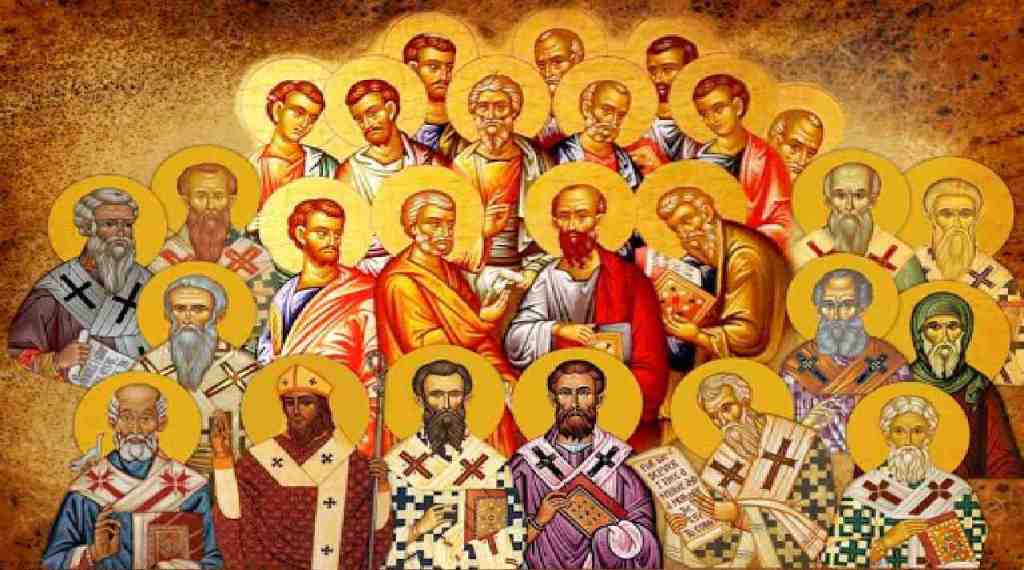
Figures such as St. Ignatius of Antioch, St. Irenaeus of Lyons, St. Athanasius of Alexandria, St. Basil the Great, St. Gregory of Nazianzus, St. John Chrysostom, St. Ambrose of Milan, St. Jerome, and St. Augustine of Hippo collectively shaped the theological, liturgical, and institutional foundations of Christianity.
This article explores in depth:
- The identity and classification of the Church Fathers
- Their historical context and challenges
- Their doctrinal, ecclesial, and cultural contributions
- Their enduring relevance in contemporary theology
To understand the Church Fathers is to understand how Christianity became what it is.
1. Defining the Church Fathers: Criteria and Characteristics
The term “Church Fathers” is not a vague honorific but a carefully defined theological category. Traditionally, four criteria are used to identify a Church Father:
1.1 Orthodoxy (Doctrinal Integrity)
A Church Father must teach the faith in continuity with apostolic doctrine. Orthodoxy here does not imply static repetition but faithful development.
1.2 Sanctity (Holiness of Life)
The Fathers were not merely intellectuals; they were men of prayer, ascetic discipline, and pastoral responsibility.
1.3 Antiquity (Early Period)
They belong to the formative centuries of Christianity—generally from the late first century to the eighth century.
1.4 Ecclesial Reception (Recognition by the Church)
Their teachings were received, preserved, and endorsed by the broader Christian community.
These criteria ensure that the Fathers are not merely historical figures but authoritative witnesses to the early faith.
2. Historical Context: Crisis, Persecution, and Development
The Church Fathers operated within a dynamic and often hostile environment.
2.1 The Age of Persecution
Before the legalization of Christianity under Emperor Constantine, Christians faced intermittent persecution. This context shaped early writings:
- Emphasis on martyrdom
- Defense of Christian identity
- Clarification of belief under pressure
2.2 The Post-Constantinian Era
After Christianity gained imperial favor, new challenges emerged:
- Internal doctrinal disputes
- Political involvement in ecclesiastical matters
- Need for theological precision
2.3 Intellectual and Cultural Engagement
The Fathers engaged with:
- Greek philosophy (Platonism, Stoicism)
- Roman legal and political structures
- Pagan religious traditions
They translated Christian revelation into categories intelligible to the Greco-Roman world.
3. Classification of the Church Fathers
3.1 Apostolic Fathers
These Fathers stand closest to the Apostles.
- St. Clement of Rome
- St. Ignatius of Antioch
Contribution: Preservation of apostolic teaching and early ecclesial structure.
3.2 Greek (Eastern) Fathers
Key figures:
- St. Athanasius of Alexandria
- St. Basil the Great
- St. Gregory of Nazianzus
- St. Gregory of Nyssa
Contribution: Development of Trinitarian and Christological theology.
3.3 Latin (Western) Fathers
Key figures:
- St. Ambrose of Milan
- St. Jerome
- St. Augustine of Hippo
Contribution: Systematic theology, ecclesiology, and moral theology.
4. Doctrinal Development: From Implicit Faith to Explicit Theology
4.1 The Trinity
The doctrine of the Trinity was clarified through intense debate.
The Cappadocian Fathers articulated:
- One ousia (essence)
- Three hypostases (persons)
This formulation remains normative.
4.2 Christology
The Fathers defended:
- The full divinity of Christ (against Arianism)
- The full humanity of Christ
St. Athanasius of Alexandria was central in this struggle.
4.3 Soteriology (Doctrine of Salvation)
St. Augustine of Hippo emphasized:
- Grace as necessary for salvation
- Human dependence on divine initiative
5. Defense Against Heresy: Defining Orthodoxy
Heresy played a paradoxical role—it forced clarity.
Major controversies:
- Gnosticism → opposed by St. Irenaeus of Lyons
- Arianism → opposed by St. Athanasius of Alexandria
- Pelagianism → opposed by St. Augustine of Hippo
The Fathers did not merely refute error—they clarified truth.
6. Formation of the Biblical Canon
The Fathers played a decisive role in recognizing Scripture.
They:
- Quoted authoritative texts
- Distinguished canonical from non-canonical writings
- Preserved textual integrity
St. Jerome contributed significantly through linguistic scholarship.
7. Hermeneutics: Interpreting Scripture
The Fathers developed interpretative frameworks:
- Literal
- Allegorical
- Moral
- Anagogical
This multi-layered reading reflects a rich theological vision.
8. Ecclesiology: Structure and Authority
The Fathers emphasized:
- Apostolic succession
- Authority of bishops
- Unity of the Church
St. Ignatius of Antioch insisted on unity under the bishop.
9. Liturgy and Sacramental Theology
The Fathers shaped:
- Eucharistic theology
- Baptismal practice
- Liturgical structure
Their writings show that worship was already deeply theological.
10. Spiritual Theology: The Inner Life
The Fathers were spiritual masters.
Themes include:
- Conversion
- Prayer
- Asceticism
- Union with God
St. Augustine of Hippo emphasized interiority.
11. Faith and Reason
The Fathers integrated faith with philosophy.
They demonstrated:
- Christianity is intellectually credible
- Reason can serve revelation
12. Cultural Transformation
The Fathers helped transform the Roman world:
- From paganism to Christianity
- From myth to theological reflection
- From empire to Church-centered society
13. Legacy and Contemporary Relevance
The Church Fathers remain indispensable.
They offer:
- Doctrinal clarity
- Historical continuity
- Spiritual depth
Their writings are foundational for:
- Theology
- Liturgy
- Ecumenical dialogue
Conclusion: Living Voices of the Early Church
The Church Fathers are not relics of the past—they are living authorities whose insights continue to shape Christianity.
Through figures like St. Augustine of Hippo, St. Athanasius of Alexandria, and St. Basil the Great, the Church received:
- Doctrinal clarity
- Scriptural integrity
- Spiritual richness
To study them is to encounter the mind of the early Church—a Church wrestling with truth, guided by the Spirit, and committed to faithfully proclaiming the Gospel.
Their legacy endures because the questions they addressed remain our questions—and the truth they defended remains the foundation of Christian faith.
 Nelson MCBS
Leave a comment