
Introduction
The Eucharist occupies a central and indispensable place within Catholic worship, representing the real presence of Jesus Christ—Body, Blood, Soul, and Divinity—under the appearances of bread and wine. Throughout history, the faith and devotion to the Blessed Sacrament have been reinforced by extraordinary signs, known as Eucharistic miracles. These wonders, affirmed by ecclesiastical and sometimes scientific inquiry, serve to deepen belief in the Real Presence and inspire awe and reverence. The miracle of Tixtla, Mexico, which occurred in 2006, is one of the most striking and thoroughly investigated of modern times, joining the ranks of Lanciano, Buenos Aires, and Sokółka in Poland as a powerful testament to the truth of Catholic teaching.
Historical Background and Setting
Tixtla is a modest town of about 23,000 inhabitants in southwestern Mexico, located in the Diocese of Chilpancingo-Chilapa. On October 21, 2006, faithful gathered at St. Martin of Tours parish during an annual spiritual retreat. The community, animated by their devotion, prepared to celebrate the Holy Mass, which for Catholics is the highest and most sacred act of worship.
During that liturgical celebration, several events unfolded that would bring Tixtla to international attention and contribute profoundly to Eucharistic theology and devotion.
The Miracle’s Occurrence
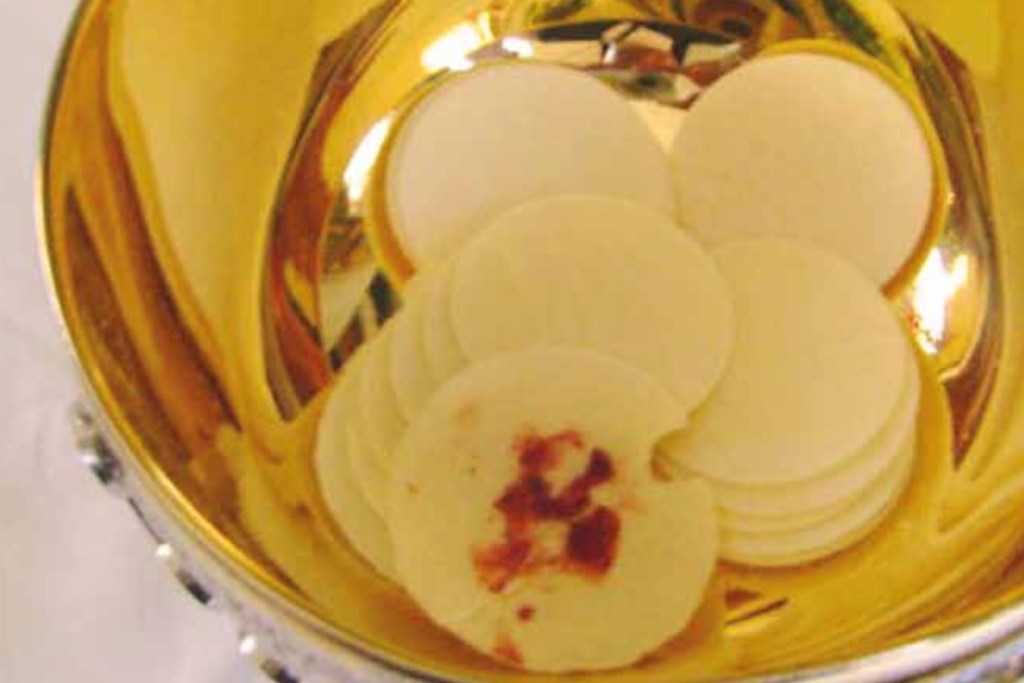
As Mass progressed, two priests and a religious sister distributed Holy Communion to the participants. The sister, Sister Arely, was assisting with the distribution when something remarkable occurred. She noticed that one of the consecrated Hosts in her ciborium had begun to ooze a reddish substance, resembling fresh blood. With tears in her eyes and deep concern, she showed the Host to Father Raymundo Reyna Esteban, who was leading the retreat, and Father Leopoldo Roque, the parish pastor. Their immediate reaction was shock, awe, and a sense of profound responsibility.
Upon examining the Host, the priests realized that what was transpiring appeared miraculous. They quickly notified the diocesan bishop, Most Reverend Alejo Zavala Castro, who recognized the gravity of the situation. The Host was set aside for preservation and subsequent investigation, to prevent tampering and maintain its integrity for scientific study.
Eyewitness Testimony and Initial Investigation
Following this unprecedented event, the local bishop undertook a meticulous and systematic inquiry. Seventeen statements were gathered from witnesses, each affirming the veracity of the phenomenon and confirming its occurrence during the retreat Mass. These accounts provided a robust foundation for the investigation and mapped out the moment-by-moment progression of the miracle.
To rule out any possibility of fraud, Bishop Zavala Castro established a theological commission. This body’s role was not only to explore doctrinal implications but also to oversee the safeguarding and proper handling of the Host. The bishop would later call upon internationally renowned scientist Dr. Ricardo Castañón Gomez, already recognized for his investigations of Eucharistic miracles in Buenos Aires, Argentina.
Scientific Investigation
Between 2009 and 2012, Dr. Castañón and a team of experts launched a rigorous examination of the Tixtla Host. The primary objective was to determine with the utmost precision whether the reddish substance was truly blood, to identify its origin, and to exclude the possibility of hoax or natural explanation. The investigation would become one of the most comprehensive of its kind, involving experts from four continents and employing modern forensic and medical techniques.
Samples from the Host were taken for analysis, with an emphasis on maintaining strict controls and transparency. The following findings were reported:
- Presence of Human Blood: The reddish substance was confirmed to be blood, containing hemoglobin and DNA of human origin. It was found to be blood type AB, which strikingly corresponded to other famous Eucharistic miracles (Lanciano, Buenos Aires) and also matched the blood found on the Shroud of Turin.
- Origin from Within the Host: Forensic experts, using microscopic examination and chemical analyses, determined that the substance originated from the interior of the Host, not from the outside—effectively ruling out any human intervention.
- Active White Blood Cells and Heart Tissue: The blood contained not only intact red blood cells but exceptionally active white blood cells and macrophages engaged with lipids, indicating that the blood was “fresh” and metabolically active. This is extraordinary, as living white blood cells quickly die once outside a living organism.
- Cardiac Muscle Tissue: The tissue contained within the Host was identified as myocardium—the heart muscle. Histological analysis confirmed striated heart muscle cells, continuous with findings from earlier miracles.
- Temporal Progression: Part of the blood had coagulated since 2006, but additional examination revealed the continuing presence of live (non-coagulated) blood from as late as 2010. This finding indicated that the process was ongoing and unexplainable by natural decay or preservation.
Ecclesiastical Judgment
On October 12, 2013, after several years of scientific analysis and careful theological reflection, Bishop Zavala Castro declared the event a Eucharistic miracle. While local ecclesiastical recognition was conferred, it remains under review by the Holy See, as is customary for phenomena of world significance.
The bishop’s declaration and subsequent dissemination were meant not merely to publicize the miracle but to foster deeper reverence for the Eucharist. His pastoral statement invited the faithful to meditate on Christ’s Real Presence and approach Holy Communion with greater faith, reverence, and love.
Theological Significance and Connection to Other Miracles
The Tixtla miracle, while unique in various respects, closely aligns with the findings of previous Eucharistic miracles. The recurring themes include:
- Type AB Blood: This rare blood type is consistent across various miracles and significant in biblical scholarship, as it is most common in populations from the Middle East, the region of Jesus’ earthly life.
- Myocardium Tissue: The heart muscle found in the Consecrated Hosts points to profound theological meaning. The heart is biblically regarded as the seat of life, compassion, and divine love. In giving His Sacred Heart to the world, Christ reveals the depth of His sacrificial love and the reality of His suffering for humanity’s redemption.
- Active Blood Cells: Living cells in a consecrated Host—unpreserved, unchanged for years—defy scientific explanation and point toward supernatural intervention.
Devotional Impact and Blessed Carlo Acutis
This miracle has inspired Catholics worldwide. Blessed Carlo Acutis, a young Italian recently beatified, is often associated with the cataloguing and promotion of Eucharistic miracles. He worked tirelessly to document these events, including Tixtla, aiming to renew Eucharistic devotion among his contemporaries. Carlo’s own love for the Eucharist—calling it “his highway to Heaven”—serves as a spiritual model for youth and adults alike.
The Mystery and Call to Faith
Eucharistic miracles are not ends in themselves but beckon believers to a deeper mystery: the daily miracle of the Mass. Each time bread and wine are consecrated, the words of Jesus at the Last Supper become reality. These extraordinary signs are reminders—amid an unbelieving or indifferent age—of the truth and power accessible to every Christian at Mass. They foster a spirit of adoration, conversion, and renewal.
Many theologians propose that such miracles are permitted by God at times and places where faith in the Real Presence is weak, or where reverence needs strengthening. The Tixtla miracle, emerging from a humble parish in Mexico, is now a beacon for the universal Church.
Reverence and Practical Response
The principal message of Tixtla is a renewed invitation for:
- Eucharistic Adoration: Spending time before the Blessed Sacrament, meditating on Christ’s love.
- Worthy Reception: Preparing spiritually for Communion through Confession, prayer, and reconciliation.
- Defending the Faith: Sharing the reality of the Eucharist with those who doubt or misunderstand.
Scientific Reflections
What science cannot fully explain, faith embraces. The exhaustive research performed on the Tixtla Host has confounded skeptics and reinforced belief in an invisible but real mystery. Rather than diminishing faith, such investigations purify and deepen it.
Conclusion
The Eucharistic Miracle of Tixtla stands as an extraordinary sign of Christ’s Real Presence and love for mankind. It urges all believers to approach the Eucharist with humility, awe, and a sense of wonder, and to bear witness to the transformative power of Jesus in the Blessed Sacrament. In the heart of the Church—at every altar—He awaits to renew, heal, and sanctify those who come in faith.
Original Prayer in Honor of the Eucharistic Miracle of Tixtla, Mexico
O Eucharistic Lord,
Whose Heart was revealed in wondrous mystery at Tixtla,
We bow before Thy Real Presence in awe and gratitude.
From humble bread, Thy Sacred Heart shines forth,
Ever-living, beating with love for all humanity.
You call us, O Jesus, to deeper faith,
To approach Thy altar with reverence and devotion.
May the blood that flowed from the Host
Remind us of Thy sacrifice on Calvary,
And awaken in our hearts true repentance and adoration.
Strengthen our belief,
Heal our doubts, and inflame us with charity,
So that every Communion becomes a meeting with Your Divine Heart.
Bless the Church in Mexico and throughout the world
With renewed devotion to the Most Holy Eucharist.
Let this miracle be a sign for generations,
Drawing all souls into the blazing fire of Your love.
Sacred Heart of Jesus, in the Eucharist,
Have mercy on us.
May our lives become a living thanksgiving
For Your wondrous gift.
Amen.
 Nelson MCBS
Leave a comment