

Second Sunday of Advent | Isaiah 11:1-10; Romans 15:4-9; Mathew 3:1-12
On the Second Sunday of Advent, the Church invites us to enter more deeply into one of the most precious and long-awaited gifts of God – peace. Last week, the Advent journey began with the call to watchfulness and hope. Today, the liturgy lights the second candle, often called the Candle of Peace or Bethlehem Candle, reminding us that the coming of Christ is meant to calm our fears, heal our divisions, and restore harmony to our hearts and our world.
The Second Sunday of Advent gives us Scripture’s most beautiful visions, a vision of peace. It is the harmony Isaiah dreams of, where the wolf dwells with the lamb and a child leads the strong and the meek together. It is the unity Paul prays for in the early Christian community. It is the transformed heart John the Baptist urges us to prepare a heart made ready for the Prince of Peace.
Advent does not give us a shallow or sentimental peace. It gives us the peace that flows from God’s faithfulness, God’s presence, and God’s transforming grace. Christ enters the world not to decorate our lives, but to heal them. He comes not simply to comfort us, but to change us.
Today the Word of God opens before us one of the most beautiful, hope-filled prophecies in the entire Old Testament: “A shoot shall sprout from the stump of Jesse, and from his roots a bud shall blossom.” (Is 11:1)
Isaiah speaks to a nation that has been cut down. Israel’s monarchy has become a lifeless stump. The great tree has fallen. The people are exiled, powerless, scattered. They look at their future and see only a stump of lifeless wood, no possibility, no promise.
But Isaiah dares to proclaim: God begins His greatest work in the places we think are dead. He brings life where we see only loss. He brings hope where we see only endings.
Isaiah paints an astonishing picture: Then the wolf shall be a guest of the lamb, and the leopard shall lie down with the kid; the calf and the young lion shall browse together, with a little child to guide them…. The earth shall be filled with knowledge of the LORD.
This is not sentimental poetry. It is the vision of a restored creation of human hearts reconciled, of relationships healed, of a world ordered toward God rather than violence or pride.
Every Eucharist is a foretaste of that peace. Every time we forgive, welcome the stranger, feed the hungry, or reconcile with a brother or sister, we allow that prophecy to take root in our world.
St. Paul, in the second reading, pray and encourages us: “May the God of endurance and encouragement grant you to think in harmony with one another.”
Harmony is another word for peace, but it is richer than simply “getting along.” In music, harmony is created when different notes, different voices, different instruments come together not to become the same, but to form something more beautiful than any single voice could produce alone.
This harmony Paul speaks of is not uniformity of opinion, but unity of heart, unity in faith, unity in worship, unity in mission. A divided Christian community cannot credibly proclaim a God of peace.
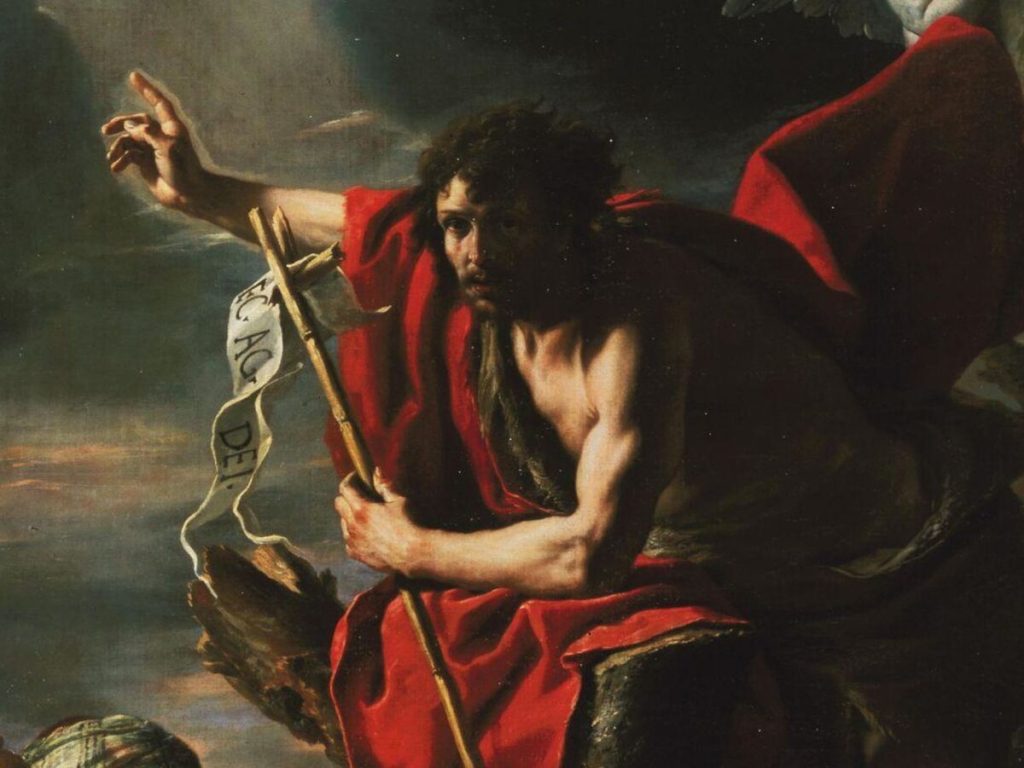
The Gospel brings us the fiery voice of John the Baptist: “Repent, for the kingdom of heaven is at hand!” A voice of one crying out in the desert, “Prepare the way of the Lord, make straight His paths!”
Why do we need to prepare? Because peace cannot grow in a heart crowded with anger, pride, resentment, gossip, fear, division. The Prince of Peace cannot reign where bitterness takes root. Advent cannot flourish where resentment or division is allowed to live unchecked.
The Gospel tells us: “John the Baptist appeared, preaching in the desert of Judea.” This is more than a historical note. The desert is symbolic and deeply spiritual. It represents a place of emptiness, stillness, and openness far from the distractions, noise, and pressures of daily life. Only those who sincerely seek the Lord will journey there.
St. Jerome says that salvation is first proclaimed not in the crowded city, but in the quiet of the wilderness—just as today, Christ comes first to hearts that make room for Him in silence.
The desert also mirrors the human heart. Like Judea, many of our hearts are deserts not because it lacked people, but because it lacked God. They are places of dryness, neglect, and longing for mercy and grace. Advent invites us to enter that desert within ourselves not to escape life, but to prepare it for Christ. It is in this quiet, humble space that God can sow peace, transformation, and renewal.
John’s presence in the wilderness reminds us that spiritual preparation requires intentionality. We cannot fully welcome Christ while our hearts are crowded with noise, distractions, or sin.
The Gospel tells us that “Jerusalem, all Judea, and the whole region of the Jordan went out to him.” Why did the people respond so eagerly? Because, placed near the holiness of John, each person suddenly saw their own spiritual poverty. Just as a garment looks dull next to fresh snow, their imperfections became visible. Their hearts were stirred, and they came to confess their sins.
Confession is not mere ritual; it is the testimony of a conscience that fears God, not with terror, but with reverent seriousness. Perfect fear casts out shame; therefore, they confessed without hesitation. God calls us to this same honesty, so that the shame we feel over our sins becomes part of our healing, an early share in the purifying judgment that brings us closer to Him.
In Advent, confession is medicine, not punishment. It is part of the preparation Christ requires of us. John’s Advent command is simple yet profound: sweep away the dust of sin, straighten the crookedness of our desires, and open a clear path for Christ. Repentance clears the way, creating a heart that can truly receive the Prince of Peace.
Just as the people of Israel had to journey into the desert to meet God in freedom, we too are called to step away from what clutters our hearts, confront what is blocking God’s grace, and open ourselves to the Prince of Peace.
And so, the Advent question for each of us is: Where is my desert? Where is God absent in my life?
Advent invites us to enter that place, remove the obstacles our sins, distractions, and hardened hearts and prepare a way for the Lord to dwell fully within us.
This is the true spirit of Advent: a season of hopeful repentance, interior renewal, and preparation, so that when Christ comes, He finds not only our longing hearts, but hearts made ready to receive His peace, mercy, and joy.
✍ Fr James Abraham
 Nelson MCBS
Leave a comment