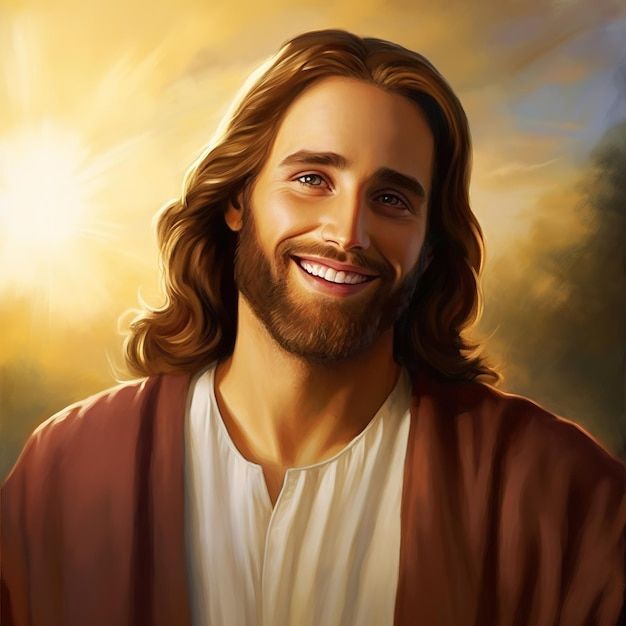


“The Word became flesh and dwelt among us” (John 1:14).
In these simple words, the Gospel reveals the mystery of the Incarnation: the eternal Word enters our human reality, taking on our flesh, our joys, and our sufferings. The Word who was with God from the beginning now lives among His people, sharing in our lives so that we might know God’s love directly and be drawn into communion with Him. Through this dwelling, God shows that salvation is not a distant promise but a living reality—He is truly Emmanuel, “God with us.”
Centuries before Bethlehem, Isaiah spoke to a wounded people of a promised deliverance—hope and restoration in the midst of judgment, loss, and exile. Matthew hears that ancient promise and sees it fulfilled in the child born of Mary:
“Behold, the virgin shall be with child and bear a son, and they shall name him Emmanuel,” which means “God is with us” (Matthew 1:23).
Emmanuel is not just a poetic name; it is the truth that God’s presence has become concrete, visible, and near in the life of the Savior.
This presence does not end with Bethlehem or at the manger. At the end of Matthew’s Gospel, the risen Jesus assures His disciples:
“I am with you always, until the end of the age” (Matthew 28:20).
The One who came in humility remains with His Church in glory present in His word, in the sacraments, in the poor, and in the hidden places of our daily lives. God is not a distant God of postponed promises, but a God who walks with us and brings salvation into the fabric of every day.
So, Christmas is not about remembering something that once happened but entering into something that continues to happen.
For this reason, the Church teaches that Christmas is not a single day but a liturgical season, unfolds over twelve days, leading to Epiphany and extends the celebration liturgically through the Baptism of the Lord.
And even more, Incarnation is not a brief visit, but an enduring reality of God with us rather than a mere backward-looking memory.
Yet most of us are profoundly event‑driven people. We tend to organize our lives from one event to the next. A day without appointments can feel like “nothing is happening.”
When Christmas is treated this way, then once the day has passed, attention moves on. The Christmas decorations come down, the carols stop, and our hearts quietly ask, “What’s next?”
But if Christmas is understood as John presents it, not as an event but as a state of divine presence: the Word made flesh dwelling among us here and now. Life continues to unfold within that presence, whether or not something “special” is scheduled. Every ordinary day is now lived under the same promise: Emmanuel—God with us.
John’s understanding of Christmas, life, and humanity is profoundly different from and far deeper than a narrative centered on chronology, sentiment, or even historical detail. Instead, John gives us ontology: who Christ is, what reality itself means, and how humanity exists within God’s ongoing creative act.
For John, Christmas does not begin in Bethlehem but “in the beginning.” “In the beginning was the Word.”
By deliberately echoing Genesis, John situates the Incarnation not as a late intervention in history but as integral to creation itself. The Word through whom all things came to be is the same Word who becomes flesh.
Creation and Incarnation are not separate acts; but two expressions of the same divine self-giving. From the very start, the purpose of creation was communion, God desiring to dwell with us and within us.
Christmas, therefore, is not God stepping into creation from the outside, but God revealing what creation has always been oriented toward.
Creation and Incarnation both tell the same story, God’s love taking form, breathing life, becoming present in all that He has made.
John writes, “What has come into being in him was life, and life was the light of all people.” This “life” is not just biological existence it is participation in the very being of God. To live, in John’s Gospel, is to share in God’s own life to dwell in communion with the divine Word. And where that communion is broken, darkness reigns.
This is why John consistently contrasts life with darkness and death not as physical states, but as relational realities. Life exists where there is communion with God; darkness reigns where that communion is refused.
Likewise, humanity is understood not simply as created once and left to fend for itself, but as continually sustained by the Word. Just as creation in Genesis unfolds through God’s ongoing speech “God said… and it was” so creation remains dependent on the Word who speaks it into being at every moment.
Humanity, made in the image and likeness of God, finds its true identity not in autonomy but in relationship: to God, to one another, and to the light that “enlightens everyone.”
This is why, for John, Christmas is not primarily about a child in a manger, but it’s about light entering the world, life confronting death, and God dwelling permanently with humanity. The Incarnation reveals what has always been true: the world is created for communion, and humanity is meant to live in the light of God’s presence.
So, when we celebrate Christmas, we do more than remember an event two thousand years ago. We bear witness to a truth that continues now: the Word still creates, still enlightens, still gives life. The Incarnation didn’t end with the first Christmas morning; creation itself is still unfolding in the presence of the Word made flesh.
Christmas is God’s continuing gift of life to His people. “And the Word became flesh and lived among us” (John 1:14).
As St. Gregory of Nyssa reminds us, Christmas is the “festival of re-creation.” It is God giving His own life to humanity.
This festival of re-creation is God’s celebration of humanity. It is God entrusting Himself to human beings—to you and to me. It is God’s reaffirmation of our goodness. It is the sharing and exchanging of life between God and humanity.
In the mystery of Christmas, the boundaries between God and humanity are not erased, but wonderfully bridged. God draws near, gives Himself fully, and invites us into the fullness of divine life. We have been given the power to become children of God.
So, Christmas resists being confined to a day, a season, or even a memory. It is cosmic, ongoing, and deeply personal. The Word continues to create, enlighten, and give life. Christmas, then, is not over because creation itself is still unfolding in the presence of the Word made flesh.
✍ Fr James Abraham
 Nelson MCBS
Leave a comment