

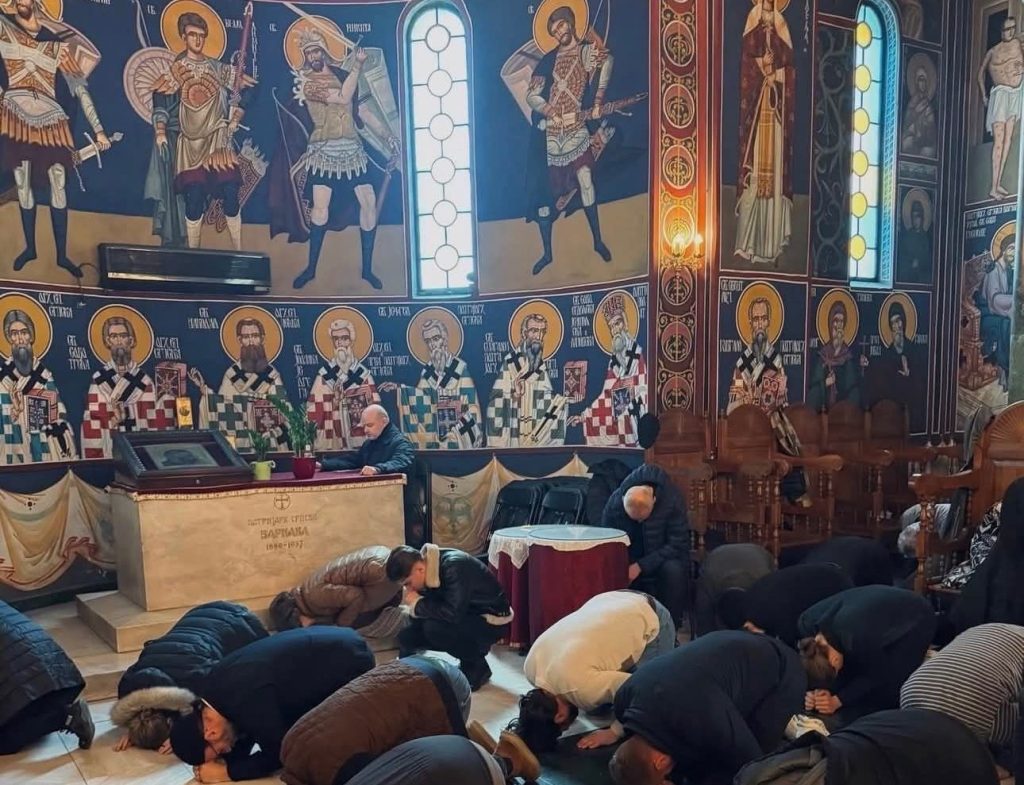
A Theological and Liturgical Study with References
Eastern Christian prostrations, commonly called metania (from the Greek μετάνοια, “repentance” or “conversion”), embody the profound unity of body and soul that characterizes the theology of the Christian East. In Eastern spirituality, repentance is never merely psychological or intellectual; it is enacted with the whole person. The outward gesture of bowing or full prostration gives visible form to interior contrition and surrender. This incarnational understanding of worship reflects the apostolic exhortation to “present your bodies as a living sacrifice, holy and acceptable to God” (Romans 12:1). As Alexander Schmemann observes, liturgical worship in the East engages the total human person, because salvation itself is the restoration of the whole human being.¹
The biblical foundations of prostration are abundant and decisive. The Psalmist calls the faithful: “Come, let us worship and bow down; let us kneel before the Lord our Maker” (Psalm 95:6). Daniel knelt three times daily in prayer (Daniel 6:10), and in the New Testament Christ Himself “fell on His face and prayed” in Gethsemane (Matthew 26:39). The Book of Revelation repeatedly describes the elders falling before the throne of God in heavenly adoration (Revelation 4:10). These scriptural precedents reveal prostration as an expression of awe, supplication, repentance, and recognition of divine sovereignty. Joseph Ratzinger explains that kneeling is not a cultural accident but a gesture rooted in biblical revelation, signifying humility before the living God.²
The patristic tradition deepens this biblical vision. St. Basil the Great connects kneeling with penitence and acknowledges the Church’s discipline of refraining from kneeling on Sundays to honor the Resurrection.³ St. John Chrysostom frequently interprets bodily gestures as pedagogical, teaching that the bending of the knee trains the soul in humility and reverence.⁴ Yet within the East Syriac tradition, prostration acquires an especially ascetical and therapeutic depth. St. Isaac of Nineveh, one of the greatest spiritual masters of the Church of the East, repeatedly emphasizes that outward humility softens the heart and prepares it for divine mercy. For Isaac, repentance is not juridical but medicinal; bodily abasement assists the healing of the inner person.⁵ In his Ascetical Homilies, he describes tears, kneeling, and prostration as means by which the soul becomes receptive to the transforming grace of God.
The East Syriac liturgical heritage preserves this patristic anthropology in concrete practice. The Hudra and the penitential offices of the Church of the East prescribe kneeling and prostration particularly during the Fast of Nineveh and throughout the Great Fast.⁶ These gestures echo the repentance of the Ninevites in the Book of Jonah and reflect a communal acknowledgment of sin before divine compassion. In the Syro-Malabar and Chaldean traditions, penitential seasons intensify the use of bows and kneeling during supplicatory prayers, especially during the “Onitha d’Raza” and other moments of solemn intercession. The faithful bow deeply as the Church cries for mercy, enacting corporately what each believer must live interiorly.
The Syriac Fathers also articulate a rich theology of bodily humility. St. Ephrem the Syrian frequently links physical abasement with spiritual exaltation, teaching that the one who lowers himself in repentance will be raised by divine mercy.⁷ Aphrahat, the Persian Sage, speaks of kneeling as a sign of servanthood before God’s majesty, reflecting Christ’s own humility.⁸ In this tradition, prostration participates in the kenosis of Christ described in Philippians 2:7–8; the believer imitates the self-emptying Lord by lowering himself before the Father. The act of rising after a full prostration silently proclaims the hope of resurrection, echoing the baptismal descent and ascent described by St. Cyril of Jerusalem.⁹
Liturgical discipline further reveals the theological precision of these gestures. The Council of Nicaea forbade kneeling on Sundays and during the Paschal season, affirming that standing expresses the joy of the Resurrection.¹⁰ The East Syriac tradition likewise preserves this rhythm: penitential kneeling yields to Paschal standing. Thus posture becomes theology enacted. As Louis Bouyer notes, the early Church guarded these distinctions carefully because bodily attitude communicates doctrinal truth.¹¹
In the hesychastic and monastic traditions of the Christian East, prostrations accompany the Jesus Prayer and penitential psalmody. The Philokalic writers describe bodily discipline as an aid to inner stillness, teaching that humility of posture fosters humility of heart.¹² For the Syriac mystics, especially St. Isaac of Nineveh, repeated prostrations cultivate compunction and awaken the heart to divine love. Repentance, therefore, is not despair but a pathway into mercy.
When performed within the liturgical assembly, prostration also possesses an ecclesial dimension. The entire community bows together, confessing collectively its need for salvation. The Church becomes visibly what she professes spiritually: a repentant yet hope-filled Body awaiting full restoration. Schmemann insists that corporate worship forms ecclesial identity; shared gestures shape shared faith.¹³ In this sense, metania is not an isolated devotional act but an expression of communion.
Eastern Christian prostration ultimately proclaims the paradox at the heart of the Gospel: the way down is the way up. The believer descends in humility and rises in grace. The body falls to the earth from which it was formed, acknowledging creatureliness, and rises again in anticipation of resurrection glory. Within the East Syriac patrimony, shaped by centuries of ascetical wisdom and liturgical reverence, this movement becomes a silent homily repentance embodied, humility enacted, and hope proclaimed.
 Joseph Thekkedath Puthenkudy
References
1. Alexander Schmemann, Introduction to Liturgical Theology (Crestwood, NY: St Vladimir’s Seminary Press, 1986).
2. Joseph Ratzinger (Benedict XVI), The Spirit of the Liturgy (San Francisco: Ignatius Press, 2000).
3. Basil the Great, On the Holy Spirit, 27.66.
4. John Chrysostom, Homilies on Matthew, Homily 82.
5. Isaac of Nineveh, Ascetical Homilies, Homily 36.
6. Hudra: Divine Office according to the Rite of the Church of the East.
7. Ephrem the Syrian, Hymns on Repentance.
8. Aphrahat, Demonstrations, 4.
9. Cyril of Jerusalem, Mystagogical Catecheses, II.
10. Council of Nicaea I (325), Canon 20.
11. Louis Bouyer, Liturgical Piety (Notre Dame: University of Notre Dame Press, 1954).
12. The Philokalia, Vol. 1.
13. Alexander Schmemann, For the Life of the World (Crestwood, NY: St Vladimir’s Seminary Press, 1973).
 Nelson MCBS
Leave a comment