
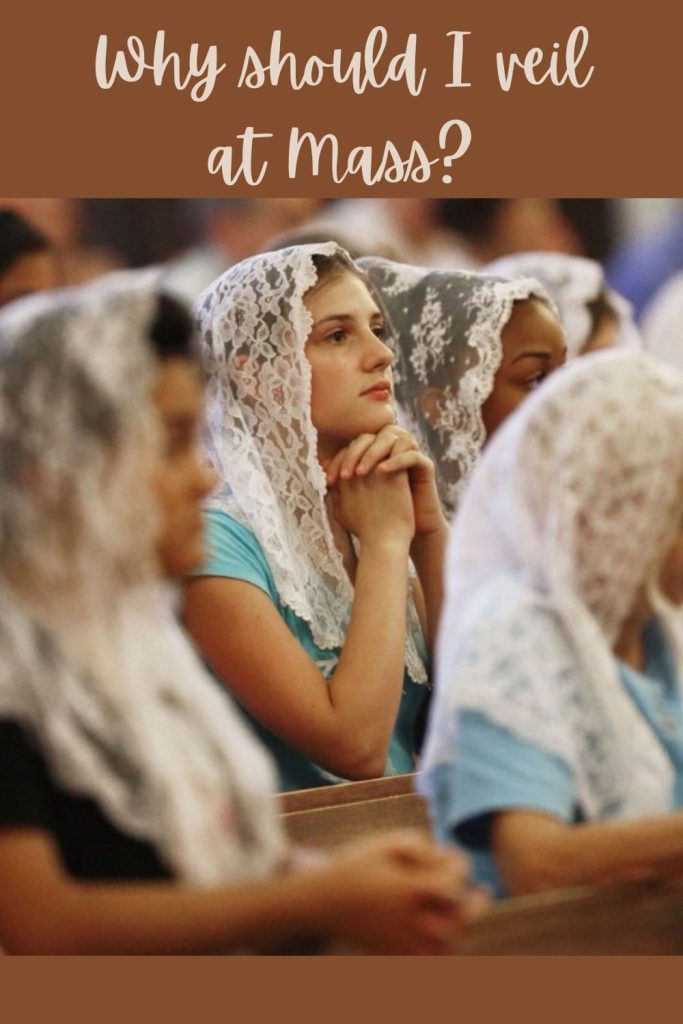
Why should a woman veils at mass?
 Biblical Truth
1 Corinthians 11:3–10 — St. Paul says clearly:
“The head of every man is Christ, the head of a woman is her husband, and the head of Christ is God. Every man who prays or prophesies with his head covered dishonors his head, but every woman who prays or prophesies with her head uncovered dishonors her head… That is why a woman ought to have a veil on her head, because of the angels.”
What it means:
– Man = image & glory of God → uncovers head to show he belongs directly to God
– Woman = glory of man, and image of the Church → covers head as sign of:
1. Reverence & humility before God
2. Modesty & purity — she is precious, set apart, like a sacred vessel
3. Sign of authority & order — just as the Church is subject to Christ, woman shows she belongs to God’s order
– “Because of the angels”: Angels cover their faces before God; we do the same in worship.
Catholic Tradition
– From the very beginning, all churches practiced this. Councils & Popes taught it as apostolic rule .
– 1917 Canon Law: “Women must have head covered in church, especially at Holy Communion”.
– 1983 Code: No longer required by law, but still recommended & encouraged — it is a sacred custom, not just culture.
– Our Lady: She always veiled herself — perfect example of humility and reverence.
CCC Teaching
CCC 2628: “In prayer, the Christian keeps his body in an attitude of respect… Women cover their heads, following the apostolic rule, as a sign of humility and modesty before God.”
CCC 1260: “Veil expresses the mystery: woman is image of the Church, which is hidden, loved, and holy, belonging only to Christ.”
Simple meaning
Not because women are less important — in God’s eyes, equal dignity!
It is a beautiful symbol:
– Man uncovers = direct to God, visible, active
– Woman covers = hidden beauty, humility, belonging, like a bride before her Groom (Christ)
It says: I am holy, I am here for God, I respect His presence, I am part of His order.
We veil because the Bible commands it, the Church always taught it, and it is a beautiful sign of reverence, modesty, humility, and being the image of the Church before God.
Source: Catechists of St. Francis Xavier
 Nelson MCBS
Leave a comment