
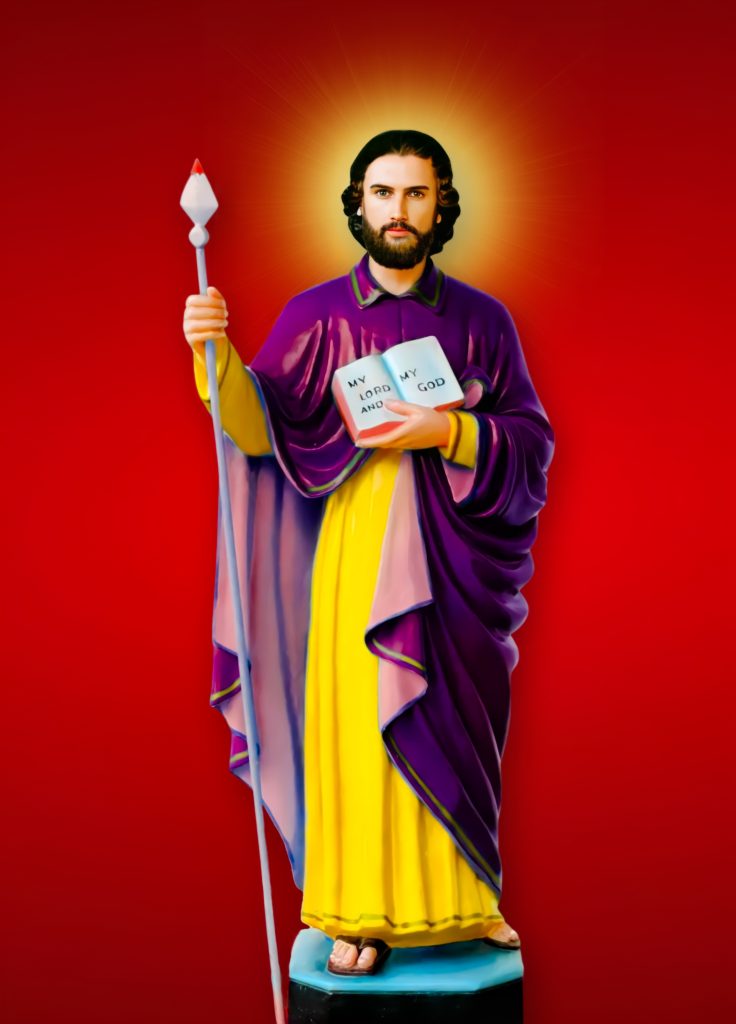
“My Lord and my God!” (John 20:28)
Introduction
Every year on 3 July, the Catholic Church celebrates the Feast of St. Thomas the Apostle, commonly known in India as St. Thomas Day. For Christians around the world, it is a day to honor one of the Twelve Apostles of Jesus Christ. For the Christians of India—especially the St. Thomas Christians of Kerala—the day carries even deeper significance, for according to ancient and enduring Christian tradition, St. Thomas brought the Gospel to India in AD 52, founded Christian communities along the Malabar Coast, and was later martyred near present-day Chennai around AD 72. (Vatican News)
St. Thomas Day is not merely a remembrance of an apostle from the distant past; it is a celebration of faith born from doubt, missionary courage, and the enduring presence of Christianity in India for nearly two millennia. His life reminds believers that honest questions can lead to deeper faith and that true discipleship often requires sacrifice.
Who Was St. Thomas?
St. Thomas, also called Didymus (meaning “Twin”), was one of the twelve apostles chosen by Jesus Christ.
Although the Synoptic Gospels mention him only briefly among the lists of the apostles, the Gospel of John presents Thomas as a courageous, thoughtful, and deeply committed disciple.
Three significant episodes reveal his personality:
1. Thomas’ Courage
When Jesus decided to return to Judea after the death of Lazarus, the other disciples feared for His safety because the religious leaders sought to kill Him.
Thomas courageously declared:
“Let us also go, that we may die with him.”
(John 11:16)
These words reveal that Thomas was not a coward but a loyal disciple prepared to suffer alongside his Master.
2. Thomas’ Search for Understanding
During the Last Supper, Jesus said:
“You know the way to where I am going.”
Thomas honestly replied:
“Lord, we do not know where you are going. How can we know the way?”
(John 14:5)
This question prompted one of Christ’s most famous declarations:
“I am the way, and the truth, and the life.”
(John 14:6)
Thomas’ question became the occasion for one of the greatest revelations in Scripture.
3. Thomas and the Risen Christ
The event for which Thomas is best remembered occurred after the Resurrection.
When Jesus first appeared to the apostles, Thomas was absent.
When the others proclaimed,
“We have seen the Lord,”
Thomas answered:
“Unless I see the mark of the nails… I will not believe.”
(John 20:25)
Eight days later Jesus appeared again and invited Thomas to touch His wounds.
Overwhelmed by the reality of the Resurrection, Thomas made one of the clearest professions of faith recorded in the New Testament:
“My Lord and my God!”
(John 20:28)
Jesus then spoke words that continue to encourage Christians throughout history:
“Blessed are those who have not seen and yet have believed.”
(John 20:29)
Rather than defining Thomas solely by his doubt, the Church remembers him for his journey from questioning to unwavering faith. (Vatican News)
St. Thomas’ Mission to India
Ancient Christian tradition holds that after Pentecost the apostles dispersed to different parts of the world to preach the Gospel.
According to the long-standing tradition of the Church, St. Thomas journeyed east through Persia and eventually reached the Malabar Coast of India in AD 52. (Vatican News)
Upon arriving in India, he preached among Jewish communities and local inhabitants, baptizing converts and establishing Christian congregations.
The Christian communities founded through his ministry became known as the St. Thomas Christians or Nasranis, and they preserve a continuous tradition tracing their origins to the Apostle himself.
According to Kerala tradition, St. Thomas founded Seven and a Half Churches (Ezharappallikal):
- Kodungallur (Muziris)
- Palayoor
- Kottakkavu (North Paravur)
- Kokkamangalam
- Niranam
- Nilackal (Chayal)
- Kollam
- Thiruvithamcode (the “Half Church”)
These churches remain important pilgrimage centers today.
The Martyrdom of St. Thomas
After years of missionary work, St. Thomas continued preaching in South India.
Tradition holds that he was martyred around AD 72 at St. Thomas Mount near Mylapore (Chennai), where he was killed with a spear while praying. (Vatican News)
His tomb at Mylapore has been revered by Christians for centuries and remains one of the most important Christian pilgrimage sites in India.
The spear, often depicted in Christian art, became the symbol of his martyrdom.
Why Is St. Thomas Day Celebrated on 3 July?
Although St. Thomas is believed to have been martyred around AD 72, the Roman Catholic Church celebrates his feast on 3 July.
Historically, this date commemorates the translation (transfer) of his relics to Edessa in the early centuries of Christianity. Following the post–Second Vatican Council revision of the Roman Calendar, 3 July became the universal feast day of St. Thomas the Apostle. (Catholic Culture)
For Indian Christians, the date also commemorates the Apostle’s enduring missionary legacy and the ancient roots of Christianity in India.
Significance of St. Thomas Day in India
India occupies a unique place in Christian history because, according to tradition, it received the Gospel directly from one of Christ’s apostles.
For Indian Christians, St. Thomas Day celebrates:
- The arrival of Christianity in India
- The apostolic origin of the Indian Church
- Nearly two thousand years of Christian witness
- The missionary spirit of the Gospel
- The unity of the universal Church
The Syro-Malabar Church, Syro-Malankara Church, the Latin Church, and many other Christian communities celebrate the feast with special solemnity.
Liturgical Celebration
The Feast of St. Thomas is celebrated with great devotion.
Typical observances include:
Solemn Holy Mass
Churches celebrate festive Eucharistic liturgies highlighting St. Thomas’ confession of faith:
“My Lord and my God.”
Scripture Readings
The liturgy typically includes:
- Ephesians 2:19–22 – The Church built upon the foundation of the apostles.
- Psalm 117 – “Go out to all the world and tell the Good News.”
- John 20:24–29 – Thomas encounters the risen Christ. (Catholic Culture)
Novenas and Special Prayers
Many parishes conduct novenas, Eucharistic adoration, processions, and devotional services seeking the intercession of St. Thomas.
Pilgrimages
Thousands of pilgrims visit:
- St. Thomas Mount, Chennai
- San Thome Basilica, Chennai
- Palayoor Church, Kerala
- Kodungallur
- Niranam
- Other ancient St. Thomas churches
These sacred places remind believers of the Apostle’s missionary zeal.
St. Thomas: Patron of India
Because of his apostolic mission, St. Thomas is honored as the Patron Saint of India in the Catholic tradition. He is also regarded as the patron of architects, builders, and those who struggle with doubt, drawing from traditions surrounding his life and martyrdom. (Catholic Apostolate Center Feast Days)
His life demonstrates that God can transform uncertainty into unwavering conviction.
Lessons from St. Thomas
1. Honest Doubt Can Lead to Strong Faith
Thomas teaches that sincere questions are not opposed to faith.
When honestly brought before Christ, they become opportunities for deeper belief.
2. Christ Meets Us Where We Are
Jesus did not reject Thomas for doubting.
Instead, He lovingly invited him to believe.
God continues to meet believers amid their struggles and uncertainties.
3. Faith Leads to Mission
After encountering the risen Christ, Thomas did not remain in Jerusalem.
He carried the Gospel thousands of kilometers to India.
Authentic faith naturally becomes missionary.
4. True Faith Requires Commitment
Thomas ultimately sealed his witness with martyrdom.
His life reminds Christians that discipleship involves sacrifice and perseverance.
5. Christ Is Truly Lord and God
Thomas’ confession remains one of the clearest affirmations of Christ’s divinity in the New Testament.
His words continue to be repeated in Christian worship:
“My Lord and my God.”
Celebrating St. Thomas Day Today
Families and parish communities can observe the feast by:
- Participating in Holy Mass.
- Reading John 20:24–29 together.
- Praying for the Church in India and missionaries throughout the world.
- Reflecting on personal doubts and bringing them to Christ in prayer.
- Studying the history of Christianity in India.
- Visiting churches dedicated to St. Thomas where possible.
- Renewing commitment to evangelization through words and charitable actions.
St. Thomas and the Church in India
The story of St. Thomas continues to shape the identity of Indian Christianity. The ancient Christian communities of Kerala preserve liturgical traditions, customs, and ecclesial heritage that witness to the apostolic origins of the faith in India. While historians continue to study the details of Thomas’s journey, the tradition of his mission has remained central to the faith and identity of the St. Thomas Christians for centuries. (Vatican News)
Today, millions of Indian Christians look to St. Thomas not merely as a historical figure but as the apostle who planted the seeds of the Gospel in their land.
Conclusion
St. Thomas Day is a celebration of faith that triumphs over doubt, courage that overcomes fear, and missionary zeal that crosses every boundary. The Apostle who once asked questions became the disciple who made one of the most profound professions of faith in the New Testament: “My Lord and my God.” From the Upper Room in Jerusalem to the shores of Kerala and the hills of Mylapore, his journey illustrates the transforming power of an encounter with the Risen Christ.
For the Church in India, St. Thomas is more than a revered apostle; he is the spiritual father whose missionary witness laid the foundation for one of the world’s oldest Christian traditions. As Christians celebrate his feast each year on 3 July, they are invited to imitate his courage, deepen their faith, embrace the call to evangelization, and proclaim with conviction that Jesus Christ is truly Lord and God.
Leave a Reply