

“From Distance to Discipleship: A Journey of Gratitude”
Luke 17: 11-19
Jesus is on the way to Jerusalem, as a pilgrim and traveler toward the heart of God’s plan: the salvation of the world. Every step of His journey is filled with meaning, because Jerusalem is not simply a city on a hill, but the place of sacrifice, the place where the Father’s love will be revealed in its fullness through the Cross and Resurrection. Along the way, He meets people in their brokenness, their need, their hope — and every encounter becomes a revelation of God’s mercy.
Among these encounters, the Gospel tells us of the ten lepers. From a distance, they lift their voices, “Jesus, Master, have pity on us!” They call Him by name. To call on the name of Jesus is itself an act of faith. Even before healing takes place, even before they are restored, they show that they believe enough to name Him, to direct their need toward Him. This is the smallest and
As St. John Chrysostom reminds us, to invoke the name of Jesus with faith is already a prayer of power: “The very name of Jesus Christ is great, even when only pronounced by the mouth. For wherever the name of Jesus is pronounced, there He Himself is present.”
The Gospel paints their misery vividly: torn garments, disfigured skin, voices trained to cry out, “Unclean, unclean!” This was not only a physical illness; it was an exile from family, worship, and the community of God’s people. They lived as though they were already dead. Their lives were a constant reminder of separation, from neighbor, from worship, even from God. And yet, even from that place of distance, they dare to cry out to Jesus. That cry, that turning of their hearts toward Him, is already the beginning of faith.
St. Cyril of Alexandria interprets leprosy as an image of sin: disfiguring the soul, isolating us from communion, eating away at our beauty as children of God. He writes, “The leprosy that afflicts the soul is far more dangerous than that of the body, for sin separates man from God and casts him outside the camp of the saints.”
And yet, even from that distance, they cry out to Jesus. He does not heal them instantly. Instead, He gives a command: “Go, show yourselves to the priests.” This is a test of faith and obedience. The Law required that a priest declare a leper cleansed before he could return to society.
As St. Augustine notes, the miracle occurs not in an instant of spectacle, but in the journey of obedience: “The word of the Lord does not deceive. They were not yet cleansed when they were commanded to go, but in obeying, they were healed. For obedience is itself the path to healing.” In other words, faith is not mere belief; it is action, movement, trust that takes the first step even without visible proof. Healing here is not a spectacle; it is a journey. It unfolds as they move in trust. Faith in Luke’s Gospel is never static, it is active, responsive, willing to risk obedience even without visible proof.
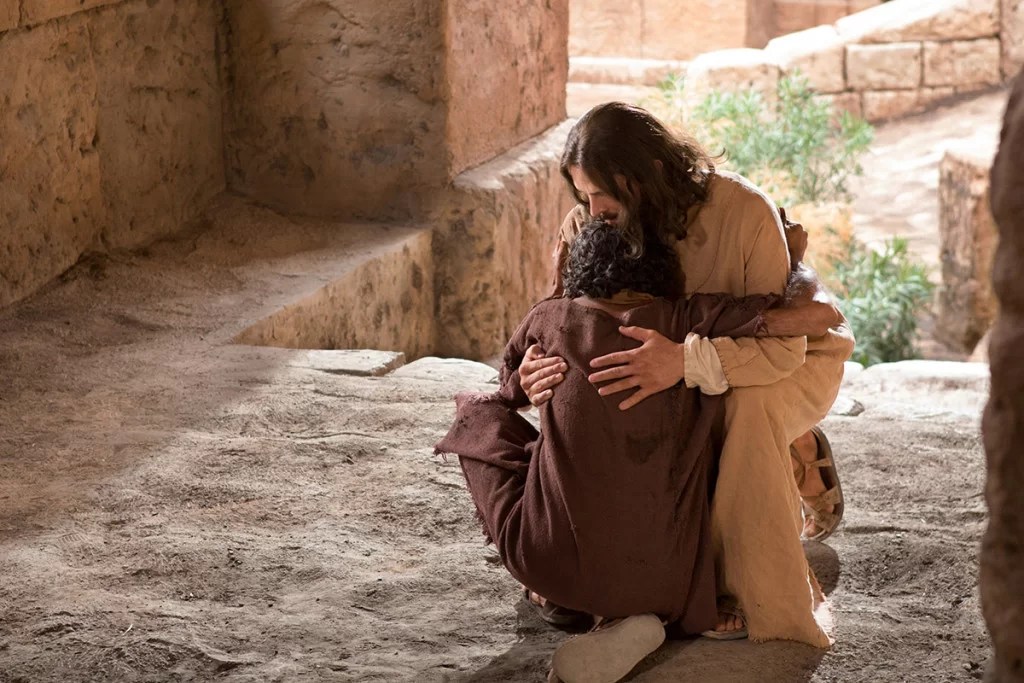
Then comes the turning point of the story. Nine continue onward, but one, a Samaritan, a foreigner returns. His return is more than gratitude; it is conversion. He realizes that healing is not complete until he acknowledges the Giver. He realizes that the gift he has received demands a response, and that response is thanksgiving. He falls at the feet of Jesus and gives thanks. His body is healed, but more importantly, his heart is transformed.
This Samaritan shows us that healing is not complete until it turns into gratitude and discipleship. Thanksgiving is the true completion of any miracle. To be restored to health is not the end of the story. True healing means returning to the Giver, clinging to the feet of the Master, and beginning the journey with Him. What matters is not simply that we are blessed, but that we know how to return and give thanks.
The Samaritan, by his thanksgiving, shows us the deepest meaning of healing: restoration not only to health, but to communion, to worship, to discipleship. The Greek word for thanksgiving is Eucharist. At that moment, the Samaritan was celebrating the first Eucharist of his life: giving thanks at the feet of Jesus, recognizing the presence of God in the One who had healed him.
Notice the final words of Jesus: “Rise and go; your faith has saved you.” Here again the Fathers hear the voice of resurrection. Origen points out that this rising is a symbol of new life in Christ: no longer bound by the sickness of sin.”
Notice the final words of Jesus: “Rise and go; your faith has saved you.” Healing, forgiveness, grace, these are never meant to leave us where we were. To “rise” is the language of resurrection, “to be lifted up with Christ, to walk in the newness of life. It means being lifted from shame, sin, and despair into life, joy, and hope. And to go is to enter the road of discipleship, carrying the joy of salvation into the world. Healing is never for us alone; it always carries a missionary purpose.
What, then, does this teach us spiritually?
- Recognize leprosy in our own lives. The most dangerous leprosy is not visible on the skin but hidden in the heart. Sin isolates us from God, from others, and even from ourselves. Pride, resentment, habits of selfishness, bitterness, these are wounds that eat away at our souls. Like the lepers, we may find ourselves withdrawing, hiding our faces, covering our wounds. The first step toward healing is to name sickness, to acknowledge the wound. Only then can we cry out for mercy.
- Make the name of Jesus your refuge. The lepers teach us a prayer that is simple yet profound: “Jesus, Master, have mercy.” This prayer, known as the Jesus Prayer in Christian tradition, is a lifeline. In fear, in temptation, in loneliness, in sin – call on His name. His name is a bridge between our weakness and His strength. It creates a relationship, a personal connection that grows through faith, obedience, and love. Every time we call His name sincerely, we invite His presence into our hearts, into our homes, into our communities. The simple invocation – Jesus! – is both our prayer and our embrace of the One who heals, saves, and makes all things new.
- Understand that faith is active obedience. When Jesus told the lepers to go, He was asking them to trust His word enough to act. The same is true for us. Faith is not only about feelings or ideas, it is lived in obedience. It is seen in the humble steps we take: going to confession to name our sins before the priest, coming to Mass faithfully even when we feel distracted, practicing works of mercy for the poor and lonely. God heals us as we walk, as we respond to His commands.
- Treasure thanksgiving. Nine were healed, but only one returned. Gratitude is what completes the miracle. The Eucharist – the thanksgiving – is not optional; it is the very heart of Christian life. If we have received Christ’s mercy, if we have been forgiven, if we have been fed at His table, then our first response must be thanksgiving. A life of faith is not only about receiving, but about returning, about living every day in gratitude.
- Be sent to others. Jesus sends the healed Samaritan: “Go your way.” Every healing, every grace, every forgiveness is meant to overflow into mission. If you have received mercy, then show mercy. If you have been forgiven, then forgive. If you have been restored, then seek out the wounded and be present to them. Our discipleship is not private; it is always communal, always missionary.
Brothers and sisters, this is our story at every Mass. We come carrying our wounds, our sins, our leprosies – visible or hidden. At the altar, Christ meets us. He heals, forgives, and feeds us. But the miracle is not complete until we, like the Samaritan, return in thanksgiving, fall at His feet in worship, and then rise and go forth to live as disciples.
Let us not be numbered among the nine who forgot, but among the one who remembered. Let us live as Eucharistic people, for as St. Augustine says, “We are Easter people, and Alleluia is our song.” And let us hear Jesus say to us, today and always: “Rise and go; your faith has saved you.”
Amen.
✍ Fr James Abraham
 Nelson MCBS
Leave a comment