

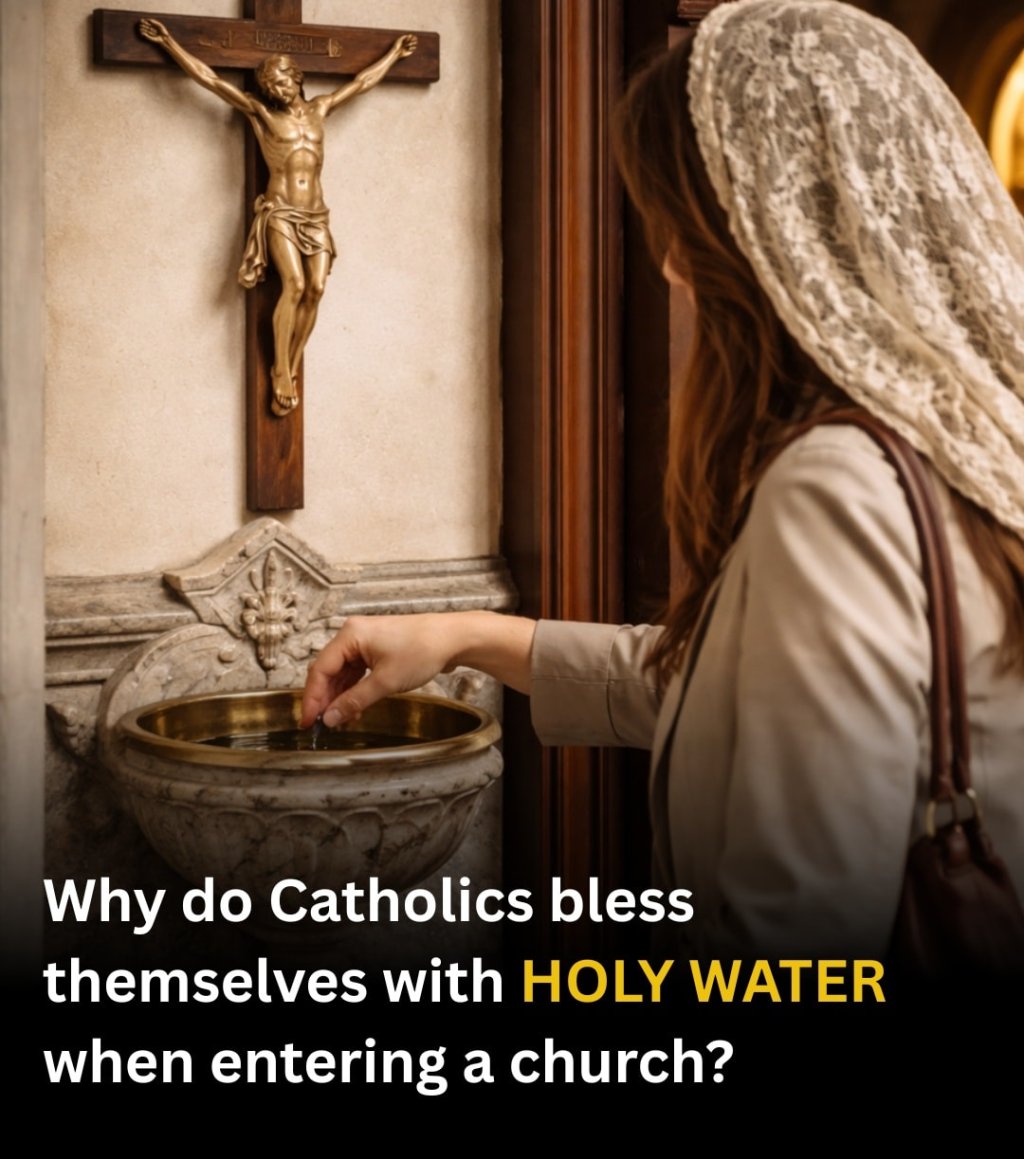
When visiting a Catholic church for Sunday Mass, it is hard not to notice all the parishioners pause for a second as they file in through the various entrances. They stop, dip their fingers in a bowl of water and then make the sign of the cross over their body.
Why do they do that?
Besides remembering Christ’s passion and professing their faith in the Holy Trinity, Catholics bless themselves with holy water primarily as a reminder of our Baptism.
The Catechism of the Catholic Church explains why water plays such an important role in the life of the Church.
“𝘛𝘩𝘦 𝘴𝘺𝘮𝘣𝘰𝘭𝘪𝘴𝘮 𝘰𝘧 𝘸𝘢𝘵𝘦𝘳 𝘴𝘪𝘨𝘯𝘪𝘧𝘪𝘦𝘴 𝘵𝘩𝘦 𝘏𝘰𝘭𝘺 𝘚𝘱𝘪𝘳𝘪𝘵’𝘴 𝘢𝘤𝘵𝘪𝘰𝘯 𝘪𝘯 𝘉𝘢𝘱𝘵𝘪𝘴𝘮, 𝘴𝘪𝘯𝘤𝘦 𝘢𝘧𝘵𝘦𝘳 𝘵𝘩𝘦 𝘪𝘯𝘷𝘰𝘤𝘢𝘵𝘪𝘰𝘯 𝘰𝘧 𝘵𝘩𝘦 𝘏𝘰𝘭𝘺 𝘚𝘱𝘪𝘳𝘪𝘵 𝘪𝘵 𝘣𝘦𝘤𝘰𝘮𝘦𝘴 𝘵𝘩𝘦 𝘦𝘧𝘧𝘪𝘤𝘢𝘤𝘪𝘰𝘶𝘴 𝘴𝘢𝘤𝘳𝘢𝘮𝘦𝘯𝘵𝘢𝘭 𝘴𝘪𝘨𝘯 𝘰𝘧 𝘯𝘦𝘸 𝘣𝘪𝘳𝘵𝘩: 𝘫𝘶𝘴𝘵 𝘢𝘴 𝘵𝘩𝘦 𝘨𝘦𝘴𝘵𝘢𝘵𝘪𝘰𝘯 𝘰𝘧 𝘰𝘶𝘳 𝘧𝘪𝘳𝘴𝘵 𝘣𝘪𝘳𝘵𝘩 𝘵𝘰𝘰𝘬 𝘱𝘭𝘢𝘤𝘦 𝘪𝘯 𝘸𝘢𝘵𝘦𝘳, 𝘴𝘰 𝘵𝘩𝘦 𝘸𝘢𝘵𝘦𝘳 𝘰𝘧 𝘉𝘢𝘱𝘵𝘪𝘴𝘮 𝘵𝘳𝘶𝘭𝘺 𝘴𝘪𝘨𝘯𝘪𝘧𝘪𝘦𝘴 𝘵𝘩𝘢𝘵 𝘰𝘶𝘳 𝘣𝘪𝘳𝘵𝘩 𝘪𝘯𝘵𝘰 𝘵𝘩𝘦 𝘥𝘪𝘷𝘪𝘯𝘦 𝘭𝘪𝘧𝘦 𝘪𝘴 𝘨𝘪𝘷𝘦𝘯 𝘵𝘰 𝘶𝘴 𝘪𝘯 𝘵𝘩𝘦 𝘏𝘰𝘭𝘺 𝘚𝘱𝘪𝘳𝘪𝘵. 𝘈𝘴 ‘𝘣𝘺 𝘰𝘯𝘦 𝘚𝘱𝘪𝘳𝘪𝘵 𝘸𝘦 𝘸𝘦𝘳𝘦 𝘢𝘭𝘭 𝘣𝘢𝘱𝘵𝘪𝘻𝘦𝘥,’ 𝘴𝘰 𝘸𝘦 𝘢𝘳𝘦 𝘢𝘭𝘴𝘰 ‘𝘮𝘢𝘥𝘦 𝘵𝘰 𝘥𝘳𝘪𝘯𝘬 𝘰𝘧 𝘰𝘯𝘦 𝘚𝘱𝘪𝘳𝘪𝘵.’ 𝘛𝘩𝘶𝘴 𝘵𝘩𝘦 𝘚𝘱𝘪𝘳𝘪𝘵 𝘪𝘴 𝘢𝘭𝘴𝘰 𝘱𝘦𝘳𝘴𝘰𝘯𝘢𝘭𝘭𝘺 𝘵𝘩𝘦 𝘭𝘪𝘷𝘪𝘯𝘨 𝘸𝘢𝘵𝘦𝘳 𝘸𝘦𝘭𝘭𝘪𝘯𝘨 𝘶𝘱 𝘧𝘳𝘰𝘮 𝘊𝘩𝘳𝘪𝘴𝘵 𝘤𝘳𝘶𝘤𝘪𝘧𝘪𝘦𝘥 𝘢𝘴 𝘪𝘵𝘴 𝘴𝘰𝘶𝘳𝘤𝘦 𝘢𝘯𝘥 𝘸𝘦𝘭𝘭𝘪𝘯𝘨 𝘶𝘱 𝘪𝘯 𝘶𝘴 𝘵𝘰 𝘦𝘵𝘦𝘳𝘯𝘢𝘭 𝘭𝘪𝘧𝘦” (𝘊𝘊𝘊 694).
The Catechism further instructs about the need for a place within the church walls for a remembrance of this birth in the life of grace.
“𝘛𝘩𝘦 𝘨𝘢𝘵𝘩𝘦𝘳𝘪𝘯𝘨 𝘰𝘧 𝘵𝘩𝘦 𝘗𝘦𝘰𝘱𝘭𝘦 𝘰𝘧 𝘎𝘰𝘥 𝘣𝘦𝘨𝘪𝘯𝘴 𝘸𝘪𝘵𝘩 𝘉𝘢𝘱𝘵𝘪𝘴𝘮; 𝘢 𝘤𝘩𝘶𝘳𝘤𝘩 𝘮𝘶𝘴𝘵 𝘩𝘢𝘷𝘦 𝘢 𝘱𝘭𝘢𝘤𝘦 𝘧𝘰𝘳 𝘵𝘩𝘦 𝘤𝘦𝘭𝘦𝘣𝘳𝘢𝘵𝘪𝘰𝘯 𝘰𝘧 𝘉𝘢𝘱𝘵𝘪𝘴𝘮 (𝘣𝘢𝘱𝘵𝘪𝘴𝘵𝘳𝘺) 𝘢𝘯𝘥 𝘧𝘰𝘳 𝘧𝘰𝘴𝘵𝘦𝘳𝘪𝘯𝘨 𝘳𝘦𝘮𝘦𝘮𝘣𝘳𝘢𝘯𝘤𝘦 𝘰𝘧 𝘵𝘩𝘦 𝘣𝘢𝘱𝘵𝘪𝘴𝘮𝘢𝘭 𝘱𝘳𝘰𝘮𝘪𝘴𝘦𝘴 (𝘩𝘰𝘭𝘺 𝘸𝘢𝘵𝘦𝘳 𝘧𝘰𝘯𝘵)” (𝘊𝘊𝘊 1185).
Originally the water used for baptisms and holy water fonts was blessed once a year at the Easter Vigil and preserved for the whole year. A portion of the water is still blessed by the priest during a ceremony at the Easter Vigil where the congregation is reminded of the many saving acts of God in history that occurred through water. The blessing concludes when the Easter candle, representing the Light of Christ, is lowered into the water three times. By this act the water is deemed “holy” and set apart for this specific function.
𝗟𝗲𝗮𝘃𝗶𝗻𝗴 𝘁𝗵𝗲 𝘀𝗲𝗰𝘂𝗹𝗮𝗿 𝗮𝗻𝗱 𝗲𝗻𝘁𝗲𝗿𝗶𝗻𝗴 𝘁𝗵𝗲 𝘀𝗮𝗰𝗿𝗲𝗱
In addition to being a reminder of the rebirth experienced at Baptism, holy water fonts also provide a practical function that helps transition from the secular world into the House of God.
According to Fr. John Bartunek at SpiritualDirection. com, the holy water fonts were originally much bigger and were mainly used to cleanse a person’s dirty body before walking into the sacred space.
“𝘌𝘷𝘦𝘯 𝘪𝘯 𝘢𝘯𝘤𝘪𝘦𝘯𝘵 𝘯𝘰𝘯-𝘊𝘩𝘳𝘪𝘴𝘵𝘪𝘢𝘯 𝘳𝘦𝘭𝘪𝘨𝘪𝘰𝘯𝘴 (𝘪𝘯𝘤𝘭𝘶𝘥𝘪𝘯𝘨 𝘑𝘶𝘥𝘢𝘪𝘴𝘮), 𝘳𝘪𝘵𝘶𝘢𝘭 𝘢𝘣𝘭𝘶𝘵𝘪𝘰𝘯𝘴 (𝘸𝘢𝘴𝘩𝘪𝘯𝘨𝘴) 𝘸𝘦𝘳𝘦 𝘧𝘳𝘦𝘲𝘶𝘦𝘯𝘵𝘭𝘺 𝘢𝘯 𝘪𝘯𝘪𝘵𝘪𝘢𝘭 𝘴𝘵𝘦𝘱 𝘪𝘯 𝘧𝘰𝘳𝘮𝘢𝘭 𝘸𝘰𝘳𝘴𝘩𝘪𝘱. 𝘈𝘯𝘥 𝘴𝘰, 𝘸𝘩𝘦𝘯 𝘵𝘩𝘦 𝘧𝘪𝘳𝘴𝘵 𝘊𝘩𝘳𝘪𝘴𝘵𝘪𝘢𝘯 𝘩𝘰𝘶𝘴𝘦𝘴 𝘰𝘧 𝘸𝘰𝘳𝘴𝘩𝘪𝘱 𝘸𝘦𝘳𝘦 𝘣𝘶𝘪𝘭𝘵, 𝘵𝘩𝘦 𝘢𝘵𝘳𝘪𝘶𝘮 𝘵𝘩𝘢𝘵 𝘧𝘰𝘳𝘮𝘦𝘥 𝘢 𝘬𝘪𝘯𝘥 𝘰𝘧 𝘵𝘳𝘢𝘯𝘴𝘪𝘵𝘪𝘰𝘯 𝘴𝘱𝘢𝘤𝘦 𝘣𝘦𝘵𝘸𝘦𝘦𝘯 𝘵𝘩𝘦 𝘰𝘶𝘵𝘴𝘪𝘥𝘦, 𝘱𝘶𝘣𝘭𝘪𝘤 𝘢𝘳𝘦𝘯𝘢 𝘢𝘯𝘥 𝘵𝘩𝘦 𝘤𝘩𝘶𝘳𝘤𝘩 𝘱𝘳𝘰𝘱𝘦𝘳, 𝘸𝘩𝘦𝘳𝘦 𝘵𝘩𝘦 𝘭𝘪𝘵𝘶𝘳𝘨𝘺 𝘸𝘢𝘴 𝘤𝘦𝘭𝘦𝘣𝘳𝘢𝘵𝘦𝘥, 𝘰𝘧𝘵𝘦𝘯 𝘤𝘰𝘯𝘵𝘢𝘪𝘯𝘦𝘥 𝘢 𝘭𝘢𝘳𝘨𝘦 𝘧𝘰𝘶𝘯𝘵𝘢𝘪𝘯. 𝘞𝘰𝘳𝘴𝘩𝘪𝘱𝘦𝘳𝘴 𝘸𝘰𝘶𝘭𝘥 𝘴𝘵𝘰𝘱 𝘢𝘵 𝘵𝘩𝘦 𝘧𝘰𝘶𝘯𝘵𝘢𝘪𝘯 𝘢𝘯𝘥 𝘣𝘢𝘵𝘩𝘦 𝘵𝘩𝘦𝘪𝘳 𝘩𝘢𝘯𝘥𝘴 𝘢𝘯𝘥 𝘧𝘦𝘦𝘵 (𝘴𝘩𝘰𝘦𝘴 𝘸𝘦𝘳𝘦 𝘯𝘰𝘵 𝘢𝘴 𝘤𝘰𝘮𝘮𝘰𝘯 𝘪𝘯 𝘢𝘯𝘤𝘪𝘦𝘯𝘵 𝘵𝘪𝘮𝘦𝘴 𝘢𝘴 𝘵𝘩𝘦𝘺 𝘢𝘳𝘦 𝘯𝘰𝘸, 𝘢𝘵 𝘭𝘦𝘢𝘴𝘵 𝘪𝘯 𝘵𝘩𝘦 𝘸𝘢𝘳𝘮𝘦𝘳 𝘤𝘭𝘪𝘮𝘢𝘵𝘦𝘴) 𝘣𝘦𝘧𝘰𝘳𝘦 𝘦𝘯𝘵𝘦𝘳𝘪𝘯𝘨 𝘵𝘩𝘦 𝘴𝘢𝘤𝘳𝘦𝘥 𝘴𝘱𝘢𝘤𝘦.”
Even Jesus washed the feet of his disciples before celebrating the first Eucharist.
While not currently used in that same way, holy water fonts still provide a reminder that before we can enter the “Wedding Feast of the Lamb,” we must wash ourselves and put on the “wedding garment” to be admitted to the table.
In the end, while it is sometimes easy to get into the habit of entering a Catholic church and rushing through the ritual of blessing oneself with holy water, the symbolism behind the act is worth pausing a few extra seconds.
It is meant to be a reminder of our Baptism and provides an opportunity to leave behind the secular and enter into the sacred.
𝑆𝑜𝑢𝑟𝑐𝑒: 𝐴𝑙𝑒𝑡𝑒𝑖𝑎
 Nelson MCBS
Leave a comment