

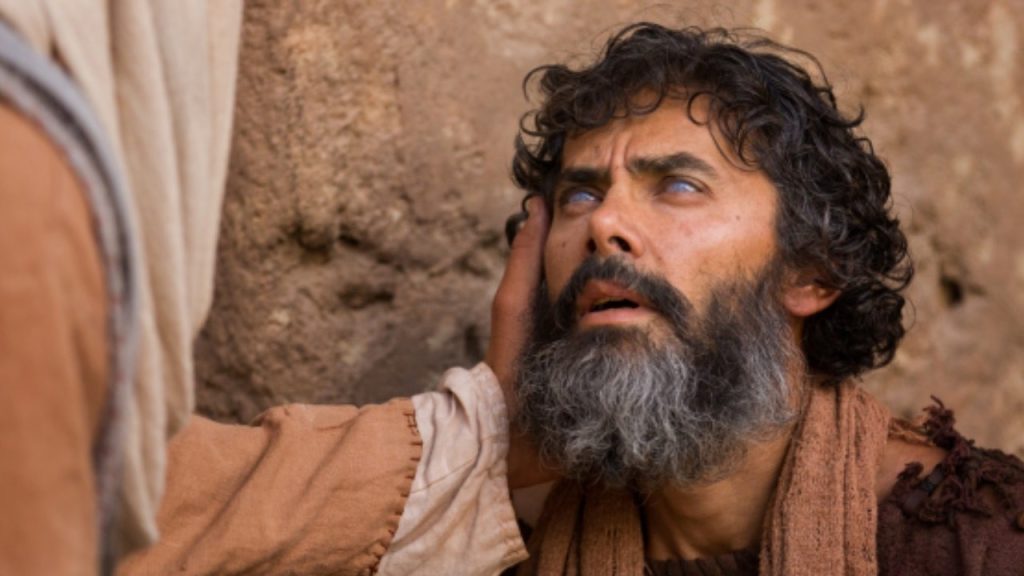
“From Blindness to Light” | John 9: 1-41
During this holy season of Lent, the Church invites us to slow down, to examine our hearts, and to allow Christ to lead us from darkness into light. Today’s Gospel from the Gospel of John chapter 9 presents one of the most moving encounters in the ministry of Jesus: the healing of the man born blind.
The story begins quietly with a simple but powerful line:
“As Jesus passed by, He saw a man blind from birth.”
Notice the first movement in the story. The blind man does not cry out for help. He doesn’t even know that Jesus is nearby. Yet Jesus sees him.
As St. John Chrysostom reflects, Christ always takes the first step toward us. Before we search for Him, He has already seen us. Before we call His name, He has already looked upon us with compassion. Grace begins not with our searching for God, but with God searching for us.
This is one of the quiet truths of spiritual life: God sees us before we see Him.
This is a beautiful truth for the season of Lent. Many of us come to church carrying burdens, our sins, our weaknesses, our struggles, our questions. We may feel distant from God. But the Gospel reminds us that even before we begin to look for God, He is already looking at us with love.
Even in the moments when we feel lost, unnoticed, or forgotten, Christ passes by and He sees us. Christ sees us exactly where we are.
When the disciples notice the blind man, they ask a question that people still ask today:
“Rabbi, who sinned, this man or his parents, that he was born blind?”
It is a question about suffering. Why does suffering exist? Why do some people carry heavy burdens from the very beginning of their lives?
In the ancient world, many believed suffering was always a punishment for sin. But Jesus gently corrects that way of thinking.
He answers:
“Neither he nor his parents sinned; it is so that the works of God might be made visible through him.”
St. Augustine explains that Jesus is not denying the reality of sin in the world. Rather, He is teaching that not every suffering is a direct punishment.
Sometimes suffering remains a mystery. Yet in the hands of God, even suffering can become the place where God’s grace quietly unfolds.
As St. Gregory the Great reflects, God can draw good even from what appears dark or painful. God sometimes allows hardship not to destroy us, but as a hidden preparation for a greater revelation of God’s goodness.
In this light, the hardships of life are not meaningless accidents. They can become moments through which God reshapes the heart. What we experience as weakness can become the place where God reveals His mercy.
Lent invites us to bring our wounds, our struggles, and even our spiritual blindness before the Lord. Sometimes the Lord allows darkness not to abandon us, but so that when the light appears, we may love Him more ardently than before.
Because often the very places we hide from God are the places where He desires to work most deeply.
In the midst of this encounter, Jesus makes a profound declaration:
“While I am in the world, I am the light of the world.”
Blindness in this Gospel is not only about the eyes. It is also about the heart.
St. Augustine says the blind man represents all humanity. Because of sin, the human heart lost its clarity of vision. We were created to see God, to know Him, and to live in His light. Yet sin darkened our sight
Lent is the time when Christ gently comes to restore that sight. Christ entered the world to restore that sight. He comes not only to forgive our sins, but to open our eyes to help us see God again, to see others with compassion, and to see ourselves with humility and truth.
The Gospel tells us that Jesus does something unusual.
He spits on the ground, makes clay, and places it on the blind man’s eyes. Why such a strange gesture?
St. John Chrysostom reminds us that in the Book of Genesis, God formed the first human being from the dust of the earth. By using clay again, Jesus reveals something profound: the Creator Himself is touching His creation. The One who formed the human body in the beginning now restores it.
St. Augustine offers another contemplative insight. The clay symbolizes the mystery of the Incarnation, God joining Himself to our human nature. Through Christ’s humanity, our spiritual blindness begins to heal.
The touch of Christ may come quietly in our lives:
through Scripture,
through prayer,
through the sacraments,
through the kindness of another person.
But whenever Christ touches our lives, something begins to change.
After placing the clay on the man’s eyes, Jesus tells him:
“Go wash in the pool of Siloam.”
The man cannot yet see, he does not ask for explanations, but he obeys. He walks through the streets, still blind, trusting the word of Jesus. This small act of obedience becomes the turning point of his life.
When the man washes in the pool, he returns seeing. Darkness becomes light.
St. Augustine sees in this journey a symbol of baptism. First the man is anointed like a catechumen preparing for the sacrament. Then he goes to wash, and he comes back seeing. This is exactly what happens in baptism. Through Christ, we pass from darkness to light.
This movement from darkness to washing, from washing to light mirrors the journey of the Christian life.
During Lent, the Church especially accompanies those preparing for baptism. But in a deeper sense, all of us are invited to renew our baptism to allow Christ again to cleanse our hearts and restore our sight.
After the miracle, the story takes an unexpected turn. The real drama is no longer about the blind man. It is about the people around him. People begin questioning him.
Ironically, the man who was blind begins to see more and more clearly, while those who claim to see remain spiritually blind.
He openly admits that he was once blind. He is not ashamed of it. He does not hide his past.
This is an important lesson for all of us. Sometimes we feel embarrassed by our weaknesses or our past sins. But the Gospel shows us something beautiful: the places of our wounds can become the places where God’s mercy shines most brightly.
The blind man can now say something powerful: “I was blind, and now I see.”
Perhaps the most beautiful moment in the entire Gospel comes when the Pharisees pressure the man to deny what happened.
They say to him: “Give glory to God. We know that this man is a sinner.”
But the man answers with simple honesty: “Whether he is a sinner I do not know. One thing I do know: I was blind, and now I see.”
He does not argue. He does not pretend to know everything. He simply speaks the truth of what God has done for him. This quiet testimony becomes stronger than all the arguments around him.
The Gospel today gently invites us to ask ourselves a question:
Where in my life do I still need Christ to open my eyes?
Perhaps we are blind to God’s presence in ordinary moments, blind to the suffering around us, and blind to our own need for conversion.
Lent is a season when Christ passes by again. He looks upon us with compassion, just as He looked upon the blind man.
And He desires to touch our eyes and restore our sight.
At the end of the story, the man who once sat in darkness now stands in the light.
But more importantly, he stands before Jesus and worships Him.
This is the true goal of every grace, every healing, every sacrament: to lead us to faith and to worship.
May this Lenten season allow Christ to touch our hearts.
May He gently open our eyes.
And may we learn, like the healed man, to say with humility and gratitude:
“Lord, I believe.”
 Nelson MCBS
Leave a comment