

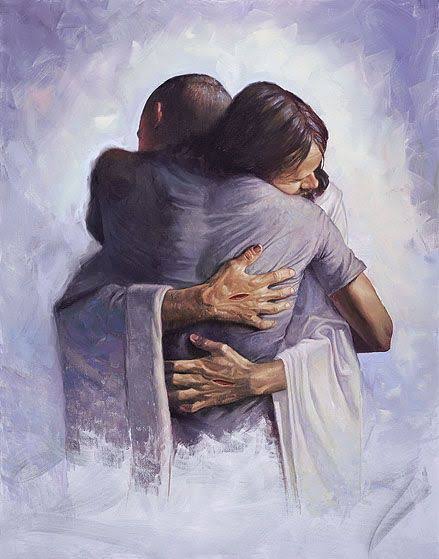
Jesus Cleanses Ten Lepers
11 On the way to Jerusalem Jesus was going through the region between Samaria and Galilee.
12 As he entered a village, ten men with a skin disease approached him. Keeping their distance,
13 they called out, saying, “Jesus, Master, have mercy on us!”
14 When he saw them, he said to them, “Go and show yourselves to the priests.” And as they went, they were made clean.
15 Then one of them, when he saw that he was healed, turned back, praising God with a loud voice.
16 He prostrated himself at Jesus’s feet and thanked him. And he was a Samaritan.
17 Then Jesus asked, “Were not ten made clean? But the other nine, where are they?
18 Was none of them found to return and give praise to God except this foreigner?”
19 Then he said to him, “Get up and go on your way; your faith has made you well.”
🔎 Verse-by-Verse Explanation
v.11 – Jesus is on the way to Jerusalem. This journey is not just geographical but theological: Jerusalem is the place of His passion, death, and resurrection.
v.12 – Ten lepers meet Him “from a distance.” Leprosy separated them from society and worship. Sin does the same to us spiritually—it isolates.
v.13 – They cry: “Jesus, Master, have mercy on us!” — the same cry as the Kyrie eleison in liturgy. It shows both need and faith.
v.14 – Jesus tells them: “Go show yourselves to the priests.” According to the Law (Lev. 14), priests had to declare a leper clean. The miracle happens on the way — obedience + faith lead to healing.
v.15–16 – One turns back, praising God and thanking Jesus. He was a Samaritan—a “foreigner,” considered outside God’s people. Gratitude breaks barriers.
v.17–18 – Jesus notices the absence of the other nine. Healing was given, but only one entered into deeper relationship through thanksgiving.
v.19 – To the Samaritan, Jesus says: “Your faith has made you well.” The Greek can also mean “saved.” Physical healing becomes spiritual salvation through gratitude and faith.
✨ Reflection / Sermon Outline
Theme: “From Distance to Discipleship: The Journey of Gratitude”
- From Distance (v.12–13)
- Lepers cry out from afar.
- We often stand at a distance from God because of sin, guilt, or fear.
- Yet even from afar, a cry of faith reaches Jesus.
- Faith in Obedience (v.14)
- They were not healed instantly but “as they went.”
- Faith is walking in trust, even before seeing results.
- The Forgotten Gift (v.15–17)
- Nine received healing but forgot the Healer.
- Gratitude is the bridge between blessing and discipleship.
- The Grateful Outsider (v.16–18)
- The Samaritan, the least expected, becomes the true disciple.
- God’s grace often shines brightest in unexpected places.
- Faith that Saves (v.19)
- Healing restored their bodies; gratitude brought salvation.
- Gratitude transforms a miracle into a relationship.
🌱 Key Takeaway for Today
- We all receive countless blessings, but do we pause to thank God?
- True discipleship begins not just in asking but in returning with gratitude.
- Faith + Gratitude = Wholeness (Salvation).
Homily on Luke 17:11–19
Brothers and sisters in Christ,
Today’s Gospel is one of the most beautiful and practical lessons of Jesus on faith, healing, and gratitude. Luke 17:11–19 tells the story of ten lepers who were healed by Jesus, but only one—a Samaritan—returned to give thanks. On the surface it looks like a simple story of healing, but if we look deeper, it reveals to us the very heart of Christian life: that salvation is not only about receiving blessings but about responding with faith and thanksgiving.
1. From Distance to Cry for Mercy
We are told that Jesus was “on the way to Jerusalem,” the place of His sacrifice. On the road, He encounters ten men suffering from leprosy. According to the Jewish law, lepers were forced to live outside the village, cut off from family, friends, and worship. They “stood at a distance” and shouted, “Jesus, Master, have mercy on us!”
This is the human condition: sin and suffering often push us into distance—from God, from others, and even from ourselves. Many of us live at a “distance” through broken relationships, addictions, guilt, or unhealed wounds. Yet the good news is that even from a distance, our cry reaches the ears of Jesus. He is the Master who listens to the prayer of the outcast.
2. Healing on the Way
Jesus does not heal them immediately. Instead, He says: “Go, show yourselves to the priests.” According to Leviticus 14, only a priest could officially declare a leper clean.
The amazing detail is this: the healing happens as they go. They begin walking in obedience, still carrying their disease, but trusting in His word. As they obey, they are cleansed.
This teaches us something powerful about faith: it is not only believing with our minds but also walking with our feet. Sometimes God asks us to take steps of obedience even before the blessing is visible. Healing often comes along the way—in the journey of trust.
3. Nine Forget, One Returns
After being healed, nine of them rush ahead, perhaps eager to return to their families, jobs, and normal life. But one man—a Samaritan—turns back. He praises God with a loud voice, falls at the feet of Jesus, and gives thanks.
Jesus then asks a painful question: “Were not ten made clean? But the other nine, where are they?”
How often we, too, receive God’s blessings but forget the Giver! We pray desperately in times of need, but once the crisis passes, gratitude fades. The nine lepers represent the many who experience God’s mercy yet stop short of relationship. Only gratitude can turn healing into discipleship.
4. The Grateful Foreigner
The one who returned was a Samaritan—someone doubly excluded: as a leper and as a foreigner. Yet he becomes the model disciple. Jesus says, “Was no one found to return and give praise to God except this foreigner?”
The message is clear: God’s grace is not bound by race, religion, or background. Sometimes those we least expect show the deepest faith. Gratitude has no boundaries—it is the universal language of the heart.
5. Faith That Saves
Finally, Jesus tells the Samaritan: “Get up and go; your faith has made you well.” The Greek word here, sozo, means not only healed but saved. All ten were physically healed, but only one received salvation—the wholeness of life that comes from a grateful faith.
Gratitude is not just good manners; it is the door to salvation. When we thank God, we acknowledge Him as the source of all good things, and we deepen our communion with Him.
6. A Journey of Gratitude for Us
This story calls us to reflect on our own lives:
- How often do we stand “at a distance” but forget to draw near in thanksgiving?
- Do we remember to thank God not only for big miracles but for daily blessings—health, family, opportunities, forgiveness, the gift of the Eucharist?
- Are we like the nine who rushed ahead, or the one who returned?
Gratitude transforms our lives. It changes blessings into relationships, miracles into salvation, ordinary days into occasions of grace.
7. Eucharist: The Supreme Thanksgiving
The very heart of our Christian worship is the Eucharist, which means thanksgiving. Every Mass is our opportunity to return like the Samaritan, to fall at the feet of Jesus, and to say: “Thank you, Lord, for healing me, for forgiving me, for saving me.” In the Eucharist, we become not only healed people but grateful disciples.
Conclusion
The Gospel today is an invitation: move from distance to discipleship, from receiving to thanksgiving, from healing to salvation.
Like the Samaritan, let us turn back, praise God with a loud voice, and give thanks. Then we will hear the words of Jesus spoken to us:
“Get up and go; your faith has made you well.”
Amen.
 Nelson MCBS
Leave a comment