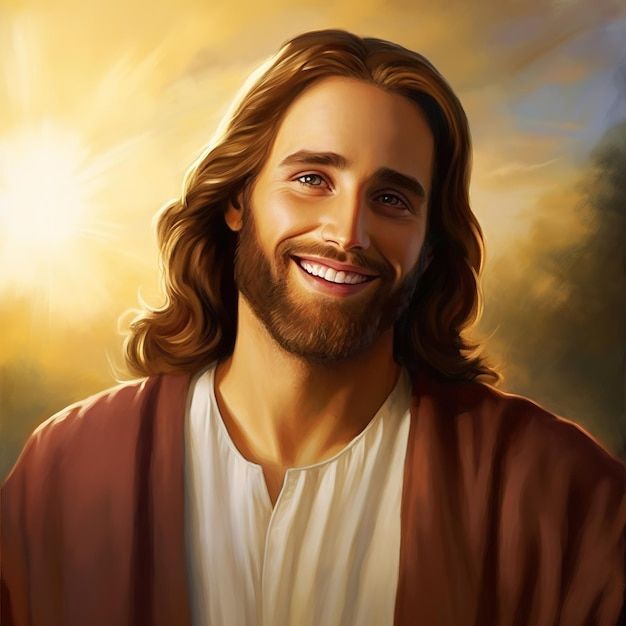

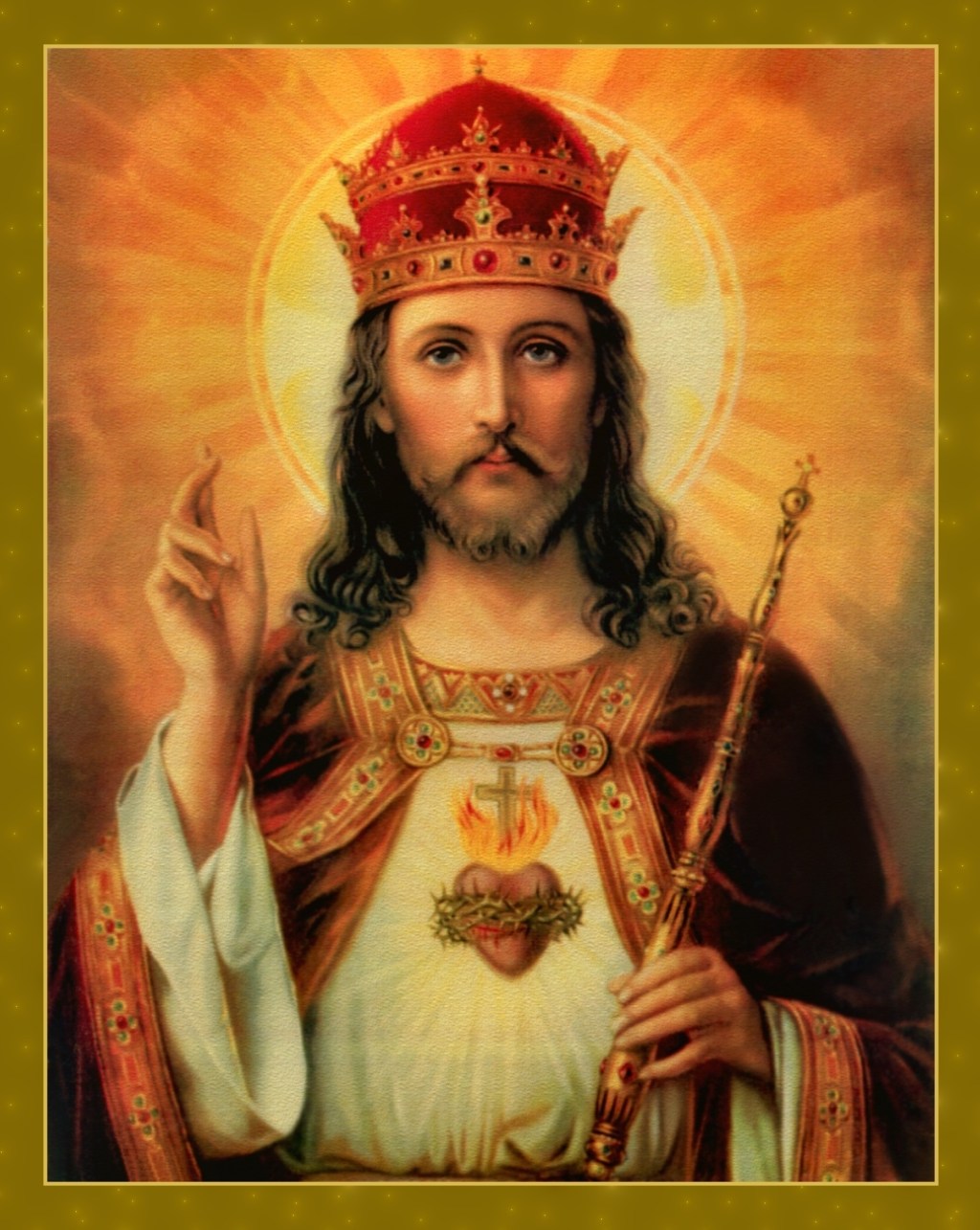
Today, as we celebrate the Solemnity of Our Lord Jesus Christ the King, the Church does something surprising. We might expect to see Jesus in majesty, seated on a throne, surrounded by glory. Instead, the Gospel brings us to Calvary.
At first glance, nothing about Calvary looks royal. Jesus is surrounded not by honor, but by ridicule. But as St. Augustine notes even the mockery contains truth: the mockery spoken at the foot of the Cross becomes a strange doorway into truth.
They shout at Him:
“He saved others!”
Yes—He did.
The crowd meant it as an insult, but it is actually a confession of faith.
Only the true King can save His people.
Then they add:
“Let Him save Himself if He is the Christ!”
St. Athanasius teaches: Christ refuses to save Himself so He can save us. Love kept Him on that cross—not nails. This is divine kingship — power expressed in sacrifice, authority expressed in love.
If He had come down, we would have remained in our sins. He stayed, not out of weakness, but out of the strength of mercy.
St. Cyril of Alexandria says: If Jesus had stepped down from the Cross, the victory of love would have been lost.
A true king does not abandon the battlefield when His people are in danger, he fights for his people and gives everything he has to secure their freedom.
Even the sign above His head, meant to shame Him—“This is the King of the Jews”—becomes a proclamation of truth.
They tried to mock Him, but they could not silence His majesty.
On either side of Jesus hang two criminals, and as the Fathers tell us, they symbolize all of humanity.
St. John Chrysostom offers a profound vision of Calvary: Christ crucified between two thieves is not an accident of history—it is a moment of judgment. The Cross itself becomes the judgment seat of Christ. There, between the two thieves, humanity is divided:
One thief becomes the image of faith—repentant, humble, turning toward Christ even in death.
The other becomes the image of unbelief—hardening his heart even as salvation hangs beside him.
And Christ, silent and suffering, becomes the Judge of hearts.
At that moment, the Cross becomes the great separation of light and darkness, grace and refusal.
The Good Thief sees a crucified man, and calls Him King, a King on a Cross. He speaks the first royal confession of the Kingdom: “Jesus, remember me when you come into your Kingdom.”
In that moment, Christ the King opens His royal treasury of mercy and replies: “Today you will be with me in Paradise.”
Chrysostom notes the stunning reversal taking place: Adam, through the deception of the devil, was cast out of Paradise. But now, from the very tree of the Cross, Christ brings the repentant thief back into Paradise, and He brings him back before the Apostles themselves.
From the reflections of the Fathers, we see that Christ’s Kingship overturns every earthly notion of power and glory.
· The Cross is His throne.
· His wounds are His royal insignia.
· And Paradise is opened not by military triumph, but by the victory of love.
Here on Calvary, Christ the King is enthroned. The Passion is not His defeat but His coronation. The Cross is not the end of His mission but the manifestation of His Kingdom.
St. Gregory the Great gives us one of the most moving insights into the Good Thief’s conversion. Though the thief’s hands and feet were nailed to the cross—every limb bound in punishment—two things remained free: his heart and his tongue. And he offered both to God.
The first thief speaks the language of the world: “Save yourself and us!”
He wants a Messiah who removes pain, not sin—a King who serves his comfort. He sees Jesus as a means to an end—a Messiah to serve his own comfort.
The second thief, however, speaks the language of faith: “Jesus, remember me.”
Notice what he does not ask for:
not freedom from suffering,
not a miracle,
not rescue from the cross.
All he asks is for relationship. He simply wants to be remembered by the Lord.
Even in the shadow of death, even when all hope seems gong, this thief recognizes what many powerful or healthy people could not: This man on the Cross is the Lord of Life.
On the cross, in his final moments, he becomes a model of the three theological virtues:
- Faith
He looks upon a dying man and proclaims a King.
He sees Jesus crucified beside him and yet confesses, “Lord.”
Where others see defeat, he recognizes majesty.
- Hope
He dares to ask the impossible: “Remember me when You come into Your kingdom.”
He hopes not for rescue from earthly suffering, but for entrance into eternal life.
- Charity
Even while in agony, he rebukes his fellow thief for blaspheming Christ.
He uses his last breath to defend innocence and to lead another away from further sin.
The King we have been reflecting on today—the King who suffered forgave, and offered Paradise—is not distant. He is not a figure only in history books or Gospel stories.
When we come forward to receive Him in Holy Communion, we repeat the prayer of the good thief: “Jesus, remember me.”
And our King responds with the same mercy and assurance He offered on Calvary:
“Behold, I am with you… today.”
This is His promise to each of us.
His reign begins not in grand displays of power, but in hearts that welcome Him. It begins in families where love is practiced, in communities where mercy is shown, in lives surrendered to Him.
May we open our hearts to this King.
Let Him reign in our hearts, our homes, our parish, and in the world around us.
A Kingdom built on truth, mercy, sacrifice, and love—a Kingdom that begins today.
Amen.
✍ Fr James Abraham
 Nelson MCBS
Leave a comment