

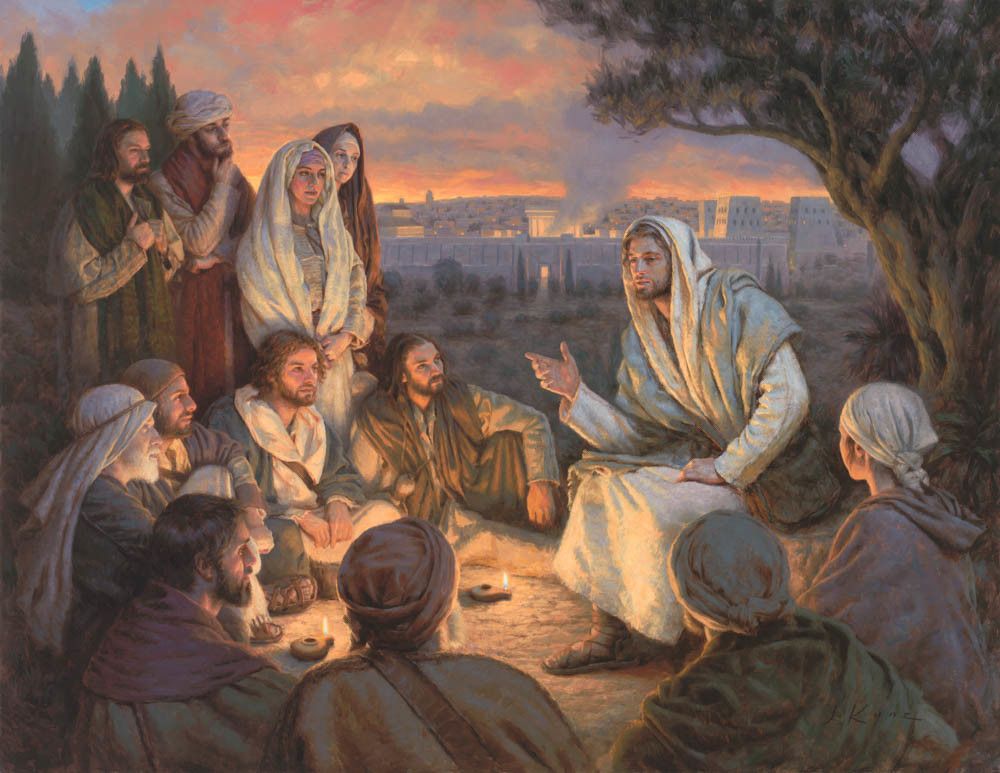
“You Are the Salt of the Earth… You Are the Light of the World” (Mathew 5:13-16)
In today’s Gospel, Jesus does not speak in parables. He speaks in definitions. He tells His disciples not what they should do, but what they are: salt and light. These are not compliments or titles of honor. They are responsibilities. They are a mission laid upon every baptized believer.
Coming immediately after the Beatitudes, these words are deeply consoling. Jesus has just set before His disciples a way of life that feels impossibly high: humility, mercy, purity of heart, endurance under persecution. One can almost hear the unspoken question: Who can live this way?
And Jesus answers not by lowering the standard but by reminding them of their dignity. You are essential. Without you, the world decays.
Salt, in the ancient world, had three main purposes: to preserve, to give flavor, and to purify. By calling His disciples salt, Jesus entrusts them with a responsibility that touches the whole world.
Salt preserves from corruption. Without it, food spoils quickly. In the same way, without the quiet faithfulness of God’s people, the world slips more easily into moral and spiritual decay. Through preaching, teaching, forgiveness, and sacramental life, the Church preserves humanity—not just for this life, but for eternity.
Salt does more than preserve; it also gives flavor. The Gospel does more than restrain evil; it introduces a new way of living. It gives life its true taste. Where Christ is welcomed, human life becomes richer, deeper, more fully itself. Christian faith is not merely about preventing evil; it brings a new savor to life. The Gospel teaches us not only how to avoid sin, but how to live with meaning, hope, and love.
And salt purifies. It stings. It irritates wounds. Gospel truth can unsettle consciences, challenge habits, and disturb comfortable illusions. That is not cruelty; it is mercy. A faith that never challenges is a faith that may have lost its savor. As Jesus says, Blessed are you when they insult you and persecute you and utter every kind of evil against you falsely because of me. Rejoice and be glad. Opposition is not always a sign of failure. Often, it is a sign that the salt is still working.
But Jesus also gives a warning: “If the salt loses its taste with what can it be seasoned?”
Jesus is not speaking about chemistry; He is speaking about discipleship. When believers compromise the Gospel out of fear, comfort, or desire to fit in, they lose what makes them life-giving. This loss is tragic, not because the world rejects them, but because they no longer serve the mission entrusted to them.
To be salt is to be spent. Salt dissolves so that others may live. It disappears so that life may be preserved. To be salt is to give oneself quietly, faithfully, often unnoticed, but with eternal effect.
Scripture often uses “the earth” to describe hearts overly attached to worldly things. Salt is always applied from outside. In that sense, we are not salt for ourselves, but for others. The earth does not salt itself. God places His people into the world so that it may be preserved.
Wherever we live Gospel, it seasons what is bland, preserves what would decay, and awakens what is dull.
This is why Scripture tells us that no sacrifice in the Old Covenant was acceptable unless it was seasoned with salt. In the same way, no Christian life bears fruit unless it carries the savor of heavenly wisdom. Faith that remains only an idea, untouched by daily choices, cannot preserve either the soul or the world. Belief without witness cannot preserve the soul or the world.
Salt works quietly. It does not draw attention to itself. But its absence is immediately felt. In the same way, when Christians cease to live distinctly when fear of loss, desire for comfort, or love of the world dulls their witness, the world decays more quickly.
When we stop living our faith, forgiveness gives way to resentment, honesty to convenience, compassion to indifference, the world decays more quickly than we realize.
But, when we forgive instead of retaliating, choose compassion over indifference, the world is being salted. Evil is restrained. Good is preserved.
Faithful Christian life preserves the world from moral and spiritual decay. In your homes, workplaces, schools, and communities, your faithfulness matters more than you realize.
But salt must remain salt.
A Christian who blends in so completely with the world that nothing is different; no values, no priorities, no witness loses savor. And therefore, Christ warns: If the salt loses its savor, with what shall it be salted?
And Jesus’ warning is serious: salt that loses its taste becomes useless.
As Augustine says, this happens when eternal things are exchanged for temporal security. Losing savor is not intellectual failure, but spiritual disorientation, forgetting what truly cannot be taken away.
Suffering does not humiliate the disciple; cowardice does. One can only tread on what is beneath. A heart fixed in heaven is never beneath the world, no matter how much the body suffers.
But salt alone is not enough. Salt preserves what already exists; light brings what is hidden into knowledge. Thus, after calling His disciples salt, Jesus adds something more: “You are the light of the world.”
Salt preserves what already exists. Light does something more: it reveals what is hidden. Light shows the way. Light gives warmth. Light offers hope.
Many people today are not hostile to God; they are simply lost. They live in confusion, anxiety, and spiritual darkness. Christ sends His disciples into that darkness, not with condemnation, but with clarity and hope.
Saint Augustine reminds us that “the world” here means those who live without knowing God. To them, Christ sends His light through His people. Light does not argue with darkness; it simply shines and darkness recedes.
Light naturally radiates wherever it is carried. So, the Christian does not shine by effort alone, but by dwelling in Christ, the true Light. Wherever the faithful go, into homes, workplaces, neighborhoods the light of Christ goes with them.
Light is meant to be seen. A lamp hidden under a basket helps no one. Faith locked away, never spoken, never lived publicly, fails its mission. Christianity is not a private secret; it is a visible way of life.
A city set on a hill cannot be hidden. Those who are founded on Christ, the true mountain, will be seen whether they intend it or not. Life speaks before words. Even when we try to hide our faith, Christ makes His own visible for the sake of others.
This is not a burden meant to frighten us. It is a calling meant to dignify us.
You are the salt of the earth.
You are the light of the world.
Remain in Christ, and the world will be preserved, guided, and drawn quietly, gently, and powerfully toward God.
And through your faithful living, God is preserving the world and leading it home.
✍ Fr James Abraham


 Nelson MCBS
Leave a reply to aparnachillycupcakes Cancel reply