

Retreat Talk / Homily on St. Joseph
Theme: “St. Joseph – The Silent Strength of Faith”
Introduction
Dear brothers and sisters in Christ,
Today we turn our hearts toward a man who never preached a sermon, never performed a miracle, and never spoke a recorded word in Scripture—yet whose life speaks more powerfully than many voices combined: Saint Joseph.
In a world filled with noise, self-promotion, and restless ambition, Joseph stands before us as a quiet contradiction—a man of silence, strength, obedience, and deep interior faith.
This retreat is an invitation not just to admire St. Joseph, but to enter into his spirituality, to learn from his silence, and to allow his life to reshape ours.
1. The Silence That Speaks
When we open the Gospels, especially those of Matthew the Apostle and Luke the Evangelist, we find something striking: Joseph never speaks.
Not one word.
And yet, his silence is not emptiness—it is full of God.
Joseph teaches us that:
- Silence is not weakness
- Silence is not absence
- Silence is presence before God
Today, many of us fear silence. We fill our lives with:
- Constant talking
- Endless scrolling
- Noise that distracts us from ourselves
But Joseph invites us into a different space—the space where God speaks.
Retreat Question:
When was the last time you allowed yourself to be silent before God—not asking, not speaking, just listening?
2. The Courage to Trust
Joseph’s life begins with a crisis.
He discovers that Mary, the woman he loves, is with child—and he knows the child is not his.
Imagine his confusion, his pain, his fear.
Yet Scripture tells us:
“Joseph, being a just man…”
He chooses mercy over judgment.
Then comes the dream—God speaks. And Joseph responds immediately.
He does not argue.
He does not delay.
He does not demand explanations.
He simply trusts.
This is not blind faith—it is courageous faith.
Retreat Reflection:
How often do we say, “God, I will trust you—but first explain everything”?
Joseph teaches us a deeper surrender:
- Trust without clarity
- Obedience without guarantees
- Faith without control
3. Obedience in Action
Each time God speaks to Joseph—in dreams—Joseph acts:
- “Take Mary as your wife” → he takes her
- “Flee to Egypt” → he rises at night and goes
- “Return to Israel” → he obeys again
There is no hesitation.
Joseph’s obedience is immediate, concrete, and costly.
He leaves his home.
He risks his future.
He embraces uncertainty.
Why?
Because for Joseph, God’s will is not an idea—it is a priority.
Retreat Challenge:
What is God asking of you right now that you are delaying?
Joseph whispers to us today:
“Do not postpone grace.”
4. The Hidden Life of Nazareth
After the dramatic moments fade, Joseph disappears into ordinary life in Nazareth.
No miracles.
No recognition.
No applause.
Just daily life:
- Work
- Family
- Responsibility
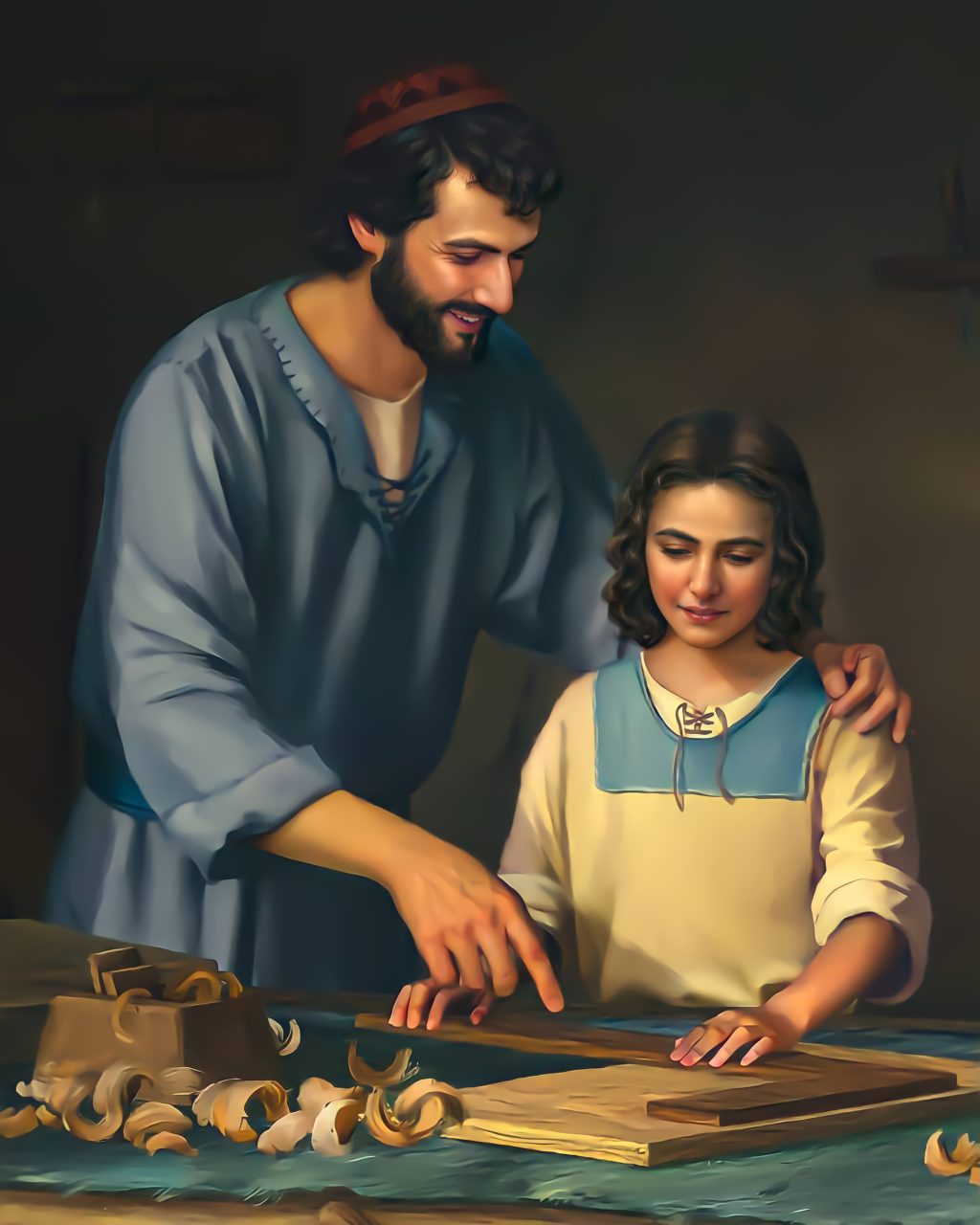
He becomes a carpenter, providing for Jesus Christ and Mary.
And here is the beauty:
God is present in the ordinary.
Joseph teaches us that holiness is not found only in extraordinary acts but in:
- Faithful routines
- Daily sacrifices
- Quiet love
Retreat Insight:
Your home can be Nazareth.
Your work can be sacred.
Your hidden life can be holy.
5. The Spirituality of Fatherhood
Joseph is not the biological father of Jesus, yet he becomes a true father.
He names Jesus.
He protects Him.
He teaches Him.
Joseph shows us that fatherhood—and indeed all relationships—are not about possession, but about responsibility and love.
In a world where relationships are often fragile, Joseph stands as a model of:
- Commitment
- Protection
- Self-giving love
Reflection:
Who has God entrusted to your care?
Are you protecting, guiding, and loving them as Joseph did?
6. Faith in the Darkness
Joseph’s journey is filled with uncertainty:
- A mysterious pregnancy
- A dangerous king like Herod the Great
- A sudden flight into Egypt
Yet Joseph never complains.
He walks in darkness—but with faith.
Many of us experience:
- Confusion
- Fear
- Unanswered prayers
Joseph teaches us that faith is not the absence of darkness—it is trust within it.
Retreat Prayer:
“Lord, give me the faith of Joseph—to walk even when I do not see.”
7. The Dignity of Work
Joseph the carpenter transforms work into prayer.
His workshop becomes a place of grace.
Every nail, every piece of wood, every effort becomes an offering to God.
He teaches us:
- Work is not a burden—it is a vocation
- Labor is not meaningless—it is sacred
Reflection:
Do you see your work as a burden or as a participation in God’s creation?
Joseph reminds us:
Even the most ordinary task can be extraordinary when done with love.
8. Joseph: The Protector
Joseph is often called:
- Guardian of the Redeemer
- Protector of the Church
- Terror of demons
Not because he was powerful in worldly terms—but because he was completely aligned with God.
He protected:
- Mary’s dignity
- Jesus’ life
- God’s plan
Today, we need Joseph more than ever:
- To protect families
- To guard faith
- To defend what is sacred
9. A Call to Imitation
This retreat is not just about learning—it is about transformation.
To follow Joseph is to:
- Embrace silence
- Practice obedience
- Trust in uncertainty
- Sanctify daily life
- Love without seeking recognition
10. Practical Resolutions
As we conclude, let us take concrete steps:
- Daily Silence: Spend 10 minutes in quiet prayer
- Immediate Obedience: Act on what God is asking today
- Sanctify Work: Offer your daily tasks to God
- Protect Relationships: Be intentional in love and care
- Pray to St. Joseph: Seek his intercession regularly
Conclusion
Dear friends,
Saint Joseph does not call attention to himself. He leads us quietly—but powerfully—to God.
He reminds us that greatness is not in being seen, but in being faithful.
As we leave this retreat, may we carry his spirit within us:
- A heart that listens
- A will that obeys
- A life that trusts
Closing Prayer
St. Joseph,
Silent guardian and faithful servant,
Teach us to listen as you listened,
To trust as you trusted,
To act as you acted.
Protect our families,
Guide our work,
Strengthen our faith.
Lead us always to Jesus Christ.
Amen.
 Nelson MCBS
Leave a comment