

“Who Do You Say That I Am?” | Matthew 16:13–20
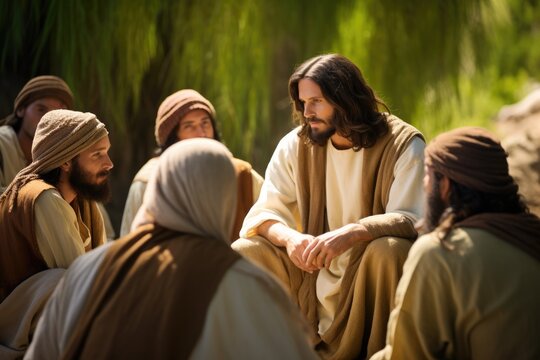
Today’s Gospel brings us to one of the most decisive moments in the life of Jesus and His disciples. Jesus takes them to the region of Caesarea Philippi – a place known for its temples to pagan gods and monuments to worldly power. It’s right there, surrounded by voices that claim to offer meaning and truth, that Jesus asks two, simple yet life-changing questions:
“Who do people say that the Son of Man is?”
“But you, who do you say that I am?”
At first, He asks about the opinions of others. “Some say John the Baptist, others Elijah, still others Jeremiah or one of the prophets.” All good and holy men — but none of them capture the fullness of who Jesus truly is. This was “seeing from the outside,” based on observable actions and common interpretations.
Jesus asked this question to show how far human opinions fall short of the truth. Jesus doesn’t ask because He’s curious. He asks because He wants to reveal how easily we settle for knowing about Him, without truly knowing Him.
Even today, people have their own opinions about Jesus. Some say He was a great moral teacher, others a social reformer, a miracle worker, a prophet, or simply a kind man who did good things. All of these have a grain of truth, but they stop short. They recognize His greatness, but not His divinity.
Then comes the second, more personal question: “But you — who do you say that I am?”
Now the conversation has changed. It’s no longer about public opinion; it’s about personal relationships. Jesus wants to know not what others have told us, but what our hearts believe.
Jesus wants his disciples to become aware of what is hidden in their own minds and hearts and to give voice to their conviction. At the same time, however, he knows that the judgment they will express will not be theirs alone, because it will reveal what God has poured into their hearts by the grace of faith.
Jesus asks this question for our sake – to draw out the faith already growing in our hearts, to confess what we believe.”
Peter answers: “You are the Christ, the Son of the living God.” This wasn’t an answer Peter learned from others or figured out through logic. It came from revelation, a gift from the Father.
Jesus confirms this: “Flesh and blood has not revealed this to you, but my Father who is in heaven.”
Peter’s faith is not based on human reasoning or popular opinion; it is a gift of revelation. God the Father has opened his heart to recognize in Jesus not only a great teacher, but the very presence of the living God.
Jesus’ first question “Who do people say…?” leads to Peter’s confession, the foundation of true Christian faith, a personal revelation that Jesus is not just a teacher or prophet, but the Son of the living God. The true knowledge of Christ begins when we move beyond what people say and enter into personal relationship and revelation.
St. John Paul II called this moment at Caesarea Philippi the “school of faith.” There the mystery of the origin and development of our faith is disclosed. Here we learn that faith unfolds in three movements:
First, there is the grace of revelation: God reveals Himself – His grace opens our hearts.
Second, it follows the call to respond: We are invited to respond – to say our own “You are the Christ.”
Finally, there comes the human response: Our response gives shape to our life – faith must become the foundation of all we do.
Jesus’ question, “Who do you say that I am?”, pierces through every generation and every heart. We can know many things about God: that He is loving, merciful, powerful, and just. But that knowledge remains abstract until it’s lived in relationship. Faith that stays second-hand, something we inherit from others can inform the mind, but it doesn’t transform the heart. Faith becomes alive only when it’s born from encounter.
Many people today still live on inherited faith what parents, culture, or community have passed on. That’s a good beginning, but not the end. Christ invites each of us to move from knowing about Him to knowing Him personally.
This moment tells us something profound about how we come to know Jesus. True faith is not the result of human speculation, deduction, or intelligence; it is a gift of divine revelation. Human reasoning alone could grasp that Jesus was extraordinary, but only the light of grace could reveal that He is the Son of the living God.
In every age, people attempt to define Jesus by their own categories – philosopher, moral teacher, social reformer, or mystic. But the truth about Jesus cannot be discovered by analysis or debate. It must be revealed by the Father to the heart that is open in humility and faith.
This is why Jesus said earlier in Matthew’s Gospel: “No one knows the Son except the Father, and no one knows the Father except the Son, and anyone to whom the Son chooses to reveal him.” (Mt 11:27)
And this is what Jesus desires for each of us. He asks us today the same question He asked Peter: “Who do you say that I am?” Not, “What do your parents say? What does your culture say? What does the Church say?” But rather, you – personally. Who is Jesus for you?
Every generation must rediscover Jesus, not as a memory from the past, but as a living Lord who walks with us here and now.
We must first listen to what the world says about Christ, not to conform, but to respond, to witness with clarity and love to who He truly is.
Jesus doesn’t ask this question out of curiosity, but to lead His disciples and us to a personal decision of faith. This is the turning point from second-hand faith to first-hand encounter. It’s a question that each of us must answer again and again, every day of our lives.
When life is joyful – who is He for you? When life is broken – who is He for you?
Is He an idea, or is He your Lord? Is He a story you’ve heard, or a presence you’ve encountered?
✍ Fr James Abraham
 Nelson MCBS
Leave a comment