

Christ Fulfils the Law in Our Hearts (Mathew 5:17 -26)
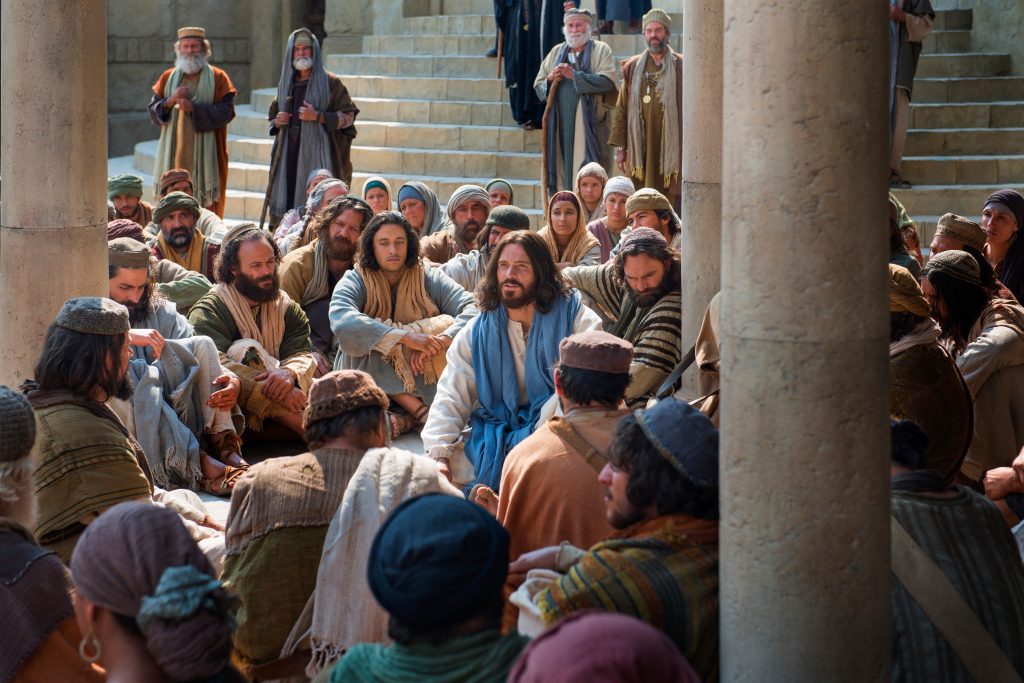
In the Sermon on the Mount, Jesus speaks words that can unsettle us. He calls His followers to endure suffering for righteousness, to accept persecution, and to let their light shine openly for others. Naturally, a question arises in the hearts of those listening: Is Jesus undoing what God gave through Moses? Is He casting aside the Law and the Prophets?
Jesus answers this concern clearly: “Do not think that I have come to abolish the Law or the Prophets.” He says this for two reasons.
First, He instructs His disciples that just as He fulfills the Law, we too are called to fulfill it, not only by external observance but by a righteousness that transforms our hearts.
Second, He anticipates the false accusations His followers will face, that we are subverting the Law. But He speaks not merely as a teacher, repeating the Law like the Prophets before Him, but as the One in whom the Law reaches its perfection.
Saint Augustine teaches that Christ fulfills the Law in a twofold way: by perfectly obeying what it commands, and by bringing it to its fullness, giving us the grace to live it.
Our human weakness makes perfect obedience difficult, yet Christ, as our High Priest, strengthens us through the sacrifice of His own flesh. We are not left to struggle alone.
This is why Jesus teaches us that anger can be a kind of murder, that lust begins in the heart, and that truthfulness is better than even a truthful oath. The Law is not abolished; it is transformed. What once was written on stone tablets now lives in converted hearts, fulfilled in Christ, and fulfilled in us through His grace.
When Jesus says, “I have not come to abolish the Law and the Prophets, but to fulfill them,” He speaks the very heart of the Gospel. Faith is not about picking and choosing what appeals to us. It is about receiving Christ’s Word fully, trusting it, embracing it, and allowing it to shape our hearts and guide our lives.
To fulfill the Law is not to cancel it, nor merely to add words to it. It is to bring it to its true purpose. The Law is fulfilled when what it commanded is lived out and when what it foretold comes to pass. Its fulfillment is love; love of God and love of neighbor poured into our hearts by the Holy Spirit.
The rituals and signs of the Old Covenant were not destroyed; they were completed. What was promised in figure is now accomplished in reality. Christ has been born, crucified, and risen. The sacraments may have changed outwardly, but the saving reality remains the same. To mistake a change in outward signs for a change in the truth itself is a grave error; the sacraments and symbols may differ, but the reality they signify in Christ remains the same. In Christ, the Law of Moses is neither denied nor erased; it leads to life in the Spirit.
What does this mean for us today?
It means that our faith is not about choosing what suits us and ignoring the rest, nor about clinging to outward practices without inward conversion. Christ fulfills the Law in us when we allow His grace to shape our hearts. To love God sincerely, to love our neighbor faithfully, this is where the Law reaches its goal.
The question for us, then, is not whether the Law still matters, but whether Christ truly reigns in our lives. If anger still rules our hearts, the Law is not yet fulfilled in us. If lust, dishonesty, or resentment are left unchallenged, the Gospel has not yet taken full root.
But if we allow Christ, our High Priest, to strengthen us in our weakness, then what the Law once demanded from without is accomplished within us by the Spirit.
Let us not be content with external religion alone. Let us seek the fulfillment Christ offers—a faith that transforms the heart, a love that gives life, and an obedience born not of fear, but of grace.
Christ emphasizes the enduring truth and fulfillment of God’s Law when He says, Amen, I say to you, until heaven and earth pass away, not the smallest letter or the smallest part of a letter will pass from the law, until all things have taken place.
As Saint Augustine explains, even the smallest letters and the tiniest marks of writing remind us that the Law’s fulfillment extends even to the tiniest details. Heaven and earth may be renewed, but God’s promises will stand unshaken, and what has been foretold will reach its completion.
The smallest Greek letter, the iota, alludes to the Ten Commandments, with Christ as their perfection. In this, we see that God’s promises are precise, complete, and certain: nothing God has willed will fail, and everything foretold in the Law finds its true reality in Christ.
Christ now emphasizes the seriousness of His words, reminding us: “Whoever breaks one of the least of these commandments and teaches others to do so will be called least in the kingdom of heaven”
By “least,” He does not mean unimportant. He means the commandments that touch the heart: The commandments such as “You shall not kill” or “You shall not commit adultery,” was easier to obey because the severity of the crime restrained the desire to sin. But, “You shall not be angry,” “You shall not lust,” and so on are harder to keep, but their reward is greater. Those who fail, and lead others to fail, are called least, not excluded but deprived of the full glory God intends. True greatness comes when we live in integrity what we proclaim in word and guide others toward the fullness of Christ’s teaching.
Those who break them, and lead others to do the same, are called least in the kingdom not excluded entirely but deprived of full glory.
By “breaking” the commandments, Christ does not mean only outward disobedience, but also the deeper failings of the heart and mind: failing to do what one rightly understands, misunderstanding what has been distorted, or undermining the perfect teaching and additions that Christ Himself has given to complete the Law.
So today, let us ask ourselves: Does Christ truly reign in our hearts? Are we allowing His grace to transform our anger into patience, our lust into chastity, our dishonesty into truth? If so, the Law is fulfilled in us, not as a burden, but as a path to life in the Spirit.
Let us allow Christ to shape our hearts. Let us strive for a love that fulfills the Law, a faith that transforms from within, and an obedience that flows from grace. For in Him, the Law is not a burden but a path to true life in the Spirit.
✍ Fr James Abraham
 Nelson MCBS
Leave a comment