

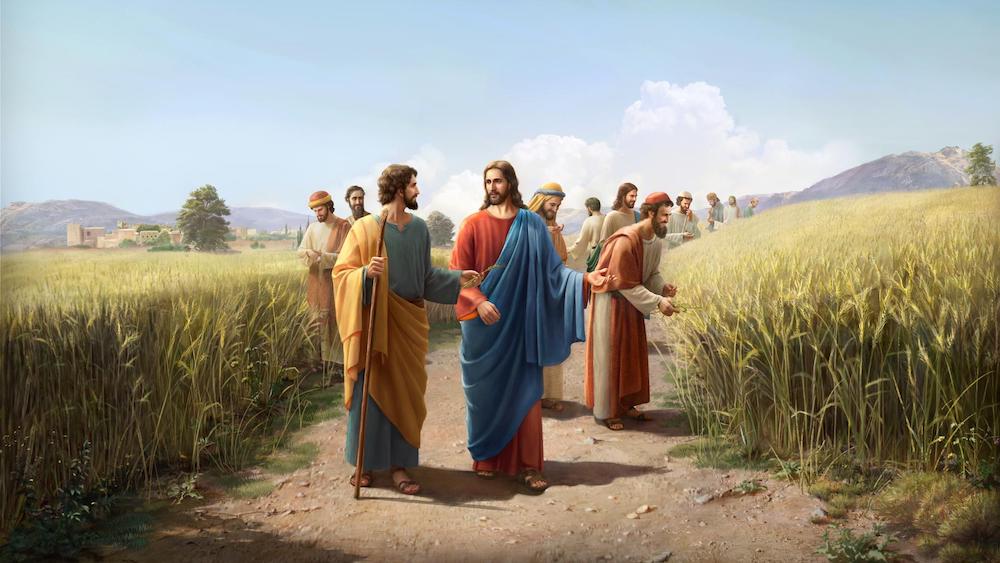
Jesus and the Conflicts of Faith
(Matthew 12:1–8)
In today’s Gospel, we witness how frequently Jesus found Himself in conflict with the religious authorities of His time. These conflicts revolved around practices such as fasting, ritual purity, and the observance of the Sabbath.
If we were to translate these situations into our own day, we might see similar tensions: questions about marriage after divorce, friendship with those on the margins of society, receiving Communion outside of canonical marriage, the obligation of Sunday Mass, or the practice of fasting and penance.
Conflict as Part of the Journey of Faith
Conflict is part of every life. Jesus faced conflict not because He despised the Law, but because He lived its deepest truth — love and mercy. We, too, encounter conflicts in our families, parishes, and hearts. Yet these moments are not interruptions in the journey of faith; they are part of the journey itself. They purify us, challenge our pride, and open us to the living truth of God.
Every conflict in faith — whether concerning Church teaching, moral questions, or community tensions — is an opportunity to rediscover mercy as the heart of God’s law. As the Catechism reminds us: “The Law of the Gospel fulfills, refines, surpasses, and leads the Old Law to its perfection” (CCC 1968). Conflict arises when people cling to the letter of the law and forget its spirit — defending rules while losing sight of love.
What stands out in the Gospel is not only that Jesus faced conflict, but how He faced it. He did not argue simply to prove He was right. Rather, He sought to help others encounter the same truth of God that He Himself lived — a God rich in mercy and compassion. Jesus answered His accusers not with anger but with Scripture, the very Word they claimed to defend. Yet He read it through the eyes of mercy, offering three compelling examples.
- David and the Bread of the Presence (1 Samuel 21:2–7)
When David and his men were hungry, they entered the house of God and ate the consecrated bread, which was lawful only for priests. Jesus uses this story to teach a profound truth: human need comes before rigid rules. Hunger is real. No law should ever turn us away from caring for it.
No Pharisee would dare criticize King David for this act, yet they condemned the disciples for plucking grain. Jesus exposes their hypocrisy: they honor David, but fail to recognize the Son of David standing before them.
This is not Jesus rejecting the Law. Rather, He reminds us of its true purpose. God’s commandments were never meant as weapons of judgment; they are meant to guide us toward love, mercy, and life. Compassion, care for others, and mercy are always at the heart of God’s Law.
When Jesus points to David, He restores the Law to its original spirit: mercy over sacrifice, love over rigid rule-keeping. He invites us to do the same — to see the spirit behind the rules, to care for people first, and to let God’s compassion shape our lives.
- The Example of the Priests (Numbers 28:9–10)
In the Temple, priests were required to offer sacrifices and perform their duties even on the Sabbath. Technically, they were “working,” yet they were blameless — because their work was an act of service to God.
This challenges us to reflect on our own approach to religious observance. Do we sometimes become so focused on following rules perfectly that we forget why the rules exist — to bring us closer to God and to one another? The Gospel reminds us that true faith is lived in service and love. The needs of God and others always take precedence over strict adherence to formalities. As St. Augustine wisely said: “Love, and do what you will.”
- “I Desire Mercy, Not Sacrifice” (Hosea 6:6)
This is the heart of the Gospel. Jesus quotes Hosea to expose the blindness of the Pharisees: “If you had known what this means — ‘I desire mercy, not sacrifice’ — you would not have condemned the innocent.”
The Hebrew word hesed means faithful, tender love — the kind that stays close to the brokenhearted. The Latin misericordia means “to have the heart in the misery of others.” To be merciful is to bring our consecrated heart into the suffering of others, not to remain aloof in holiness.
Pope Francis calls mercy “the beating heart of the Gospel” and emphasizes the Church’s role as a herald of merciful love: “The name of God is Mercy. The Church’s very credibility is seen in how she shows merciful and compassionate love.”
Sacrifice (sacrum facere) means to make something holy. But holiness that separates us from the poor, sinners, and suffering is not true holiness. True sacrifice is compassionate closeness, lifting others from misery. St. Teresa of Calcutta lived this truth: “I see Jesus in every suffering person. For me, every day is a living Mass.”
The Lord of the Sabbath
Jesus declares Himself “Lord of the Sabbath,” revealing that He is the living standard for understanding God’s Law. The Sabbath — the holiest day of Jewish life — finds its true meaning in Him.
Jesus recognized how rigid interpretations of the Law could burden people. Religious rules, when misused, can judge, marginalize, and make people feel unworthy of God’s love. But if God is truly our Father, all are His children, and the Sabbath must serve this fraternity — restoring life, not condemning it. As Jesus said: “The Sabbath was made for man, not man for the Sabbath” (Mark 2:27).
Because of His fidelity to this message — placing the Law at the service of life and mercy — Jesus became a threat to the religious and social systems of His time. He disrupted systems that used religion for control, and for that fidelity to God’s heart, He was condemned. The cross stands as the ultimate sign of His obedience to a God of compassion and freedom.
Living the Gospel Today
This Gospel calls us to return to the heart of God’s Word. Like Jesus, we are called to know Scripture deeply and to live it in our communities — not as cold rules, but as a living path to love, mercy, and life. True fidelity to God’s Law leads to mercy, fraternity, and the flourishing of every person.
The Lord of the Sabbath walks among us still, calling us to make every day a day of life, healing, and compassionate presence. The Sabbath, in its truest sense, is not a day of rigid rules — it is a day to restore life, nourish, heal, and show mercy.
Let us make our faith credible not by rigid observance, but by compassionate presence. Let every law, rule, and devotion lead us toward deeper love — love for God and for every brother and sister created in His image.
Where mercy is lived, the heart of God reigns. Where love is practiced, there the Sabbath — a day of life, healing, and grace — is always present.
Amen.
✍ Fr James Abraham


 Nelson MCBS
Leave a reply to Nelson MCBS Cancel reply