
 𝐇𝐨𝐰 𝐭𝐡𝐞 𝐂𝐚𝐭𝐡𝐨𝐥𝐢𝐜 𝐂𝐡𝐮𝐫𝐜𝐡 𝐏𝐫𝐨𝐭𝐞𝐜𝐭𝐞𝐝 𝐚𝐧𝐝 𝐓𝐫𝐚𝐧𝐬𝐦𝐢𝐭𝐭𝐞𝐝 𝐭𝐡𝐞 𝐁𝐢𝐛𝐥𝐞 𝐓𝐡𝐫𝐨𝐮𝐠𝐡 𝐭𝐡𝐞 𝐀𝐠𝐞𝐬
One of the greatest misconceptions spread by modern critics is that the Catholic Church somehow hid the Bible.
 History shows the opposite: without the Catholic Church, the Bible as we know it today would not exist.
For over 1,500 years before the printing press, the survival of Scripture depended entirely on the Church—especially on monks who dedicated their lives to copying the sacred texts by hand.
 The original autographs—the first manuscripts written by apostles and prophets—are all lost. What we have today are copies of copies, preserved and transmitted by Catholic monks.
 If not for their labor and devotion, we would know nothing about the Bible today.
 𝐓𝐡𝐞 𝐌𝐨𝐧𝐚𝐬𝐭𝐢𝐜 𝐒𝐜𝐫𝐢𝐩𝐭𝐨𝐫𝐢𝐮𝐦: 𝐓𝐡𝐞 𝐁𝐢𝐫𝐭𝐡𝐩𝐥𝐚𝐜𝐞 𝐨𝐟 𝐄𝐯𝐞𝐫𝐲 𝐁𝐢𝐛𝐥𝐞 𝐁𝐞𝐟𝐨𝐫𝐞 𝐏𝐫𝐢𝐧𝐭𝐢𝐧𝐠
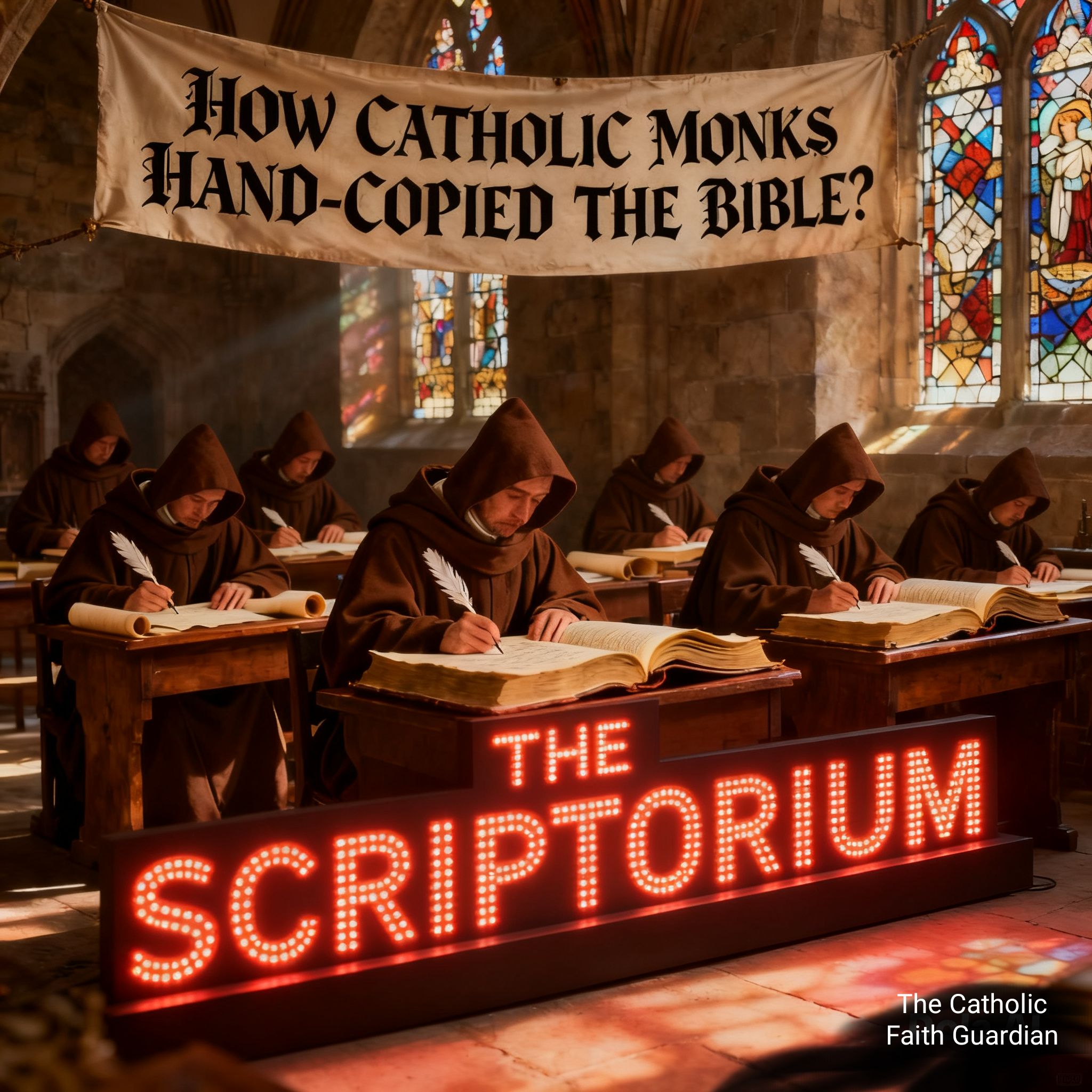
In the early centuries, books were rare and extremely expensive. Writing materials were costly, and copying required highly trained hands. To preserve Scripture, Catholic monasteries created special rooms called scriptoria (“writing places”).
Inside these peaceful rooms, monks spent long hours copying every word of Scripture with extraordinary care. Many saw this labor as prayer, believing every letter written glorified God.
 It took Catholic monks around 3 years to complete just one handwritten Bible!
 But because materials like parchment, vellum, and ink do not last forever, monks had to recopy the Bible repeatedly to pass it on to the next generation.
Monks followed strict practices to ensure accuracy:
 1. A Master Layout and Checkers
A master manuscript was placed at the center. A scribe copied it, and another monk checked the work letter by letter.
2. Highly Skilled Calligraphy
Scribes used specialized handwriting styles (like Carolingian minuscule) to make Scripture clearer and less prone to mistakes.
3. Corrections and Marginal Notes
Scribes added footnotes, clarifications, and corrections—long before modern editors existed.
4. A Vow of Accuracy
Many monasteries required scribes to take a vow to guarantee faithfulness in copying the Word of God.
Through their work, Scripture was preserved during:
• Collapse of the Roman Empire
•  Barbarian invasions
•  The Dark Ages
•  Wars, plagues, and cultural chaos
If the monks had not copied Scripture, the Bible would have perished in history, just like many ancient works that did not survive.
 𝐓𝐡𝐞 𝐂𝐚𝐭𝐡𝐨𝐥𝐢𝐜 𝐂𝐡𝐮𝐫𝐜𝐡 𝐁𝐮𝐢𝐥𝐭 𝐭𝐡𝐞 𝐅𝐢𝐫𝐬𝐭 𝐋𝐢𝐛𝐫𝐚𝐫𝐢𝐞𝐬 𝐚𝐧𝐝 𝐀𝐫𝐜𝐡𝐢𝐯𝐞𝐬
Catholic monasteries were the intellectual centers of Europe. They housed the largest scriptural libraries in the world:
• Greek and Latin biblical manuscripts
• Copies of the Septuagint and early Christian texts
•  Commentaries of the Church Fathers
•  Liturgical books containing Scripture
The output of their work is called manuscripts. Famous examples include the Codex Vaticanus and Codex Sinaiticus.
These libraries became the foundation of medieval universities—all founded by Catholics—where biblical scholarship continued.
 𝐓𝐡𝐞 𝐂𝐡𝐮𝐫𝐜𝐡 𝐒𝐚𝐯𝐞𝐝 𝐭𝐡𝐞 𝐁𝐢𝐛𝐥𝐞 𝐅𝐫𝐨𝐦 𝐃𝐞𝐬𝐭𝐫𝐮𝐜𝐭𝐢𝐨𝐧
Throughout history, Scripture faced threats:
• Roman Persecutions (1st–4th century) – Owning Scriptures could cost Christians their lives. Many Catholics died protecting sacred books.
•  Barbarian Invasions – Monasteries like Monte Cassino, St. Gall, and Iona rescued manuscripts.
•  Muslim Conquests in the East – Catholics fleeing to the West carried precious manuscripts, preserving texts lost in other regions.
•  Viking Raids – Irish and English monks rescued manuscripts from attacks.
Only a few churches owned a Bible because it was so expensive. Ordinary people could not afford one, so the Church was the guardian of Scripture.
In every age, Catholics protected Scripture at great personal risk.
 𝐂𝐚𝐭𝐡𝐨𝐥𝐢𝐜 𝐌𝐨𝐧𝐤𝐬 𝐂𝐫𝐞𝐚𝐭𝐞𝐝 𝐭𝐡𝐞 𝐌𝐨𝐬𝐭 𝐁𝐞𝐚𝐮𝐭𝐢𝐟𝐮𝐥 𝐁𝐢𝐛𝐥𝐞𝐬 𝐄𝐯𝐞𝐫 𝐖𝐫𝐢𝐭𝐭𝐞𝐧
Monks didn’t just copy texts—they illuminated them.
The most famous medieval manuscripts—like the Book of Kells and Lindisfarne Gospels—were made by Catholic monks. These breathtaking works show how deeply the Church honored Scripture.
People do not pour thousands of hours into beautifying a book they want to suppress.
 𝐂𝐚𝐭𝐡𝐨𝐥𝐢𝐜𝐬 𝐒𝐭𝐚𝐧𝐝𝐚𝐫𝐝𝐢𝐳𝐞𝐝 𝐭𝐡𝐞 𝐁𝐢𝐛𝐥𝐞’𝐬 𝐋𝐚𝐲𝐨𝐮𝐭
Catholics didn’t just preserve Scripture—they organized it.
• Chapters: Cardinal Hugo of Saint-Cher & Stephen Langton
• Verses: Santes Pagnino
• Canon lists: Councils of Rome (382), Hippo (393), Carthage (397)
The Bible’s modern structure—from table of contents to chapters & verses—is a Catholic invention.
When the Printing Press Arrived, Who Printed the First Bible?
Gutenberg—a Catholic—created the printing press:
 To mass-produce the Catholic Bible.
Before this, the Church had already produced:
• Thousands of handwritten biblical manuscripts
•  Standardized liturgical use of Scripture
•  Biblical commentaries used worldwide
Printing simply made the Bible easier to distribute—something the Church had always desired.
𝐖𝐢𝐭𝐡𝐨𝐮𝐭 𝐭𝐡𝐞 𝐂𝐚𝐭𝐡𝐨𝐥𝐢𝐜 𝐂𝐡𝐮𝐫𝐜𝐡, 𝐓𝐡𝐞𝐫𝐞 𝐖𝐨𝐮𝐥𝐝 𝐁𝐞 𝐍𝐨 𝐁𝐢𝐛𝐥𝐞 𝐓𝐨𝐝𝐚𝐲
When Protestant Christianity appeared in the 1500s, they inherited a Bible preserved by Catholics for 1,500 years.
If the Church were truly opposed to Scripture, the Bible would have disappeared long before the Reformation.
Because Catholic monks labored faithfully in the scriptoria:
• The Word of God survived
• The canon was protected
•  Scripture reached every nation
• Translations spread worldwide
• The Bible was never lost
Meanwhile, Protestants—who arrived after the Bible was already fully preserved—
Contributed nothing to the gathering, selection, rejection, canonization, transmission, or protection of the Bible.
 Their only contribution: misinterpretation of Scripture, resulting in 45,000+ sects, cults and denominations.
Far from hiding the Bible, the Catholic Church lovingly guarded it like a precious treasure.
 𝐂𝐨𝐧𝐜𝐥𝐮𝐬𝐢𝐨𝐧: 𝐓𝐡𝐞 𝐁𝐢𝐛𝐥𝐞 𝐈𝐬 𝐂𝐚𝐭𝐡𝐨𝐥𝐢𝐜 𝐢𝐧 𝐢𝐭𝐬 𝐇𝐢𝐬𝐭𝐨𝐫𝐲, 𝐏𝐫𝐞𝐬𝐞𝐫𝐯𝐚𝐭𝐢𝐨𝐧, 𝐅𝐨𝐫𝐦𝐚𝐭𝐢𝐨𝐧, 𝐚𝐧𝐝 𝐓𝐫𝐚𝐧𝐬𝐦𝐢𝐬𝐬𝐢𝐨𝐧
Every time a Christian opens a Bible—Catholic or Protestant—they benefit from centuries of Catholic preservation.
The book in your hands is the fruit of:
• Monks who copied in cold stone rooms
• Scholars who defended the canon
• Councils that protected Scripture
• Libraries that preserved manuscripts
• Martyrs who died for the Word of God
The Bible survived because the Catholic Church protected it with heroic devotion.
Source:
Leave a Reply