
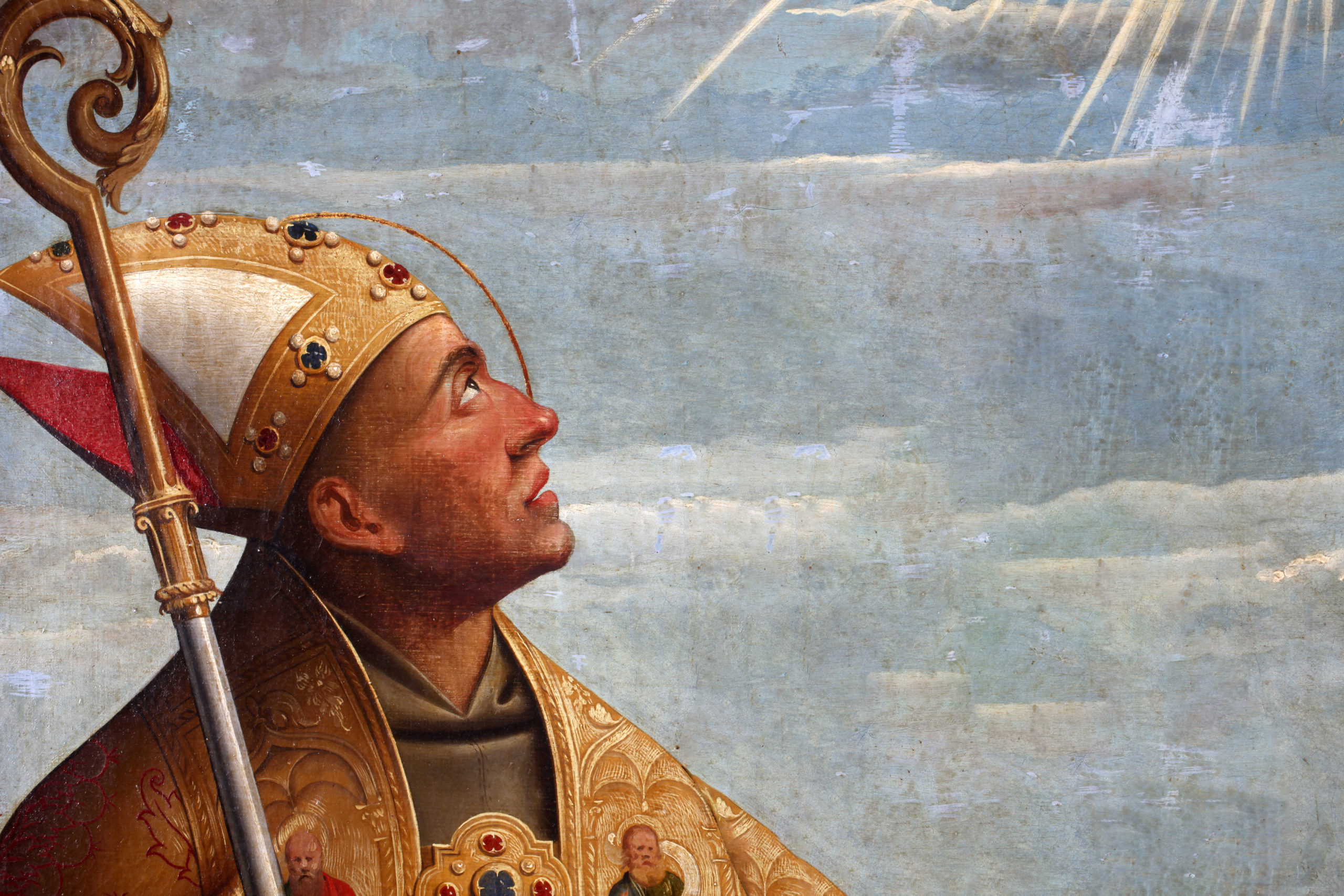
The Seraphic Doctor of the Church (1221–1274)
Feast Day: July 15
Title: Doctor of the Church (“The Seraphic Doctor”)
Born: c. 1221, Bagnoregio, Papal States (modern-day Italy)
Died: July 15, 1274, Lyon, France
Canonized: 1482 by Pope Sixtus IV
Declared Doctor of the Church: 1588 by Pope Sixtus V
Religious Order: Order of Friars Minor (Franciscans)
Saint Bonaventure stands among the greatest theologians, philosophers, mystics, and spiritual writers in Christian history. Revered as the “Seraphic Doctor,” he combined profound intellectual brilliance with deep humility and ardent love for God. Alongside St. Thomas Aquinas, Bonaventure shaped medieval Catholic theology, but while Aquinas emphasized philosophical precision, Bonaventure consistently directed the mind toward loving union with God through Christ.
His writings continue to influence theology, spirituality, philosophy, and religious life more than seven centuries after his death.


Early Life
Saint Bonaventure was born around 1221 in the hill town of Bagnoregio. His baptismal name was Giovanni di Fidanza.
A beloved tradition recounts that as a young child he became gravely ill. His mother sought the prayers of Saint Francis of Assisi, who is said to have miraculously healed the boy. Seeing the child restored, Francis reportedly exclaimed:
“O buona ventura!” (“O good fortune!” or “O happy destiny!”)
From this expression came the name Bonaventure, by which he became known throughout the Christian world.
Although historians cannot verify every detail of this story, it beautifully symbolizes Bonaventure’s lifelong connection with the Franciscan spirit.
Education
Bonaventure received an excellent education before traveling to the University of Paris, the foremost center of theological learning in Europe.
There he studied under renowned masters, particularly Alexander of Hales, one of the earliest Franciscan theologians.
While immersed in philosophy and theology, Bonaventure also encountered the growing Franciscan movement, founded only a few decades earlier by Saint Francis.
He entered the Franciscan Order around 1243.
Joining the Franciscans
The Franciscans emphasized:
- Poverty
- Humility
- Simplicity
- Love for creation
- Service to the poor
- Total devotion to Christ
These ideals profoundly shaped Bonaventure’s theology.
Unlike scholars who viewed theology merely as an academic discipline, Bonaventure believed:
“The purpose of theology is not simply to know God but to love Him.”
For him, knowledge without holiness was incomplete.
A Brilliant Theologian
By his early thirties Bonaventure had become one of the leading theologians in Europe.
His lectures attracted students from across Christendom.
He wrote commentaries on:
- Scripture
- The Sentences of Peter Lombard
- Christian doctrine
- Spiritual theology
- Mysticism
- Philosophy
His work integrated:
- Scripture
- Church Fathers
- Augustine
- Franciscan spirituality
- Christian mysticism
Minister General of the Franciscans
In 1257, at only about thirty-six years of age, Bonaventure was elected Minister General of the Franciscans.
This proved one of the greatest challenges of his life.
The rapidly growing Franciscan Order faced internal disagreements concerning:
- poverty
- discipline
- organization
- interpretation of Saint Francis’ ideals
Bonaventure became a wise and patient leader.
He sought to preserve:
- Franciscan simplicity
- obedience to the Church
- unity within the Order
For seventeen years he successfully guided the Franciscans through difficult times.
Because of his leadership he is often called the “Second Founder of the Franciscan Order.”
The Life of Saint Francis
One of Bonaventure’s greatest achievements was writing the Major Life of Saint Francis (Legenda Maior).
This biography became the official account of the founder’s life.
Rather than merely recounting historical events, Bonaventure portrayed Francis as:
- another Christ
- a model of holiness
- an example of perfect charity
- a servant of peace
His biography helped preserve the authentic Franciscan spirit for future generations.
Spiritual Theology
Bonaventure believed every Christian is called to journey toward God.
His masterpiece,
The Journey of the Mind into God (Itinerarium Mentis in Deum),
describes the soul’s ascent toward divine union.
He teaches that the journey passes through several stages:
1. God in Creation
Creation reflects God’s beauty.
Nature reveals God’s wisdom.
Everything points toward its Creator.
2. God Within the Soul
The human soul bears God’s image.
Prayer, reflection, and virtue reveal God’s presence within us.
3. God Beyond Human Understanding
Eventually the soul reaches contemplation.
Here love surpasses reason.
The believer experiences profound union with God through grace.
Faith and Reason
Like many medieval theologians, Bonaventure valued reason.
However, he insisted:
- reason alone cannot reach God fully
- faith perfects reason
- divine love surpasses intellectual knowledge
He famously taught:
“No one truly knows Christ unless he follows Him.”
Love Above Knowledge
A distinctive feature of Bonaventure’s theology is his emphasis on love.
He believed:
Knowledge is important.
Wisdom is better.
Love is greatest.
According to Bonaventure,
the highest knowledge of God comes through loving communion rather than intellectual achievement alone.
Relationship with Thomas Aquinas
Saint Bonaventure and Saint Thomas Aquinas were contemporaries.
Though belonging to different religious orders,
they deeply respected one another.
Tradition recounts that Aquinas once visited Bonaventure while he was writing.
Seeing Bonaventure surrounded by prayer rather than books, Aquinas asked:
“Where is your library?”
Bonaventure pointed to the crucifix and replied:
“There is my library.”
Whether legendary or historical, the story beautifully expresses his spirituality.
Cardinal and Bishop
In 1273, Pope Gregory X appointed Bonaventure:
- Cardinal Bishop of Albano
The story is often told that when the papal messengers arrived with the cardinal’s red hat, Bonaventure was washing dishes in the monastery.
Because his hands were dirty, he asked them to hang the hat on a nearby tree until he finished his work.
The anecdote illustrates his humility.
Second Council of Lyon
Bonaventure played an essential role in the Second Council of Lyon.
The council addressed:
- Church reform
- reunion with the Eastern Church
- missionary activity
- ecclesiastical discipline
His wisdom greatly influenced the proceedings.
Death
While attending the council in Lyon,
Bonaventure became seriously ill.
He died peacefully on:
15 July 1274
He was approximately fifty-three years old.
His death deeply saddened the Church.
Pope Gregory X praised him as:
“A man of eminent learning and virtue.”
Canonization
Saint Bonaventure was canonized in 1482.
In 1588, Pope Sixtus V declared him a Doctor of the Church.
He received the title:
Doctor Seraphicus
The Seraphic Doctor
This title reflects both:
- his burning love of God
- the heavenly beauty of his theology
Major Works
Among Bonaventure’s greatest writings are:
- The Journey of the Mind into God
- The Tree of Life
- The Major Life of Saint Francis
- Breviloquium
- Collations on the Six Days
- Biblical commentaries
- Numerous sermons
- Spiritual treatises
Spiritual Legacy
Bonaventure’s spirituality centers on several enduring themes:
Christ at the Center
Everything begins and ends in Christ.
Prayer
True theology arises from prayer rather than mere study.
Humility
Learning should lead to humility, never pride.
Love
Love is the highest form of knowledge.
Creation
Nature reflects God’s goodness and invites us to praise the Creator.
The Cross
The mystery of Christ’s Passion is the surest path to holiness.
Patronage
Saint Bonaventure is regarded as a patron of:
- Franciscan theologians
- Students of theology
- Teachers
- Philosophers
- Writers
- Those seeking wisdom
Lessons from Saint Bonaventure
His life offers timeless guidance:
- Seek wisdom rather than mere information.
- Let prayer accompany study.
- Allow love to shape knowledge.
- Live humbly, even when honored.
- Find God in creation, Scripture, and the sacraments.
- Remember that holiness is the goal of theology.
Selected Quotes
“The outcome of knowledge should be love.”
“No one can enter into himself to find God unless God first enters into him.”
“If you learn everything except Christ, you have learned nothing.”
“The greatest wisdom is to love God.”
Prayer to Saint Bonaventure
O glorious Saint Bonaventure, Seraphic Doctor of the Church, you united brilliant learning with deep humility and burning love for Christ. Help us to seek wisdom that leads to holiness, knowledge that inspires charity, and prayer that draws us ever closer to God.
Teach us to contemplate the beauty of the Creator in all creation, to remain faithful to the Gospel in simplicity and joy, and to serve the Church with generous hearts. Through your intercession, obtain for us the grace to grow daily in faith, hope, and love, until we reach the eternal vision of God in heaven.
Through Christ our Lord. Amen.
Conclusion
Saint Bonaventure remains one of Christianity’s greatest spiritual masters because he showed that intellectual brilliance and profound holiness are not rivals but companions. He believed that study reaches its fulfillment in worship, wisdom blossoms into charity, and every search for truth ultimately leads to Christ. His life continues to inspire scholars, religious, and lay faithful to pursue knowledge with humility and to let every insight become an act of love for God and neighbor.
Leave a Reply