
“Love and Life Beyond This World” | Matthew 22:23–33
In today’s Gospel, we meet a group called the Sadducees—a small but powerful c ircle of religious leaders in Jesus’ time. They were wealthy, well-educated, and politically influential. Unlike the Pharisees, they accepted only the first five books of the Bible—the Torah—and they did not believe in resurrection, angels, or life after death. For them, this world was all there was.
So when they come to Jesus, they are not seeking truth; they are trying to trap Him. They pose a question they believe will make the whole idea of resurrection look ridiculous. They remind Jesus of the ancient law of Levirate marriage, which said that if a man died without children, his brother must marry the widow to continue the family line. Then they ask:
“If a woman had seven husbands, each of whom died, whose wife will she be in the resurrection?”
It’s a clever question the Sadducees ask—but it’s built on a false idea. They come to Jesus trying to trap Him with a riddle about marriage and the resurrection. But Jesus sees right through it. Jesus’ response begins not with argument, but with revelation. He exposes the Sadducees’ blindness: their entire question rests on a mistaken view of both God and life after death.
“You are wrong because you know neither the Scriptures nor the power of God.”
The Sadducees thought they were being smart. They prided themselves on knowing Scripture, yet they missed its very heart—the living power of God. Their question shows that they imagine eternal life as just a continuation of this life, as though heaven were simply earth 2.0. But Jesus reminds them—and us—that eternal life is not a repetition of earthly life; it is a transformation. Eternity cannot be measured in human terms or defined by our earthly relationships.
Heaven is not a place where we cling to what we had; it is the place where everything is made new. Marriage and family life, as sacred as they are, belong to the present world. They are holy signs—beautiful shadows—pointing toward the perfect communion that awaits us in the presence of God. In the resurrection, we will not lose love; rather, love will be perfected and universalized. Our relationships will be transfigured, not erased.
But Jesus doesn’t stop at correcting their misunderstanding. He meets them on their own ground—the Torah, the only Scripture they accepted. He quotes Exodus 3:6:
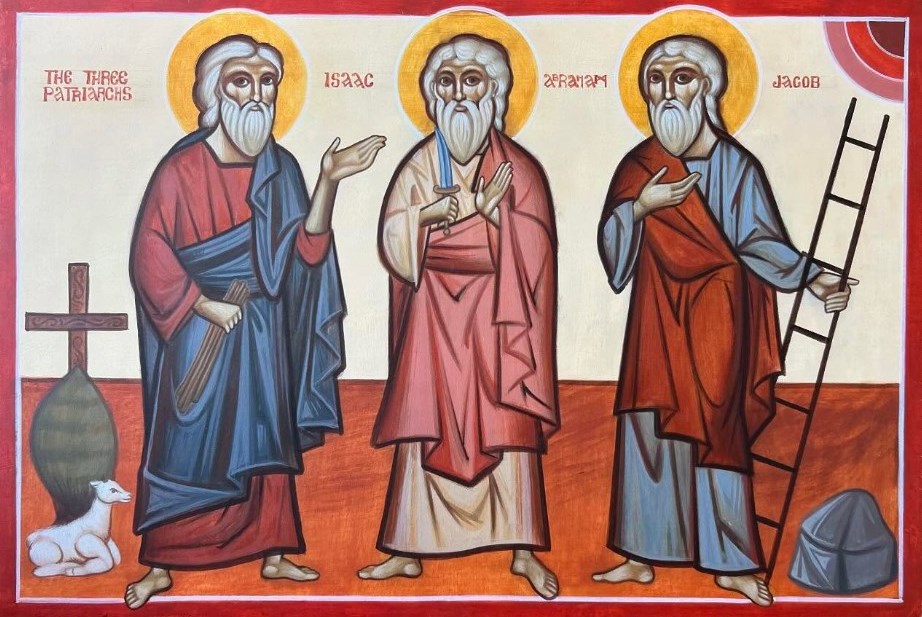
“I am the God of Abraham, the God of Isaac, and the God of Jacob.”
Notice, Jesus points out that God says, “I am,” not “I was.” God doesn’t speak of the dead—He speaks of the living. Abraham, Isaac, and Jacob are alive in God. To belong to God is to live forever.
This means that death does not have the final word. God’s love is stronger than death. The truth is already there in their own faith, but they could not see it.
And so, He concludes:
“He is not the God of the dead, but of the living.”
Our faith, too, stands on this truth: the God we worship is the God of life—life that conquers death, life that transforms every loss into hope, and life that unites all who believe in His love. Every time we profess the Creed and say, “I look forward to the resurrection of the dead and the life of the world to come,” we are declaring that same truth.
So, when we lose someone, we love, when we face suffering or death, we hold on to this promise: He is the God of the living. The ones we have loved and lost are not gone forever; they live in God. And we, too, are on our way toward that same fullness of life.
The Catechism of the Catholic Church (CCC 993–996) reminds us:
“The resurrection of the dead is closely linked to belief in God as Creator. The same God who created the universe out of nothing will restore life to the dead.”
Our hope, then, is not in some vague idea of immortality—it is in the bodily resurrection, made possible through Christ’s own victory over death. As St. Paul boldly declares,
“If Christ has not been raised, your faith is futile.” (1 Corinthians 15:17)
Our entire Christian faith stands or falls on this truth: death does not have the last word.
And that changes how we live now. When we face grief, when we stand at the grave of a loved one, when we ourselves grow old or sick, we do so with hope. We know that life in God never ends. The same hands that formed us in our mother’s womb will one day raise us up to share His glory forever.
But then Jesus says something that often troubles people:
“In the resurrection they neither marry nor are given in marriage” (Matthew 22:30)
Many wonder: Does that mean our marriages end in heaven?
The answer is both comforting and profound. Marriage, as the Church teaches, is a sacrament for this world—a sacred covenant that mirrors Christ’s love for His Church (Ephesians 5:32). On earth, marriage is a school of holiness, a place where two people learn to love selflessly, to forgive, to endure, and to help one another grow closer to God.
As St. John Chrysostom beautifully wrote,
“Marriage is a little Church, a partnership for life’s journey, where husband and wife help one another toward heaven.”
In our daily joys and struggles—through tenderness, fidelity, patience, and care—we practice glimpses of the eternal love that God holds for each of us.
The Catechism (CCC 1601–1605) reminds us that marriage points toward the eternal communion between Christ and His Bride, the Church. Through love, couples participate in God’s creative power, and their children are not just the continuation of a family line—they are immortal souls, living signs of love that will never end.
St. John Paul II, in Familiaris Consortio, assures us that marriage is a sign of Christ’s love for the Church—a love that transcends death and time. Even if the forms of our earthly relationships change in heaven, the fruit of love, the grace we have shared, and the souls we have nurtured endure forever.
Heaven, then, is not the end of love, it is love’s fulfillment. Every act of kindness, every word of forgiveness, every moment of patience or sacrifice—these are seeds of eternity. When we love faithfully and selflessly here, we are already living the life of heaven.
So take heart: the love you give and receive in marriage does not end. In heaven, it is transformed. Freed from earthly limitations, perfected in God, it participates in the eternal communion of love. The joy, the sacrifices, the bonds you form are all seeds of eternity, destined to bloom in the life that never ends.
Today’s Gospel reminds us to lift our eyes from the temporary to the eternal. The Sadducees could not imagine life beyond this world. But Jesus shows us a kingdom where love never dies. If God is the God of the living, then all who live in His love will live forever. Every act of love—every kindness, every forgiveness, every faithful word—builds that eternal kingdom.
Let us live and love with heaven in mind. Let our marriages, our families, and our friendships reflect God’s enduring love here and now. Let us hold fast to hope in the resurrection, trusting that every genuine act of love, every sacrifice, every faithful relationship will be renewed and made eternal in God’s presence.
✍ Fr James Abraham
 Nelson MCBS
Leave a comment