
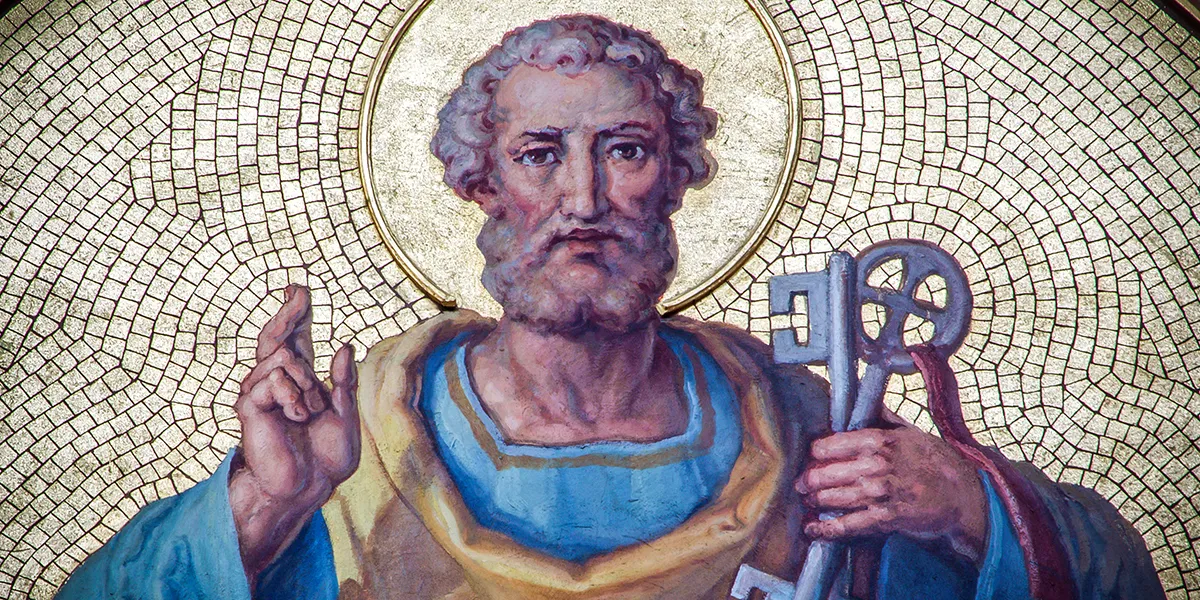
A Complete Historical Reference from Saint Peter to Pope Leo XIV
The Pope is the Bishop of Rome and Successor of Saint Peter, serving as the visible head of the Catholic Church. The Catholic Church traces the succession of Roman Pontiffs back to Saint Peter the Apostle. The Vatican’s official historical register currently lists 267 pontificates, from Peter to Pope Leo XIV. (Vatican)
Pope Leo XIV, born Robert Francis Prevost, was elected on 8 May 2025. The Vatican identifies him as the 267th Successor of Saint Peter, the first pope from the United States and the first Augustinian pope. His pontificate began on 18 May 2025. (Vatican)
Historical note: The dates of several of the earliest popes are uncertain. The Vatican’s official list itself gives alternative dates for a number of early pontificates. In the detailed list below, approximate dates are therefore marked with c., while uncertain dates are retained in simplified form.
1. The First Century – The Apostolic Age
| No. | Pope | Pontificate |
|---|---|---|
| 1 | Saint Peter | c. 30/33–64/67 |
| 2 | Saint Linus | 68–79 |
| 3 | Saint Anacletus (Cletus) | 80–92 |
| 4 | Saint Clement I | 92–99 |
| 5 | Saint Evaristus | c. 99–108 |
The first four successors after Peter are traditionally associated with the earliest Roman Church. Because documentary evidence from this period is limited, exact dates remain uncertain. (Vatican)
2. Second and Third Centuries
| No. | Pope | Pontificate |
|---|---|---|
| 6 | Saint Alexander I | 108/109–116/119 |
| 7 | Saint Sixtus I | 117/119–126/128 |
| 8 | Saint Telesphorus | 127/128–137/138 |
| 9 | Saint Hyginus | 138–142/149 |
| 10 | Saint Pius I | 142/146–157/161 |
| 11 | Saint Anicetus | 150/157–153/168 |
| 12 | Saint Soter | 162/168–170/177 |
| 13 | Saint Eleutherius | 171/177–185/193 |
| 14 | Saint Victor I | 186/189–197/201 |
| 15 | Saint Zephyrinus | 198–217/218 |
| 16 | Saint Callistus I | 218–222 |
| 17 | Saint Urban I | 222–230 |
| 18 | Saint Pontian | 230–235 |
| 19 | Saint Anterus | 235–236 |
| 20 | Saint Fabian | 236–250 |
| 21 | Saint Cornelius | 251–253 |
| 22 | Saint Lucius I | 253–254 |
| 23 | Saint Stephen I | 254–257 |
| 24 | Saint Sixtus II | 257–258 |
| 25 | Saint Dionysius | 259–268 |
| 26 | Saint Felix I | 269–274 |
| 27 | Saint Eutychian | 275–283 |
| 28 | Saint Caius | 283–296 |
| 29 | Saint Marcellinus | 296–304 |
This period was characterized by the growth of Christianity within the Roman Empire, theological controversies and, at various times, severe persecution of Christians. Many of these early popes are honored as martyrs or saints. (Vatican)
3. The Fourth and Fifth Centuries
| No. | Pope | Pontificate |
|---|---|---|
| 30 | Saint Marcellus I | 306–309 |
| 31 | Saint Eusebius | 309 |
| 32 | Saint Miltiades (Melchiades) | 311–314 |
| 33 | Saint Sylvester I | 314–335 |
| 34 | Saint Mark | 336 |
| 35 | Saint Julius I | 337–352 |
| 36 | Liberius | 352–366 |
| 37 | Saint Damasus I | 366–384 |
| 38 | Saint Siricius | 384–399 |
| 39 | Saint Anastasius I | 399–401 |
| 40 | Saint Innocent I | 401–417 |
| 41 | Saint Zosimus | 417–418 |
| 42 | Saint Boniface I | 418–422 |
| 43 | Saint Celestine I | 422–432 |
| 44 | Saint Sixtus III | 432–440 |
| 45 | Saint Leo I the Great | 440–461 |
| 46 | Saint Hilary | 461–468 |
| 47 | Saint Simplicius | 468–483 |
| 48 | Felix III | 483–492 |
| 49 | Saint Gelasius I | 492–496 |
| 50 | Anastasius II | 496–498 |
Important figures
Saint Sylvester I was pope during the reign of Emperor Constantine and the period surrounding the legalization of Christianity.
Saint Damasus I strongly promoted the cult of the martyrs and supported the development of the Latin biblical tradition associated with Saint Jerome.
Saint Leo the Great is one of the most important early popes. He defended orthodox Christology and is famous for meeting Attila the Hun in 452. He was later proclaimed a Doctor of the Church.
(Vatican)
4. The Sixth and Seventh Centuries
| No. | Pope | Pontificate |
|---|---|---|
| 51 | Symmachus | 498–514 |
| 52 | Hormisdas | 514–523 |
| 53 | John I | 523–526 |
| 54 | Felix IV | 526–530 |
| 55 | Boniface II | 530–532 |
| 56 | John II | 533–535 |
| 57 | Agapetus I | 535–536 |
| 58 | Silverius | 536–537 |
| 59 | Vigilius | 537–555 |
| 60 | Pelagius I | 556–561 |
| 61 | John III | 561–574 |
| 62 | Benedict I | 575–579 |
| 63 | Pelagius II | 579–590 |
| 64 | Saint Gregory I the Great | 590–604 |
| 65 | Sabinian | 604–606 |
| 66 | Boniface III | 607 |
| 67 | Boniface IV | 608–615 |
| 68 | Adeodatus I | 615–618 |
| 69 | Boniface V | 619–625 |
| 70 | Honorius I | 625–638 |
| 71 | Severinus | 640 |
| 72 | John IV | 640–642 |
| 73 | Theodore I | 642–649 |
| 74 | Saint Martin I | 649–655 |
| 75 | Eugene I | 654–657 |
| 76 | Vitalian | 657–672 |
| 77 | Adeodatus II | 672–676 |
| 78 | Donus | 676–678 |
| 79 | Agatho | 678–681 |
| 80 | Leo II | 682–683 |
| 81 | Benedict II | 684–685 |
| 82 | John V | 685–686 |
| 83 | Conon | 686–687 |
| 84 | Sergius I | 687–701 |
Saint Gregory the Great
Gregory I (590–604) was one of the greatest popes of the early Middle Ages. A former Roman official and Benedictine monk, he reorganized Church administration, promoted missionary activity and played an important role in the evangelization of the Anglo-Saxons.
He is honored as one of the four great Doctors of the Latin Church.
(Vatican)
5. The Eighth and Ninth Centuries
| No. | Pope | Pontificate |
|---|---|---|
| 85 | John VI | 701–705 |
| 86 | John VII | 705–707 |
| 87 | Sisinnius | 708 |
| 88 | Constantine | 708–715 |
| 89 | Gregory II | 715–731 |
| 90 | Gregory III | 731–741 |
| 91 | Zachary | 741–752 |
| 92 | Stephen II | 752–757 |
| 93 | Paul I | 757–767 |
| 94 | Stephen III | 768–772 |
| 95 | Adrian I | 772–795 |
| 96 | Leo III | 795–816 |
| 97 | Stephen IV | 816–817 |
| 98 | Paschal I | 817–824 |
| 99 | Eugene II | 824–827 |
| 100 | Valentine | 827 |
| 101 | Gregory IV | 827–844 |
| 102 | Sergius II | 844–847 |
| 103 | Leo IV | 847–855 |
| 104 | Benedict III | 855–858 |
| 105 | Nicholas I | 858–867 |
| 106 | Adrian II | 867–872 |
| 107 | John VIII | 872–882 |
| 108 | Marinus I | 882–884 |
| 109 | Adrian III | 884–885 |
| 110 | Stephen V | 885–891 |
Charlemagne and Leo III
Pope Leo III crowned Charlemagne Emperor on Christmas Day in 800, an event of enormous importance in medieval European history.
Nicholas I, meanwhile, became one of the strongest papal figures of the ninth century and asserted the authority of the papacy in disputes involving rulers and bishops.
(Vatican)
6. The Tenth Century
| No. | Pope | Pontificate |
|---|---|---|
| 111 | Formosus | 891–896 |
| 112 | Boniface VI | 896 |
| 113 | Stephen VI | 896–897 |
| 114 | Romanus | 897 |
| 115 | Theodore II | 897 |
| 116 | John IX | 897/898–900 |
| 117 | Benedict IV | 900–903 |
| 118 | Leo V | 903 |
| 119 | Sergius III | 904–911 |
| 120 | Anastasius III | 911–913 |
| 121 | Lando | 913–914 |
| 122 | John X | 914–928 |
| 123 | Leo VI | 928–929 |
| 124 | Stephen VII | 929–931 |
| 125 | John XI | 931–936 |
| 126 | Leo VII | 936–939 |
| 127 | Stephen VIII | 939–942 |
| 128 | Marinus II | 942–946 |
| 129 | Agapetus II | 946–955 |
| 130 | John XII | 955–964 |
| 131 | Leo VIII | 963–965 |
| 132 | Benedict V | 964 |
| 133 | John XIII | 965–972 |
| 134 | Benedict VI | 973–974 |
| 135 | Benedict VII | 974–983 |
| 136 | John XIV | 983–984 |
| 137 | John XV | 985–996 |
| 138 | Gregory V | 996–999 |
| 139 | Sylvester II | 999–1003 |
The troubled tenth century
The tenth century is frequently regarded as one of the most politically troubled periods in papal history. Roman political families exercised considerable influence over papal elections, and several pontificates were extremely short.
The period also witnessed the extraordinary Cadaver Synod, associated with Pope Formosus and Pope Stephen VI.
(Vatican)
7. The Eleventh Century and the Gregorian Reform
| No. | Pope | Pontificate |
|---|---|---|
| 140 | John XVII | 1003 |
| 141 | John XVIII | 1003–1009 |
| 142 | Sergius IV | 1009–1012 |
| 143 | Benedict VIII | 1012–1024 |
| 144 | John XIX | 1024–1032 |
| 145 | Benedict IX | 1032–1044 |
| 146 | Sylvester III | 1045 |
| 147 | Benedict IX | 1045 |
| 148 | Gregory VI | 1045–1046 |
| 149 | Clement II | 1046–1047 |
| 150 | Benedict IX | 1047–1048 |
| 151 | Damasus II | 1048 |
| 152 | Leo IX | 1049–1054 |
| 153 | Victor II | 1055–1057 |
| 154 | Stephen IX | 1057–1058 |
| 155 | Nicholas II | 1058–1061 |
| 156 | Alexander II | 1061–1073 |
| 157 | Gregory VII | 1073–1085 |
| 158 | Victor III | 1086–1087 |
| 159 | Urban II | 1088–1099 |
| 160 | Paschal II | 1099–1118 |
Benedict IX – an extraordinary case
Benedict IX appears three times in the Vatican’s numbered list because he held the papal office during three separate periods. Consequently, the Vatican’s sequence reaches 267 even though the number of distinct individuals is lower.
Gregory VII
Gregory VII was one of the central figures of the Gregorian Reform. His pontificate witnessed the dramatic Investiture Controversy involving the authority of the Pope and the Holy Roman Emperor.
Urban II
Urban II is particularly remembered for the Council of Clermont in 1095, where he called for the First Crusade.
(Vatican)
8. The Twelfth and Thirteenth Centuries
| No. | Pope | Pontificate |
|---|---|---|
| 161 | Gelasius II | 1118–1119 |
| 162 | Callixtus II | 1119–1124 |
| 163 | Honorius II | 1124–1130 |
| 164 | Innocent II | 1130–1143 |
| 165 | Celestine II | 1143–1144 |
| 166 | Lucius II | 1144–1145 |
| 167 | Eugene III | 1145–1153 |
| 168 | Anastasius IV | 1153–1154 |
| 169 | Adrian IV | 1154–1159 |
| 170 | Alexander III | 1159–1181 |
| 171 | Lucius III | 1181–1185 |
| 172 | Urban III | 1185–1187 |
| 173 | Gregory VIII | 1187 |
| 174 | Clement III | 1187–1191 |
| 175 | Celestine III | 1191–1198 |
| 176 | Innocent III | 1198–1216 |
| 177 | Honorius III | 1216–1227 |
| 178 | Gregory IX | 1227–1241 |
| 179 | Celestine IV | 1241 |
| 180 | Innocent IV | 1243–1254 |
| 181 | Alexander IV | 1254–1261 |
| 182 | Urban IV | 1261–1264 |
| 183 | Clement IV | 1265–1268 |
| 184 | Gregory X | 1271–1276 |
| 185 | Innocent V | 1276 |
| 186 | Adrian V | 1276 |
| 187 | John XXI | 1276–1277 |
| 188 | Nicholas III | 1277–1280 |
| 189 | Martin IV | 1281–1285 |
| 190 | Honorius IV | 1285–1287 |
| 191 | Nicholas IV | 1288–1292 |
| 192 | Celestine V | 1294 |
| 193 | Boniface VIII | 1294–1303 |
Important popes of this era
Adrian IV remains the only Englishman traditionally recognized as having become Pope.
Alexander III faced a long struggle with Emperor Frederick Barbarossa.
Innocent III was one of the most powerful medieval popes. His pontificate coincided with major developments in European politics and the Church, including the Fourth Lateran Council of 1215.
Celestine V is famous for voluntarily resigning the papal office in 1294.
Boniface VIII became involved in major conflicts over papal and royal authority, particularly with the French monarchy.
(Vatican)
9. The Avignon Papacy and Western Schism
| No. | Pope | Pontificate |
|---|---|---|
| 194 | Benedict XI | 1303–1304 |
| 195 | Clement V | 1305–1314 |
| 196 | John XXII | 1316–1334 |
| 197 | Benedict XII | 1334–1342 |
| 198 | Clement VI | 1342–1352 |
| 199 | Innocent VI | 1352–1362 |
| 200 | Urban V | 1362–1370 |
| 201 | Gregory XI | 1370–1378 |
| 202 | Urban VI | 1378–1389 |
| 203 | Boniface IX | 1389–1404 |
| 204 | Innocent VII | 1404–1406 |
| 205 | Gregory XII | 1406–1415 |
The Avignon Papacy
From 1309 to 1377, the papacy was based in Avignon, rather than Rome.
Gregory XI returned the papacy to Rome in 1377.
The Western Schism
After Gregory XI’s death in 1378, competing papal claimants emerged. This became known as the Western Schism.
The crisis was finally resolved at the Council of Constance, and Martin V was elected in 1417.
(Vatican)
10. The Fifteenth Century – Renaissance Papacy
| No. | Pope | Pontificate |
|---|---|---|
| 206 | Martin V | 1417–1431 |
| 207 | Eugene IV | 1431–1447 |
| 208 | Nicholas V | 1447–1455 |
| 209 | Callixtus III | 1455–1458 |
| 210 | Pius II | 1458–1464 |
| 211 | Paul II | 1464–1471 |
| 212 | Sixtus IV | 1471–1484 |
| 213 | Innocent VIII | 1484–1492 |
| 214 | Alexander VI | 1492–1503 |
| 215 | Pius III | 1503 |
| 216 | Julius II | 1503–1513 |
| 217 | Leo X | 1513–1521 |
Renaissance Rome
The fifteenth and early sixteenth centuries saw the papacy become deeply involved in the cultural and artistic life of the Renaissance.
Nicholas V was an important patron of Renaissance scholarship and architecture.
Sixtus IV supported major artistic and architectural projects, including the chapel that became the Sistine Chapel.
Julius II, known as the “Warrior Pope,” was a major patron of Michelangelo and Raphael.
Leo X, a member of the Medici family, was pope when Martin Luther’s Reformation began in 1517.
(Vatican)
11. The Protestant Reformation and the Council of Trent
| No. | Pope | Pontificate |
|---|---|---|
| 218 | Adrian VI | 1522–1523 |
| 219 | Clement VII | 1523–1534 |
| 220 | Paul III | 1534–1549 |
| 221 | Julius III | 1550–1555 |
| 222 | Marcellus II | 1555 |
| 223 | Paul IV | 1555–1559 |
| 224 | Pius IV | 1559–1565 |
| 225 | Pius V | 1566–1572 |
| 226 | Gregory XIII | 1572–1585 |
| 227 | Sixtus V | 1585–1590 |
| 228 | Urban VII | 1590 |
| 229 | Gregory XIV | 1590–1591 |
| 230 | Innocent IX | 1591 |
| 231 | Clement VIII | 1592–1605 |
Paul III and the Council of Trent
Paul III convened the Council of Trent, which began in 1545 and became the central Catholic response to many of the doctrinal and disciplinary challenges of the Protestant Reformation.
Saint Pius V
Pius V, a Dominican friar before becoming Pope, implemented important reforms associated with the Council of Trent. He was canonized in 1712.
Gregory XIII
Gregory XIII is particularly remembered for the reform of the calendar. The Gregorian calendar, introduced in 1582, eventually became the civil calendar used by most countries today.
(Vatican)
12. The Seventeenth Century
| No. | Pope | Pontificate |
|---|---|---|
| 232 | Leo XI | 1605 |
| 233 | Paul V | 1605–1621 |
| 234 | Gregory XV | 1621–1623 |
| 235 | Urban VIII | 1623–1644 |
| 236 | Innocent X | 1644–1655 |
| 237 | Alexander VII | 1655–1667 |
| 238 | Clement IX | 1667–1669 |
| 239 | Clement X | 1670–1676 |
| 240 | Innocent XI | 1676–1689 |
| 241 | Alexander VIII | 1689–1691 |
| 242 | Innocent XII | 1691–1700 |
The seventeenth-century papacy was shaped by the aftermath of the Reformation, European political conflicts, Catholic missions around the world and the development of Baroque Rome.
Urban VIII was a major patron of the arts and oversaw important developments in Rome.
Innocent XI, later canonized, is remembered for Church reform and his opposition to certain forms of royal interference in ecclesiastical affairs.
(Vatican)
13. The Eighteenth Century
| No. | Pope | Pontificate |
|---|---|---|
| 243 | Clement XI | 1700–1721 |
| 244 | Innocent XIII | 1721–1724 |
| 245 | Benedict XIII | 1724–1730 |
| 246 | Clement XII | 1730–1740 |
| 247 | Benedict XIV | 1740–1758 |
| 248 | Clement XIII | 1758–1769 |
| 249 | Clement XIV | 1769–1774 |
| 250 | Pius VI | 1775–1799 |
Benedict XIV
Benedict XIV was noted for his intellectual interests, scholarship and engagement with scientific and theological questions.
Clement XIV
Clement XIV is particularly remembered for suppressing the Society of Jesus in 1773, a decision later reversed by Pope Pius VII.
Pius VI and the French Revolution
The pontificate of Pius VI was profoundly affected by the French Revolution and the expansion of revolutionary French power.
Pius VI died in exile in France in 1799.
(Vatican)
14. The Nineteenth Century
| No. | Pope | Pontificate |
|---|---|---|
| 251 | Pius VII | 1800–1823 |
| 252 | Leo XII | 1823–1829 |
| 253 | Pius VIII | 1829–1830 |
| 254 | Gregory XVI | 1831–1846 |
| 255 | Pius IX | 1846–1878 |
| 256 | Leo XIII | 1878–1903 |
Pius VII
Pius VII’s pontificate was dominated by the rise of Napoleon Bonaparte. The Pope was eventually imprisoned by Napoleon before the fall of the French emperor.
Pius IX
Pius IX had the longest pontificate of any historically certain pope, lasting more than 31 years.
He proclaimed the dogma of the Immaculate Conception in 1854 and presided over the First Vatican Council (1869–1870), which defined the dogma of papal infallibility under specific conditions.
Leo XIII
Leo XIII is particularly famous for Rerum Novarum (1891), a foundational document of modern Catholic social teaching addressing the conditions of workers and the social questions created by industrialization.
(Vatican)
15. The Twentieth Century
| No. | Pope | Pontificate |
|---|---|---|
| 257 | Saint Pius X | 1903–1914 |
| 258 | Benedict XV | 1914–1922 |
| 259 | Pius XI | 1922–1939 |
| 260 | Pius XII | 1939–1958 |
| 261 | Saint John XXIII | 1958–1963 |
| 262 | Saint Paul VI | 1963–1978 |
| 263 | John Paul I | 1978 |
| 264 | Saint John Paul II | 1978–2005 |
Saint Pius X
Pius X promoted frequent Holy Communion, encouraged early First Communion for children, reformed sacred music and strongly opposed what he regarded as theological Modernism.
He was canonized in 1954.
Benedict XV
Benedict XV became Pope shortly after the outbreak of World War I and devoted much of his pontificate to peace and humanitarian efforts.
Pius XI
Pius XI’s pontificate witnessed the rise of totalitarian regimes and included the establishment of diplomatic relations between the Holy See and the Kingdom of Italy through the Lateran Pacts of 1929.
Pius XII
Pius XII was Pope during World War II and the early Cold War. His pontificate remains the subject of extensive historical scholarship and debate, particularly concerning his wartime actions and responses to the Holocaust.
Saint John XXIII
John XXIII convoked the Second Vatican Council, which opened in 1962.
Saint Paul VI
Paul VI guided the Church through the conclusion and implementation of Vatican II and became the first Pope to make extensive modern international apostolic journeys.
John Paul I
John Paul I served for only 33 days in 1978.
Saint John Paul II
John Paul II, elected in 1978, became one of the most influential figures of the late twentieth century. His long pontificate was marked by extensive international travel, the fall of Communist regimes in Eastern Europe, strong promotion of the New Evangelization and a major contribution to Catholic teaching.
(Vatican)
16. The Twenty-First Century
| No. | Pope | Pontificate |
|---|---|---|
| 265 | Benedict XVI | 2005–2013 |
| 266 | Francis | 2013–2025 |
| 267 | Leo XIV | 2025–present |
Benedict XVI
Born Joseph Ratzinger, Benedict XVI was elected in 2005 following the death of John Paul II.
A distinguished theologian, he emphasized the relationship between faith and reason, Christian identity and the centrality of Christ.
On 11 February 2013, he announced his resignation from the papacy, becoming the first pope in centuries to resign freely from office.
His pontificate ended on 28 February 2013.
Pope Francis
Born Jorge Mario Bergoglio in Buenos Aires, Argentina, Francis was elected on 13 March 2013.
He was the first pope from the Americas, the first pope from the Southern Hemisphere and the first Jesuit pope.
His pontificate emphasized:
- Care for the poor
- Mercy
- Evangelization
- Migrants and refugees
- Environmental responsibility
- Synodality
- Dialogue
- Outreach to people on the margins
Francis died on 21 April 2025. The Vatican’s official register records his pontificate as 2013–2025. (Vatican)
Pope Leo XIV
Robert Francis Prevost was elected Pope on 8 May 2025 and chose the name Leo XIV.
The Vatican identifies him as the 267th Successor of Saint Peter. He is the first pope from the United States of America and the first Augustinian pope. His inauguration Mass took place on 18 May 2025. (Vatican)
Complete List of All 267 Popes at a Glance
For quick reference, here is the entire succession in compact form:
1–25
- Peter
- Linus
- Anacletus/Cletus
- Clement I
- Evaristus
- Alexander I
- Sixtus I
- Telesphorus
- Hyginus
- Pius I
- Anicetus
- Soter
- Eleutherius
- Victor I
- Zephyrinus
- Callistus I
- Urban I
- Pontian
- Anterus
- Fabian
- Cornelius
- Lucius I
- Stephen I
- Sixtus II
- Dionysius
26–50
- Felix I
- Eutychian
- Caius
- Marcellinus
- Marcellus I
- Eusebius
- Miltiades
- Sylvester I
- Mark
- Julius I
- Liberius
- Damasus I
- Siricius
- Anastasius I
- Innocent I
- Zosimus
- Boniface I
- Celestine I
- Sixtus III
- Leo I
- Hilary
- Simplicius
- Felix III
- Gelasius I
- Anastasius II
51–75
- Symmachus
- Hormisdas
- John I
- Felix IV
- Boniface II
- John II
- Agapetus I
- Silverius
- Vigilius
- Pelagius I
- John III
- Benedict I
- Pelagius II
- Gregory I
- Sabinian
- Boniface III
- Boniface IV
- Adeodatus I
- Boniface V
- Honorius I
- Severinus
- John IV
- Theodore I
- Martin I
- Eugene I
76–100
- Vitalian
- Adeodatus II
- Donus
- Agatho
- Leo II
- Benedict II
- John V
- Conon
- Sergius I
- John VI
- John VII
- Sisinnius
- Constantine
- Gregory II
- Gregory III
- Zachary
- Stephen II
- Paul I
- Stephen III
- Adrian I
- Leo III
- Stephen IV
- Paschal I
- Eugene II
- Valentine
101–125
- Gregory IV
- Sergius II
- Leo IV
- Benedict III
- Nicholas I
- Adrian II
- John VIII
- Marinus I
- Adrian III
- Stephen V
- Formosus
- Boniface VI
- Stephen VI
- Romanus
- Theodore II
- John IX
- Benedict IV
- Leo V
- Sergius III
- Anastasius III
- Lando
- John X
- Leo VI
- Stephen VII
- John XI
126–150
- Leo VII
- Stephen VIII
- Marinus II
- Agapetus II
- John XII
- Leo VIII
- Benedict V
- John XIII
- Benedict VI
- Benedict VII
- John XIV
- John XV
- Gregory V
- Sylvester II
- John XVII
- John XVIII
- Sergius IV
- Benedict VIII
- John XIX
- Benedict IX
- Sylvester III
- Benedict IX
- Gregory VI
- Clement II
- Benedict IX
151–175
- Damasus II
- Leo IX
- Victor II
- Stephen IX
- Nicholas II
- Alexander II
- Gregory VII
- Victor III
- Urban II
- Paschal II
- Gelasius II
- Callixtus II
- Honorius II
- Innocent II
- Celestine II
- Lucius II
- Eugene III
- Anastasius IV
- Adrian IV
- Alexander III
- Lucius III
- Urban III
- Gregory VIII
- Clement III
- Celestine III
176–200
- Innocent III
- Honorius III
- Gregory IX
- Celestine IV
- Innocent IV
- Alexander IV
- Urban IV
- Clement IV
- Gregory X
- Innocent V
- Adrian V
- John XXI
- Nicholas III
- Martin IV
- Honorius IV
- Nicholas IV
- Celestine V
- Boniface VIII
- Benedict XI
- Clement V
- John XXII
- Benedict XII
- Clement VI
- Innocent VI
- Urban V
201–225
- Gregory XI
- Urban VI
- Boniface IX
- Innocent VII
- Gregory XII
- Martin V
- Eugene IV
- Nicholas V
- Callixtus III
- Pius II
- Paul II
- Sixtus IV
- Innocent VIII
- Alexander VI
- Pius III
- Julius II
- Leo X
- Adrian VI
- Clement VII
- Paul III
- Julius III
- Marcellus II
- Paul IV
- Pius IV
- Pius V
226–250
- Gregory XIII
- Sixtus V
- Urban VII
- Gregory XIV
- Innocent IX
- Clement VIII
- Leo XI
- Paul V
- Gregory XV
- Urban VIII
- Innocent X
- Alexander VII
- Clement IX
- Clement X
- Innocent XI
- Alexander VIII
- Innocent XII
- Clement XI
- Innocent XIII
- Benedict XIII
- Clement XII
- Benedict XIV
- Clement XIII
- Clement XIV
- Pius VI
251–267
- Pius VII
- Leo XII
- Pius VIII
- Gregory XVI
- Pius IX
- Leo XIII
- Pius X
- Benedict XV
- Pius XI
- Pius XII
- John XXIII
- Paul VI
- John Paul I
- John Paul II
- Benedict XVI
- Francis
- Leo XIV
The Vatican’s official register confirms the sequence from Peter through Leo XIV and records Leo XIV as number 267. (Vatican)
⭐ Some Remarkable Facts About the Papal Succession
👑 The first Pope
Saint Peter is traditionally regarded as the first Pope and the first Bishop of Rome.
🌍 The 267th Pope
Leo XIV is the 267th pope in the Vatican’s official numbering. (Vatican)
🇺🇸 First Pope from the United States
Leo XIV, Robert Francis Prevost, is the first pope from the United States. (Vatican)
🇬🇧 Only English Pope
Adrian IV (1154–1159) is traditionally recognized as the only Englishman to become Pope.
⏳ Longest pontificate of a historically certain pope
Pius IX (1846–1878) reigned for more than 31 years.
⚡ Shortest pontificate
Urban VII was elected in 1590 but died before he could be crowned; his pontificate lasted only about 13 days.
🕊️ Pope who resigned
Celestine V resigned in 1294.
🕊️ Modern pope who resigned
Benedict XVI resigned in 2013, becoming the first pope in many centuries to do so voluntarily.
👶 Youngest traditional pope
The exact ages of some early medieval popes are uncertain. Benedict IX is traditionally regarded as having been extremely young when first elected.
🕯️ Popes who were martyrs
A substantial number of the earliest popes are venerated as martyrs, including Peter, Clement I, Sixtus II, Cornelius, Cyprian’s contemporary Stephen I, Pontian, Fabian and others.
✝️ Popes Who Became Saints
The papal succession contains a remarkable number of canonized saints, particularly among the earliest centuries.
Some especially well-known saintly popes include:
- Saint Peter
- Saint Clement I
- Saint Sixtus I
- Saint Telesphorus
- Saint Pius I
- Saint Anicetus
- Saint Victor I
- Saint Callistus I
- Saint Pontian
- Saint Fabian
- Saint Cornelius
- Saint Cyprian’s contemporary Pope Cornelius
- Saint Marcellinus
- Saint Sylvester I
- Saint Damasus I
- Saint Leo the Great
- Saint Gelasius I
- Saint Gregory the Great
- Saint Boniface IV
- Saint Martin I
- Saint Pius V
- Saint Pius X
- Saint John XXIII
- Saint Paul VI
- Saint John Paul II
The process of canonization has varied greatly throughout history. The modern Church normally conducts a formal canonical investigation before declaring a person a saint.
🏛️ Major Periods in Papal History
| Historical Period | Approximate Papal Era | Major Characteristics |
|---|---|---|
| Apostolic Age | Peter–Clement | Foundations of the Roman Church |
| Early Church | 1st–3rd centuries | Persecution and evangelization |
| Imperial Christian Era | 4th century | Constantine and legalization of Christianity |
| Late Antiquity | 5th–6th centuries | Doctrinal development and fall of Western Roman Empire |
| Early Middle Ages | 6th–8th centuries | Missionary expansion |
| Carolingian Era | 8th–9th centuries | Alliance with Frankish rulers |
| Medieval Papacy | 10th–13th centuries | Reform and growing papal influence |
| Avignon Period | 1309–1377 | Papal residence in Avignon |
| Western Schism | 1378–1417 | Competing papal claimants |
| Renaissance | 15th–16th centuries | Art, politics and humanism |
| Reformation Era | 16th century | Protestant Reformation and Council of Trent |
| Early Modern Era | 17th–18th centuries | Catholic renewal and European political change |
| Revolutionary Era | Late 18th–19th centuries | Revolution, nationalism and secularization |
| Modern Papacy | 20th century | World wars and global Catholicism |
| Vatican II Era | 1958 onward | Council, renewal and modern evangelization |
| Contemporary Papacy | 2005–present | Benedict XVI, Francis and Leo XIV |
🌎 From Rome to a Global Church
One of the most remarkable developments in the history of the papacy is the geographical transformation of the Church.
For many centuries, the papacy was overwhelmingly associated with Italy, particularly Rome and the Italian peninsula.
The modern period changed this dramatically.
John Paul II was Polish.
Benedict XVI was German.
Francis was Argentine.
Leo XIV was born in Chicago, United States.
The election of Leo XIV therefore represents another significant development in the long history of the Petrine ministry. The Vatican describes him as the first Pope from the United States and the first Augustinian Pope. (Vatican)
📖 The Papacy and the Development of Catholic Teaching
Across two millennia, the popes have played major roles in Catholic teaching concerning:
- Scripture and Tradition
- The sacraments
- Christian morality
- Church unity
- Social justice
- Marriage and family life
- Human dignity
- Peace
- Evangelization
- Ecumenism
- Interreligious dialogue
- Care for creation
- The relationship between faith and reason
The papal office has therefore developed not merely as an administrative institution but as an important centre of teaching and pastoral leadership.
The Second Vatican Council described the Roman Pontiff as the Successor of Peter and emphasized his relationship with the college of bishops. (Vatican)
🕊️ The Meaning of the Petrine Succession
For Catholics, the succession of popes is more than a historical list.
It represents a continuous chain of pastoral leadership associated with the ministry entrusted by Christ to Peter.
The Catholic understanding is rooted especially in Christ’s words to Peter:
“You are Peter, and on this rock I will build my Church.”
— Matthew 16:18
From Peter to Leo XIV, the names, personalities, cultures and historical circumstances have changed enormously.
But the Catholic Church understands the essential mission of the Petrine ministry as continuing:
to proclaim Christ, preserve the apostolic faith, strengthen the unity of the Church and serve the People of God.
📌 The Papal Succession in One Line
Peter → Linus → Anacletus → Clement I → Evaristus → … → John Paul II → Benedict XVI → Francis → Leo XIV
The succession contains 267 numbered pontificates in the Vatican’s official register, covering approximately two thousand years of Christian history. (Vatican)
🌟 Conclusion
The history of the popes is, in many respects, a condensed history of Christianity and a significant part of European and world history.
The popes have lived through:
- The Roman persecutions
- The conversion of the Roman Empire
- The fall of the Western Roman Empire
- The rise of medieval Europe
- The Crusades
- The Great Schism between East and West
- The Renaissance
- The Protestant Reformation
- The Council of Trent
- The Enlightenment
- The French Revolution
- The Industrial Revolution
- The rise and fall of empires
- Two World Wars
- The Holocaust
- The Cold War
- The Second Vatican Council
- The collapse of Communism
- Globalization
- The digital age
From Saint Peter, the fisherman and apostle, to Leo XIV, the first American and first Augustinian pope, the papal succession spans an extraordinary period of human history.
The Vatican’s official list currently concludes with Leo XIV, the 267th Pope, whose secular name is Robert Francis Prevost and whose pontificate began in May 2025. (Vatican)
Two thousand years. 267 numbered pontificates. One continuous Petrine tradition.
Official Vatican Reference
For readers who want to verify individual names, dates and biographical information, the Holy See’s official list of Pontiffs is the primary reference. Official Vatican List of the Popes
For Pope Leo XIV specifically, the Vatican’s official biography confirms his election on 8 May 2025, his name Robert Francis Prevost, and his status as the 267th Successor of Saint Peter. Official Vatican Biography of Pope Leo XIV
Leave a Reply