
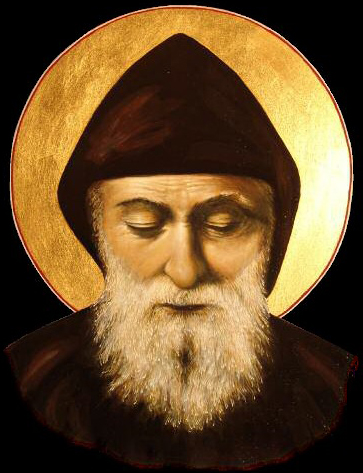
A Comprehensive Biography of the Great Maronite Saint
Feast Day: July 24 (Roman Catholic Church); Third Sunday of July (Maronite Church)
Born: May 8, 1828, Bekaa Kafra, North Lebanon
Died: December 24, 1898, Annaya, Lebanon
Beatified: December 5, 1965, by Pope Paul VI
Canonized: October 9, 1977, by Pope Paul VI
Patron: Lebanon; those seeking healing and spiritual renewal
Introduction
Among the saints of the modern era, few have inspired as much devotion across religious, cultural, and national boundaries as Saint Charbel Makhlouf. A humble Maronite monk and hermit from the mountains of Lebanon, Charbel spent most of his life hidden from the world in silence, prayer, fasting, and complete union with God. Yet after his death, he became one of the most renowned miracle-working saints in the Catholic Church.
Thousands of people from every continent—including Christians, Muslims, and people of other faiths—testify to extraordinary healings and favors received through his intercession. His tomb in Annaya, Lebanon, has become one of the world’s great pilgrimage destinations, and devotion to him has spread to nearly every country.
Saint Charbel reminds modern Christians that true greatness lies not in worldly achievements but in holiness, humility, and complete surrender to God.
Early Life
Saint Charbel was born as Youssef Antoun Makhlouf on May 8, 1828, in the mountain village of Bekaa Kafra, the highest inhabited village in Lebanon. His parents, Antoun Makhlouf and Brigitta Chidiac, were poor but deeply faithful Maronite Catholics.
When Youssef was only three years old, his father died while serving in forced labor under Ottoman authorities, leaving the family in poverty. His mother later remarried a devout man who eventually became a parish priest, providing Youssef with an environment deeply rooted in faith and prayer. (Deir Annaya)
Even as a child, Youssef was remarkably different from other boys.
He spent long hours:
- tending the family flock
- praying in solitude
- reading Scripture
- meditating in a small grotto dedicated to the Blessed Virgin Mary
Villagers soon noticed his unusual holiness and affectionately called him “the saint.”
A Call to Religious Life
Youssef admired two maternal uncles who lived as hermits.
Their simple life of:
- silence
- manual labor
- fasting
- prayer
deeply attracted him.
Although relatives hoped he would marry and remain at home, his heart belonged entirely to God.
At the age of 23, without informing anyone, he quietly left home in 1851 and entered the Lebanese Maronite Order at the Monastery of Our Lady in Mayfouq. There he took the religious name Charbel, after a second-century Christian martyr. (Deir Annaya)
Religious Formation
After entering the monastery, Brother Charbel underwent years of intense spiritual and theological formation.
He became known for:
- complete obedience
- extraordinary humility
- deep recollection
- love of manual labor
- strict observance of the Rule
On November 1, 1853, he professed solemn vows of:
- Poverty
- Chastity
- Obedience
He later studied theology at the Monastery of Saint Cyprian and Saint Justina in Kfifan under the guidance of Saint Nimatullah Kassab, another revered Lebanese saint.
Ordination to the Priesthood
Father Charbel was ordained a priest in 1859.
His priesthood centered almost entirely on:
- celebrating the Holy Eucharist
- hearing confessions
- personal prayer
- manual work
- silence
Unlike many priests, he sought no recognition.
He rarely spoke except when necessary.
His fellow monks recalled that every action seemed to flow from an awareness of God’s presence.
Life at the Monastery of Saint Maron
For nearly two decades Father Charbel lived in the Monastery of Saint Maron at Annaya.
His daily routine was astonishingly demanding.
It included:
- midnight prayer
- lengthy liturgical offices
- meditation
- hard agricultural labor
- fasting
- spiritual reading
- Eucharistic adoration
His food was extremely simple.
He accepted:
- no comforts
- no privileges
- no personal possessions.
Visitors often noticed the peace radiating from him.
Becoming a Hermit
In 1875, after nineteen years in community life, Father Charbel received permission to become a hermit.
He moved into the nearby Hermitage of Saints Peter and Paul.
This fulfilled the deepest desire of his heart.
For the next 23 years, he lived almost completely secluded from society. (Deir Annaya)
Daily Life as a Hermit
His life followed an almost unchanging rhythm.
Every day included:
Celebration of the Divine Liturgy
The Eucharist stood at the center of everything.
He celebrated Mass with extraordinary reverence, often spending long periods afterward in thanksgiving.
Prayer
He prayed almost continuously.
The Psalms, Rosary, and meditation filled most of his waking hours.
Fasting
His fasting was severe.
Meals consisted mainly of:
- vegetables
- herbs
- bread
- water
Manual Labor
Despite his age, he cultivated fields and vineyards.
He believed work united him with Christ.
Silence
Silence became his language.
He spoke only when charity required it.
His Love for the Eucharist
Saint Charbel’s greatest devotion was the Holy Eucharist.
Witnesses observed:
- tears during Mass
- prolonged thanksgiving after Communion
- deep contemplation before the Blessed Sacrament
He considered the Eucharist:
- the source of holiness
- the center of priesthood
- heaven on earth
His spirituality was profoundly Eucharistic.
Devotion to the Blessed Virgin Mary
Equally remarkable was his love for Mary.
From childhood he prayed before a Marian grotto.
As a monk he constantly prayed:
- the Rosary
- Marian hymns
- traditional Eastern prayers
He entrusted every aspect of his life to Our Lady.
Extraordinary Holiness
Many monks witnessed unusual events surrounding Father Charbel.
Among the stories passed down are accounts of:
- miraculous healings
- prophetic insight
- multiplication of food
- supernatural light during prayer
- remarkable peace experienced in his presence
Though not all such accounts are formally investigated by the Church, they contributed to his reputation for sanctity during his lifetime.
His Death
On December 16, 1898, while celebrating the Divine Liturgy, Father Charbel suffered a stroke after praying:
“Father of Truth…”
He never recovered.
After eight days of suffering offered to God, he died peacefully on Christmas Eve, December 24, 1898, at age seventy. (Saint Charbel Parish)
Extraordinary Signs After Death
Soon after his burial, villagers reported mysterious lights shining above his grave.
When his tomb was opened months later, witnesses found his body remarkably preserved and said that a blood-like fluid continued to flow from it for years. These reports greatly increased devotion to him and led many pilgrims to visit his tomb in Annaya. (Deir Annaya)
Miracles
Saint Charbel is widely known as the “Miracle Monk of Lebanon.”
The Catholic Church carefully investigated miracles attributed to his intercession during his causes for beatification and canonization, including the healings of Sister Mary Abel Kamari, Iskandar Naim Obeid, Rached Salim Zoorob, and Mariam Awad. (Wikipedia)
One of the most famous later accounts concerns Nohad El Shami, who reported being healed from partial paralysis after dreaming that Saint Charbel operated on her neck; she awoke with small wounds and was able to walk again. While this event has greatly strengthened popular devotion, it is distinct from the miracles formally used in his canonization process. (Wikipedia)
Today, devotees around the world continue to report healings and answered prayers through his intercession, and the shrine at Annaya maintains records of many such testimonies. (Deir Annaya)
Beatification
The cause for his canonization began in 1929.
On December 5, 1965, Pope Paul VI beatified him during the closing of the Second Vatican Council, presenting him as a model of poverty, penance, asceticism, and contemplative holiness. (Wikipedia)
Canonization
On October 9, 1977, Pope Paul VI canonized Charbel Makhlouf.
He became:
- one of Lebanon’s greatest saints
- among the most beloved Eastern Catholic saints
- an internationally recognized miracle worker
The Pope praised him as an outstanding example of Eastern monastic spirituality whose witness enriches the entire Church. (Wikipedia)
Spiritual Characteristics
Saint Charbel’s spirituality rested upon several pillars:
1. Complete Trust in God
He surrendered every aspect of life to Divine Providence.
2. Silence
He believed silence allowed God to speak.
3. Prayer
Prayer became the atmosphere of his life.
4. Eucharistic Love
The Mass was his greatest treasure.
5. Simplicity
He embraced poverty joyfully.
6. Humility
He avoided praise and recognition.
7. Obedience
He obeyed his superiors without hesitation.
Lessons from Saint Charbel
His life teaches that:
- Holiness is possible in every age.
- Prayer transforms the human heart.
- Silence is essential for hearing God.
- The Eucharist is the center of Christian life.
- Humility is greater than worldly success.
- God’s power is revealed through hidden lives.
Devotion Around the World
Today, devotion to Saint Charbel extends far beyond Lebanon.
Churches, shrines, and prayer groups dedicated to him exist in:
- Lebanon
- India
- Australia
- United States
- Canada
- Brazil
- Mexico
- Philippines
- Europe
- Africa
His image is especially revered among the Lebanese diaspora, but many non-Lebanese Catholics have also embraced him as a powerful intercessor for healing and spiritual renewal.
The Tomb at Annaya
The Monastery of Saint Maron in Annaya, Lebanon, remains the principal shrine of Saint Charbel.
Millions of pilgrims visit annually to:
- pray
- attend Mass
- seek healing
- receive blessings
- thank God for favors received
The monastery has become one of the most important pilgrimage destinations in the Middle East. (Deir Annaya)
Quotes Attributed to Saint Charbel
Although he wrote very little, his life inspires sayings often associated with his spirituality:
- “God sees the heart.”
- “Silence allows the soul to hear God.”
- “Prayer is heaven begun on earth.”
- “The Eucharist is the greatest treasure.”
These expressions summarize his spirituality, even if they are not preserved as direct documented quotations.
Prayer to Saint Charbel
O glorious Saint Charbel,
You who spent your life in silence, prayer, and complete surrender to God’s will, obtain for us the grace to love Christ above all things.
Pray for the sick, comfort the suffering, strengthen those who have lost hope, and intercede for all who seek God’s mercy.
Help us to imitate your humility, purity, obedience, and unwavering faith.
Through your powerful intercession, may God grant us the grace we seek, if it is according to His holy will.
We ask this through Christ our Lord.
Amen.
Legacy
More than a century after his death, Saint Charbel continues to inspire millions through the witness of a life hidden from the world yet radiant with holiness. He never founded an order, wrote influential books, or sought fame. His enduring legacy rests on his complete union with God, his profound love for the Eucharist, and the countless people who turn to him in faith.
His life echoes the words of Christ:
“Whoever humbles himself will be exalted.” (Matthew 23:12)
Saint Charbel remains a timeless model of contemplative prayer, humility, and trust in God—a beacon reminding the faithful that sanctity flourishes most deeply in hearts wholly surrendered to divine love.
Leave a Reply