
5 Things to Know About the Solemnity of the Annunciation of the Lord
 What “Annunciation” Means
The word “Annunciation” comes from the Latin annuntiatio, meaning “announcement.”
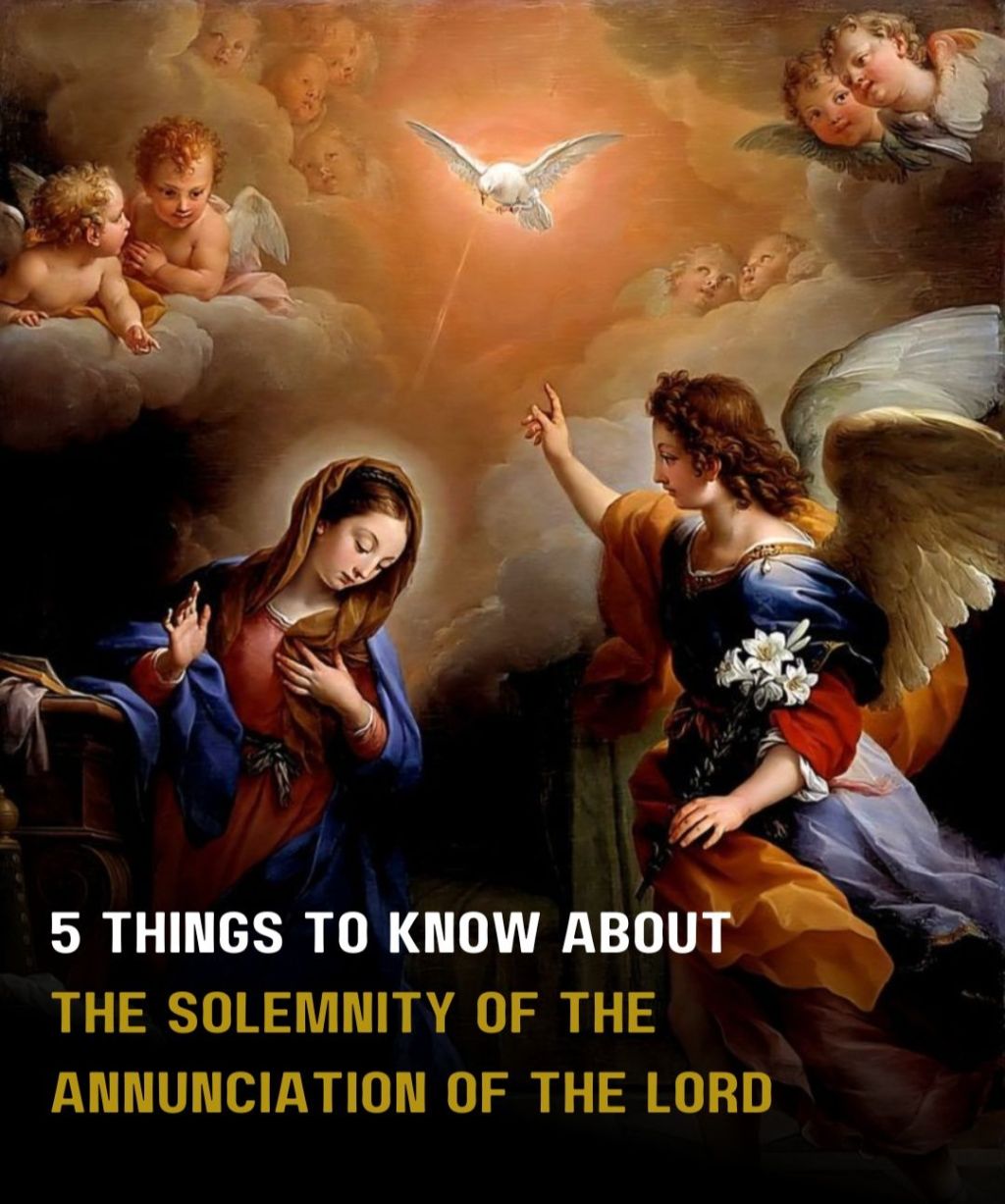
It refers to the moment when the angel Gabriel announced the coming of Jesus.
This is not just any announcement—it is the proclamation that God would enter the world as man.
 The Angel Gabriel Appeared to Mary
The feast celebrates when the angel Gabriel appeared to Virgin Mary and told her she would become the Mother of God.
This event is recorded in Luke 1:26–38 and marks one of the most important encounters in salvation history.
 It Marks the Incarnation
At the moment Mary said “yes”—“Let it be done to me according to your word”—the Incarnation took place.
According to the Catechism of the Catholic Church, this is the mystery where Jesus Christ, true God, became true man in the womb of Mary.
 Celebrated on March 25
The Church celebrates the Annunciation on March 25, exactly nine months before Christmas.
Liturgical norms found in the Roman Missal explain that if this date falls during Holy Week or Easter Week, the feast is transferred to a later date to respect the higher-ranking celebrations.
 Mary’s “Fiat” Changed History
Mary’s response—her “Fiat”—is one of the most important moments in salvation history.
As reflected by Pope Benedict XVI, her free and faithful “yes” allowed God’s plan to unfold.
Her example teaches us:
Trust in God’s will
Humility and obedience
Courage in uncertainty
The Solemnity of the Annunciation reminds us that God works through simple moments and willing hearts.
Through the faith of Virgin Mary, the Word became flesh—and the story of our salvation began to unfold.
It invites us to listen for God’s voice and respond with our own “yes,” trusting in His plan.
Source: Fear Not
 Nelson MCBS
Leave a comment