
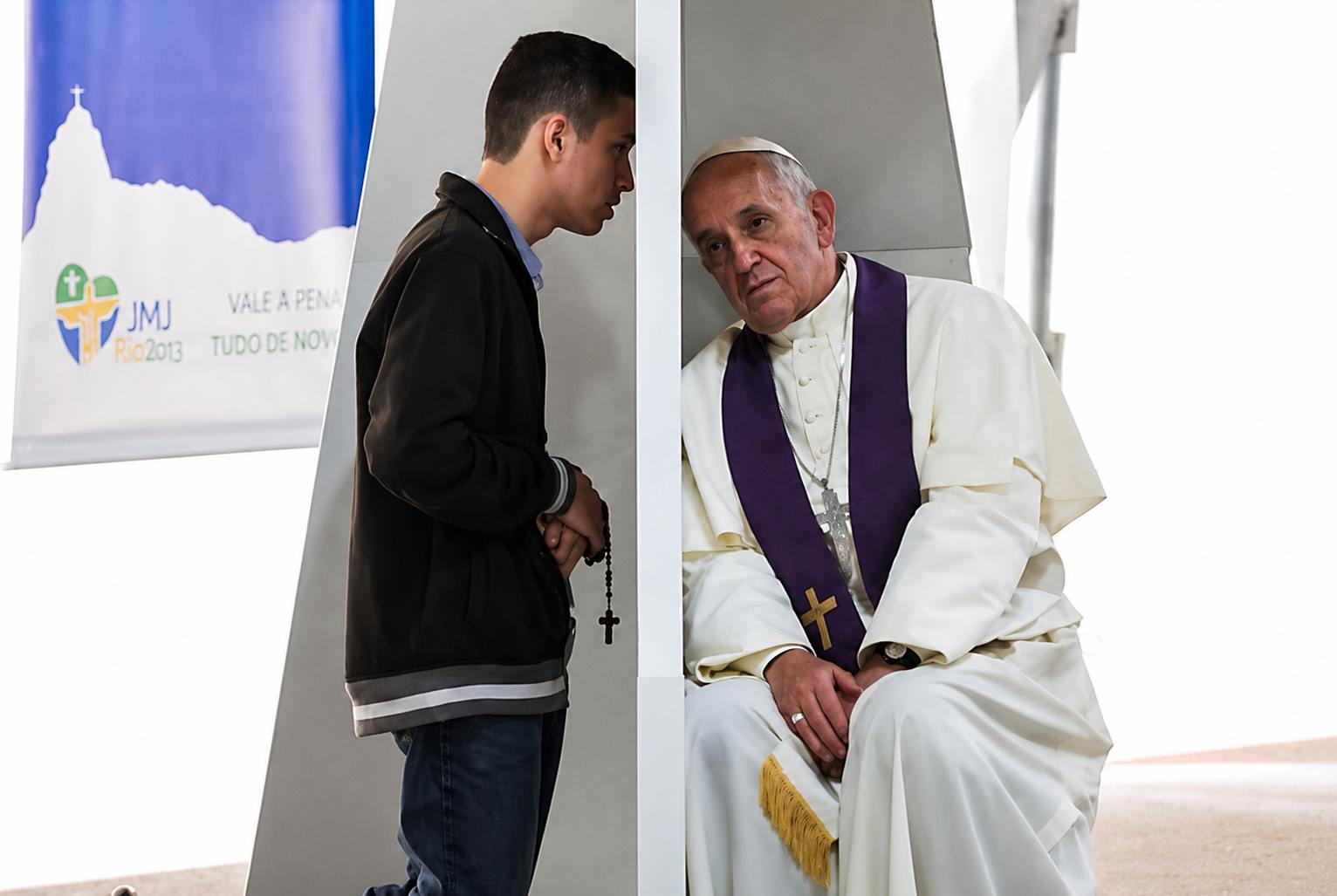
Of all the objections to the Sacrament of Reconciliation, the one most often voiced, particularly by Protestants, and sometime by Catholics is: “I don’t need to go to confession to a priest! The priest is just another human being! All that I need to do is to confess my sins directly to God, and that is enough!” This objection is flawed on a number of counts.
Jesus Commissioned Forgiveness through his Apostles.
Jesus asked believers to approach God for forgiveness through the apostles who were commissioned to act as his agents. Jesus told Peter, “Whatever you bind on earth shall be bound in heaven, and whatever you loose on earth shall be loosed in heaven” (Mt 16:19). After the resurrection, Jesus breathed on his disciples and said, “Whose sins you forgive are forgiven them and whose sins you retain are retained” (Jn 20:22,23). Priests alone carry out this apostolic role (Canon 965; CCC, Nos. 1461 & 1462).
Catholic Sacraments are Mediated.
The sacraments celebrate the most profound moments of our lives: birth (Baptism), the transition to adulthood (Confirmation), lifetime commitment (Marriage and Holy Orders), and the end of life (Anointing). Two other sacraments strengthen us for the journey through life: Eucharist, spiritual sustenance, and Penance, the forgiveness of sins. We need to be fed at least weekly, and because we sin so often, we need to be forgiven regularly. The sacraments are not self-administered. Rather, the priest is the mediator, the linkage or conduit between God and the people, a rich channel of God’s grace
A Personal Encounter with Christ.
The priest is not just “another human being,” but one who acts in persona Christi, in the person of Christ. With faith we believe that when the penitent speaks to the priest, the penitent speaks to Christ, and when the priest speaks, the priest speaks on behalf of Christ. When the priest says, “I absolve you,” it is Christ who absolves (Mk 2:10).
A Community Representative.
Our sins offend not only God, but the community as well. It is not only impractical, but often also ill-advised because of scandal or grave consequences, to admit our sins to others. When we admit our sins to a priest, the priest also serves in persona ecclesia, “in the person of the Church” or “in the person of the community.” Therefore, when we receive absolution, not only are we forgiven by God, we are also forgiven by those that we have offended.
The Personal Touch.
When we confess our sins to a priest, we are able to receive individualized counsel, advice that fits our unique circumstances, and we can be given a penance that is “medicinal,” specifically tailored to help us in the spiritual healing process (Canon 981).
Source: Catechists of St. Francis Xavier
Leave a Reply