
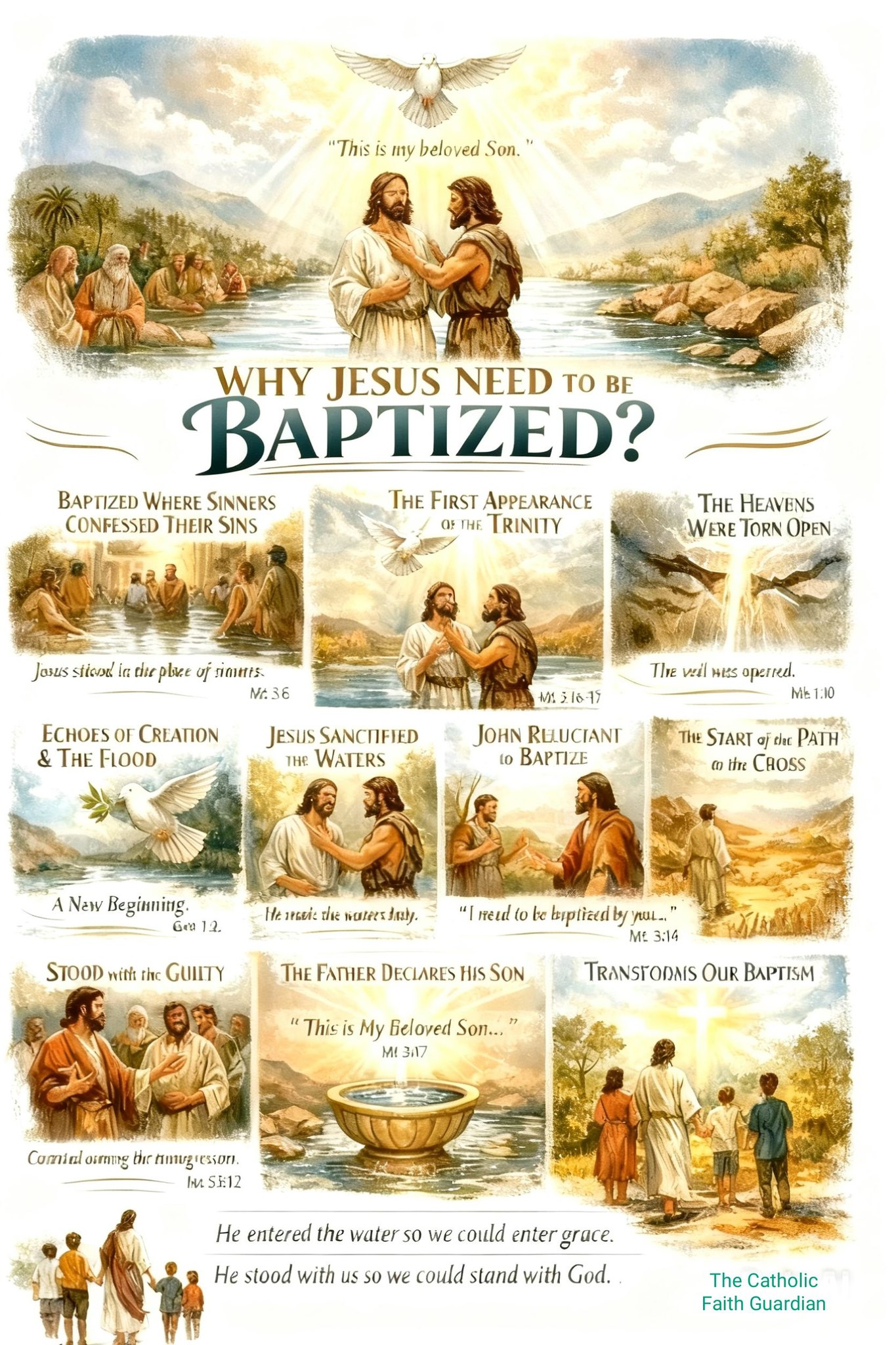
The Feast of the Baptism of the Lord closes the Christmas season and opens the public ministry of Jesus Christ. Yet it also presents a mystery that many believers—then and now—find puzzling:
𝘞𝘩𝘺 𝘸𝘰𝘶𝘭𝘥 𝘑𝘦𝘴𝘶𝘴 𝘣𝘦 𝘣𝘢𝘱𝘵𝘪𝘻𝘦𝘥 𝘪𝘧 𝘏𝘦 𝘩𝘢𝘥 𝘯𝘰 𝘴𝘪𝘯𝘴?
Since baptism is associated with repentance and the washing away of sins, Christ’s descent into the Jordan seems, at first glance, unnecessary.
Sacred Scripture and Catholic Tradition, however, reveal that Jesus’ Baptism was not about His sin, but our salvation.
𝘾𝙝𝙧𝙞𝙨𝙩 𝙃𝙖𝙙 𝙉𝙤 𝙎𝙞𝙣 — 𝙎𝙘𝙧𝙞𝙥𝙩𝙪𝙧𝙚 𝙇𝙚𝙖𝙫𝙚𝙨 𝙉𝙤 𝘿𝙤𝙪𝙗𝙩
The Bible is unequivocal about the sinlessness of Christ:
“𝘏𝘦 𝘸𝘢𝘴 𝘵𝘦𝘮𝘱𝘵𝘦𝘥 𝘪𝘯 𝘦𝘷𝘦𝘳𝘺 𝘸𝘢𝘺, 𝘺𝘦𝘵 𝘸𝘪𝘵𝘩𝘰𝘶𝘵 𝘴𝘪𝘯.” (𝘏𝘦𝘣𝘳𝘦𝘸𝘴 4:15)
“𝘏𝘦 𝘤𝘰𝘮𝘮𝘪𝘵𝘵𝘦𝘥 𝘯𝘰 𝘴𝘪𝘯.” (1 𝘗𝘦𝘵𝘦𝘳 2:22)
“𝘏𝘦 𝘬𝘯𝘦𝘸 𝘯𝘰 𝘴𝘪𝘯.” (2 𝘊𝘰𝘳𝘪𝘯𝘵𝘩𝘪𝘢𝘯𝘴 5:21)
Even John the Baptist recognized this reality and resisted baptizing Him:
“𝘐 𝘯𝘦𝘦𝘥 𝘵𝘰 𝘣𝘦 𝘣𝘢𝘱𝘵𝘪𝘻𝘦𝘥 𝘣𝘺 𝘺𝘰𝘶, 𝘢𝘯𝘥 𝘺𝘦𝘵 𝘺𝘰𝘶 𝘤𝘰𝘮𝘦 𝘵𝘰 𝘮𝘦?” (𝘔𝘢𝘵𝘵𝘩𝘦𝘸 3:14)
Thus, Jesus’ Baptism cannot be interpreted as repentance. Any theology that suggests otherwise contradicts Scripture itself.
𝘽𝙖𝙥𝙩𝙞𝙨𝙢 𝙄𝙨 𝙛𝙤𝙧 𝙩𝙝𝙚 𝙒𝙖𝙨𝙝𝙞𝙣𝙜 𝘼𝙬𝙖𝙮 𝙤𝙛 𝙎𝙞𝙣𝙨
John’s baptism was explicitly penitential:
“𝘛𝘩𝘦𝘺 𝘸𝘦𝘳𝘦 𝘣𝘢𝘱𝘵𝘪𝘻𝘦𝘥 𝘪𝘯 𝘵𝘩𝘦 𝘑𝘰𝘳𝘥𝘢𝘯, 𝘤𝘰𝘯𝘧𝘦𝘴𝘴𝘪𝘯𝘨 𝘵𝘩𝘦𝘪𝘳 𝘴𝘪𝘯𝘴.” (𝘔𝘢𝘵𝘵𝘩𝘦𝘸 3:6)
“𝘈 𝘣𝘢𝘱𝘵𝘪𝘴𝘮 𝘰𝘧 𝘳𝘦𝘱𝘦𝘯𝘵𝘢𝘯𝘤𝘦 𝘧𝘰𝘳 𝘵𝘩𝘦 𝘧𝘰𝘳𝘨𝘪𝘷𝘦𝘯𝘦𝘴𝘴 𝘰𝘧 𝘴𝘪𝘯𝘴.” (𝘔𝘢𝘳𝘬 1:4)
The Church later proclaims the same truth of Christian baptism:
“𝘉𝘦 𝘣𝘢𝘱𝘵𝘪𝘻𝘦𝘥… 𝘧𝘰𝘳 𝘵𝘩𝘦 𝘧𝘰𝘳𝘨𝘪𝘷𝘦𝘯𝘦𝘴𝘴 𝘰𝘧 𝘺𝘰𝘶𝘳 𝘴𝘪𝘯𝘴.” (𝘈𝘤𝘵𝘴 2:38)
“𝘉𝘦 𝘣𝘢𝘱𝘵𝘪𝘻𝘦𝘥, 𝘢𝘯𝘥 𝘸𝘢𝘴𝘩 𝘢𝘸𝘢𝘺 𝘺𝘰𝘶𝘳 𝘴𝘪𝘯𝘴.” (𝘈𝘤𝘵𝘴 22:16)
If baptism is indeed for sinners—and it is—then Christ’s Baptism must have a different purpose.
𝘾𝙝𝙧𝙞𝙨𝙩 𝙀𝙣𝙩𝙚𝙧𝙚𝙙 𝙩𝙝𝙚 𝙋𝙡𝙖𝙘𝙚 𝙤𝙛 𝙎𝙞𝙣𝙣𝙚𝙧𝙨 𝙩𝙤 𝙍𝙚𝙙𝙚𝙚𝙢 𝙏𝙝𝙚𝙢
Jesus Himself explains His action:
“𝘐𝘵 𝘪𝘴 𝘧𝘪𝘵𝘵𝘪𝘯𝘨 𝘧𝘰𝘳 𝘶𝘴 𝘵𝘰 𝘧𝘶𝘭𝘧𝘪𝘭𝘭 𝘢𝘭𝘭 𝘳𝘪𝘨𝘩𝘵𝘦𝘰𝘶𝘴𝘯𝘦𝘴𝘴.” (𝘔𝘢𝘵𝘵𝘩𝘦𝘸 3:15)
Christ deliberately entered the very place where sins were confessed—not because He shared in guilt, but because He came to bear it.
This act visibly fulfills Isaiah’s prophecy:
“𝘏𝘦 𝘸𝘢𝘴 𝘯𝘶𝘮𝘣𝘦𝘳𝘦𝘥 𝘢𝘮𝘰𝘯𝘨 𝘵𝘩𝘦 𝘵𝘳𝘢𝘯𝘴𝘨𝘳𝘦𝘴𝘴𝘰𝘳𝘴.” (𝘐𝘴𝘢𝘪𝘢𝘩 53:12)
At the Jordan, the innocent stands where the guilty belong, foreshadowing the Cross where He would carry their sins fully.
𝙏𝙝𝙚 𝘽𝙖𝙥𝙩𝙞𝙨𝙢 𝙍𝙚𝙫𝙚𝙖𝙡𝙨 𝙩𝙝𝙚 𝙏𝙧𝙞𝙣𝙞𝙩𝙮 — 𝙋𝙪𝙗𝙡𝙞𝙘𝙡𝙮 𝙖𝙣𝙙 𝘾𝙡𝙚𝙖𝙧𝙡𝙮
At no other moment in Scripture is the Trinity revealed with such clarity:
 The Son stands in the water
The Spirit descends like a dove
The Father speaks from heaven
“𝘛𝘩𝘪𝘴 𝘪𝘴 𝘮𝘺 𝘣𝘦𝘭𝘰𝘷𝘦𝘥 𝘚𝘰𝘯.” (𝘔𝘢𝘵𝘵𝘩𝘦𝘸 3:17)
The Trinity is not revealed in thunder or spectacle, but in humility. The Godhead is made manifest at the moment Christ identifies Himself with sinners.
𝙏𝙝𝙚 𝙃𝙚𝙖𝙫𝙚𝙣𝙨 𝙒𝙚𝙧𝙚 𝙏𝙤𝙧𝙣 𝙊𝙥𝙚𝙣 — 𝙉𝙤𝙩 𝙈𝙚𝙧𝙚𝙡𝙮 𝙊𝙥𝙚𝙣𝙚𝙙
Mark’s Gospel uses the word schizomenous:
“
“𝘏𝘦 𝘴𝘢𝘸 𝘵𝘩𝘦 𝘩𝘦𝘢𝘷𝘦𝘯𝘴 𝘣𝘦𝘪𝘯𝘨 𝘵𝘰𝘳𝘯 𝘰𝘱𝘦𝘯.” (𝘔𝘢𝘳𝘬 1:10
This same word appears when the Temple veil is torn at Jesus’ death (Mark 15:38).
What begins at the Baptism is completed at the Cross: the barrier between God and man is destroyed.
𝘾𝙝𝙧𝙞𝙨𝙩 𝙎𝙖𝙣𝙘𝙩𝙞𝙛𝙞𝙚𝙙 𝙩𝙝𝙚 𝙒𝙖𝙩𝙚𝙧𝙨 — 𝙏𝙝𝙚 𝙒𝙖𝙩𝙚𝙧𝙨 𝘿𝙞𝙙 𝙉𝙤𝙩 𝙋𝙪𝙧𝙞𝙛𝙮 𝘾𝙝𝙧𝙞𝙨𝙩
The Church Fathers unanimously teach that Christ did not receive holiness from the water; He imparted holiness to it.
By entering the Jordan, Christ transformed water into a means of grace. Every baptismal font draws its spiritual power from this moment.
In short: the waters were cleansed by Christ, not Christ by the waters.
𝙅𝙤𝙝𝙣’𝙨 𝙍𝙚𝙡𝙪𝙘𝙩𝙖𝙣𝙘𝙚 𝘾𝙤𝙣𝙛𝙞𝙧𝙢𝙨 𝘾𝙝𝙧𝙞𝙨𝙩’𝙨 𝙋𝙪𝙧𝙥𝙤𝙨𝙚
John’s protest—“I need to be baptized by you”—is not incidental.
It confirms that this Baptism was unnecessary for Jesus, but essential for humanity.
Christ submits, not because He must, but because we must.
𝙏𝙝𝙚 𝘽𝙖𝙥𝙩𝙞𝙨𝙢 𝘽𝙚𝙜𝙞𝙣𝙨 𝙩𝙝𝙚 𝙍𝙤𝙖𝙙 𝙩𝙤 𝙩𝙝𝙚 𝘾𝙧𝙤𝙨𝙨
Immediately after His Baptism, Jesus:
 Is driven into the desert
Faces temptation
Begins His public ministry
Baptism is not an emotional conclusion; it is a declaration of war against sin. The Cross is already in view at the Jordan.
𝙄𝙙𝙚𝙣𝙩𝙞𝙩𝙮 𝘾𝙤𝙢𝙚𝙨 𝘽𝙚𝙛𝙤𝙧𝙚 𝙈𝙞𝙨𝙨𝙞𝙤𝙣
Before Jesus performs a single miracle, the Father declares:
“This is my beloved Son.” (Matthew 3:17)
The Father affirms identity before action. This same order applies to Christians: we are loved before we are sent.
Christ’s Baptism Gives Meaning to Ours
Because Jesus entered the waters:
 Our baptism unites us to His death and resurrection (Romans 6:3–4)
We truly become children of God
The Holy Spirit truly dwells within us
At every baptism, heaven opens again—whether we perceive it or not.
𝘽𝙖𝙥𝙩𝙞𝙯𝙚𝙙 𝙉𝙤𝙩 𝙛𝙤𝙧 𝙃𝙞𝙢𝙨𝙚𝙡𝙛, 𝙗𝙪𝙩 𝙛𝙤𝙧 𝙐𝙨
Jesus did not enter the Jordan to repent.
He entered to redeem.
He stood among sinners so sinners could stand before God.
He entered the waters of repentance so we could enter the waters of salvation.
To deny the necessity and meaning of Christ’s Baptism is to misunderstand the Gospel itself.
The sinless Christ was baptized so that sinners might be reborn.
Source: The Catholic Faith Guardian
Leave a Reply