
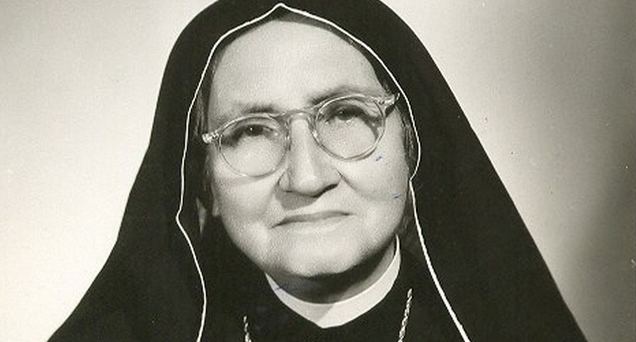
The history of the Church is adorned with the lives of countless saints who dedicated themselves to serving Christ in the poor, the sick, and the marginalized. Among these shining examples is Saint Anastasia Guadalupe García Zavala, affectionately known as Mother Lupita, a Mexican religious sister whose life became a testimony to compassion, humility, and unwavering faith.
Born on April 27, 1878, in Zapopan, Jalisco, Mexico, Anastasia Guadalupe García Zavala grew up in a deeply religious family. Her father owned a religious goods store located near the famous Basilica of Our Lady of Zapopan, and from an early age she developed a profound devotion to God and the Blessed Virgin Mary. Her frequent visits to the basilica nurtured a spiritual life that would later blossom into a remarkable vocation.
As a young woman, Guadalupe was engaged to be married. However, while discerning her future, she experienced a powerful call from God to dedicate her life entirely to His service. Trusting in this divine invitation, she courageously ended her engagement and embraced a religious vocation. Guided by her spiritual director, Father Cipriano Iñiguez, she joined in founding a new religious congregation dedicated to caring for the poor and the sick.
On October 13, 1901, she co-founded the Handmaids of Saint Margaret Mary and the Poor and became its first Superior General. The congregation’s mission was simple yet profound: to serve Christ through compassionate care for the sick, especially those who could not afford medical treatment. Mother Lupita personally cared for patients, often performing the humblest tasks with joy and tenderness. She taught her sisters that genuine holiness is found in loving service and in sharing the struggles of the poor.
One of Mother Lupita’s most admirable qualities was her complete trust in Divine Providence. When hospitals lacked resources, she was not ashamed to beg for assistance so that the sick could continue receiving care. She believed that true discipleship meant becoming “poor with the poor” and serving others without seeking recognition or reward.
During the turbulent years of religious persecution in Mexico, particularly between 1911 and 1936, Mother Lupita displayed extraordinary courage. She risked her own life by sheltering priests and even the Archbishop of Guadalajara within her hospital. Yet her charity extended beyond those who shared her faith. She also cared for soldiers and persecutors who opposed the Church, treating everyone with equal dignity and compassion. Her response to hatred was always love, reflecting the Gospel command to love one’s enemies.
Throughout her life, Mother Lupita established numerous charitable foundations and inspired generations of religious sisters to continue her mission. Even during her final years, when she suffered from serious illness, she remained steadfast in prayer and trust in God. She died on June 24, 1963, leaving behind a legacy of holiness and service.
The Church formally recognized her heroic virtue through the process of canonization. She was beatified by Saint John Paul II on April 25, 2004, and later canonized by Pope Francis on May 12, 2013. Today, she is honored as a patron saint of nurses and healthcare workers, inspiring all who dedicate their lives to caring for the suffering. Her feast day is celebrated on June 24.
Saint Anastasia Guadalupe García Zavala reminds us that holiness is not found in extraordinary achievements but in extraordinary love. Her life teaches that every act of kindness, every sacrifice for the poor, and every gesture of compassion toward the sick can become a path to sanctity. In a world often marked by indifference, Mother Lupita’s example continues to call Christians to a life of selfless service and unwavering trust in God’s providence.
“Whatever you do for the least of my brothers and sisters, you do for Christ.” Saint Anastasia Guadalupe García Zavala lived this Gospel truth every day of her life, making her a radiant model for the Church and the world.
Leave a Reply