
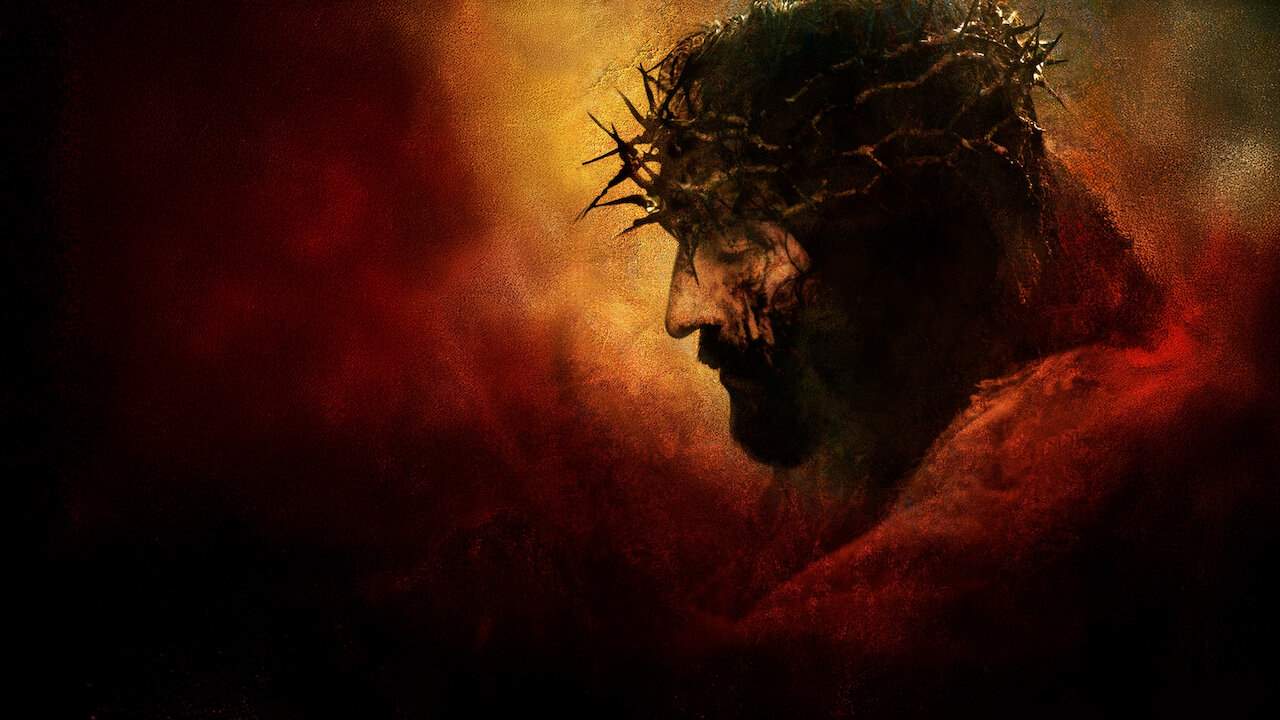
Part III: The Scourging, the Way of the Cross, and the School of Redemptive Suffering
“If anyone would come after Me, let him deny himself and take up his cross daily and follow Me.” — Luke 9:23
Introduction
If the first two parts of The Passion of the Christ introduced us to the mystery of Christ’s obedience, betrayal, and unjust condemnation, Part III leads us into the very heart of His physical suffering. These scenes are among the most unforgettable in cinematic history. The scourging, the crowning with thorns, the carrying of the Cross, and the journey to Golgotha are portrayed with a realism that has left audiences deeply moved—and, at times, deeply disturbed.
Some have questioned whether the film’s depiction of violence is excessive. Others have argued that it is precisely this realism that compels viewers to confront the immense cost of redemption. Whatever one’s perspective, the theological purpose is unmistakable: the suffering of Christ is not presented as an end in itself but as the supreme revelation of God’s love.
In these scenes, Mel Gibson invites viewers to meditate not only on what Jesus endured but also on why He endured it. Every wound, every fall, and every step toward Calvary proclaims the same truth: “He loved us to the end” (John 13:1).
The Scourging at the Pillar: Love Endures Unspeakable Pain
Following Pilate’s reluctant decision to have Jesus flogged, the film enters one of its most difficult sequences.
Roman scourging was no ordinary punishment. Historical sources describe it as a brutal form of torture intended to weaken the victim before crucifixion. The instrument commonly used, the flagrum, consisted of leather thongs embedded with pieces of bone or metal, capable of tearing flesh with each blow.
The Gospels describe the event with remarkable brevity:
“Then Pilate took Jesus and had Him flogged.” (John 19:1)
The brevity of the biblical account does not diminish its horror. Gibson attempts to visualize the suffering that those simple words encompass.
The executioners begin with rods before turning to the scourge. Each strike leaves deeper wounds. Blood covers Christ’s body. The violence seems endless.
The camera does not glorify brutality; rather, it compels the viewer to witness the terrible price of human sin. The audience is not permitted to remain detached. Instead, one is confronted with the reality that redemption was costly.
The prophet Isaiah had foretold this centuries earlier:
“By His wounds we are healed.” (Isaiah 53:5)
Every lash upon Christ’s body becomes, paradoxically, a sign of healing for humanity.
The Silent Strength of Jesus
One of the most remarkable aspects of the scourging scene is not the cruelty of the soldiers but the composure of Jesus.
He does not curse His executioners.
He does not plead for revenge.
He does not surrender to hatred.
Instead, He endures.
This silence echoes the prophecy of Isaiah:
“Like a lamb that is led to the slaughter, and like a sheep before its shearers is silent, so He opened not His mouth.” (Isaiah 53:7)
In Christian theology, silence is not always weakness. Sometimes it is the language of perfect trust.
Christ’s silence expresses His complete surrender to the Father’s will.
It also reveals His limitless love for those who are inflicting His wounds.
Mary at the Pillar: The Suffering Mother
Among the film’s most moving moments is Mary’s quiet presence after the scourging.
When the soldiers depart, she approaches the place where Jesus has been tortured. Together with Mary Magdalene, she kneels to clean His Precious Blood from the stone pavement.
This scene does not appear in the Gospels but beautifully reflects Catholic spirituality.
The image carries profound theological symbolism.
Every drop of Christ’s Blood is precious.
Nothing associated with His sacrifice is insignificant.
Mary’s loving reverence reflects the Church’s devotion to the Precious Blood of Christ, through which humanity is redeemed.
It also illustrates the compassion of the Blessed Virgin, who shares spiritually in her Son’s suffering.
The Church has long honored her as the Mater Dolorosa—the Sorrowful Mother—whose heart is pierced by the sword foretold by Simeon (Luke 2:35).
The Crowning with Thorns: The King Who Reigns Through Love
After the scourging, Roman soldiers continue their mockery.
They drape Jesus in a scarlet cloak.
They fashion a crown from long, sharp thorns and force it onto His head.
Then they kneel before Him in cruel parody:
“Hail, King of the Jews!”
The irony is profound.
Everything intended as ridicule proclaims the truth.
Jesus truly is King.
Yet His kingship differs radically from earthly power.
Earthly rulers wear crowns of gold.
Christ wears a crown of suffering.
Earthly kings sit upon magnificent thrones.
Christ’s throne will be the Cross.
Earthly kingdoms are maintained through force.
Christ’s Kingdom is established through self-giving love.
The thorny crown also recalls Genesis.
After humanity’s fall into sin, the earth was cursed:
“Thorns and thistles it shall bring forth.”
By wearing the crown of thorns, Christ symbolically bears the consequences of humanity’s rebellion, transforming the curse into the beginning of redemption.
“Behold the Man”
Pilate presents the scourged Jesus to the crowd.
His words are unforgettable:
“Ecce Homo.”
“Behold the Man.”
Pilate likely intended these words to evoke pity, believing the crowd would be satisfied by Jesus’ suffering.
Instead, they carry profound theological significance.
Here stands the perfect human being.
The new Adam.
The One who perfectly reveals what humanity was always meant to become.
Bruised.
Bleeding.
Humble.
Obedient.
Completely surrendered to God.
The disfigured face of Christ becomes the clearest revelation of divine love.
The Carrying of the Cross
Condemned to death, Jesus now begins His journey to Golgotha.
The heavy wooden cross is placed upon His wounded shoulders.
Each step becomes an act of obedience.
Each movement fulfills His own teaching:
“Whoever does not carry his cross and follow Me cannot be My disciple.” (Luke 14:27)
The Via Dolorosa—the Way of Sorrows—is more than a historical route through Jerusalem.
It becomes the pathway of Christian discipleship.
Every believer is called to walk behind Christ, carrying the crosses of daily life with faith and perseverance.
The Three Falls of Christ
Although Scripture does not explicitly mention Jesus falling beneath the Cross, Christian tradition has long meditated upon these moments through the Stations of the Cross.
Gibson portrays several falls with extraordinary emotional power.
Each fall illustrates the crushing weight of physical exhaustion.
Yet each rising demonstrates something greater.
Christ refuses to remain on the ground.
He rises again.
Not because the burden has become lighter.
But because love gives Him strength.
These scenes offer hope to every Christian.
Failure is never final.
What matters is rising again.
The Christian life is not measured by never falling but by continually returning to Christ.
Mary Meets Her Son
Perhaps no scene in the film is more emotionally moving than the meeting between Jesus and His Mother.
As Jesus collapses beneath the Cross, Mary pushes through the crowd.
A flashback recalls the child Jesus falling while running in Nazareth.
Then the film returns to Calvary.
Mary reaches the broken body of her Son.
Jesus looks at her and says:
“See, Mother, I make all things new.”
Although these words are inspired by Revelation 21:5 rather than the Gospel accounts of the Passion, they beautifully express the theological truth that Christ’s sacrifice inaugurates the new creation.
The sorrow of Calvary is not meaningless.
Through suffering comes redemption.
Through death comes life.
Simon of Cyrene: The Unexpected Disciple
Unable to continue alone, Jesus receives unexpected assistance.
Roman soldiers compel Simon of Cyrene to carry the Cross.
Initially reluctant, Simon resists.
The Cross is not his burden.
It belongs to another.
Yet as the journey continues, something changes.
Simon begins not merely to carry the Cross but to accompany Christ.
The burden becomes a privilege.
The stranger becomes a disciple.
This transformation reflects the experience of many Christians.
Often the crosses we resent become the means through which God transforms us.
Discipleship frequently begins in reluctance but matures into love.
Jesus had promised:
“My yoke is easy, and My burden is light.”
Not because suffering disappears, but because Christ carries it with us.
Veronica: The Face of Compassion
One of the most beloved traditions of the Stations of the Cross is Veronica wiping the face of Jesus.
Although this event is not recorded in Scripture, it has occupied a cherished place in Christian devotion for centuries.
In the film, Veronica courageously pushes through the hostile crowd and offers Jesus a cloth to wipe His face.
The soldiers roughly drive her away.
Yet her act of compassion remains.
Tradition holds that the image of Christ’s face was miraculously imprinted upon the cloth.
Whether understood historically or symbolically, Veronica represents every act of mercy performed in Christ’s name.
Small gestures of compassion possess eternal significance.
As Jesus teaches:
“Whatever you did for one of the least of these brothers and sisters of Mine, you did for Me.” (Matthew 25:40)
The Women of Jerusalem
Along the road to Calvary, several women weep for Jesus.
Unexpectedly, He turns toward them.
Rather than seeking sympathy for Himself, He says:
“Daughters of Jerusalem, do not weep for Me; weep for yourselves and for your children.”
Even amid unimaginable suffering, Jesus remains the teacher.
His concern extends beyond His own pain to the spiritual future of His people.
True compassion requires conversion.
The Cross calls not merely for emotion but for transformation of heart.
Satan’s Defeat
Throughout the journey to Calvary, Gibson repeatedly interweaves scenes of Satan observing the events.
At first glance, evil appears victorious.
The Messiah has been arrested.
He has been condemned.
He has been scourged.
He staggers beneath the Cross.
Yet the deeper theological reality is the exact opposite.
Every step toward Golgotha marks Satan’s defeat.
The devil believes he is destroying Christ.
Instead, Christ is destroying the power of sin and death.
As St. Paul later writes:
“He disarmed the rulers and authorities and made a public spectacle of them, triumphing over them by the Cross.” (Colossians 2:15)
The Cross, which appears to be the instrument of Satan’s victory, becomes the instrument of his final defeat.
Lessons for Christian Discipleship
The Way of the Cross continues to speak to believers today.
The scourging reminds us that sin wounds not only ourselves but also the heart of God.
The crown of thorns reveals that true greatness is found in humble service.
The falls of Christ encourage perseverance after failure.
Simon teaches that unexpected burdens can become paths to holiness.
Veronica reminds us that even small acts of kindness possess eternal value.
Mary demonstrates steadfast fidelity when faith is tested by suffering.
Above all, Jesus shows that love is stronger than pain, hatred, and death.
The disciple who walks with Christ along the Via Dolorosa discovers that every cross carried with Him becomes a path toward resurrection.
Conclusion
The road to Calvary is far more than a procession of suffering. It is the revelation of divine love in action. Every lash of the scourge, every thorn pressed into Christ’s brow, every painful step beneath the Cross proclaims that God’s response to human sin is not abandonment but self-giving love.
Mel Gibson’s portrayal of these events invites the viewer to move beyond sympathy into discipleship. The Passion is not merely something to be observed; it is a mystery into which every Christian is called to enter. The Cross becomes the school where believers learn humility, perseverance, compassion, forgiveness, and hope.
In Part IV, the final installment of this series, we will ascend Mount Calvary to contemplate the Crucifixion, the Seven Last Words of Christ, His death, the Resurrection, the film’s biblical accuracy, its Catholic symbolism, its controversies, and its enduring spiritual legacy for the Church and the world.
Leave a Reply