
“The Call to Become Good Soil”
Matt. 13:3–9
The Parable of the Sower (Matt. 13:3–9; Mark 4:3–9; Luke 8:4–8) is among Christ’s best-known teachings, yet beneath its simplicity lies profound theological depth. The Fathers of the Church discerned in it not merely an agricultural illustration but a revelation of Christ’s saving mission, the nature of the Gospel, and the varied human response to divine grace. The parable therefore invites every hearer to examine the condition of the heart before the divine Sower.
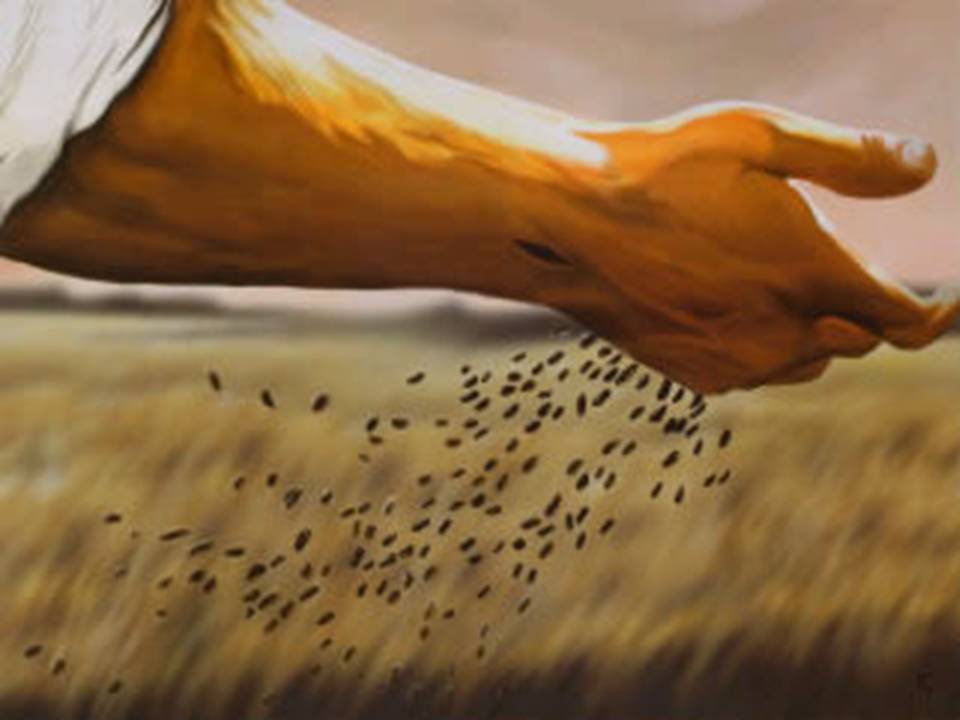
When Christ says, “A sower went out to sow,” He speaks first of Himself. Through the Incarnation, the eternal Son “went out” from the Father by assuming human nature and entering the fallen world.
As St. John Chrysostom observes, the Evangelist deliberately writes that the sower “went out to sow.” A farmer may enter his field to plow, clear stones, or prepare the soil. Christ, however, came above all to sow the life-giving seed of God’s Word. He came not first as Judge but as Savior, fulfilling His own declaration: “God did not send His Son into the world to condemn the world, but that the world might be saved through Him” (John 3:17). In this simple phrase the parable quietly proclaims the mystery of the Incarnation: “The Word became flesh and dwelt among us” (John 1:14).
The parable immediately presents an apparent paradox. Much of the seed appears to be wasted: some falls along the path, some upon rocky ground, and some among thorns, while only a portion bears fruit. Why would a wise sower scatter precious seed upon unsuitable soil? In ordinary agriculture, such action would seem foolish. Yet Christ is not teaching about farming but about grace. The failure lies not in the Sower nor in the seed, but in the condition of the soil.
As St. Chrysostom emphasizes, Christ scatters His Word generously because human hearts, unlike ordinary soil, can be transformed. The hardened path can be broken, stones removed, and thorns uprooted. Since no sinner is beyond the reach of divine mercy, the divine Sower offers His Word to all without distinction.
This truth gives the Church confidence in its mission. In an age marked by secularism, indifference, and spiritual decline, discouragement is a constant temptation. Christ Himself encountered rejection, yet He never ceased sowing. Likewise, faithful ministry is measured not by immediate success but by faithful sowing. Parents who pray for their children, pastors who proclaim the Gospel, teachers who patiently form the young, and Christians who offer quiet witness all participate in the work of the divine Sower, trusting God alone for the harvest. As St. Paul writes, “I planted, Apollos watered, but God gave the growth.” (1 Corinthians 3:6)
The modern world enjoys unprecedented access to God’s Word. Scripture is more available than at any point in history through print, digital media, and global proclamation. Yet abundance of the Word does not guarantee abundance of fruit. The decisive question remains the disposition of the heart.
The four soils describe four distinct responses to the Gospel.
The hardened path represents hearts rendered insensitive through habitual sin, unbelief, or hardened by constant noise and distraction. In a culture filled with constant information, entertainment, and digital noise, The relentless flow of news, social media, entertainment, and digital notifications leaves little room for the attentive stillness in which God’s Word takes root. The evil one often needs only to distract before the Word can take root.
The rocky soil represents those who receive the Gospel with immediate enthusiasm but possess no spiritual depth, falling away when trials arise. We readily embrace what is inspiring and emotionally uplifting, but perseverance is more difficult. Modern culture prizes convenience and immediate satisfaction, whereas Christian discipleship requires perseverance. Faith sustained only by emotion cannot endure suffering or trial.
The thorny ground depicts believers whose spiritual life is gradually suffocated by anxiety, wealth, ambition, and worldly pleasures. Such attachments rarely destroy faith suddenly; more often they slowly choke spiritual growth until little fruit remains.
Only the good soil bears fruit because it receives the Word with perseverance, obedience, and a receptive heart.
The good soil is not presented as naturally superior to the others. Rather, it is soil that has been prepared.
Throughout Scripture God is portrayed as the One who plows, waters, prunes, and cultivates His people. Through repentance, prayer, the sacraments, and the sanctifying work of the Holy Spirit, hardened hearts are softened, shallow hearts deepen, and thorn-filled hearts are cleared. As long as the day of grace remains, no heart is beyond the reach of the divine Gardener.
Christ’s method of teaching further reveals His pastoral wisdom. Rather than directly accusing His hearers of unbelief or worldliness, He tells a story. The parable leads listeners to judge the soils before recognizing themselves within them. In this way Christ invites repentance through self-examination rather than coercion.
The parable concludes with Christ’s solemn exhortation: “He who has ears to hear, let him hear.” Christ speaks not merely of physical hearing but of spiritual perception of the heart. True hearing involves not merely understanding the Word but obeying it. As the Epistle of James teaches, believers must be “doers of the word, and not hearers only” (James 1:22). This echoes Christ’s own declaration: “Blessed rather are those who hear the word of God and keep it” (Luke 11:28).
The four soils all receive the same seed. The difference lies neither in the Sower nor in the Gospel, but in the disposition of the hearer. The wayside hears without receiving; the rocky soil hears without persevering; the thorny ground hears without surrendering competing loves. Only the good soil hears with faith, endurance, and obedience.
The parable therefore offers both warning and hope. Familiarity with Scripture is no guarantee of fruitfulness, yet no heart is beyond renewal. The divine Sower continues to sow His Word because grace can still transform the human heart. Christ’s disciples are likewise called to proclaim the Gospel generously and without discouragement, trusting God alone to give the increase. As hearers of that Word, we pray that the Holy Spirit soften our hearts, deepen our faith, uproot the thorns of worldly attachment, and make us fruitful “thirtyfold, sixtyfold, and a hundredfold” to the glory of God.
✍ Fr James Abraham
Leave a Reply