
Memorial – August 29
The Passion of Saint John the Baptist, celebrated by the Catholic Church on August 29, commemorates the martyrdom and beheading of Saint John the Baptist, the Precursor of Jesus Christ. John was the prophet who prepared the way for the Messiah, courageously called people to repentance, and finally gave his life because he refused to compromise the truth.
The memorial complements the Solemnity of the Nativity of Saint John the Baptist, celebrated on June 24. The Church gives particular prominence to both the birth and martyrdom of John because his entire life was directed toward Christ. The celebration of his martyrdom has very ancient origins, with evidence of its observance in fifth-century France and sixth-century Rome. (Vatican News)


John the Baptist: The Forerunner of Christ
John occupies a unique place in salvation history. He stands at the threshold between the Old and New Covenants. He was the final great prophet who announced the coming of the Messiah and directly pointed people toward Jesus.
From the beginning, John’s mission was marked by God’s providence. His parents, Zechariah and Elizabeth, were elderly when he was conceived. His birth was announced by the angel Gabriel, and his coming was closely connected with the mystery of Christ’s own coming.
John lived an austere life in the wilderness, clothed simply and sustained by the provisions of the desert. His preaching was uncompromising:
“Repent, for the kingdom of heaven has come near.”
He called Israel to conversion and baptized those who confessed their sins. When Jesus came to the Jordan, John recognized Him and bore witness to Him.
John never sought glory for himself. When people wondered whether he might be the Messiah, he clearly rejected the honor:
“He must increase; I must decrease.”
His entire existence was a preparation for Christ.
The Vatican describes him as the Precursor, whose mission was to go before Christ both in birth and in death. (Vatican News)
A Prophet Who Spoke the Truth
The courage of John becomes especially evident in his confrontation with Herod Antipas.
Herod had taken Herodias, the wife of his brother Philip, as his own wife. John publicly condemned this unlawful relationship. He did not remain silent simply because Herod was a powerful ruler.
The Gospel records John’s courageous words:
“It is not lawful for you to have your brother’s wife.”
— Mark 6:18
John understood that God’s law was greater than human power.
His prophetic mission demanded that he speak the truth even when the truth was dangerous.
For this reason Herod had John arrested and imprisoned. Yet imprisonment did not silence him. The prophet who had fearlessly preached repentance in the wilderness continued to bear witness to God’s truth.
This is one of the great lessons of John’s life: a true prophet does not change the truth according to the identity or power of the person listening.
Herod: A Weak and Divided Ruler
The Gospel account of John’s martyrdom reveals a tragic contrast between the courage of John and the weakness of Herod.
Herod knew that John was a righteous and holy man. Mark tells us that Herod feared John and protected him in some measure, even though he had imprisoned him.
But Herod was spiritually divided.
He knew what was right, yet he lacked the courage to do what was right.
This becomes dramatically evident during his birthday banquet. Herodias’s daughter danced before Herod and his guests. Pleased with her performance, Herod made an extravagant promise:
“Ask me for whatever you wish, and I will give it.”
The girl consulted her mother. Herodias, who had long resented John because of his condemnation of her relationship with Herod, saw an opportunity for revenge.
She instructed her daughter to ask for the head of John the Baptist.
The request horrified Herod. Yet instead of doing what was right, he became trapped by his pride, his oath and his concern for the opinion of his guests.
The Gospel says that Herod was deeply distressed, but because of his oath and his guests he did not want to refuse the request. (Vatican News)
Thus, a powerful king became a prisoner of human respect.
The Dance and the Death of a Prophet
Herod ordered an executioner to go to the prison.
John was beheaded.
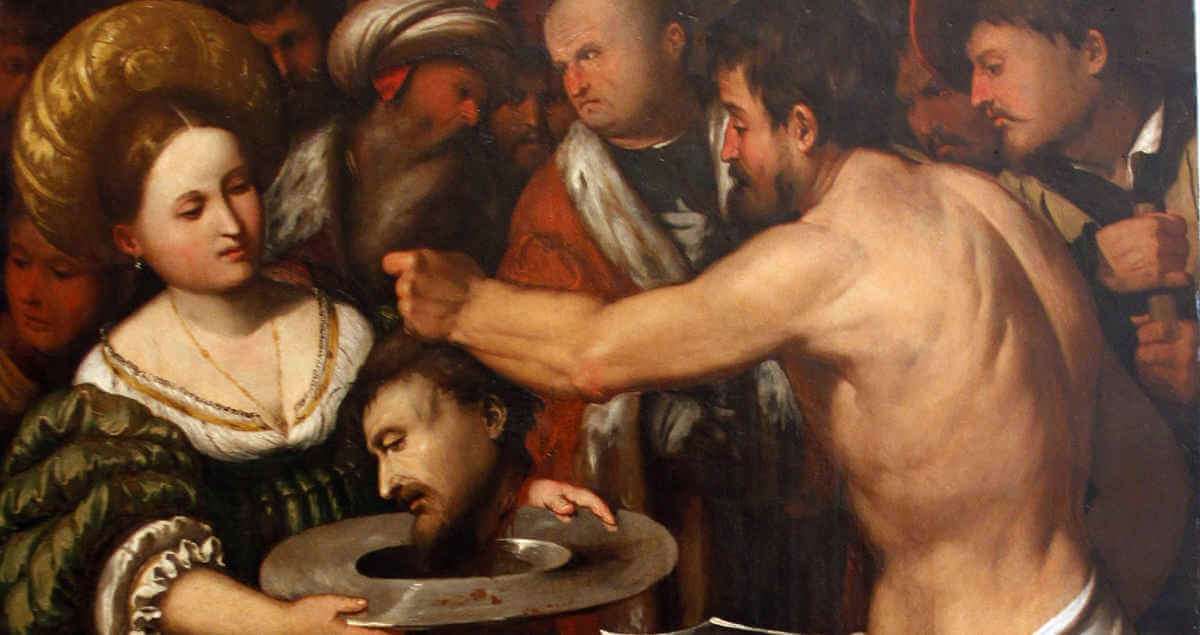
His head was brought on a platter and given to the young woman, who gave it to her mother.
The scene is one of the darkest moments in the Gospel narrative.
A prophet of God is killed because a ruler lacked the courage to resist an immoral demand.
John had no army.
He had no political power.
He possessed no palace or wealth.
Yet he possessed something greater: fidelity to God.
Herod had a throne, soldiers and authority, but he lacked the interior freedom to do what was right.
John was physically imprisoned, but spiritually he was free.
Herod was physically free, but spiritually he was imprisoned by fear, pride and the desire to please others.
This contrast remains one of the most powerful lessons of John’s martyrdom.
John Died for the Truth
Saint John the Baptist’s death is not merely the tragic ending of an ancient story. It is a martyrdom for truth.
John did not die because he was involved in political rebellion. He died because he refused to abandon God’s moral law.
His prophetic courage reminds Christians that discipleship sometimes requires us to speak difficult truths.
The Church therefore remembers John not simply as a preacher who was killed, but as a martyr who sealed his testimony with his blood.
Pope Benedict XVI reflected on John’s martyrdom as the testimony of one who remained faithful to his mission even unto death. The Church’s ancient veneration of John is evidence of the deep importance that Christians have always attached to his witness. (Vatican)
“Blessed Are Those Who Are Persecuted”
The liturgy of this memorial appropriately places before us the Beatitude:
“Blessed are those who are persecuted for righteousness’ sake, for theirs is the kingdom of heaven.”
John lived this Beatitude.
He was persecuted because he defended righteousness.
He was imprisoned because he spoke the truth.
He was killed because he refused to compromise.
His life teaches us that faithfulness does not always lead to worldly success.
Sometimes the faithful suffer.
Sometimes good people are misunderstood.
Sometimes those who speak the truth are rejected.
Sometimes courage has a price.
But the Gospel promises that such suffering is not meaningless.
The martyr’s apparent defeat becomes victory in God.
The Four Characters in the Gospel
The story of John’s martyrdom presents several figures who can become mirrors for our own spiritual lives.
1. John – The Courageous Witness
John represents truth, courage and fidelity.
He would rather suffer than compromise.
His life asks us:
Do I have the courage to remain faithful when doing what is right becomes difficult?
2. Herod – The Weak and Divided Person
Herod knows John is righteous, yet he does not have the courage to protect him.
He allows fear of others to overcome his conscience.
His tragedy is not ignorance but weakness of will.
We can know what is right and still fail to do it.
3. Herodias – The Person Consumed by Resentment
Herodias refuses to accept correction.
Instead of repenting, she seeks revenge against the person who speaks the truth.
Her attitude warns us about the destructive power of anger, hatred and an unwillingness to repent.
4. Salome – The Instrument of a Wrong Desire
The young woman becomes an instrument through which evil is accomplished.
The story reminds us that our choices can have consequences far beyond what we initially imagine.
We must therefore be careful about the promises we make, the desires we encourage and the influences we allow to shape us.
Pope Francis has also reflected on these characters, contrasting Herod’s corruption and indecision, Herodias’s hatred, Salome’s vanity and John’s steadfast witness. (Vatican News)
The Cost of Human Respect
One of the strongest lessons from the Passion of John the Baptist concerns human respect.
Herod did not necessarily want John to die.
He was distressed by the request.
But he was more concerned about what his guests would think than about what God desired.
How often can the same thing happen in our lives?
We may know the right thing to do but hesitate because:
- “What will people say?”
- “What will my friends think?”
- “I might lose my position.”
- “People may reject me.”
- “I don’t want to cause trouble.”
- “Everyone else is doing it.”
- “It is easier to remain silent.”
John teaches us that truth must not be sacrificed on the altar of popularity.
The Head of John on a Platter
The image of John’s head being presented on a platter has become one of the most recognizable images of Christian martyrdom.
It represents the shocking price that John paid for fidelity.
The world might look at John and say:
“He lost.”
But Christianity sees something completely different.
John did not lose.
He completed his mission.
He prepared the way for Christ during his life and gave witness to Christ in his death.
His earthly voice was silenced, but his witness became even more powerful.
The executioner could take his head, but he could not destroy his testimony.
The Disciples of John
After John’s death, his disciples came, took his body and laid it in a tomb.
Their action demonstrates their love and respect for their teacher.
John had spent his life directing people toward Jesus. Even in death, his disciples’ actions point us toward the dignity of the human person and the reverence owed to the body.
The Christian understanding of martyrdom does not glorify violence. Rather, it honors the person who remains faithful to God even when confronted by violence.
The Ancient Celebration of John’s Martyrdom
The memorial of the Passion of Saint John the Baptist has deep roots in Christian tradition.
The Vatican notes that the celebration can be traced to the dedication of an ancient church associated with the place where John’s tomb was venerated at Sebaste in Samaria. The commemoration subsequently became established in the Christian liturgical tradition. (Vatican News)
Pope Benedict XVI likewise noted the ancient veneration of John and the connection of the memorial with the dedication of a crypt at Sebaste. (Vatican)
The date of August 29 has also been associated in Christian tradition with the discovery or commemoration of John’s precious relics, contributing to the historical development of the celebration. (Vatican State)
John the Baptist and Jesus
John’s greatness cannot be separated from Jesus.
John was not the Messiah.
He did not want people to follow him as though he were Christ.
His entire ministry had one purpose:
to lead people to Jesus.
At the Jordan, John pointed toward Christ.
At the end of his life, his martyrdom also resembles in certain ways the Passion of Christ.
Both were righteous.
Both were rejected by powerful authorities.
Both were condemned despite their innocence.
Both suffered because of the weakness and injustice of rulers.
Both were victims of human sin.
And both demonstrate that God’s apparent defeat can become the doorway to victory.
John is therefore the Forerunner not only in preaching but also in suffering.
The Church’s prayer for this memorial explicitly connects John’s mission with that of Christ: John went before the Son in both his birth and his death. (Vatican News)
A Prophet for Our Time
The Passion of Saint John the Baptist has enormous relevance for the modern world.
We live in an age in which truth can easily become relative.
People can be tempted to say:
“There is no absolute truth.”
But Christianity teaches that truth is not simply whatever is convenient or popular.
Jesus Christ is the Truth.
John’s mission was to prepare people to encounter that Truth.
Therefore, Christians today are also called to become witnesses.
We may not be called to die as John did, but we are certainly called to live faithfully.
We may have to stand for truth:
- in our families,
- in our workplaces,
- in our schools,
- in our communities,
- in public life,
- in the Church,
- and especially in our personal moral choices.
Courage to Speak the Truth with Love
John’s example does not mean that Christians should become harsh, angry or judgmental.
Christian courage must always be united with charity.
John was a prophet of repentance because he wanted people to return to God.
His purpose was not hatred.
His mission was salvation.
Therefore, when Christians speak the truth, they must do so with:
truth + charity + humility + courage.
We should never use “speaking the truth” as an excuse for cruelty.
John’s courage came from his relationship with God.
The Martyrdom of the Conscience
The story of John also teaches us about conscience.
Herod knew something was wrong.
He was troubled.
But he did not follow his conscience.
This is a warning for every Christian.
A conscience must not merely be listened to when it agrees with our desires. It must be formed according to God’s truth.
A healthy conscience asks:
What does God want me to do?
Not merely:
What will make me comfortable?
John’s life teaches us that obedience to God may sometimes demand sacrifice.
What Saint John the Baptist Teaches Us
1. Put God before popularity
John was not interested in pleasing crowds.
His priority was fidelity to God.
2. Speak the truth courageously
John did not remain silent when God’s law was violated.
3. Do not compromise moral truth
A person’s social position does not change God’s commandments.
4. Avoid human respect
Herod’s downfall began with his excessive concern for the opinions of others.
5. Repent when corrected
John called people to conversion. His message remains relevant to every generation.
6. Do not allow resentment to control you
Herodias shows how hatred can destroy both individuals and relationships.
7. Remain faithful in suffering
John remained faithful even when imprisonment and death followed.
8. Point people toward Christ
John’s greatness consisted in making Christ known.
9. Prepare the way of the Lord
Every Christian is called to prepare the way for Christ in the hearts of others.
10. Remember that faithfulness is more important than worldly success
John lost his earthly life but gained eternal glory.
Saint John: A Model for Priests and Preachers
Saint John the Baptist has a particularly powerful message for priests, preachers and evangelizers.
The preacher is not called to preach himself.
He is called to proclaim Christ.
John’s words could be summarized:
“Look not at me. Look at the Lamb of God.”
A priest must have the humility to say:
Christ must increase; I must decrease.
John’s preaching was courageous because he knew that God’s Word was more important than his own popularity.
For every preacher, teacher and evangelizer, John asks:
- Am I preaching Christ?
- Am I faithful to the Gospel?
- Am I afraid of criticism?
- Do I soften God’s truth merely to please people?
- Is my life consistent with my preaching?
- Do I lead people toward Jesus or toward myself?
John the Baptist remains one of the greatest models of authentic Christian ministry.
A Message for Families
John’s martyrdom also speaks to family life.
Families today need courage to protect truth, dignity, fidelity and holiness.
Parents have the responsibility to teach children the difference between right and wrong.
Children need examples of people who are willing to stand for truth.
John’s story reminds parents that Christian formation cannot be based only on academic success or worldly achievement.
Children must also learn:
What is true?
What is good?
What is holy?
What is pleasing to God?
A society that loses its moral compass needs families that remain faithful to the Gospel.
A Message for Young People
The story of Salome also gives young people an important warning.
The desire for approval can be powerful.
Young people can easily be influenced by:
- peer pressure,
- popularity,
- social media,
- entertainment,
- unhealthy relationships,
- vanity,
- the desire to impress others.
John’s martyrdom reminds us that our choices matter.
Do not allow the crowd to decide who you are.
Do not allow popularity to replace truth.
Do not sacrifice your dignity for temporary applause.
Choose Christ.
The Voice That Could Not Be Silenced
John’s physical voice was silenced by the sword.
But the message he proclaimed continues.
Every generation still hears:
Repent.
Prepare the way of the Lord.
Stand for truth.
Turn back to God.
Be faithful to Christ.
This is why the martyrdom of John is not simply a story about death.
It is a story about faithfulness.
The executioner could silence the prophet’s voice, but he could not silence the truth he proclaimed.
John and the Christian Meaning of Martyrdom
A martyr is not someone who seeks death.
Rather, a martyr is someone who refuses to deny Christ or God’s truth even when threatened with suffering or death.
John’s martyrdom demonstrates the highest form of fidelity.
He did not choose death; he chose truth.
Death came because he refused to abandon the truth.
The Christian martyr therefore says through his life:
God is more precious than life itself.
This is why the Church honors martyrs not as victims of history alone but as witnesses to the power of God’s grace.
A Powerful Examination of Conscience
On the memorial of the Passion of Saint John the Baptist, we can ask ourselves:
Am I courageous enough to stand for what is right?
Do I remain silent when I should speak?
Do I compromise my values because of human respect?
Do I fear people more than I fear God?
Do I accept correction with humility?
Do I allow anger or resentment to control me?
Do I use my influence responsibly?
Do my words lead people toward Christ?
Am I willing to make sacrifices for my faith?
Can I honestly say with John: “He must increase, but I must decrease”?
These questions make the memorial intensely personal.
The Message of August 29
The Passion of Saint John the Baptist speaks a simple but demanding message:
Truth is worth defending.
Faithfulness is worth suffering for.
Christ is worth everything.
John’s life began with a miraculous birth and ended with a martyr’s death. Between those two moments was a life completely surrendered to God.
He did not build a kingdom for himself.
He did not accumulate wealth.
He did not seek political influence.
He simply fulfilled his mission:
to prepare the way for Christ.
And when the moment came, he remained faithful to the end.
Conclusion
The Passion of Saint John the Baptist is a celebration of courage, truth, fidelity and martyrdom.
John was the voice crying in the wilderness. He prepared the people for Jesus. He pointed away from himself and toward the Messiah. He confronted sin without fear and refused to compromise God’s law.
For speaking the truth, he was imprisoned.
For remaining faithful, he was killed.
But his death was not defeat.
John had completed his mission.
The Church continues to remember him because he shows us what it means to belong completely to God. His life challenges Christians to resist fear, reject compromise and remain faithful to Christ.
On August 29, we therefore ask Saint John the Baptist to intercede for us:
May we have his courage to speak the truth,
his humility to point others toward Christ,
his strength to resist temptation,
his faithfulness in suffering,
and his willingness to decrease so that Christ may increase in us.
May the witness of Saint John inspire us never to exchange truth for popularity, conscience for comfort, or faithfulness for worldly approval.
And when we are tempted to remain silent because the truth is difficult, may we remember the voice of the Forerunner:
Prepare the way of the Lord.
Prayer to Saint John the Baptist
O glorious Saint John the Baptist,
Forerunner of Jesus Christ,
faithful prophet and courageous martyr,
pray for us.
You proclaimed the truth without fear
and prepared the way for the coming of the Lord.
You remained faithful even when your preaching
brought imprisonment and death.
Obtain for us the courage to stand for truth,
the humility to accept God’s correction,
the strength to resist sin,
and the grace to remain faithful to Christ
in every circumstance of life.
Protect us from fear of human opinion.
Help us never to compromise our faith
for popularity, comfort or worldly advantage.
Teach us to point others toward Jesus
and to say with you:
“He must increase, but I must decrease.”
Saint John the Baptist,
faithful servant of God,
pray for us.
Amen.
Feast: August 29 – Memorial of the Passion of Saint John the Baptist
Gospel: Mark 6:17–29
Optional Proper First Reading: Jeremiah 1:17–19 (bible.usccb.org)
Leave a Reply