
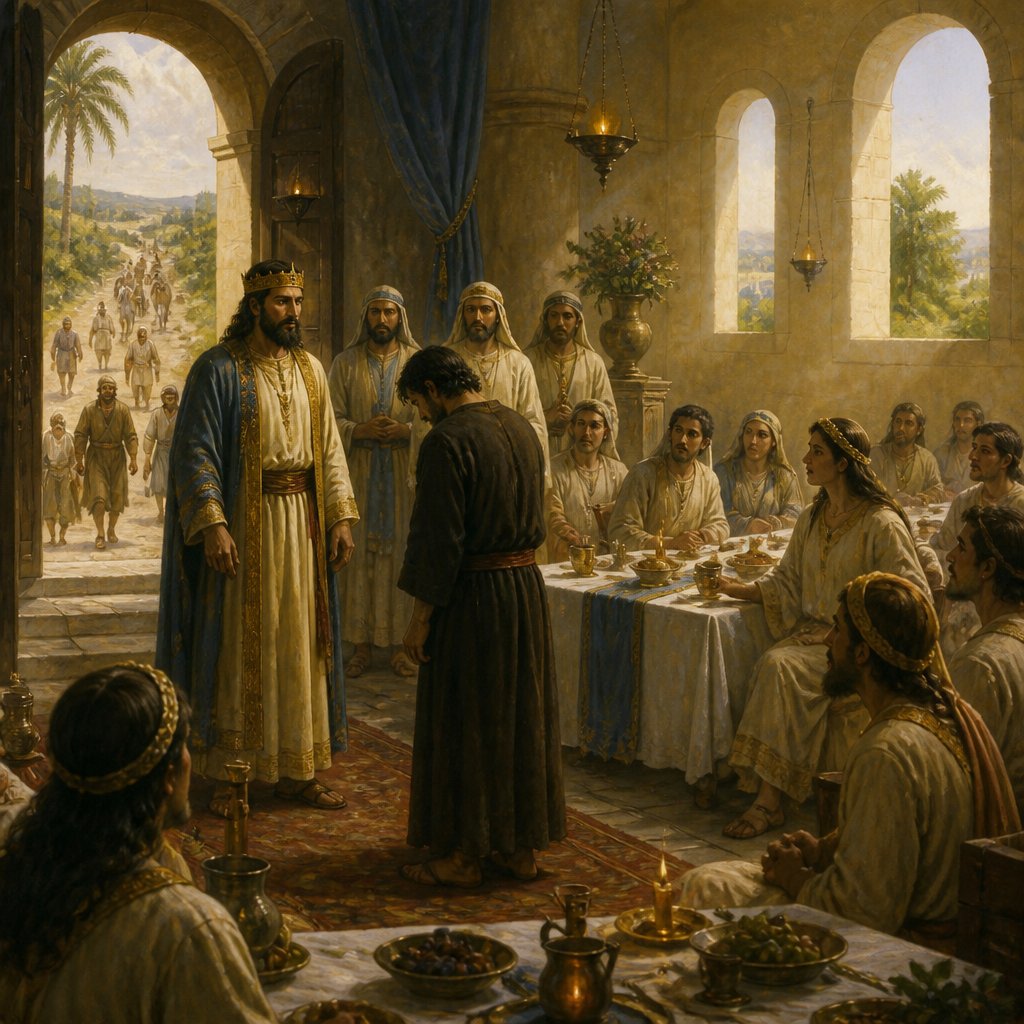
The Feast Is Ready. The Table Is Prepared. The Lord Is Calling… Come! | Matthew 22:1-14
The Gospel presents the parable of the wedding feast as a revelation of God’s invitation to salvation. After Jesus had said that the kingdom would be given to a people who would produce its fruits, He now shows us who those people are: those who accept the King’s invitation and bear the fruits of faith.
Everything is ready. The table is prepared, and the servants go out to summon the guests. Yet some people do not come because they are busy with farms or business. Others mistreat the servants who bring the invitation.
The farm and business were not necessarily sinful things; these are ordinary concerns. Work matters. Families need care. Daily responsibilities are real. Yet they become an excuse to ignore something greater.
What is troubling is not that they have ordinary responsibilities. It is that they become so absorbed in their own concerns that they no longer make room for the feast.
The excuses may seem reasonable, but the parable teaches us to value spiritual things above all else.
The guests’ refusal was not simply a lack of time: they were making light of the invitation. The trouble begins when good things become so absorbing that we no longer have room for the greatest good.
Pope Francis reflected that the guests did not necessarily think the celebration would be unpleasant. They were simply caught up in their own affairs, preferring what felt secure and familiar. They preferred what was familiar and secure to the invitation God placed before them.
We can do the same. We do not usually say, “I want nothing to do with God.” More often we say, “Not now. Later. When things settle down.”
Little by little, without intending to, we can push God toward the margins of our lives.
We will pray when the work is finished. We will make more time for worship when the schedule becomes less crowded. We will reach out to someone who needs us when we have more time. But something else always comes along. Without quite meaning to, we keep pushing God to the margins.
When everything revolves around what I want, what suits me, and what serves me best, the heart can become closed and hard. That hardening can begin quietly. We stop listening to someone who challenges us. We grow impatient with anyone who interrupts our plans. We see another person’s need as an inconvenience rather than an invitation to love.
In the parable, some guests go further: they mistreat and kill the king’s servants. Jesus shows how a heart turned inward can move from indifference to hostility.
That is why indifference can be spiritually serious. It may not look like rebellion. It may sound like, “Later,” or “I’m too busy,” or “I’ll get around to God when life settles down.”
Yet this Gospel is not only a warning. It is also a message of hope.
The king sends his servants again: “Everything is ready; come to the wedding.” Even after rejection, the invitation continues. The feast will not remain empty.
Everything necessary for our salvation has been accomplished in Christ: His Incarnation, Passion, Death, and Resurrection. The Scriptures have been given. The Church has been established. The sacraments have been entrusted to us. The way to the Kingdom has been opened.
Therefore, God’s invitation is no longer simply, “Prepare yourselves.” It is: “Come.”
God does not call us because we have earned a place at His table. He calls us because He desires to share His life and joy with us. As Pope Francis has emphasized, this communion is not merely a relationship of duty, but one marked by dialogue, trust, mercy, and forgiveness.
We can forget this even while practicing our faith. Prayer can become another task to complete. Sunday Mass can become a routine. We can remember our religious duties while losing sight of the love that gives those duties their meaning.
The Lord calls us back to that love. He invites us through His Word, through prayer, through the Eucharist, and through the people whom He places in our lives.
The parable now takes a dramatic turn. The King’s invitation has been rejected, but he will not let the wedding feast remain empty. He sends his servants to the crossroads: “Invite to the wedding feast as many as you find.” They gather everyone they meet, “both good and bad.” The invitation goes far beyond those who first received it. The doors are open; there is room at the feast. The invitation is generous but being invited is not the end of the story.
The parable does not end simply with our arrival. Jesus speaks about the wedding garment. Although both good and bad were invited, the purpose of the invitation was that the bad should put off their former way of life and put on a new life worthy of the feast. The garment therefore represents the transformation that must accompany faith.
The wedding garment is not something we manufacture by our own strength. Christ gives us grace. He clothes us through Baptism, nourishes us through the Eucharist, restores us through Confession, and strengthens us through His Word and the Holy Spirit.
We cannot say, “I have faith, therefore the way I live does not matter.” The wedding garment tells us otherwise. Faith must become charity; grace must become a transformed life; belief must become discipleship.
The Gospel invitation is free, but grace is meant to transform us. Baptism brings us into Christ; the Eucharist nourishes us; Confession restores us when we fall; Scripture forms our minds and hearts. But we must cooperate with that grace.
For us as Catholics, the wedding feast finds its deepest sacramental fulfillment in the Eucharist. Every Sunday, and indeed every day, Christ invites us to His table. We do not come merely to attend a ceremony. We come to meet the Bridegroom and to enter more deeply into communion with Him.
The feast is ready. The table is prepared. The Lord is calling — not because He needs us to fill an empty room, but because He wants us to share His joy.
So the question is not simply, “Have I received an invitation?” We have.
The real question is: How am I responding to the invitation?
Are we making room for Christ? Are we allowing His grace to shape our choices?
Let us not wait for life to become quiet before we answer. Let us not allow work, comfort, or our own plans to become excuses for postponing God.
Everything is ready. Come to the wedding.
Amen.
✍ Fr. Tojan Abraham MCBS
Leave a Reply