
Catholic Bible Study · Biblical Biography · Faith and Spirituality
Introduction
Abraham, the great patriarch of the Old Testament, occupies a central place in the history of salvation. He is remembered as the father of faith, the recipient of God’s covenant, and a model of obedience, trust, hospitality, and perseverance. His life teaches believers how to follow God even when the future remains uncertain and the fulfilment of His promises seems impossible.
Abraham’s story is primarily narrated in the Book of Genesis, especially Genesis 11:27–25:18. His importance extends far beyond the Old Testament. The New Testament presents him as a model of faith, and the Catholic Church recognizes him as an outstanding example of trust in God’s promises.
Abraham is also a significant figure in Judaism, Christianity, and Islam. Christians look to him as the father of believers because he trusted God’s promise and responded to His call with obedience.
His life offers a timeless spiritual message: faith does not mean knowing every step of the journey; it means trusting the God who calls us forward.

1. Who Was Abraham?
Abraham was originally called Abram. He was the son of Terah and belonged to a family associated with Ur of the Chaldeans. His wife was Sarai, later called Sarah. His nephew Lot accompanied him for part of his journey.
According to Genesis, Terah’s family travelled from Ur toward Canaan and settled in Haran. After Terah’s death, God called Abram to leave his country, his kindred, and his father’s house and journey to a land that He would show him (Genesis 11:27–12:5).

God promised Abram three great blessings:
- A land: God would lead him to the land He intended to give his descendants.
- A great nation: His descendants would become a great people.
- A universal blessing: Through him, all the families of the earth would receive blessing.
These promises became the foundation of Abraham’s covenant relationship with God.
The Bible does not present Abraham as a man who possessed every answer. He was a pilgrim who learned to depend on God’s faithfulness throughout his life.
2. God’s Call: Leaving Everything Behind
The decisive moment in Abraham’s life came when God called him to leave the familiar surroundings of his homeland.
Genesis 12:1 records the divine command:
“Go forth from your land, your relatives, and from your father’s house to a land that I will show you.”
God did not give Abraham a complete travel plan or reveal every difficulty he would encounter. Instead, He invited him to trust the divine promise.
Abraham responded by setting out with Sarah, Lot, his possessions, and the people of his household. His journey brought him into the land of Canaan, where God appeared to him and promised that the land would be given to his descendants (Genesis 12:4–7).
This departure was more than a geographical journey. It was a spiritual turning point. Abraham left the security of the familiar and embraced a future dependent upon God.
His experience reminds us that following God’s will sometimes requires us to surrender our preferred plans, overcome fear, and move forward without knowing the final outcome.
Pope Benedict XVI reflected on Abraham as an exemplary model of faith, emphasizing his willingness to obey God’s call and travel toward an unknown destination.
Spiritual lesson: Faith begins when we allow God’s word to guide our decisions, even when we cannot see the whole road ahead.
3. God’s Covenant with Abraham

The covenant is the heart of Abraham’s relationship with God. God did not merely invite him on a journey; He established a lasting relationship with him and his descendants.
In Genesis 15, God promised Abraham that his descendants would be as numerous as the stars of heaven. Although Abraham had no son at that time, he believed God’s word.
Genesis 15:6 declares:
“Abram put his faith in the LORD, who credited it to him as an act of righteousness.”
This verse became especially important in the writings of Saint Paul. In Romans 4, Paul presents Abraham as a model of righteousness through faith, teaching that God’s saving grace cannot be reduced to human achievement or boasting.
In Genesis 17, God renewed the covenant and changed Abram’s name to Abraham. The new name is explained in the biblical narrative in connection with God’s promise that he would become the father of a multitude of nations. Sarai was also renamed Sarah, and God promised that she would bear a son.
The covenant included God’s promise to be the God of Abraham and his descendants. Circumcision was established as its sign (Genesis 17:1–14).
The covenant reveals several important truths:
- God takes the initiative in establishing a relationship with humanity.
- God’s promises call for faith and a response of obedience.
- Human weakness does not prevent God from accomplishing His purposes.
- God’s plan extends beyond one individual to future generations and, ultimately, the blessing of all nations.
For Christians, Abraham’s covenant also points forward to the fulfilment of God’s saving plan in Jesus Christ.
4. Abraham and Lot: A Lesson in Generosity and Peace
Abraham’s life was not free from conflict. As their possessions increased, the land could no longer adequately support both Abraham’s household and Lot’s household. Disputes arose between their herdsmen (Genesis 13:1–7).
Rather than allowing the disagreement to destroy their relationship, Abraham proposed a peaceful solution. He allowed Lot to choose his territory first.
Lot chose the well-watered plain of the Jordan, while Abraham remained in Canaan. After Lot departed, God renewed His promise to Abraham concerning the land and his descendants (Genesis 13:8–18).
Abraham’s conduct demonstrates that peace is often more valuable than personal advantage. He did not insist on receiving the first choice, nor did he treat every disagreement as a contest to be won.
Later, when Lot was captured during a conflict between regional kings, Abraham organized a rescue and brought him back safely (Genesis 14:1–16).
These episodes reveal a man who combined generosity with courage. He was willing to surrender an advantage to preserve peace, yet he did not abandon a family member in danger.
Spiritual lesson: A person of faith seeks reconciliation rather than unnecessary rivalry and shows practical concern for the welfare of others.
5. Abraham and Melchizedek
One of the intriguing episodes in Abraham’s story is his meeting with Melchizedek, king of Salem and priest of God Most High.
After Abraham returned from rescuing Lot, Melchizedek brought out bread and wine and blessed him. Abraham, in turn, gave him a tenth of everything (Genesis 14:17–20).
Melchizedek is a mysterious figure in the biblical narrative. Psalm 110 refers to a priest according to the order of Melchizedek, and the Letter to the Hebrews develops this theme in its presentation of Christ’s unique priesthood (Hebrews 5:5–10; 7:1–17).
Christian tradition has therefore read this encounter in connection with the priesthood of Christ. The bread and wine offered by Melchizedek also invite a Eucharistic association in Christian interpretation, although Genesis itself does not explicitly identify this episode as the institution of the Eucharist.
For Catholics, the episode offers an opportunity to reflect on blessing, thanksgiving, priesthood, and the mysterious unity of God’s plan of salvation.
6. Abraham, Hagar, and Ishmael

One of the most complicated parts of Abraham’s story concerns the long delay in the fulfilment of God’s promise of a son.
Sarah was unable to conceive, and she gave her Egyptian servant Hagar to Abraham. Hagar conceived and gave birth to Ishmael (Genesis 16:1–16).
This episode reveals the human tendency to seek our own solutions when God’s promises seem delayed. The resulting family tensions brought suffering and conflict.
Nevertheless, the biblical narrative also shows God’s concern for Hagar and Ishmael. When Hagar fled into the wilderness, the angel of the Lord encountered her and promised that her son would become the father of a great multitude. God later heard Ishmael’s cry and provided for him (Genesis 16:7–13; 21:14–21).
God subsequently clarified that Sarah would bear Abraham a son named Isaac, through whom the covenant line would continue. At the same time, God promised to bless Ishmael and make him a great nation (Genesis 17:15–21).
This distinction is important: the particular covenant promise concerning Isaac does not mean that Ishmael was forgotten by God.
The story teaches us that human decisions can have painful consequences, but God’s concern reaches people who suffer, including those who feel abandoned or excluded.
7. The Birth of Isaac: God’s Promise Fulfilled

The birth of Isaac was a decisive moment in Abraham’s life. Abraham was one hundred years old, and Sarah was ninety, according to the biblical narrative (Genesis 17:17; 21:1–7).
When God first announced that Sarah would bear a son, Abraham laughed in astonishment. Sarah also laughed when she heard the promise. Their reaction expressed the human difficulty of believing something that seemed impossible.
Yet God fulfilled His word.
Sarah conceived and gave birth to Isaac, whose name is associated in Genesis with laughter. Sarah declared that God had brought her laughter and that others would rejoice with her (Genesis 21:6).
Isaac became the son through whom the covenant promise would continue. His birth demonstrated that God’s plan did not depend solely upon human strength, age, or circumstances.
Abraham’s experience offers hope to those who are waiting for an answer to prayer. It does not mean that every desire will be granted exactly as we wish or when we expect. Rather, it reminds believers that God remains faithful, even when the way forward is beyond human understanding.
Spiritual lesson: What seems impossible to us is not necessarily beyond God’s power, although we must leave the manner and timing of His action to His wisdom.
8. Abraham’s Hospitality: Welcoming the Three Visitors

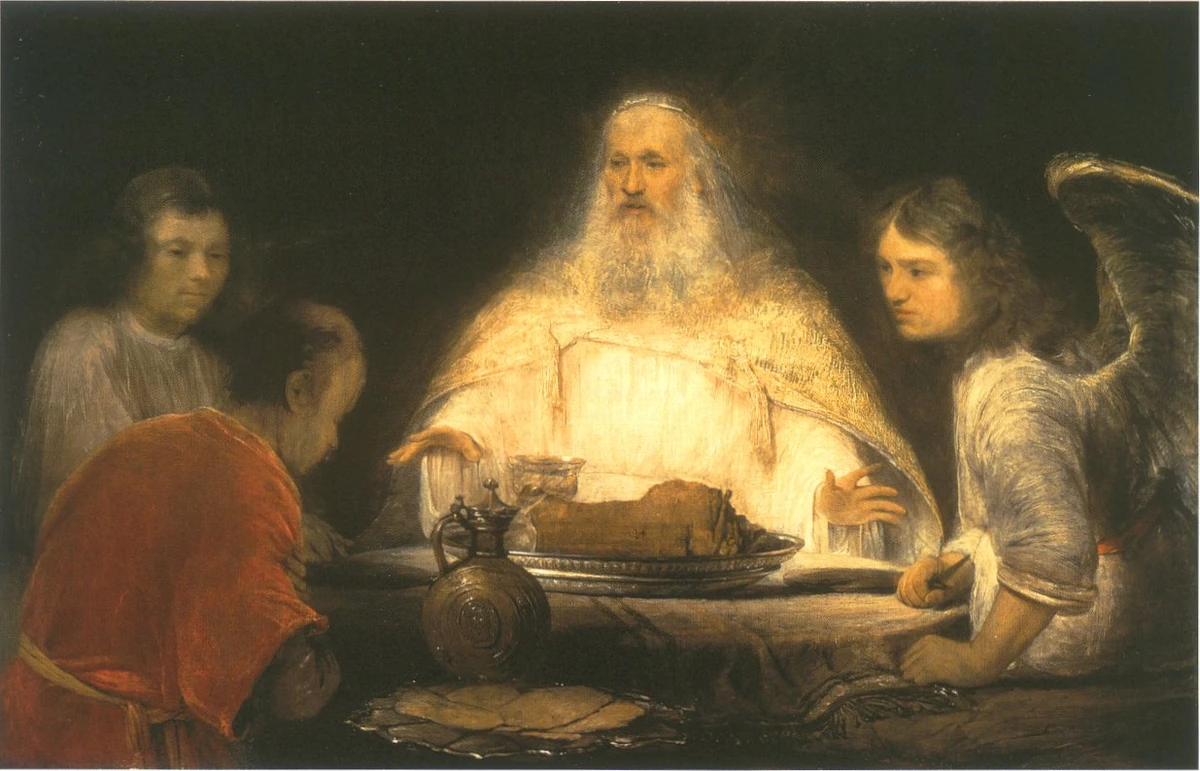
Genesis 18 recounts a memorable scene in which Abraham welcomed three visitors near the oak trees of Mamre.
When he saw them, Abraham hurried to meet them, offered water for their feet, arranged for food to be prepared, and stood nearby while they ate. During this encounter, a promise was announced: Sarah would have a son.
Sarah laughed inwardly at the thought, prompting the question that has echoed through generations: Is anything too wonderful for the Lord? (Genesis 18:1–15).
The identity of the visitors is presented within the mystery of the biblical narrative. Christian tradition has often interpreted this scene in relation to the presence of God and has associated the three visitors with Trinitarian symbolism. However, this traditional interpretation should be distinguished from the literal details explicitly stated in Genesis.
Abraham’s hospitality is unmistakable. He welcomed strangers with generosity, respect, and practical care.
His example remains relevant to Christian life. Hospitality is not merely providing food or accommodation; it is recognizing the dignity of another person and making room for them in our lives.
The New Testament similarly encourages believers to practise hospitality, reminding them that some have welcomed angels without knowing it (Hebrews 13:2).
9. Abraham’s Intercession for Sodom
Abraham’s relationship with God is also revealed in his prayer for the people of Sodom.
When God disclosed the impending judgment upon Sodom and Gomorrah, Abraham approached Him with a series of questions about justice. He asked whether the innocent would perish along with the guilty and appealed to God’s righteousness (Genesis 18:16–33).
Abraham began by asking whether the city might be spared if fifty righteous people were found there. He continued to plead, reducing the number successively to forty-five, forty, thirty, twenty, and finally ten.
This dialogue reveals Abraham’s concern for others. He did not pray only for his own family, possessions, or future. He interceded for an entire community.
The passage also illustrates the biblical relationship between divine justice and mercy. Abraham does not claim that evil is unimportant; rather, he appeals to God’s righteousness and asks that the innocent not be treated as the guilty.
For Christians, Abraham becomes an example of persistent intercessory prayer. We are called to pray not only for those who love us, but also for our communities, those who suffer, and even those whose lives are marked by wrongdoing.
Spiritual lesson: True prayer expands the heart beyond personal concerns and teaches us to carry the needs of others before God.
10. The Sacrifice of Isaac: The Greatest Test of Abraham’s Faith

Genesis 22 recounts the most dramatic test in Abraham’s life. God tested Abraham by commanding him to offer Isaac, the beloved son through whom the covenant promises were to be fulfilled.
Abraham set out with Isaac and two servants. When Isaac asked where the lamb for the sacrifice was, Abraham replied that God would provide it.
At the decisive moment, as Abraham prepared to carry out the command, the angel of the Lord stopped him. Abraham saw a ram caught by its horns in a thicket and offered it in place of his son.
God reaffirmed His promise to bless Abraham and multiply his descendants (Genesis 22:1–19).
This passage must be read carefully. It describes a unique biblical test that ends with God preventing Isaac’s death. It is not permission for human sacrifice or a justification for harming children.
The narrative emphasizes Abraham’s trust in God and God’s provision. The ram becomes a sign of the sacrifice God provides in place of Isaac.
The Christian understanding of Abraham and Isaac
Christian tradition reads this episode in the light of Jesus Christ.
Several parallels are especially significant:
- Isaac is the beloved son of Abraham; Jesus is the beloved Son of the Father.
- Isaac carries the wood for the offering; Jesus carries His Cross.
- Isaac is spared, while Jesus freely gives His life for the salvation of humanity.
- God provides the sacrifice in the story of Abraham; in the Gospel, God gives His Son for the life of the world.
These are theological connections drawn by Christian interpretation, not a claim that every detail of Genesis is identical to the Passion of Christ.
The Letter to the Hebrews praises Abraham’s faith and explains that he trusted God’s power even in the face of what appeared to be the loss of the promised heir (Hebrews 11:17–19). Saint John Paul II likewise reflected on Abraham’s trial as pointing toward the saving sacrifice of Christ.
Spiritual lesson: Abraham teaches us to entrust even our most precious hopes to God. Faith does not mean that we will always understand His ways; it means that we continue to trust Him while seeking to live according to His will.
11. Abraham, the Father of Faith
Abraham’s importance extends far beyond the history of ancient Israel. The New Testament repeatedly presents him as a model for all who believe.
Abraham in the Letter to the Romans
Saint Paul uses Abraham to explain the relationship between faith, grace, and righteousness.
Romans 4 teaches that Abraham was regarded as righteous because he believed God’s promise. Paul emphasizes that salvation is a gift of God’s grace, not something that allows human beings to boast before God.
Catholic teaching does not separate faith from a life transformed by grace. Genuine faith leads to obedience, charity, and good works. Abraham’s life illustrates this connection: he trusted God’s word and responded through concrete acts of faithfulness.
Abraham in the Letter to the Galatians
Galatians 3:6–9 presents Abraham as the father of those who live by faith. Saint Paul explains that God’s promise was always directed toward a blessing extending to the nations.
Galatians 3:16 and 3:29 further connect the promise to Christ and to those who belong to Him through faith.
For Christians, Abraham’s spiritual fatherhood is therefore understood in relation to Jesus Christ, through whom God’s blessing reaches all peoples.
Abraham in the Letter to the Hebrews
Hebrews 11:8–19 celebrates Abraham’s faith. He obeyed God’s call, lived as a pilgrim in the promised land, and trusted God’s promise even when the fulfilment seemed impossible.
The chapter presents faith as confidence in God’s faithfulness, even when the future cannot be seen clearly.
Abraham is not remembered because he lived without fear, uncertainty, or weakness. He is remembered because his journey was marked by a willingness to trust God and continue responding to His call.
12. Abraham in the Catholic Tradition
The Catholic Church regards Abraham as a foundational figure in salvation history.
The Catechism of the Catholic Church presents Abraham as an example of faith and obedience. It explains how his response to God’s call becomes a model for the believer’s journey toward God.
Several aspects of Abraham’s life are especially important in Catholic spirituality:
Faith and obedience: Abraham believed God’s promise and acted upon it.
Covenant and salvation history: God’s relationship with Abraham prepared the way for the history of Israel and the coming of Christ.
Intercessory prayer: Abraham pleaded for others before God, demonstrating concern for justice and mercy.
Hospitality and charity: His welcome of strangers remains a powerful example of Christian generosity.
Hope in God’s promises: Abraham trusted God even when circumstances seemed to contradict what had been promised.
The Church also recognizes Abraham as a figure of the unity of God’s saving plan. Christians honour the spiritual heritage of the patriarch while acknowledging the distinctive relationship that the Jewish people have with Abraham and the covenant traditions of Israel.
The Vatican’s document The Jewish People and Their Sacred Scriptures in the Christian Bible discusses how the New Testament interprets Abraham’s promises in the light of Christ while recognizing the importance of the original biblical promises and their Jewish context.
13. Abraham’s Death and His Legacy
Genesis 23 recounts Sarah’s death at the age of 127. Abraham mourned her and purchased the cave of Machpelah near Hebron as a burial place for her (Genesis 23:1–20).
This purchase is significant because Abraham, who had lived as a sojourner in the land promised to his descendants, acquired a burial place for his family.
In Genesis 24, Abraham arranged for a wife to be found for Isaac, seeking to ensure the continuation of the family through which the covenant promise would be carried forward.
Genesis 25:7–10 records that Abraham lived for 175 years. His sons Isaac and Ishmael buried him in the cave of Machpelah, beside Sarah.
Abraham’s story did not end with his death. The covenant continued through Isaac and Jacob, and the people of Israel traced their identity to the patriarchs. In the New Testament, his faith became a lasting example for Christians of every generation.
His legacy is not merely that of a great ancestor. It is the legacy of a person who learned to place his life in God’s hands.
14. Seven Important Lessons from the Life of Abraham
Abraham’s journey continues to speak to Christians today. His life offers practical guidance for prayer, family life, vocation, and spiritual growth.

1. Trust God when the future is uncertain.
Abraham left his homeland without knowing the destination in detail. We, too, are called to trust God when making difficult decisions about our vocation, family, career, and future.

2. Be patient with God’s timing.
Abraham and Sarah waited many years for Isaac. Their story reminds us not to confuse a delay with God’s absence, even as we acknowledge that prayer does not guarantee the outcome we desire.

3. Choose peace over selfish ambition.
Abraham gave Lot the opportunity to choose first. His example encourages us to seek reconciliation and place relationships above unnecessary competition.

4. Practise generous hospitality.
Abraham welcomed strangers with care. We can follow his example by welcoming visitors, supporting the poor, listening to lonely people, and treating everyone with dignity.

5. Pray for others.
Abraham interceded for Sodom. Our prayer should include families in difficulty, the sick, those who have lost hope, and people who have no one to pray for them.

6. Remain faithful during trials.
Abraham’s life included uncertainty, family difficulties, and severe tests. Faith does not remove every trial, but it gives us a reason to persevere in hope.

7. Place God above every earthly attachment.
The story of Isaac challenges us to examine our priorities and surrender our lives to God’s will. For Christians, this surrender must always be understood in harmony with God’s goodness and the dignity of human life.
15. Important Bible Passages About Abraham
The following passages are especially useful for personal prayer, Bible study, catechesis, and homilies.
| Bible reference | Main theme |
|---|---|
| Genesis 12:1–9 | God’s call and Abraham’s obedience |
| Genesis 13:1–18 | Abraham and Lot; choosing peace |
| Genesis 14:17–20 | Abraham and Melchizedek |
| Genesis 15:1–21 | Faith and God’s covenant |
| Genesis 16:1–16 | Hagar and the birth of Ishmael |
| Genesis 17:1–27 | The covenant and the new names |
| Genesis 18:1–15 | Hospitality and the promise of Isaac |
| Genesis 18:16–33 | Abraham’s intercession for Sodom |
| Genesis 21:1–21 | The birth of Isaac and the story of Hagar |
| Genesis 22:1–19 | Abraham’s test and God’s provision |
| Genesis 24:1–67 | Isaac and Rebekah |
| Romans 4:1–25 | Abraham’s faith and righteousness |
| Galatians 3:6–29 | Abraham’s blessing and faith in Christ |
| Hebrews 11:8–19 | Abraham as an example of faith |
| James 2:21–24 | Faith expressed through action |
16. Frequently Asked Questions About Abraham
1. Who was Abraham in the Bible?
Abraham was the patriarch whom God called to leave his homeland and journey to the land He would show him. God established a covenant with him and promised that his descendants would become a great nation and that all nations would receive blessing through him.
2. Why is Abraham called the Father of Faith?
Abraham is called the father of faith because he believed God’s promises and responded to God’s call with obedience. Saint Paul presents him as an example of faith in Romans 4 and Galatians 3.
3. What was Abraham’s original name?
His original name was Abram. According to Genesis 17:5, God changed his name to Abraham in connection with the promise that he would become the father of a multitude of nations.
4. Who was Abraham’s wife?
Abraham’s wife was Sarah, originally called Sarai. She became the mother of Isaac in her old age.
5. Who were Abraham’s sons?
The two sons prominently featured in Genesis are Ishmael, born to Hagar, and Isaac, born to Sarah. God promised to bless Ishmael, while the covenant line described in Genesis continued through Isaac.
6. Why did God test Abraham by asking him to offer Isaac?
Genesis 22 presents the event as a test of Abraham’s faith. God stopped Abraham before Isaac was killed and provided a ram for the offering. Christian tradition also reads this episode in the light of Christ’s sacrifice.
7. How is Abraham connected to Jesus Christ?
The Gospel of Matthew begins by identifying Jesus as the son of David and the son of Abraham (Matthew 1:1). The New Testament presents Jesus as the fulfilment of God’s saving plan and connects Abraham’s promised blessing with the salvation offered to the nations through Christ.
8. How old was Abraham when he died?
Genesis 25:7 states that Abraham lived for 175 years.
9. Is Abraham important to Catholics today?
Yes. Abraham remains an important model of faith, obedience, hope, hospitality, and prayer. His life helps Christians understand the covenant, salvation history, and the relationship between faith and action.
17. A Practical Reflection: Walking in the Faith of Abraham
Abraham’s life invites each of us to ask some important questions.
- Am I willing to follow God even when I cannot see the whole path ahead?
- Do I become discouraged when my prayers are not answered according to my expectations?
- Do I seek peace in my family and community, or do I insist on having everything my own way?
- Do I welcome strangers and care for those who are forgotten?
- Do I pray for people who are suffering, including those with whom I disagree?
- Can I entrust my future, my loved ones, and my deepest concerns to God?
For priests, religious, parents, young people, and all Christians, Abraham offers a particularly meaningful example. He reminds us that the life of faith is a journey rather than a single moment of decision.
We may sometimes struggle, become impatient, or fail to understand God’s plan. Yet we can return to Him in prayer, seek His guidance, and continue moving forward with hope.
Abraham’s story is not a promise that every journey will be easy. It is an invitation to believe that our lives are held within God’s providence.
18. A Prayer Through the Example of Abraham

Prayer for Faith and Trust in God
Heavenly Father,
You called Abraham to leave his homeland and journey toward the future You had prepared for him. You taught him to trust Your promises even when their fulfilment seemed impossible.
Grant me the faith of Abraham. When I am uncertain, guide me. When I am afraid, strengthen me. When I become impatient, teach me to wait upon Your wisdom. When I face difficulties in my family, vocation, work, or personal life, help me to remain faithful to You.
Give me a generous heart that welcomes others, a forgiving spirit that seeks peace, and a compassionate heart that remembers those who suffer.
Lord, help me to surrender my plans, worries, and hopes into Your loving hands. May my faith not remain merely in words, but become visible through my obedience, charity, and daily actions.
Through Jesus Christ, Your Son, lead me toward the fullness of Your promises. May the example of Abraham inspire me to walk faithfully with You all the days of my life.
We ask this through Christ our Lord.
Amen.
Conclusion: Abraham’s Faith Continues to Inspire the World
Abraham stands among the most significant figures in the Bible because his life reveals the power of faith in the living God. He heard God’s call, left his homeland, trusted the covenant promise, welcomed strangers, interceded for others, and endured the testing of his faith.
His journey was not without human weakness or uncertainty. Yet the biblical account continually returns to the faithfulness of God, who guided Abraham and continued His saving plan through succeeding generations.
For Christians, Abraham’s story reaches its fullest significance in Jesus Christ, through whom God’s blessing is offered to all nations. His example reminds us that faith involves trusting God, responding to His call, and allowing our lives to be transformed by His grace.
The enduring message of Abraham is simple: trust God’s promises, walk in obedience, persevere in hope, and become a blessing to others.
References for Further Reading
- The Holy Bible — Genesis 11:27–25:18.
- The Holy Bible — Romans 4:1–25.
- The Holy Bible — Galatians 3:6–29.
- The Holy Bible — Hebrews 11:8–19.
- Catechism of the Catholic Church, especially paragraphs 144–146 on the obedience of faith and Abraham.
- Pope Benedict XVI, General Audience: “I Believe in God” — Abraham, 23 January 2013.
- Pope John Paul II, Homily for the Commemoration of Abraham, 23 February 2000.
- United States Conference of Catholic Bishops, Genesis 17 — Covenant with Abraham.
Leave a Reply