
Introduction
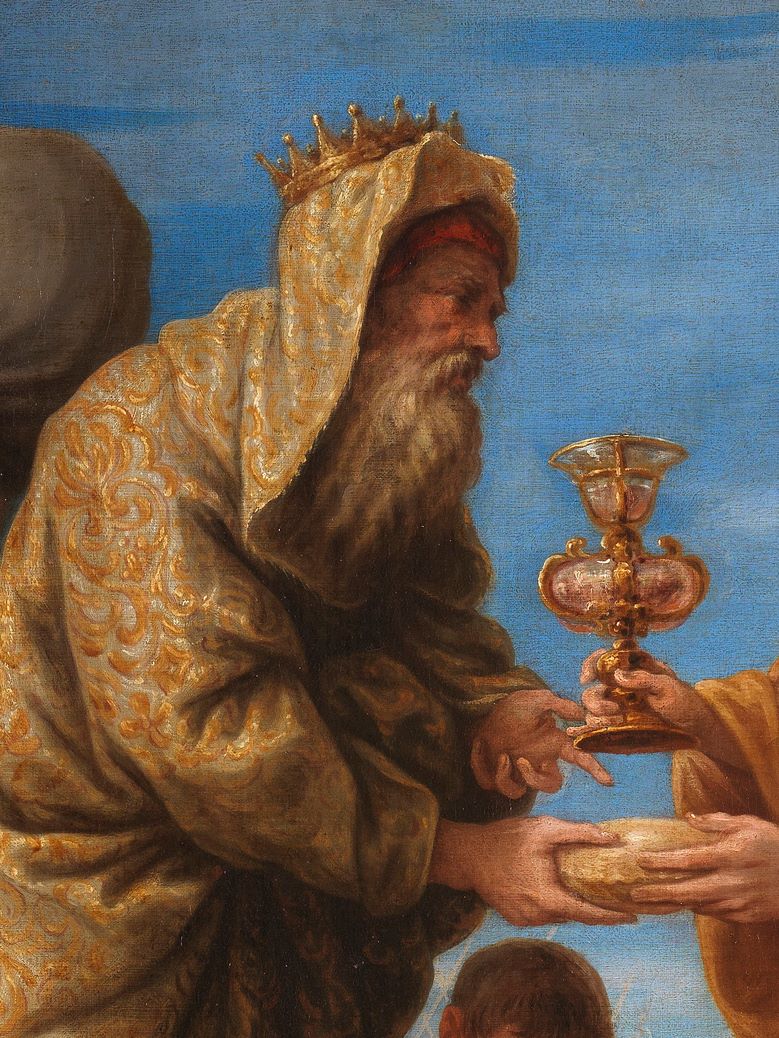
The name Melchizedek appears only briefly in the Old Testament, yet his figure carries an extraordinary significance in the history of salvation. He is introduced in the Book of Genesis as the king of Salem and priest of God Most High who blessed Abraham and offered bread and wine.
“And Melchizedek king of Salem brought out bread and wine; he was priest of God Most High. And he blessed him.”
— Genesis 14:18–19
The Church has traditionally remembered Melchizedek the Patriarch as an important biblical figure and as a mysterious foreshadowing of Jesus Christ, the eternal High Priest.
His story is especially important for understanding the priesthood of Christ and the mystery of the Holy Eucharist. The Letter to the Hebrews develops this theme extensively, presenting Christ as the eternal priest “according to the order of Melchizedek.”
The feast of Melchizedek therefore invites Christians to reflect on priesthood, sacrifice, blessing, Eucharistic worship and the eternal priesthood of Jesus Christ.
Who Was Melchizedek?
Melchizedek appears in Genesis 14, during the account of Abraham’s victory over several kings.
The name Melchizedek is generally understood to mean “king of righteousness” or “my king is righteousness.” He is described as the king of Salem, traditionally associated with Jerusalem.
But Melchizedek was more than a king.
Genesis calls him:
“priest of God Most High.”
This makes him a remarkable figure because he appears in Scripture as a priest of God even though he belongs to a period before the establishment of the Levitical priesthood of Israel.
He therefore stands outside the later priestly system associated with Aaron and the tribe of Levi.
Melchizedek and Abraham
The meeting between Melchizedek and Abraham takes place after Abraham has rescued his nephew Lot.
Lot had been captured during a military conflict involving several kings. Abraham gathered his servants, pursued the enemy and successfully rescued Lot and the other captives.
After Abraham’s victory, Melchizedek came to meet him.
Genesis records:
“And he blessed him and said, ‘Blessed be Abram by God Most High, maker of heaven and earth.’”
— Genesis 14:19
Melchizedek then blessed God:
“And blessed be God Most High, who has delivered your enemies into your hand!”
— Genesis 14:20
Abraham responded by giving Melchizedek a tenth of everything.
This brief encounter is the first biblical reference to Melchizedek, but its theological importance becomes much greater later in Scripture.
King and Priest
Melchizedek holds two offices simultaneously:
- King
- Priest
He is the king of Salem and priest of God Most High.
This combination is significant because the Old Testament priesthood of Israel was ordinarily associated with the tribe of Levi, while kingship belonged particularly to the descendants of David.
Melchizedek, however, combines royal and priestly imagery.
This becomes an important biblical pattern pointing toward Christ.
Jesus is both:
King of Kings
and
Eternal High Priest.
He is the true King who establishes God’s kingdom and the true Priest who offers Himself for the salvation of humanity.
Melchizedek Offers Bread and Wine
One of the most remarkable details in the story is that Melchizedek brings bread and wine.
“And Melchizedek king of Salem brought out bread and wine.”
— Genesis 14:18
For Christians, this verse has profound Eucharistic significance.
The bread and wine brought by Melchizedek have traditionally been understood as a foreshadowing of the Eucharist.
At the Last Supper, Jesus took bread and wine and transformed them into the sacramental signs of His Body and Blood.
Melchizedek therefore becomes an important biblical image pointing toward the Eucharistic sacrifice of Christ.
The Catechism of the Catholic Church explains that Melchizedek’s offering is understood by Christian tradition as a prefiguration of Christ’s offering.
“According to the Order of Melchizedek”
The most important biblical development of Melchizedek appears in Psalm 110.
The psalm says:
“You are a priest for ever, according to the order of Melchizedek.”
— Psalm 110:4
This verse becomes one of the foundational Old Testament texts for Christian understanding of the priesthood of Christ.
The New Testament applies it directly to Jesus.
The Letter to the Hebrews repeatedly presents Jesus as the eternal High Priest according to the order of Melchizedek.
Hebrews 7 declares:
“You are a priest for ever, according to the order of Melchizedek.”
— Hebrews 7:17
Christ, the Eternal High Priest
The priesthood of Jesus is different from the Levitical priesthood.
The priests of the Old Covenant offered sacrifices repeatedly.
Christ offered one perfect sacrifice—Himself.
The Letter to the Hebrews explains:
“He has no need, like those high priests, to offer up sacrifices daily… he did this once for all when he offered up himself.”
— Hebrews 7:27
Christ’s sacrifice is unique because He is simultaneously:
- the Priest who offers,
- the Victim who is offered,
- and the Altar of the new covenant.
His sacrifice on Calvary is eternal in its saving power.
The Eucharist does not repeat Christ’s sacrifice; rather, it sacramentally makes present the one sacrifice of Christ.
Why Melchizedek Is Important to the Eucharist
The connection between Melchizedek and the Eucharist is particularly meaningful for Catholics.
At every celebration of the Holy Mass, bread and wine are brought to the altar.
Through the words of Christ and the action of the Holy Spirit, bread and wine become the Body and Blood of Christ.
The Catechism teaches that the Eucharist is both a memorial and the sacramental making-present of Christ’s unique sacrifice.
Melchizedek’s offering of bread and wine therefore becomes a beautiful biblical image of what finds its fulfillment in Christ.
Melchizedek and the Mystery of the Priesthood
Melchizedek also has a special significance for Catholic understanding of priesthood.
The priest is called to participate in the one priesthood of Jesus Christ.
A Catholic priest does not possess an independent priesthood apart from Christ.
Rather, he ministers in the person of Christ, especially in the celebration of the Eucharist and the administration of the Sacraments.
The Second Vatican Council teaches that Christ’s priesthood is shared in different ways by the faithful and that ordained ministers exercise the ministerial priesthood in the service of the people of God.
Melchizedek therefore reminds priests that their vocation ultimately finds its meaning in Christ the Eternal Priest.
A Priest Who Blesses
One of the first actions we see Melchizedek performing is blessing Abraham.
This is a beautiful image of priestly ministry.
A priest is called to bless.
He blesses God’s people.
He brings God’s Word to them.
He celebrates the Sacraments.
He accompanies people in moments of joy and sorrow.
He prays for the living and the dead.
He stands before God on behalf of the people and serves the people in the name of God.
The priestly ministry is therefore not about personal status or power. It is a ministry of service, sacrifice and blessing.
Melchizedek and Abraham’s Tithe
Genesis tells us that Abraham gave Melchizedek a tenth of everything.
This act is significant because it expresses Abraham’s recognition of Melchizedek’s priestly authority and blessing.
The Letter to the Hebrews later uses this event in its theological argument concerning the superiority of the priesthood associated with Melchizedek over the Levitical priesthood.
Abraham, the ancestor of Levi, gives a tenth to Melchizedek.
The biblical author sees in this a sign of the greater dignity of the Melchizedek priesthood.
This ultimately points toward the superiority and permanence of Christ’s priesthood.
“Without Father or Mother”
Hebrews 7 contains some mysterious language about Melchizedek:
“He is without father or mother or genealogy, and has neither beginning of days nor end of life, but resembling the Son of God he continues a priest forever.”
— Hebrews 7:3
This does not necessarily mean that Melchizedek literally had no parents or was an eternal being.
Rather, the Letter to the Hebrews is drawing attention to the fact that Genesis gives no genealogy or account of his birth and death.
Unlike the Levitical priests, whose priestly legitimacy depended upon genealogy, Melchizedek appears in the biblical narrative without a recorded genealogy.
This makes him an especially powerful literary and theological figure pointing toward the eternal priesthood of Christ.
Jesus does not receive His priesthood because of Levitical ancestry.
His priesthood is eternal.
Melchizedek as a Foreshadowing of Christ
Christian tradition has always recognized Melchizedek as a type, or foreshadowing, of Christ.
Several parallels are striking:
| Melchizedek | Jesus Christ |
|---|---|
| King of Salem | King of Kings |
| King of righteousness | Perfectly righteous King |
| Priest of God Most High | Eternal High Priest |
| Blesses Abraham | Blesses all humanity |
| Offers bread and wine | Gives His Body and Blood |
| Receives Abraham’s offering | Receives the worship of the Church |
| Priesthood not based on Levi | Eternal priesthood |
| Appears without genealogy | Eternal Son of God |
Melchizedek is therefore not Christ Himself, but his biblical figure points forward to Christ.
Salem and Jerusalem
Melchizedek was king of Salem.
The name Salem is related to the Hebrew word associated with peace.
The ancient identification of Salem with Jerusalem became especially important in Christian interpretation.
Jerusalem later became the city of David, the site of the Temple and the place where Jesus would suffer, die and rise from the dead.
There is therefore a remarkable movement in salvation history:
Salem → Jerusalem → Calvary → the Eucharistic Church
Melchizedek’s mysterious priesthood stands at the beginning of a biblical trajectory that ultimately leads toward Christ’s sacrifice in Jerusalem.
Melchizedek and Peace
The name Salem evokes the idea of peace.
This is fitting because the true fulfillment of Melchizedek’s priesthood is found in Christ, who reconciles humanity with God.
At Christmas, the angels proclaim peace.
At the Last Supper, Jesus gives His disciples peace.
After the Resurrection, He greets them:
“Peace be with you.”
Christ is the true Prince of Peace.
The Eucharist, which Melchizedek’s bread and wine foreshadow, is therefore also a sacrament of communion and reconciliation.
The Feast and Its Spiritual Meaning
The feast of Melchizedek is not simply a commemoration of an obscure Old Testament character.
It is an invitation to contemplate Jesus Christ, the Eternal High Priest.
Melchizedek points us beyond himself.
His significance lies precisely in the fact that he directs our attention to Christ.
When we hear his name, we should remember:
Christ is our Priest.
Christ is our King.
Christ is our Sacrifice.
Christ is our Eucharistic Lord.
Lessons from Melchizedek
1. God prepares the way for Christ
Melchizedek appears long before the Incarnation.
His story reminds us that God’s plan of salvation unfolds gradually through history.
God prepares His people to recognize Christ through signs, persons, covenants and prophecies.
2. True priesthood belongs to Christ
Every Christian priesthood finds its source in Jesus.
Priests are called to imitate Christ’s self-giving love.
3. The Eucharist is at the heart of Christian life
Melchizedek’s bread and wine point toward the Eucharistic mystery.
The Mass is not merely a gathering or religious ceremony. It is participation in the saving mystery of Christ’s sacrifice.
4. We are called to bless others
Melchizedek blessed Abraham.
Christians too are called to become sources of blessing in the world.
Our words, actions, prayers and sacrifices should bring God’s goodness to others.
5. Give thanks to God for His victories
Abraham’s victory was acknowledged as a gift from God.
Our achievements should likewise lead us to thanksgiving rather than pride.
6. Christ is our eternal hope
Human priests are mortal.
Human institutions change.
Earthly rulers rise and fall.
But Christ’s priesthood is eternal.
Therefore, our hope rests ultimately in Him.
Melchizedek and the Holy Mass
Every celebration of Holy Mass can remind us of the mystery prefigured by Melchizedek.
We gather around the altar.
Bread and wine are presented.
The priest acts in the person of Christ.
The Church offers praise and thanksgiving.
The Holy Spirit is invoked.
Christ becomes truly present in the Eucharist.
The faithful receive the Body and Blood of the Lord.
And then they are sent into the world to live what they have celebrated.
Melchizedek’s ancient offering of bread and wine finds its full meaning in the Eucharistic sacrifice of Christ.
A Reflection for Priests
For priests, Melchizedek offers a profound spiritual meditation.
The priest is called to be a man of the altar, a man of prayer and a man of blessing.
He must not replace Christ.
He must reveal Christ.
He must not seek his own glory.
He must lead people toward Christ.
He must not live for himself.
He must offer himself for God’s people.
Every priest can therefore pray:
“Lord Jesus, Eternal High Priest, make my priesthood a reflection of Your priesthood. Let me offer myself with You, serve Your people with love, and lead every soul entrusted to me closer to You.”
A Reflection for Families
The mystery of Melchizedek also has something to say to Christian families.
Every family is called to become a place of blessing.
Parents bless their children through love and prayer.
Children bless their parents through gratitude and obedience.
Husband and wife bless each other through fidelity and self-giving love.
Families become stronger when the Eucharist becomes the center of their lives.
A family that gathers around Christ at the altar can carry His peace into the home.
A Reflection for the Faithful
The feast invites every Catholic to ask:
Is Jesus truly the center of my life?
Do I approach the Holy Eucharist with faith?
Do I recognize the sacrifice of Christ in the Mass?
Do I pray for priests?
Do I allow Christ to transform me after receiving Holy Communion?
Do I become a blessing to others?
Melchizedek’s story is short, but its message is immense:
Receive God’s blessing and become a blessing.
Prayer to Melchizedek the Patriarch
O Blessed Melchizedek,
king of Salem and priest of God Most High,
you who blessed Abraham
and offered bread and wine before God,
intercede for us.
Help us to recognize
the eternal priesthood of Jesus Christ.
Teach us to approach the Holy Eucharist
with reverence, faith and love.
Pray that priests may remain faithful
to their sacred vocation
and offer themselves generously
for the salvation of souls.
Obtain for us a heart of thanksgiving,
a spirit of humility
and a life of generous service.
May our homes become places of peace,
our families places of blessing,
and our hearts worthy dwelling places
for Jesus Christ.
Pray for the Church,
for the Holy Father,
for bishops, priests, deacons and religious,
and for all who serve God’s people.
May we always remember
that Jesus Christ is our true King,
our Eternal High Priest
and our perfect Sacrifice.
Through Christ our Lord.
Amen.
Conclusion
Melchizedek remains one of the most mysterious and fascinating figures of the Bible.
He appears only briefly, yet his significance extends throughout salvation history.
He was king of Salem, priest of God Most High, blesser of Abraham, and the mysterious priest whose offering of bread and wine became an important biblical foreshadowing of the Eucharist.
Above all, Melchizedek points us toward Jesus Christ.
Christ is the fulfillment of what Melchizedek prefigured.
He is the true King of righteousness.
He is the true Prince of Peace.
He is the eternal High Priest.
He is the Lamb who offers Himself for the salvation of the world.
He is the Eucharistic Lord who gives Himself to His people as spiritual food.
As we commemorate Melchizedek, may our hearts be renewed in love for Christ, our Eternal Priest and King.
May every celebration of the Holy Eucharist deepen our gratitude for His sacrifice.
And may we, like Melchizedek, become people who receive God’s blessing and share that blessing with others.
Melchizedek the Patriarch, priest of God Most High, pray for us.
Jesus Christ, Eternal High Priest, have mercy on us.
Leave a Reply