
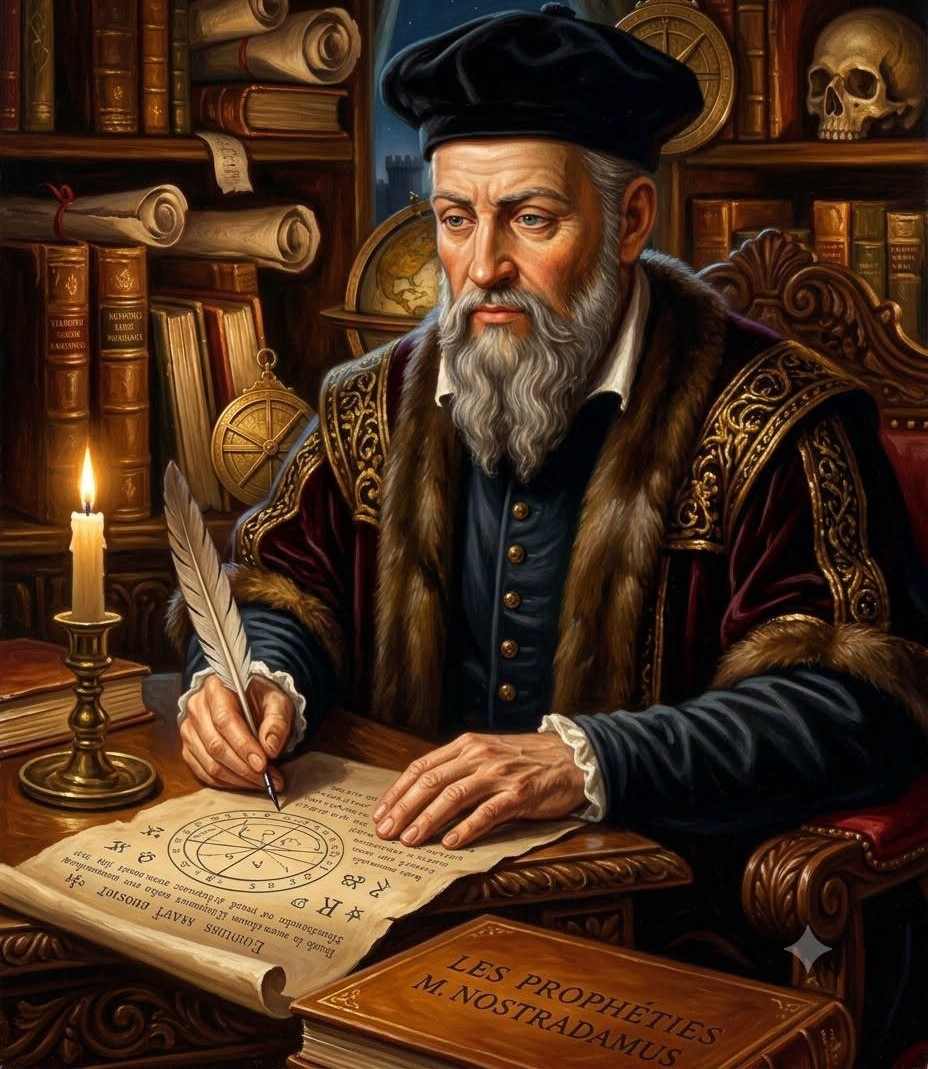
𝗡𝗢𝗦𝗧𝗥𝗔𝗗𝗔𝗠𝗨𝗦 𝗨𝗡𝗠𝗔𝗦𝗞𝗘𝗗: 𝗧𝗛𝗘 𝗙𝗔𝗟𝗦𝗘 𝗣𝗥𝗢𝗣𝗛𝗘𝗧 𝗪𝗛𝗢 𝗠𝗜𝗫𝗘𝗗 𝗖𝗛𝗥𝗜𝗦𝗧𝗜𝗔𝗡 𝗟𝗔𝗡𝗚𝗨𝗔𝗚𝗘 𝗪𝗜𝗧𝗛 𝗢𝗖𝗖𝗨𝗟𝗧 𝗗𝗜𝗩𝗜𝗡𝗔𝗧𝗜𝗢𝗡
𝗔 𝗧𝗥𝗔𝗗𝗜𝗧𝗜𝗢𝗡𝗔𝗟 𝗖𝗔𝗧𝗛𝗢𝗟𝗜𝗖 𝗔𝗡𝗔𝗟𝗬𝗦𝗜𝗦
Throughout the modern world, the name Nostradamus is often surrounded by an aura of mystery. He is frequently presented as a mysterious prophet who supposedly foresaw wars, revolutions, disasters, famous rulers, and events that occurred centuries after his death. Books, documentaries, television programs, and social media posts have repeatedly connected his obscure writings with later historical events, sometimes presenting him almost as though he possessed supernatural knowledge of the future. But for a Catholic, the important question is not whether Nostradamus appears mysterious or whether some of his writings can be made to resemble later events. The real question is much more serious: 𝗪𝗔𝗦 𝗡𝗢𝗦𝗧𝗥𝗔𝗗𝗔𝗠𝗨𝗦 𝗔 𝗧𝗥𝗨𝗘 𝗣𝗥𝗢𝗣𝗛𝗘𝗧 𝗢𝗙 𝗚𝗢𝗗? The answer is no. His writings and methods must be distinguished carefully from genuine divine prophecy, and the fact that he sometimes employed biblical or Christian language does not transform occult prediction into Catholic prophecy.
━━━━━━━━━━━━━━━━━━ 𝟭. 𝗪𝗛𝗢 𝗪𝗔𝗦 𝗡𝗢𝗦𝗧𝗥𝗔𝗗𝗔𝗠𝗨𝗦? ━━━━━━━━━━━━━━━━━━
Michel de Nostredame, commonly known as Nostradamus (1503–1566), was a French physician and astrologer who became famous principally through his collection of cryptic prophetic writings, especially the Prophecies. His reputation as a “prophet” rests largely upon hundreds of obscure quatrains whose meaning is frequently uncertain and whose interpretations have changed repeatedly throughout the centuries. He was not a biblical prophet, not a canonized saint, not a Church-approved visionary, and not recognized by the Catholic Church as a prophet whose predictions Catholics are required or even permitted to accept as matters of faith. More importantly, his own writings reveal that astrology and occult philosophical ideas formed part of the intellectual framework surrounding his predictions. In the preface addressed to his son César, Nostradamus referred to astronomical calculations and even spoke of an “occult Philosophy.” This historical fact alone should immediately prevent Catholics from confusing his work with the prophetic tradition of Sacred Scripture.
𝟮. 𝗪𝗔𝗦 𝗡𝗢𝗦𝗧𝗥𝗔𝗗𝗔𝗠𝗨𝗦 𝗥𝗘𝗔𝗟𝗟𝗬 𝗔 𝗖𝗔𝗧𝗛𝗢𝗟𝗜𝗖 𝗣𝗥𝗢𝗣𝗛𝗘𝗧?
A genuine prophet of God is not simply a person who makes predictions about the future. Biblical prophecy has its source in God. The prophet speaks because God has revealed something, not because the prophet has discovered hidden information through astrological calculations, divination, magical practices, or secret techniques. The prophets of the Old Testament did not acquire divine knowledge by examining the stars or manipulating hidden forces; they received and proclaimed the word entrusted to them by God. Therefore, the mere fact that Nostradamus predicted future events—or that later generations believe certain predictions came true—does not establish him as a prophet of God. Prophecy is a matter of divine revelation, not merely successful prediction. This distinction is essential because otherwise every fortune-teller, astrologer, occultist, or political predictor who happens to make an accurate forecast could be falsely elevated to the status of a prophet.
𝟯. 𝗔𝗦𝗧𝗥𝗢𝗟𝗢𝗚𝗬, 𝗗𝗜𝗩𝗜𝗡𝗔𝗧𝗜𝗢𝗡, 𝗔𝗡𝗗 𝗢𝗖𝗖𝗨𝗟𝗧 𝗣𝗥𝗔𝗖𝗧𝗜𝗖𝗘𝗦
The Catholic Church has always distinguished trust in Divine Providence from attempts to obtain hidden knowledge through divination. Nostradamus himself connected his prophetic work with astrological calculations and referred in his writings to occult philosophical material. Whatever distinctions he personally attempted to make between astrology, magic, and other practices, the Catholic principle remains clear: man is not to seek supernatural or hidden knowledge through forbidden means. The issue is therefore not solved merely by placing Christian terminology around such practices. A person cannot make divination acceptable simply by speaking about God, Heaven, angels, judgment, or Christianity. The decisive question is the source and method by which the supposed knowledge is obtained. The Catholic trusts God and His Providence; he does not attempt to penetrate the future through occult means.
𝟰. 𝗪𝗛𝗬 𝗗𝗜𝗗 𝗛𝗘 𝗨𝗦𝗘 𝗖𝗛𝗥𝗜𝗦𝗧𝗜𝗔𝗡 𝗔𝗡𝗗 𝗕𝗜𝗕𝗟𝗜𝗖𝗔𝗟 𝗟𝗔𝗡𝗚𝗨𝗔𝗚𝗘?
This is one of the most important points to understand. Nostradamus lived in a deeply Christian European civilization, and his writings contain numerous biblical references, Christian images, and language familiar to Catholics of his time. His writings also drew upon earlier literary and prophetic traditions. But the presence of Christian language does not establish divine inspiration. This is a crucial principle of Catholic discernment: 𝗥𝗘𝗟𝗜𝗚𝗜𝗢𝗨𝗦 𝗟𝗔𝗡𝗚𝗨𝗔𝗚𝗘 𝗜𝗦 𝗡𝗢𝗧 𝗧𝗛𝗘 𝗦𝗔𝗠𝗘 𝗧𝗛𝗜𝗡𝗚 𝗔𝗦 𝗗𝗜𝗩𝗜𝗡𝗘 𝗥𝗘𝗩𝗘𝗟𝗔𝗧𝗜𝗢𝗡. Sacred Scripture itself demonstrates that even Satan can quote Scripture. During the temptation of Christ, the devil himself cited the words of Sacred Scripture in an attempt to tempt Our Lord. Therefore, the mere appearance of biblical vocabulary cannot authenticate a prophetic message. One must examine its source, doctrine, method, and conformity with the truth revealed by God.
𝟱. 𝗧𝗛𝗘 𝗣𝗥𝗢𝗕𝗟𝗘𝗠 𝗪𝗜𝗧𝗛 𝗡𝗢𝗦𝗧𝗥𝗔𝗗𝗔𝗠𝗨𝗦’ “𝗣𝗥𝗢𝗣𝗛𝗘𝗖𝗜𝗘𝗦”
Another major difficulty is the extraordinary ambiguity of Nostradamus’s writings. His quatrains are frequently obscure, lacking the kind of precise historical information that would allow a prediction to be objectively tested before the event. Names, dates, places, circumstances, and specific details are often absent or open to multiple interpretations. Consequently, after an event occurs, interpreters can search through the vast collection of quatrains and select passages that appear to correspond with what has already happened. A war, political leader, natural disaster, or tragedy can therefore be connected retrospectively with a previously obscure verse. This does not constitute proof of supernatural prophecy. A genuinely specific prediction made before an event is one thing; taking an ambiguous statement and assigning a particular meaning to it after the event is something entirely different. The distinction between prophecy and retrospective interpretation is therefore fundamental.
𝟲. 𝗪𝗛𝗬 𝗗𝗢 𝗣𝗘𝗢𝗣𝗟𝗘 𝗧𝗛𝗜𝗡𝗞 𝗛𝗘 𝗣𝗥𝗘𝗗𝗜𝗖𝗧𝗘𝗗 𝗘𝗩𝗘𝗥𝗬𝗧𝗛𝗜𝗡𝗚?
The answer lies largely in the way his writings have been interpreted. Nostradamus produced a large body of deliberately obscure material, and over the centuries countless interpreters have attempted to connect individual passages with historical events. When a major event takes place, people naturally search for patterns and meanings that seem to explain it. If one passage appears to resemble the event, it is widely circulated, while countless passages that did not correspond to anything are forgotten. Translations, paraphrases, altered wording, sensational journalism, and internet speculation can further strengthen the impression that Nostradamus predicted a particular event with extraordinary precision. But selective successes cannot be considered in isolation. The proper test is whether a prediction was sufficiently clear and specific beforehand to establish genuine predictive power. Otherwise, almost any sufficiently vague statement can eventually be made to fit something.
𝟳. 𝗪𝗛𝗔𝗧 𝗗𝗢𝗘𝗦 𝗖𝗔𝗧𝗛𝗢𝗟𝗜𝗖 𝗧𝗘𝗔𝗖𝗛𝗜𝗡𝗚 𝗦𝗔𝗬 𝗔𝗕𝗢𝗨𝗧 𝗗𝗜𝗩𝗜𝗡𝗔𝗧𝗜𝗢𝗡?
The Catholic position is not ambiguous. Attempts to uncover the future through divination are contrary to the proper Christian attitude toward Divine Providence. Astrology used as divination, fortune-telling, spiritism, and other attempts to obtain hidden knowledge through occult means are incompatible with the worship and trust owed to God alone. The Christian does not need secret techniques to discover what God has chosen not to reveal. We are called to trust Providence, obey God’s commandments, remain watchful, and prepare ourselves spiritually. This is why Nostradamus should never be treated as a spiritual authority by Catholics. Even if someone believes that some of his predictions were remarkably accurate, accuracy alone cannot transform an occult or divinatory method into a legitimate means of revelation.
𝟴. 𝗧𝗥𝗨𝗘 𝗖𝗔𝗧𝗛𝗢𝗟𝗜𝗖 𝗣𝗥𝗢𝗣𝗛𝗘𝗖𝗬 𝗩𝗦. 𝗢𝗖𝗖𝗨𝗟𝗧 𝗣𝗥𝗘𝗗𝗜𝗖𝗧𝗜𝗢𝗡
The contrast is therefore unmistakable. True prophecy has God as its source and directs men toward God’s truth, repentance, obedience, and salvation. It does not contradict Divine Revelation and does not depend upon occult techniques. Occult divination, on the other hand, seeks hidden knowledge concerning things that man does not possess the right or natural ability to know, frequently through methods condemned by Sacred Scripture and Christian moral teaching. The two must never be confused simply because both speak about the future. A meteorologist may forecast tomorrow’s weather, a historian may predict political consequences, and a scientist may make a projection based upon evidence; none of these is automatically prophecy. Likewise, a person claiming supernatural knowledge of future events is not automatically a prophet of God. 𝗣𝗥𝗢𝗣𝗛𝗘𝗖𝗬 𝗜𝗦 𝗡𝗢𝗧 𝗦𝗜𝗠𝗣𝗟𝗬 𝗣𝗥𝗘𝗗𝗜𝗖𝗧𝗜𝗢𝗡; 𝗧𝗥𝗨𝗘 𝗣𝗥𝗢𝗣𝗛𝗘𝗖𝗬 𝗜𝗦 𝗥𝗘𝗟𝗔𝗧𝗘𝗗 𝗧𝗢 𝗗𝗜𝗩𝗜𝗡𝗘 𝗥𝗘𝗩𝗘𝗟𝗔𝗧𝗜𝗢𝗡.
𝟵. 𝗪𝗛𝗬 𝗖𝗔𝗧𝗛𝗢𝗟𝗜𝗖𝗦 𝗦𝗛𝗢𝗨𝗟𝗗 𝗡𝗢𝗧 𝗖𝗢𝗡𝗦𝗨𝗟𝗧 𝗡𝗢𝗦𝗧𝗥𝗔𝗗𝗔𝗠𝗨𝗦
A Catholic has absolutely no spiritual need for Nostradamus. We possess Sacred Scripture, the teaching of Christ and His Apostles, the wisdom of the Fathers, and the authentic teaching of the Catholic Church. Above all, we possess the certainty that God is Lord of history and that nothing occurs outside His knowledge and Providence. Our Lord never commanded His disciples to spend their lives decoding obscure predictions concerning every war, earthquake, political crisis, or catastrophe. He commanded them to watch, pray, repent, persevere in faith, and remain faithful until the end. The obsession with Nostradamus can easily become a distraction from the things that actually matter for salvation. The question for a Catholic is therefore not, “What did Nostradamus predict about my future?” but rather, “Am I living faithfully before God and prepared to meet Him?”
𝟭𝟬. 𝗧𝗛𝗘 𝗪𝗔𝗥𝗡𝗜𝗡𝗚 𝗢𝗙 𝗦𝗔𝗖𝗥𝗘𝗗 𝗦𝗖𝗥𝗜𝗣𝗧𝗨𝗥𝗘
Sacred Scripture gives us an uncompromising warning against divination and occult attempts to discover hidden knowledge. In the Douay-Rheims Bible, Moses commands Israel: “Neither let there be found among you any one that shall… consulteth soothsayers, or observeth dreams and omens, neither let there be any wizard.” Scripture continues by warning against those who consult spirits and fortune tellers, and concludes: “For the Lord abhorreth all these things” (Deuteronomy 18:10–12). The same chapter gives another solemn warning concerning false prophecy: “But the prophet, who shall speak a word in my name, which I have not commanded him to speak… that prophet shall die” (Deuteronomy 18:20). The principle is unmistakable: 𝗡𝗢𝗧 𝗘𝗩𝗘𝗥𝗬 𝗩𝗢𝗜𝗖𝗘 𝗧𝗛𝗔𝗧 𝗦𝗣𝗘𝗔𝗞𝗦 𝗔𝗕𝗢𝗨𝗧 𝗧𝗛𝗘 𝗙𝗨𝗧𝗨𝗥𝗘 𝗦𝗣𝗘𝗔𝗞𝗦 𝗙𝗢𝗥 𝗚𝗢𝗗.
𝗧𝗛𝗘 𝗙𝗜𝗡𝗔𝗟 𝗩𝗘𝗥𝗗𝗜𝗖𝗧
Nostradamus may remain one of the most fascinating figures in the history of prophecy and popular culture, but fascination is not faith, mystery is not revelation, and a prediction is not automatically a prophecy from God. His use of Christian and biblical language does not establish divine inspiration, just as the use of religious terminology cannot sanctify a method that conflicts with the Catholic understanding of divination. The Catholic therefore has no reason to place confidence in Nostradamus or to treat his writings as supernatural revelation. We do not need an occult predictor to tell us that the world will pass away; Our Lord already told us. We do not need Nostradamus to warn us about judgment; Christ already warned us. We do not need secret predictions to tell us to prepare for eternity; Sacred Scripture already commands us to do so.
The greatest question is therefore not, “What did Nostradamus predict?” The greatest question is: “What has God revealed—and am I faithful to it?”
For the Catholic, the answer is not found in the stars, in occult calculations, or in obscure quatrains. It is found in 𝗝𝗘𝗦𝗨𝗦 𝗖𝗛𝗥𝗜𝗦𝗧, in His Gospel, in Sacred Scripture, and in the Catholic Faith handed down through the ages.
𝗦𝗢𝗟𝗜 𝗗𝗘𝗢 𝗛𝗢𝗡𝗢𝗥 𝗘𝗧 𝗚𝗟𝗢𝗥𝗜𝗔. 
Source: 𝐑𝐄𝐂𝐂𝐈𝐒, 𝐅𝐀𝐌𝐈𝐋𝐘 𝐀𝐍𝐃 𝐓𝐑𝐀𝐃𝐈𝐓𝐈𝐎𝐍𝐀𝐋 𝐂𝐀𝐓𝐇𝐎𝐋𝐈𝐂
Leave a Reply