
Introduction
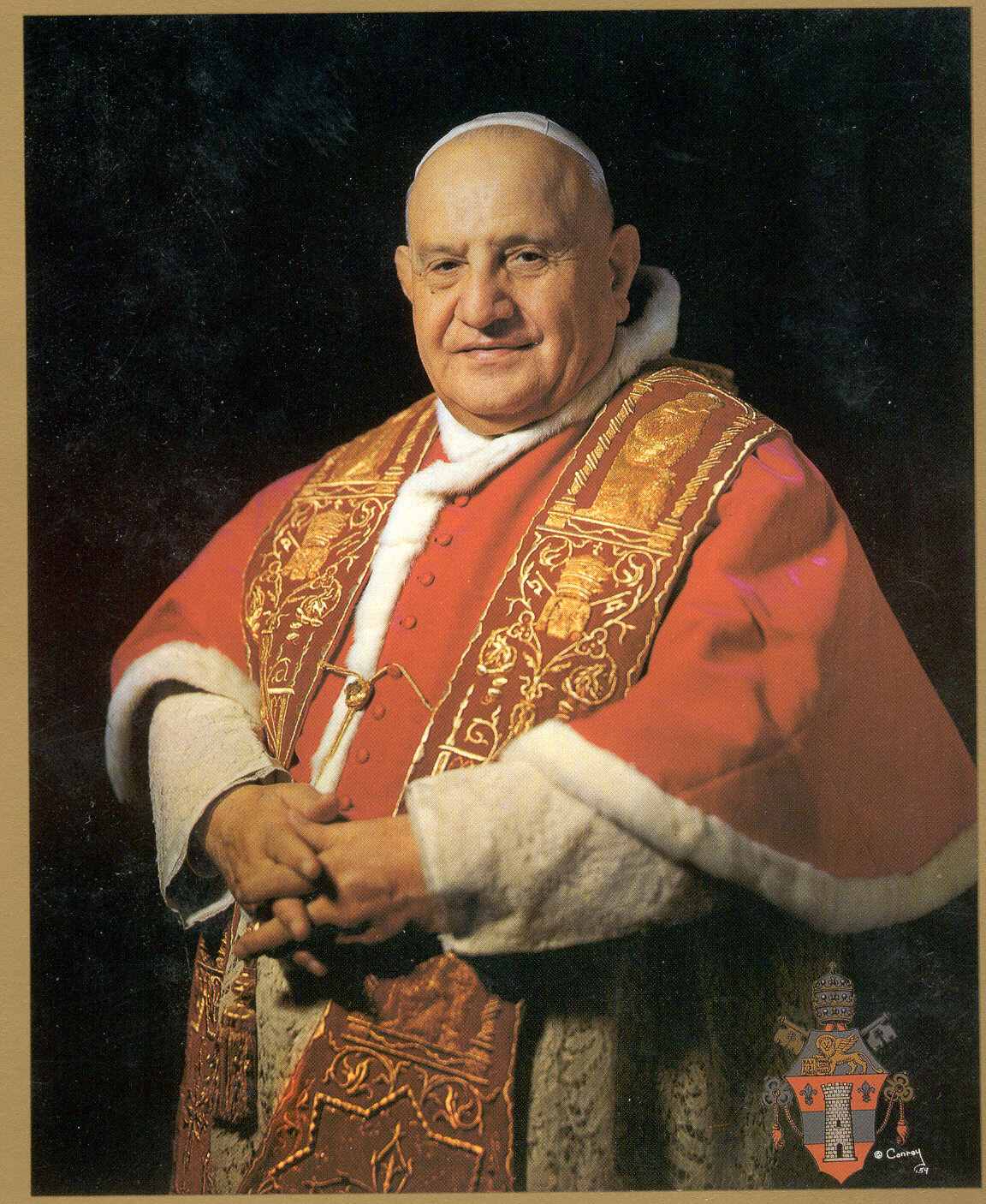
Pope Saint John XXIII, lovingly remembered as the Good Pope, was one of the most influential figures in the history of the Catholic Church during the twentieth century. Known for his humility, warmth, pastoral simplicity, and commitment to peace, he served as the 261st pope of the Catholic Church from 1958 until his death in 1963. Although his pontificate lasted less than five years, his decision to convene the Second Vatican Council marked a significant turning point in the modern history of the Church.
Born Angelo Giuseppe Roncalli on 25 November 1881 in Sotto il Monte, Italy, he grew up in a humble farming family. His life was shaped by a deep love for God, devotion to the Church, concern for ordinary people, and a desire to promote understanding among Christians and peoples of different religions.
As a priest, bishop, diplomat, cardinal, and pope, he sought to embody the image of the Good Shepherd. He visited the sick, reached out to prisoners, welcomed people from different backgrounds, and encouraged the Church to engage the modern world with truth, charity, and hope.
His pontificate is especially remembered for the opening of the Second Vatican Council on 11 October 1962, his encyclical Pacem in Terris on peace, and his vision of a Church renewed by the Gospel and attentive to the needs of humanity.
Pope Saint John XXIII was canonized by Pope Francis on 27 April 2014, together with Pope Saint John Paul II. His life continues to inspire priests, religious, laypeople, and all who seek to serve God through humility, reconciliation, and love.
1. Early Life and Family Background
Angelo Giuseppe Roncalli was born on 25 November 1881 in Sotto il Monte, a small village in the province of Bergamo in northern Italy. He was one of the children of a large, hardworking farming family. His parents, Giovanni Battista Roncalli and Marianna Mazzola, lived a simple life sustained by agricultural labour.
The Roncalli family did not possess great wealth or social influence. Their home was marked by hard work, family responsibilities, religious faith, and participation in parish life. Angelo learned early that holiness was not reserved for the rich or powerful. It could be cultivated in ordinary circumstances through prayer, obedience, generosity, and fidelity to God.
His family environment helped form the gentle and approachable character for which he later became famous. He developed a deep respect for ordinary people and never forgot his humble origins, even when he occupied positions of great responsibility.
His early religious formation was strengthened by the example of his family and the guidance of his parish priest. He learned to pray, attend the sacraments, and appreciate the importance of a life centred on God.
These childhood experiences remained important throughout his life. Even as pope, he retained a remarkable simplicity and a fatherly affection for people from every social background.
2. His Calling to the Priesthood
Angelo entered the seminary at Bergamo in 1892. He was a serious student who showed interest in theology, Church history, and spiritual life. During his years of formation, he began keeping spiritual notes that he continued throughout his life. These writings later became known through the publication of Journal of a Soul.
His spiritual journal reveals a man who continually examined his conscience, sought God’s will, and tried to grow in humility and holiness. Rather than presenting himself as a person without struggles, Roncalli recorded his efforts to overcome weaknesses and remain faithful to his vocation.
In 1901, he continued his studies in Rome at the Pontifical Roman Seminary. His formation included theological studies and a period of military service. He was ordained a priest on 10 August 1904 in Rome.
His priestly vocation was rooted in a desire to serve God and His people. He understood that the priesthood was not primarily a position of honour but a ministry of service, prayer, teaching, and pastoral care.
After ordination, he returned to Bergamo and became secretary to Bishop Giacomo Maria Radini-Tedeschi in 1905. He served the bishop until 1914, accompanying him on pastoral visits and participating in various ecclesiastical and social initiatives. He also taught subjects such as Church history, patrology, and apologetics at the seminary.
Working closely with Bishop Radini-Tedeschi helped him understand the responsibilities of pastoral leadership and the importance of standing close to people in their spiritual and material difficulties.
3. Service During the First World War
When Italy entered the First World War in 1915, Roncalli was called to military service. He initially served in the medical corps and later worked as a military chaplain.
His responsibilities brought him into contact with wounded soldiers, suffering families, and people facing the fear and uncertainty of war. He offered spiritual assistance, comfort, and encouragement to those whose lives had been disrupted by violence.
This experience strengthened his compassion and deepened his understanding of human suffering. He saw how war could destroy families, wound communities, and leave people longing for peace and reconciliation.
After the war, he continued his pastoral work and became spiritual director of the seminary at Bergamo in 1919. He also helped establish a home for students, demonstrating his concern for the formation and welfare of young people.
These years prepared him for the wider responsibilities that would follow. He learned that the Church must not remain distant from human suffering but must bring the presence of Christ to people in their moments of greatest need.
4. Missionary Service and Diplomatic Ministry
In 1921, Pope Benedict XV called Roncalli to Rome to serve the Society for the Propagation of the Faith, an organisation dedicated to supporting missionary activity.
In 1925, Pope Pius XI appointed him Apostolic Visitor to Bulgaria and elevated him to the episcopate. He chose the episcopal motto Oboedientia et Pax, meaning “Obedience and Peace.” This motto expressed the spiritual principles that guided his ministry.
Mission in Bulgaria
Roncalli arrived in Bulgaria in 1925. His ministry involved caring for Catholic communities, visiting people, and developing relationships with other Christian communities. His responsibilities were demanding, and he sometimes faced misunderstandings and practical difficulties.
Rather than responding with hostility, he sought to establish relationships marked by respect and patient dialogue. He recognised the importance of listening to others and maintaining charity even when religious traditions differed.
During the earthquake that struck Bulgaria in 1928, he offered assistance to those affected by the disaster. His concern for the suffering reflected the practical compassion that would later characterise his papacy.
Service in Turkey and Greece
In 1934, he was appointed Apostolic Delegate to Turkey and Greece. This assignment placed him in contact with Catholics, Orthodox Christians, Muslims, and people from different cultural backgrounds.
He worked to support Catholic communities while promoting respectful relations with others. His ministry demonstrated that fidelity to the Catholic faith need not prevent sincere dialogue and cooperation.
During the Second World War, he also helped people affected by the conflict. Vatican biographical accounts record his efforts to assist Jews fleeing persecution, including the provision of transit visas through the Apostolic Delegation.
These actions reflected his conviction that human dignity must be respected and that compassion should extend beyond the boundaries of nationality, culture, and religious affiliation.
Apostolic Nuncio in France
In December 1944, Pope Pius XII appointed Roncalli Apostolic Nuncio to France. He worked in a country undergoing the difficult transition from war to peace.
His responsibilities required diplomatic prudence, patience, and an ability to build relationships amid complicated ecclesiastical and political circumstances. He sought to encourage cooperation, support the French Church, and promote reconciliation.
Through these experiences, Roncalli developed a broad understanding of the Church’s international responsibilities and the urgent need for peace in a divided world.
5. Cardinal and Patriarch of Venice
On 12 January 1953, Roncalli was created a cardinal by Pope Pius XII. Later that month, he was appointed Patriarch of Venice.
For him, Venice represented an opportunity to return more directly to the pastoral ministry he had cherished since his ordination. He welcomed the chance to serve as a shepherd among the people entrusted to his care.
As Patriarch, he visited parishes, met clergy and laypeople, and encouraged a living faith rooted in prayer and charity. He showed a particular interest in ordinary people and approached pastoral responsibilities with warmth and simplicity.
He did not regard ecclesiastical leadership as an opportunity for personal prestige. Instead, he saw it as a call to serve the faithful, strengthen Christian life, and bring the compassion of Christ to those in need.
His years in Venice prepared him for the unexpected responsibility that would soon transform his life and the history of the Church.
6. Election as Pope John XXIII
Following the death of Pope Pius XII in October 1958, the cardinals gathered in conclave to elect a new pope. On 28 October 1958, Angelo Giuseppe Roncalli was elected and took the name John XXIII.
At the age of seventy-six, he was initially regarded by some observers as a transitional pope. His pontificate, however, soon demonstrated that an older man could initiate a remarkable period of ecclesial renewal.
He approached the papacy with humility and pastoral warmth. Rather than presenting himself as a distant ruler, he sought to be a father and shepherd to the faithful.
His gentle manner, approachable personality, and concern for ordinary people earned him the affectionate title “the Good Pope.”
He visited hospitals, prisons, and parishes, including communities in the poorer outskirts of Rome. These visits showed his desire to bring the Church’s pastoral presence to people who might otherwise feel forgotten.
His approach to leadership was rooted in the Gospel. He believed that the authority entrusted to the pope should be exercised in the service of Christ and His people.
7. The Second Vatican Council: A Historic Turning Point
One of the most significant decisions of John XXIII’s pontificate was his announcement of an ecumenical council.
On 25 January 1959, only a few months after his election, he announced his intention to convene the Second Vatican Council. The decision surprised many people and opened a new chapter in the modern history of the Catholic Church.
The Council was formally opened on 11 October 1962 at Saint Peter’s Basilica in Rome.
Why Did Pope John XXIII Convene the Council?
John XXIII desired a renewal of Christian life and Church practice in a changing world. He wanted the Church to present the enduring truths of the Gospel in a manner that spoke clearly and effectively to contemporary people.
The term aggiornamento, often associated with his vision, refers to renewal or bringing things up to date. It did not mean abandoning the faith. Rather, it expressed his desire that the Church should communicate the unchanging Gospel with renewed pastoral effectiveness.
He hoped that the Council would strengthen the Church’s spiritual life, encourage Christian unity, and help the faithful engage the world with greater understanding and charity.
The Council addressed matters including the Church’s identity and mission, divine revelation, the liturgy, the role of the laity, ecumenism, and the Church’s relationship with the modern world.
John XXIII died before the Council was completed. Pope Paul VI continued the work, and the Council concluded in 1965.
The Council’s lasting significance is closely associated with the vision of renewal, dialogue, and pastoral concern initiated by John XXIII.
8. His Opening Address: Hope for a Renewed Church
In his opening address to the Council, John XXIII expressed his desire that the Church should approach the modern world with confidence in God’s providence.
He encouraged the Council Fathers to communicate Christian teaching in a manner that was faithful to the truth and attentive to the needs of the times. He emphasised the importance of presenting the faith positively and pastorally rather than allowing the Church’s message to be defined solely by condemnation.
His approach was rooted in confidence in the Gospel and in the guidance of the Holy Spirit.
He did not suggest that the Church should abandon its teachings to gain approval. Instead, he called for a renewed presentation of Christian truth that could help people understand the faith and encounter Christ more deeply.
His vision continues to challenge Christians to unite fidelity with charity, conviction with humility, and truth with a genuine desire to lead others toward God.
9. Pope John XXIII and the Mission of Peace
Peace was one of the central concerns of John XXIII’s pontificate. Having experienced the consequences of two world wars and served in countries affected by international conflict, he understood the terrible cost of violence.
He believed that lasting peace required more than the absence of war. It depended upon respect for human dignity, justice, truth, freedom, mutual trust, and the willingness of nations to cooperate for the common good.
The Encyclical Pacem in Terris
On 11 April 1963, John XXIII published his landmark encyclical Pacem in Terris, meaning “Peace on Earth.”
The encyclical addressed not only Catholics but also all people of good will. It reflected his conviction that the pursuit of peace was a shared human responsibility.
He explained that peace must be built upon a moral order in which human rights and duties are recognised, public authority serves the common good, and nations work together to resolve their differences.
The document addressed the dignity of the human person, civil and political rights, the responsibilities of governments, international cooperation, and the dangers posed by the arms race.
His Appeal During the Cuban Missile Crisis
In October 1962, the world faced a grave international crisis during the confrontation between the United States and the Soviet Union over missiles in Cuba.
John XXIII appealed publicly for peace and urged those responsible to avoid a catastrophe that could devastate humanity.
His appeal reflected his belief that political leaders must place the welfare of humanity above pride, hostility, and the pursuit of power.
His commitment to peace remains a powerful example for a world still affected by war, displacement, religious conflict, and divisions among nations.
10. Important Encyclicals of Pope John XXIII
Although his pontificate was relatively brief, John XXIII published several important encyclicals. Two are particularly associated with his social teaching and his concern for humanity.
A. Mater et Magistra (1961)
The title means “Mother and Teacher.” Published on 15 May 1961, this encyclical commemorated the seventieth anniversary of Pope Leo XIII’s Rerum Novarum.
It addressed social and economic questions, including the responsibilities of governments, the dignity of workers, agricultural development, economic inequality, and the relationship between wealthier and poorer nations.
John XXIII emphasised that economic development must serve the human person. Material progress cannot be considered complete if it neglects human dignity, social justice, or the needs of vulnerable communities.
The encyclical remains relevant to questions concerning fair wages, poverty, employment, development, and the ethical responsibilities of economic institutions.
B. Pacem in Terris (1963)
This encyclical presented a comprehensive reflection on peace, human rights, duties, and the moral foundations of public life.
John XXIII taught that peace must be grounded in truth, justice, love, and freedom. He called upon individuals, communities, and nations to recognise their responsibilities toward one another.
The document is especially significant because it addressed all people of good will, reflecting the pope’s desire to engage in constructive dialogue beyond the boundaries of the Catholic Church.
C. Ad Petri Cathedram (1959)
Published in June 1959, this encyclical reflected on truth, unity, and peace. John XXIII emphasised the importance of unity among Christians and the need to overcome divisions through charity, prayer, and a sincere search for truth.
Together, these documents demonstrate his conviction that the Church must proclaim the Gospel while also addressing the spiritual, moral, and social challenges of humanity.
11. His Love for the Poor, the Sick, and the Forgotten
John XXIII’s holiness was expressed not only through major Church initiatives but also through simple acts of pastoral love.
He visited hospitals and prisons, spoke with ordinary people, and showed affection toward those who were suffering. He understood that the Church’s mission involved more than teaching doctrines or administering institutions. It also required the practical expression of Christ’s mercy.
His visits to prisoners were particularly memorable because he treated them as human beings worthy of respect and compassion. His presence communicated that no person should be reduced to the worst thing he or she had done.
He also visited children and the sick, offering encouragement and a father’s blessing. His warm manner helped people feel that the pope was not distant from their joys and sorrows.
For priests and pastoral ministers, his example offers an important lesson: people often encounter the love of God through a listening ear, a kind word, a compassionate visit, or a sincere willingness to accompany them in their difficulties.
12. His Spirituality: Humility, Prayer, and Trust in God
Behind John XXIII’s public ministry was a deeply personal spiritual life. His Journal of a Soul reveals his lifelong efforts to grow in holiness through prayer, self-examination, obedience, and trust in divine providence.
He understood that holiness required daily conversion. A person must continually allow God to purify the heart, overcome selfishness, and deepen love for others.
Obedience and Peace
His episcopal motto, Oboedientia et Pax—”Obedience and Peace”—summarised his spiritual outlook.
For John XXIII, obedience meant listening to God and fulfilling the responsibilities entrusted to him. Peace was the fruit of a life surrendered to God’s will.
This motto remained a guiding principle through his diplomatic assignments, episcopal ministry, and pontificate.
A Spirit of Simplicity
Despite the responsibilities of his office, he retained a simple and approachable manner. He understood that Christian greatness is not measured by external prestige but by fidelity to Christ.
His life encourages believers to cultivate a quiet spirituality rooted in prayer, humility, gratitude, and service.
Trust in Divine Providence
John XXIII faced uncertainties, misunderstandings, demanding responsibilities, and serious illness. Through these experiences, he sought to remain confident in God’s providence.
His example reminds Christians that they do not need to understand every detail of God’s plan before responding faithfully to the responsibilities of the present moment.
13. Pope John XXIII and Christian Unity
John XXIII believed that the divisions among Christians were a serious wound to the witness of the Gospel. He worked to encourage relationships marked by respect, prayer, and a sincere desire for greater unity.
In 1960, he established the Secretariat for Promoting Christian Unity, which helped prepare the way for the Council’s work on ecumenism.
His experience in Bulgaria, Turkey, Greece, and France had brought him into contact with Christians of different traditions. He understood the importance of patient dialogue and cooperation without abandoning one’s religious convictions.
The Second Vatican Council later developed important teachings on ecumenism, particularly in its decree Unitatis Redintegratio.
John XXIII’s vision continues to encourage Catholics to pray for Christian unity, deepen their understanding of other Christian traditions, and work together wherever cooperation serves the Gospel and the common good.
His approach also offers a lesson for relationships between people of different religions: sincere dialogue requires honesty, respect, and a commitment to peace.
14. His Final Days and Death
By 1963, John XXIII was suffering from serious illness. Despite his declining health, he continued to fulfil his responsibilities as far as he was able.
His final encyclical, Pacem in Terris, was published during this period, demonstrating his enduring concern for peace and the future of humanity.
He died on 3 June 1963, the day after Pentecost, at the age of eighty-one. His death brought sorrow to Catholics and people around the world who had come to admire his warmth, simplicity, and commitment to peace.
His passing occurred before the Second Vatican Council had completed its work. Nevertheless, the Council continued under Pope Paul VI, who guided it to its conclusion in December 1965.
John XXIII’s legacy lived on through the Council, his writings, and the example of his pastoral ministry.
15. Beatification and Canonization
The Church formally recognised John XXIII’s holiness through the process of beatification and canonization.
- 3 September 2000: Pope John Paul II beatified John XXIII.
- 27 April 2014: Pope Francis canonized John XXIII and John Paul II in Saint Peter’s Square.
- 11 October: His liturgical memorial is celebrated on the anniversary of the opening of the Second Vatican Council.
His canonization recognised his life of Christian virtue and holiness. His legacy continues to inspire the faithful to practise humility, mercy, reconciliation, and service.
He is remembered as a pope who combined a deep commitment to the Catholic faith with a welcoming spirit and a sincere desire to serve all people.
16. Lessons We Can Learn from Pope Saint John XXIII
The life of Pope Saint John XXIII offers practical lessons for Christians in every state of life.
1. Be Humble in Every Position
John XXIII never forgot his humble beginnings. Even when he became pope, he continued to value simplicity and personal contact with people.
We are reminded that our dignity comes from being children of God, not from our titles, wealth, or social status.
2. Make Peace a Daily Commitment
Peace begins in the human heart and is expressed through our relationships. We can imitate John XXIII by forgiving those who hurt us, avoiding unnecessary arguments, and seeking reconciliation in our families and communities.
3. Listen Before Judging
His diplomatic service taught him the importance of understanding others. Christians can learn to listen patiently, speak respectfully, and seek the truth without treating people who disagree with them as enemies.
4. Serve Those Who Suffer
John XXIII visited the sick, prisoners, and people who were often overlooked. We can follow his example by caring for the elderly, comforting the grieving, supporting struggling families, and helping those in need.
5. Trust God in Uncertain Times
His election to the papacy brought unexpected responsibilities. He responded by placing his trust in God and undertaking the work entrusted to him.
When we face uncertainty, we can ask for the grace to fulfil today’s duties faithfully rather than becoming overwhelmed by tomorrow’s worries.
6. Renew Your Faith Without Losing Its Foundations
John XXIII called the Church to renewal through the Second Vatican Council. His example invites Catholics to deepen their knowledge of the faith, participate actively in the Church’s life, and communicate the Gospel with clarity and charity.
7. Pray for Peace in the World
His encyclical Pacem in Terris reminds us that peace is a moral responsibility. Christians should pray for peace, support reconciliation, and resist hatred and violence.
17. How to Celebrate the Feast of Pope Saint John XXIII
The memorial of Pope Saint John XXIII on 11 October is an opportunity to reflect upon his life and renew our commitment to Christian holiness.
Consider these practical ways to celebrate:
- Attend Holy Mass and pray for the intentions of the pope and the universal Church.
- Read a passage from Pacem in Terris and reflect on your responsibility to promote peace.
- Spend time with an elderly or sick person who needs companionship.
- Make an effort to reconcile with someone with whom you have a disagreement.
- Pray for priests, bishops, and Church leaders, asking God to grant them wisdom, humility, and pastoral charity.
- Read an excerpt from Journal of a Soul and examine your own spiritual life.
- Pray for Christian unity and for peaceful relationships among people of different religions and cultures.
A meaningful celebration should go beyond remembering historical achievements. It should help us imitate the saint’s virtues in our daily lives.
18. A Prayer to Pope Saint John XXIII
O God, who called Pope Saint John XXIII to serve Your Church with humility, pastoral charity, and a deep desire for peace, grant us through his intercession the grace to follow Christ more faithfully.
Teach us to approach others with kindness, to listen with patience, and to seek reconciliation wherever there is division. Give courage to those who work for peace, comfort to those who suffer because of war, and hope to all who feel forgotten or abandoned.
Bless our Holy Father, our bishops, priests, religious, and lay faithful. Help the Church to proclaim the Gospel with fidelity, to serve the poor with compassion, and to welcome all people with the love of Christ.
Through the example of Pope Saint John XXIII, teach us to trust in Your providence, fulfil our duties faithfully, and build a world founded on truth, justice, love, and freedom.
May we always remember that true greatness lies in serving You and our brothers and sisters with a humble heart.
Through Christ our Lord.
Amen.
Pope Saint John XXIII, pray for us!
Conclusion
Pope Saint John XXIII remains a beloved figure in Catholic history because of his humility, pastoral warmth, commitment to peace, and desire for the renewal of the Church. From his beginnings in a humble Italian farming family to his service as pope, he consistently sought to place his gifts at the service of God and humanity.
His decision to convene the Second Vatican Council opened an important chapter in the Church’s engagement with the modern world. His encyclicals, especially Mater et Magistra and Pacem in Terris, continue to offer valuable insights into social responsibility, human dignity, and the pursuit of peace.
Yet his enduring legacy is not found only in documents or historical events. It is also found in the example of a shepherd who approached people with kindness, cared for those who suffered, and trusted God in the midst of uncertainty.
As we remember Pope Saint John XXIII, may we learn to become instruments of peace, agents of reconciliation, and faithful witnesses to the Gospel.
Saint John XXIII, the Good Pope, pray for the Church and for the peace of the whole world.
Authoritative references
- Pope Saint John XXIII — Official Vatican biography.
Vatican+1
- Pacem in Terris — Encyclical on Peace.
- Mater et Magistra — Encyclical on Christianity and Social Progress.
- Vatican biography and canonization information.
Leave a Reply